The 62 CA95 Basket Case Rescue Log, Start Date June 1st 2024

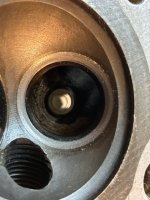
What a fine day this is! Received my Cylinder head back today with new cut seats, valve guides, (machined to fit valve stems) and new valves.
The journey begins to reassemble the engine and bike and hit that start button!
 

Attachments

  • IMG_5863 Cylinder head new seats guides.jpg
    IMG_5863 Cylinder head new seats guides.jpg
    113.2 KB · Views: 3
  • IMG_5859 Valve seat cut new.jpg
    IMG_5859 Valve seat cut new.jpg
    95.7 KB · Views: 3
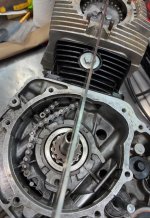
Today's journal entry is a pic of cam/crank timing marks aligned using a straight edge.
I'm recording every engine reassembly step. This way, if other performance issues arise, I can rule out mechanical aspect of timing.
The straight edge is slightly tilted to show timing marks.
 

Attachments

  • IMG_5870 Timing Marks Straight Edge.jpg
    IMG_5870 Timing Marks Straight Edge.jpg
    108.9 KB · Views: 6
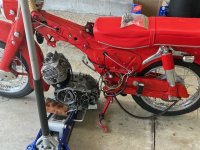
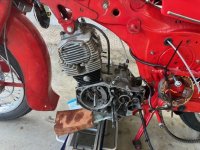
Log date 20 July 2025. Engine back together again and I hope for the last time. I get smarter every time I mess up. In the past I would have normally assembled the engine complete on the bench and struggle lifting, installing and reconnecting the harness. I found partial disassembly of the engine before removing is easier on the mechanic (me)
and installing the engine partially assembled better yet. All harness wires remain connected. Three pics. Engine on floor jack with stable wooden wedge. Lift in and attach head bolt 1st. Swing the rear up to line up rear mounts. Note to make sure starter wire is positioned in the opening in back of the engine. Hopefully tomorrow complete the engine assembly and hit the starter button.
 

Attachments

  • IMG_5900 7 20 Engine Install.jpg
    IMG_5900 7 20 Engine Install.jpg
    114.4 KB · Views: 6
  • IMG_5901engine install.jpg
    IMG_5901engine install.jpg
    118.1 KB · Views: 6
  • IMG_5902 engine install.jpg
    IMG_5902 engine install.jpg
    119.8 KB · Views: 6
I leave the plugs out to spin the motor once the oil is in, prior to actual start. When I see oil through the tappet covers then it's good.
 
I put everything back in place with assembly lube, but I will indeed cycle the engine with plugs out to circulate oil before start. I put the plugs in hand tight. I was paranoid of a clumsy drop of some small nut or washer, falling into the cylinder, like those 6mm nuts holding the right cam cover in place.
 
Poor engine performance is due to:
Right cylinder intake and exhaust valves leaking
Left side valves so incorrectly adjusted that I'm embarrassed.
One knock pin missing.
O ring on one knock pin not seated by head gasket
The head gets sent out to a machine shop to cut seats and valve faces.
Once the head is received back, valves to be adjusted while the engine is on the bench.
Make double/triple sure knock pin, O ring and head gasket are properly installed.

Thanks to all for your suggestions regarding carburation & timing.
In the end it was all in my head. (pun intended)
Previously bored cylinders .75 over+ new pistons & rings. Piston cylinders like new. New cut valve seats and guides. New valves lapped in by machine shop. New plugs, coil, timing verified good cam/crank mark. New points, condenser. Carburetor clean+, new gaskets all around. Float level good. Jets clean, new "o" ring at the carb oval. Head bolts torqued to spec. See assumptions in my quote above.
I reassembled this engine slowly over three days and only when I was fully rested.
Results:

Back to square one. Engine starts, idles. Can't throttle up. Gotta clean shop and park the bike.
 
I did a little research concerning this engine starts and can't throttle (rev) up. I visited a cycle forum for the Aprilia motorcycles.
Back in 2008 an owner complained of the same problem I'm having with his one-year-old Aprilia. Exactly the same.
Turns out he had a bad wiring harness, once the harness was replaced the problem disappeared.
Next step (another day) wiring.
 
Just another entry.
I checked wire harness connections and found two wires mis matched, and I reconnected to correct match.
Then, in the wee hours of the morning, for some reason, I asked myself; what does my current carb have that other CA95 carbs I have owned does not have?
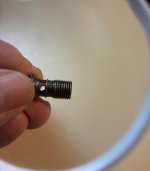
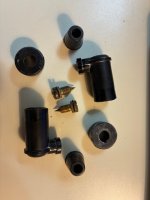
Answer: A banjo fuel connection at the side of my current carb! The only part of the puzzle I had overlooked! The screen and plug as shown was partially plugged!
(see pics) I removed the screen and cleaned the part pristine and reinstalled.
Results:
Engine runs even worse than before! Hard to start, backfire's, just a mess.
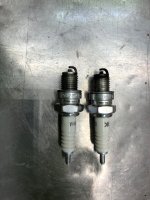
So, I pulled the plugs and noticed the right cylinder plug is black, whereas the left cylinder is relatively clean. I replaced the plugs with new ones, struggled to get the bike to start and idled the engine a short while, only to confirm right cylinder blackening the new plug.
 

Attachments

  • IMG_5919 plugs 7 23.jpg
    IMG_5919 plugs 7 23.jpg
    98.1 KB · Views: 4
  • IMG_5918 inlet plug clean.jpg
    IMG_5918 inlet plug clean.jpg
    24 KB · Views: 4
  • IMG_5916 inlet plug.jpg
    IMG_5916 inlet plug.jpg
    42.3 KB · Views: 4
Any chance the RH exhaust is restricted or plugged in any way? Or timing is somehow way off? Single carb so fuel delivery should be the same between both cylinders which just leaves spark, air, timing, 2 of 3 or all 3 as the issue.
 
Frankly I'm at the point of trying anything. I have never, ever had such a problem with any CA95 and other Honda's I have built or worked on.
The intake/exhaust ports in the head are clean as I have just reinstalled the head from the machine shop. The Asian mufflers are straight thru w/o baffles, although I'm game to remove them and just try starting with just the header pipes.

Timing at the cam/crank are as pictured in post #452. I'm confident correct.

I have:
Spark, but I wonder about the new condenser. Could the new condenser be bad?
An aftermarket air filter, and it looks porous, Again, I will pull it off just to see what happens.
Adjusted valves while the engine was on the bench and confident about adjustment correct.

Lastly, the points lobe. I checked the timing mark on the points lobe against multiple pictures found online. I know if the points lobe is 180 degrees off the bike will shotgun backfire and not start at all. Clean left plug and dirty right plug sets my head to spin!

I appreciate the input.
 
A bad condenser can lead to really crappy ignition quality, but it's usually nondiscriminatory - you'd see it on both sides. This is a weird one - maybe weak HT lead connection and it's just rattling there?
 
No spark on the right. That's why it is the only one fouled. Backfire happens from poor spark, unburnt fuel builds up on right then ignites in the header, kapow.
Could even be a bad plug, try another. I've had new ones that were bad. Check your caps too, measure their resistance. Either use a resistor plug or a resistor cap, not both.
I measure plug resistance by putting black VOM on the screw stud and the red VOM lead in the gap of the electrode. Set meter on 20K ohms. Infinity= bad plug, over 7K ohms is not good, should be between 3-5K ohm for non resistor NGK D8HA plugs.
Resistor caps should be 5K ohm, not around 10K or even more. I've noticed the original Honda caps deteriorate and resistance gets too high.
Coil must be good if one side sparks, both must, unless you have a bad plug wire on one side.

6volts rock, with love. Finally got Charles Benly flying to 67mph, but it took patience and time with the meter checking each part.
 
EZ Pete and Ballbearian, thank you for your input.
I am using the original Honda logo spark plug caps as shown in pic. The coil is new aftermarket after thinking original 63-year-old coil was bad. I took videos of spark quality and frankly, the new coil spark looked stronger, but my view is subjective.

I get no resistance when my meter is set on 20K ohms when checking plugs and original brass spike connector for the plug cap. So non-resistor cap and non-resistor spark plug would be the answer.

Congrats getting Charles Benly to reach 67mph! Frankly, I get nervous going 55 mph on these small bikes.

Thanks again for your help!
 

Attachments

  • IMG_5925 plug caps.jpg
    IMG_5925 plug caps.jpg
    60.6 KB · Views: 4
Last edited:
Other thing to check is the carb slide is pulling all the way up when attatched to the throttle cable. Either use a mirror, if carb on bike, or take carb off and hook up slide, cap and cable to observe full range.

Those caps should show some continuity, like 0.02K ohms or just a bit less. Someone else may have better accurate numbers, but I'm just sharing my own experimenting and measuring. Must have some continuity. All my old Honda caps are now museum pieces, mostly showing 10K+ ohms.
 
Thanks. I always check the carb throttle slide before installation. The slide is smooth, and the throttle snaps back return when fully opened and released. The thought crossed my mind how crazy it would be to if the throttle needle somehow became loose.
The caps. Just a pinch/poke brass connector. My electrical knowledge is limited to life taught. It would seem to me, the pinch/poke brass assembly would have no resistance. I ordered new non resistor caps anyway. Can't hurt. Should deliver Friday. I also plan to take up on EZpete's suggestion about clogged mufflers as it takes minutes to remove them. As previously mentioned, I am open to any suggestions. Thanks for your feedback!
 
Finger lifting the slide doesn't count. Does the throttle grip raise the slide all the way up?

The needle can't come loose. The spring pushes down on the butterfly looking clip and then the circlip on the needle groove.

The resistors in the caps can't be seen, they are imbedded inside the bakelite plastic body. That's why you have to test with a meter to find out. The pinch/poke screw stud things you removed are fine but have no bearing on resistor or not.


What exact plugs are you using? NGK D8HA plugs are non-resistor so you do need resistor caps to have a total of 5K ohms. 4into1 has 5K ohm caps that I measured and are good. Real genuine NGK 5K ohm LB05F caps are harder to find.

You may find NGK DR8HA resistor plugs to work with your caps if, indeed they measure almost 0 ohms.

I've not measured or used the 4into1 aftermarket coils yet. Still using the OEM original coils on all mine.
 
Throttle was/is used to determine if carb slide opens completely, so yes, the slide opens completely. I'm using NGK D8HA plugs. Interesting to learn of the bakelite resisters. This is new knowledge for me. I plan to wait until tomorrow to fuss with the bike when I get the replacement spark plug caps. Sometimes walking away from projects and doing other things for a short while gives me time to think. Something's goofy as to why this rather simple engine will not start or run worth beans.
I still have the original coil but swapped it out for the 4into 1 aftermarket unit, earlier in my tail chase. Thanks.
 
So, I pulled the plugs and noticed the right cylinder plug is black, whereas the left cylinder is relatively clean
After giving much thought about EzPete's suggestion about possible clogged mufflers, I decided to pull the right-side muffler (because of black plug on same side) and take a look. No clog. The mufflers are straight thru. The right-side header pipe is loaded with black oil. I purposely cleaned the inside of the header pipes before reinstallation.
Then something dawned on me. Broken piston rings? All the time I waited for my cylinder head to come back I never thought to pull the cylinders to have a look. The cylinders show no damage, but the total time the engine actually ran (and crappy at that) is 20 minutes total. I followed the book as far as which ring fit which grove on the piston and like previous piston installations I've done, I simply used lots of assembly lube while compressing the rings in the cylinder taper one by one, back and forth until the pistons glided into the bore(s). I staggered the rings far enough apart to have a little wiggle room while I slip the pistons into the cylinders.
Now my twisted logic is I (with the help of members input) replaced ignition components, had a valve job done, went over carburation multiple times, bored the cylinders, installed new pistons, rings, seals & gaskets. checked new coil ohm, cleaned wire connectors, installed solid state rectifier. I double checked cam/sprocket timing chain line up, installed 3 sets of new spark plugs. The oil has been changed three times (every time I opened up the case to access the cam chain).

First time start of the engine I had a lot of smoke and wrote off the smoke as rings not seated. Eventually the smoke subsided but has not disappeared, especially the right cylinder.
Tomorrow, when I get my new spark plug caps, I will try to start the engine again. I have limited faith the new caps will do the trick.
If you have read this far, consider everything done to bring the engine back to life has actually made the engine run worse! Like every improvement aggravated the real reason (theory) that the piston rings are to blame. I'll take her down one last time if I need to.

 
Apologies if this has already been covered - what was the compression test? If that was good the rings should be holding, or at least enough for it to still run somewhat decent.
 
I really can't take a decent compression check as all I have is a handheld rubber tipped compression gauge I bought back in 1973. If I wasn't so old I would buy a nice new one, but to use it once and slip it into the tool drawer seems illogical. I can have the engine off the bike, on the bench broken down in about 1-1/2 hours. No biggie to backstep.
 
I use my rubber tip cheapy in tight with a quarter clockwise twist and can hold till about 180psi blows it off. I use a quick clamp to pin the throttle wide open so I can concentrate on holding the gauge in tight and straight.

I'd wait for the caps and see if the plug stays clean before tearing down the jugs again.
I'd also clean the exhaust port and header with a rag soaked in gas or solvent.
 
I use my rubber tip cheapy in tight with a quarter clockwise twist and can hold till about 180psi blows it off. I use a quick clamp to pin the throttle wide open so I can concentrate on holding the gauge in tight and straight.
Followed your advice, my old compression gauge reads 145lbs each cylinder even. This test was done without the mufflers attached and throttle secured wide open.
I removed the Asian mufflers just to rule them out. The mufflers are straight thru and likely not the problem, but I want to rule them out as a possible cause of my issue.
I had a creative thought for retrofitting aftermarket carburation. The CB160 manifold is 38mm center to center on one end and 48mm on the other. CA95's intake manifold is 38mm center to center, making retrofit nearly impossible as modern small motorcycle carb mounts are 48mm center to center. Once I get my used CB160 manifold I should be able to cut and shorten and get aluminum welded or cut off the 48mm side leaving a tube to clamp to. Just a thought while I ponder this run crappy issue.
 
Ordered the wrong spark plug caps. They were crappy anyway, but I finagled a spark plug in the wrong plug cap and checked spark. Absolute improvement. I took apart the originals and cleaned them up, yes, they were dirty. Silly me for thinking that nothing can be wrong with the plug caps after dangling 58 years out of the frame in some shed in Ohio.
OK. Results:
Starts, idles nice, no noticeable smoke either oil or excessive fuel. When I get this issue figured out, I may build straight pipes.

Gotta be fuel related. Can't rev the engine. One noticeable difference, this time is no Immedient bog when trying to rev the engine. Twist of the throttle now does nothing unless twisted wide open, then stall. I will pull the carb one more time and look for something I may have overlooked. I may pull the tank and check the screen in my retro fit petcock as well. Maybe the tank had some fine goober that's blocking the intake screen and starving the float bowl only letting in enough fuel to supply enough fuel at idle but shortchange the bowl fuel level when more fuel is called for.
I do plan to modify the CB160 manifold, and retro fit a nice new carburetor if I can't use the original old-style carb on the bike.
Gotta be fuel related.
 
Ordered the wrong spark plug caps.
Finding good 5L ohm caps is becoming harder. I just received some aftermarket caps from amazon that had no continuity at all, junk. I did find some real NGK LB05F caps and bought all that supplier had. Here is another promising supplier.

Gotta be fuel related.
Maybe not. I would wait for correct caps before condemning your current carb. I just fixed Charles Benly with this and rode it hard for 3 hours yesterday. Even the original coil worked fine.
 
OK. I'm at the end of my options anyway so I ordered 2 as recommended. This morning before the heat set in, I pulled the tank, then the petcock, Petcock screen clear, fuel captured from the tank fresh.
I pulled the carb once more. The carb is clean to the extreme. I rechecked the float adjustment against recommended spec as per manual, good.
We will see what happens once the caps come in. I hate to part out the bike, but the thought has crossed my mind.
 
Have faith, hang in there.

A happy road test awaits you.

I think you've made it hard on yourself by changing too many things at once. I prefer plodding with purpose, rather than leaping ahead.

You also, don't put specifics of parts in the posts and not many pictures so we can see then help. I probably bore folks with some of the details I put in my posts but it has saved me from bad decisions several times.

Real genuine NGK D8HA non-resistor plugs and real genuine NGK LB05F 5K ohm caps is what you want.

There are far too many vendors out there selling junk fake copies that don't work. I buy them, I test them and I end up pitching out a bunch.

4into1 has a good batch of the plugs, I've measured them with my VOM meter, if you need more.

Don't forget to set the plug gaps at 0.6-0.7mm (0.02-0.03 inch)
 
Last steps, looking at the carb again to verify clean ports & jets. Fuel tank screen clean. Before the heat set in today, I reassembled everything less the tank and set up a funnel and line (lab stuff again LOL). So far, after all efforts mechanical & ignition to solve this no rev condition (less new caps to deliver mid next week) the engine starts. Can't rev.
vid attached.
 
Last steps, looking at the carb again to verify clean ports & jets. Fuel tank screen clean. Before the heat set in today, I reassembled everything less the tank and set up a funnel and line (lab stuff again LOL). So far, after all efforts mechanical & ignition to solve this no rev condition (less new caps to deliver mid next week) the engine starts. Can't rev.
vid attached.
Even I can hear it missing a bunch. Probably those caps and plugs. Do you have a meter to measure the plug resistance? Just trying to help you fill your wait time productively.
 
Even I can hear it missing a bunch. Probably those caps and plugs. Do you have a meter to measure the plug resistance?
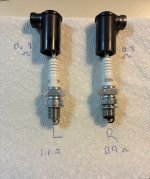
Here is a pic to answer your questions. The right plug black, left plug perfectly clean. Run time only minutes and maybe 50ml gasolene consumed. I do have a slight handicap as I only have 50% normal hearing and rely on hearing aids to compensate the difference. Artificial hearing alters all sounds. Although silence makes for great sleep and reading.
 

Attachments

  • IMG_5965 L R Plug ohm and tip clor difference.jpg
    IMG_5965 L R Plug ohm and tip clor difference.jpg
    93.6 KB · Views: 6
Here is a pic to answer your questions. The right plug black, left plug perfectly clean. Run time only minutes and maybe 50ml gasolene consumed. I do have a slight handicap as I only have 50% normal hearing and rely on hearing aids to compensate the difference. Artificial hearing alters all sounds. Although silence makes for great sleep and reading.
Great pic, by the way.
The numbers don't really look bad but, I had a new plug that sparked good outside but would not spark under compression. It's not very common but true. A new plug should fix it.
 
My last post for a short while. New caps won't deliver till mid-week or later. I will order a new round of spark plugs. I replaced the suspected bad plug from previous video with a good one. Maybe. This time the engine sounds better but still missing and popping. Thanks for directing me to ignition. I never suspected bad plugs or dirty caps. I need to become accustomed to the thought that "new" may not be good. See vid below of how the 62 did with the right-side spark plug replaced.
 
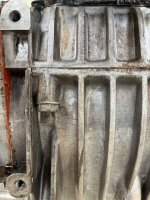
Engine runs better with the new spark plug caps. Thanks. There is still a cough when throttling up and I'm waiting for new plugs. After a short ride I parked the bike and noticed a nasty oil leak coming out of the lower starter motor bolt. So nasty I was able to take a video. Sometime early next week I will pull the starter to see where the oil is coming from. Thanks for continuing to follow my project!
 
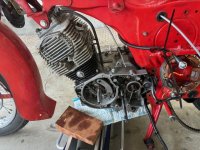
Before I disassembled the engine to send out the cylinder head, the right-side engine cover leaked oil at the bottom. Here is the question. What did I do differently this time when I reassembled the engine after getting the cylinder head back from the machinist?
Tried to correct the oil leak at the bottom of right-side engine case by applying High Temp Gasket sealer to the new side cover gasket.
I will install a new gasket at the right-side engine case again, except dry without any "treatment". I'm pretty sure the application of gasket sealer caused my weird oil leak.
 

Attachments

  • IMG_6048 Oil Leak Pic 8 2 25.jpg
    IMG_6048 Oil Leak Pic 8 2 25.jpg
    120.5 KB · Views: 3
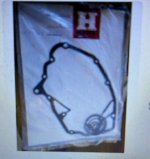
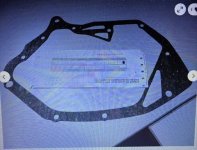
Just a log entry. This engine side cover leak got me thinking. Failure bugs me until I figure out why or how I failed. So, I go to CMSNL website and look up CA95 Engine Side Cover Gaskets. I'll be a monkey's uncle, there are two (2) part numbers for the same Engine Side Cover Gasket. 1959-1961 takes a thin gasket, 1962-1965 takes a heavier gasket. (see pics) I have installed (twice!) the earlier thin gasket and likely aggravated sealing failure with the 1st gasket installation with aircraft gasket sealer, then really aggravated sealing the 2nd gasket installation with High Temp Gasket sealer!
I'm glad I waited to order another gasket until I researched the correct part number. I assumed all year CA95 engines took the same right side engine cover gasket. Wow.
 

Attachments

  • IMG_6055 1959-1961 CA95 Right side engine case gasket.jpg
    IMG_6055 1959-1961 CA95 Right side engine case gasket.jpg
    29 KB · Views: 1
  • IMG_6054 1962-1965 CA95 Right side engine case gasket.jpg
    IMG_6054 1962-1965 CA95 Right side engine case gasket.jpg
    60 KB · Views: 1
Just a log entry. This engine side cover leak got me thinking. Failure bugs me until I figure out why or how I failed. So, I go to CMSNL website and look up CA95 Engine Side Cover Gaskets. I'll be a monkey's uncle, there are two (2) part numbers for the same Engine Side Cover Gasket. 1959-1961 takes a thin gasket, 1962-1965 takes a heavier gasket. (see pics) I have installed (twice!) the earlier thin gasket and likely aggravated sealing failure with the 1st gasket installation with aircraft gasket sealer, then really aggravated sealing the 2nd gasket installation with High Temp Gasket sealer!
I'm glad I waited to order another gasket until I researched the correct part number. I assumed all year CA95 engines took the same right side engine cover gasket. Wow.
Good to point out they weren't all the same. The early motors were 125cc C92 and CB92, later becoming the CA95 motor. It seems Honda did make some small changes to the oil passages from 59 onward and improved the gaskets. It is tempting to buy the old set, just to get the Orings, but they are often old, hard and brittle.
I wouldn't use any sealer on the side cases. Only Hondabond on the case halfs that don't have gaskets. I check and clean all bolt hole depths then bolt lengths, also check knock pin lengths. I like to dry fit everything first to visually verify everything closes tight without gaskets first.
Jensen likes to grease his gaskets and is able to reuse some of them. I've had some success doing that.
 
I appreciate your advice! I've once again been smittened by old habits that worked in the past. I may have pointed out earlier this Honda CA95 is the oldest I have worked on. Another 1st is buying basically a "boat anchor" motor and procuring parts to make one good motor. I have disassembled the engine far enough to install new gaskets when they arrive, and I will follow advice to a "T" installing the gaskets, dry fit, bolt hole depths and bolt lengths as advised.
One more observation while removing the flywheel. Every flywheel I have seen (up to now) for the CA95's is marked C92 on the face of the flywheel. I never thought much of it.
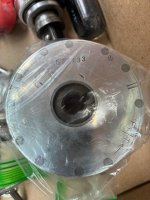
The flywheel I have on the 62 is marked with 5T7733. No C92. Timing marks seem the same as those pictured for sale on eBay for reference. Furthermore, there is evidence of a very slight contact with the one stator coil pack. I'm not sure if this is an issue. I haven't noticed any general electrical issues. Here is a pic of the flywheel through a baggie. I bag my parts for easy reassembly. As always thanks for all of the good advice.
 

Attachments

  • IMG_6061 5T7733 Flywheel.jpg
    IMG_6061 5T7733 Flywheel.jpg
    90.9 KB · Views: 4
I found adjusting the cam chain tension much easier when I could see it with the rotor and stator removed. Your's did sound a little noisy in the video.

The rotor number 5T7733 doesn't ring a bell. The timing marks could only be the same if they match the indexing of the keyway. If you could hold the crank at TDC and swap rotors without any change, would be assurance they are the same. All the rotors I've seen on these say C92 because that was the original motor they were designed for. It may be the same but if it's different then you could never get the timing right. A careful comparison with a protractor and good eyes could work to check as well.
 
Your's did sound a little noisy in the video.
Thanks for your observation. Corrected hearing loss with hearing aids makes hearing two dimension & flat, meaning all sounds are equal.
I will tighten up the timing chain prior to reassembly. The rockers adjustment is .003 and might need to be revisited again. I think I detect some rocker noise, but I cannot accurately determine if that's what I hear. At this point (for the 4th time, I think, but who's counting?) I can pull the engine easier than removing the fuel tank and place it on the bench. I can reset the rockers to maybe .002 or .001.
I will recheck the flywheel as recommended. Checking pictures of alleged Honda CA95 flywheels I have found both C92 markings and similar numerical markings as mine on others. I think it's been about 6 months of fussing with this engine to get it running right and dealing with oil leaks. Thanks!
 
Rocker clearance spec is 0.1mm or 0.004 inch, intake and exhaust. I would not vary this specification.

The Owner's manual says to adjust cam chain adjuster by feel since you can't see the end of the adjuster rod. Before the stator is put in place you can see when the adjuster rod 'just touches' the adjuster.
You don't need to pull the engine to do this , only the side cover, rotor and stator.
C92 marked rotors are the correct rotors.
 
Ok. I forgot to mention I had an oil leak at the rotor housing. So, rotor, stator and housing has been removed making cam chain adjustment convenient. I mentioned pulling the engine for ease of valve adjustment. Rocker clearance is set at .004 after tightening and rechecked multiple times. So, I will back off the thought of another adjustment.
My head will spin if replacing the rotor with a marked C92 rotor helps solve or at least contributes to a better running engine. I'm in the market for another rotor and have bids on a C92 rotor on eBay. Gaskets and parts ordered and expected delivery late this week. My project updates will be on hold until early next week. Off to visit family & friends in Northern Ohio. Thanks for your help and thanks to all who continue to follow my 62 story.
 
All needed parts arrived during my holiday including my C92 marked flywheel. I measured and weighed both the serial numbered flywheel and the C92 marked flywheel.
C92 Marked Flywheel weighs 991 grams
Serial Numbered Flywheel weigh 1001 grams

C92 Marked Flywheel Diameter measured 79.52mm
Serial numbered Flywheel Diameter measures 79.83mm

So the C92 measured flywheel is 10 grams lighter and twelve thousands (.012") (or 0.31mm) smaller than the serial numbered flywheel.

Timing marks the same for both.

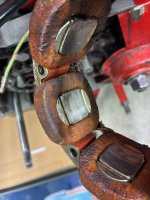
The serial numbered flywheel brushed the magneto coils so the extra .012" clearance can't hurt. Attached is a pic of the magneto coils with rub marks.
Should have the bike back together with new proper gaskets and the C92 flywheel soon.
I'm not sure if the flywheel replacement will make a difference with engine performance, but it can't hurt to use it.
 

Attachments

  • IMG_6130 CA95 Magneto.jpg
    IMG_6130 CA95 Magneto.jpg
    1.1 MB · Views: 4
I think my 62 wants to go back to the scrap yard. Maybe it's possessed. Maybe I'm out dated.
So today, I put her back together with proper gaskets & C92 flywheel. I install my new spark plugs & thought to check spark. No spark. She had hot spark before the oil leak.
Too hot to continue today. Tomorrow I will check point & spark plug gaps.

I think these survivor bikes were parked inside a barn when all else failed to get them running. Maybe when the engine finally started, the owner, out of frustration, just revved the bike till the engine seized then threw it in a corner somewhere and forgot about it. Nearly six decades another ID 10 T try's to fix the bike.
If I only had a barn.....(humor)
 
Maybe you just left the key on and the battery is dead. I put my key on a string so I pull it out and let it hang, then I know it's off. Doesn't always work, My CRS is pretty bad.
 
Thanks. I so appreciate your input. It's a privilege to know someone who understands the CA95. I like the idea of a string on the key. I pull out the key just enough to convince myself the ignition is off. I was using the electric starter to cycle the engine while checking for spark. I needed to make sure the starter worked. The C92 flywheel delivered with the starter rollers and springs dislodged and magnetically adhered to the flywheel. The flywheel needed cleaned as well. So maybe one minor success achieved.

Oddly, when I went out to connect the battery charger I had to cycle the engine once more. The points have lightning spark. I may have set points and the plug gap incorrectly, or maybe I cooked the condenser with months of fussing with this bike. I don't know. I have two types of feeler gauges. Flat ancient machinist type and newer multi wire loop type. So I reset the plugs at .026 with the wire loop type. I will check the points tomorrow.
What amazes me is the one step closer, two step back progress (or lack there of) with this build. I have never had anywhere near the issues with any other bike I have built in the past, as I have had with this one.

Battery charger is connected for the duration of the evening, or when the charger cycles off when full.
I'm grounded this evening by thunder storms, so we will see what happens tomorrow.
Thanks!
 
You may have hooked up the charger with the ignition still on. Don't do that. Don't start or run a bike on the charger either.

All your settings should be good from when it was running before. Just lay the plug threads on the fins to check for spark then put them in and try it.

We get older and forgetful so we need to slow down and double check we are following by the numbers. Slow forward is better than fast backwards.

I charge a dead battery in stages. 2 hours on, then 2 hours rest. Check with voltmeter and don't overcharge. More than 7volts is probably damaging the battery.

It's good to stick together.
 
Tom, your advice is invaluable. I have never run the bike with the charger although years ago I did leave the ignition on (charger not attached) and melted the coil.
I went back through my posts and found my "Day of Reconning" post #315, January 29, 2025, the first attempt to start the engine.
Today, August 14th the little 62 runs strong, a little cough at full throttle, so I think fine tuning spark advance 1st then maybe carburetor jet clip, now set at 2nd notch from the top. In retrospect there is several decisions I made regarding this build that made this build frustrating.
1.) I "finished" the bike with as much old parts as possible.
2.) I honed the cylinders to reach .25 over pistons. I failed to measure the cylinder out of round. Honing out of round cylinders results in out of round bigger bore.
3.) I thought I bought a good used engine. Not the case. The only salvageable parts of the engine was cylinders, upper case and side cases.
4.) I reused the upper cylinder head that came with the bike. Can't lap corroded valve seats clean. Even with new valves against the corroded valve seats.
5.) Can't use old ignition parts, less the coil if the coil is found good. I bought a replacement coil and it worked, but eventually reinstalled original coil.
6.) Gaskets need to be installed dry. My thinking that mating surfaces of mix & match parts needed a bit of sealant. Wrong.
7.) I think finding good wheels & rims is better than lacing new spokes into new rims. But that's just my thinking.
8.) Never in my wildest dreams did I suspect the flywheel! Thank you Tom again for suggesting the C92 marked flywheel.
I procured over 100 parts to finish the bike. Taking on a dead corpse and making it an athlete is not for the faint of heart. Even I came close to walking away from this build.

Another delay was titling the bike. I had to have the bike in complete order for multiple inspections, running or not. This process took 6+ weeks. I felt uncomfortable test riding the bike without plates or insurance in a tight neighborhood. Too many plaintiff opportunity types living around me. On one test ride I had a person deliberately step right in front of me. I was not kind with my words. I may be old but I can still stand my ground.

One final frontier. Tires. I've used the same IRC tires with success on precious builds. The tires are not seated equally around the rim. I placed the tire & rim assembly on my truing stand. Rims true. tires not seated equally around the rim. I knew this, but I focused on engine performance and was reminded of the tire issue when I hit 40mph. Think Flintstones...

The journey continues. Thanks to all for following my story.
Chip
 
Last edited:
Back
Top Bottom