

-
Don't overlook our Welcome Package, it contains many links to important and helpful information about functions at VHT like posting pictures and sending PMs (private messages), as well as finding the parts you need.
AD
You are using an out of date browser. It may not display this or other websites correctly.
You should upgrade or use an alternative browser.
You should upgrade or use an alternative browser.
Got my CL350
- Thread starter tmross
- Start date

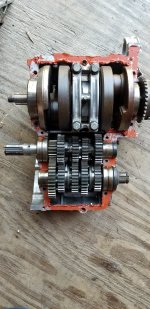
Yeah after consulting the @Stan Lipert video (https://www.vintagehondatwins.com/forums/threads/cb350-engine-rebuild-video.15226/#post-190565), I think I've got the confidence to keep it dry. Should've just watched that whole thing before I started the rebuild.

Engine installed. Started hooking up all the cables during the weekend, expecting it to be a quick job, was not. Realized an important part of the clutch actuator is missing, the "ball retainer." Turns out without it you pull the clutch lever and nothing happens! I had taken the actuator apart a couple months ago to clean it up, I don't ever remember seeing it, I've misplaced nuts and bolts before but no way I would've lost something like that, I contend it was never there to begin with. So anyway, ordered one on ebay. Next I tried the throttle cable, which came in a control cable set from 4into1 (brake/clutch/throttle). The brake and clutch cables seem to fit fine but the throttle cable is 3" longer overall than OEM, with about an inch more slack. Even with all the adjuster nuts backed out all the way the throttle still had way too much slack. So I trimmed an inch off the cable, slack is perfect now, adjuster nuts are comfortably in their middle ranges of adjustment.
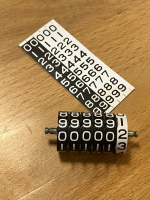
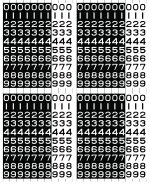
Odometer came out really good, had the vinyl stickers printed at the UGA print shop for like $1.50. Took a lot of precision with the scissors to cut them just right, and placing them perfectly so they were centered, wasted a lot so you need lots of extras on hand. Any overlapping off the sides of the wheels could be sanded off with fine grit sandpaper. If you look close between the 0 and 9 is where the ends of the stickers meet. Each wheel is 5x61mm, the ends meet up precisely if cut right. I used a sharpie to touch up any white spots along cut lines. File is attached if anyone wants it, its a sheet of 4 rolls with plenty of extras, 4.25" x 5.5". Can't say for sure which other models besides 350 it'll fit but I have a 175 and 450 speedo on hand and they look to be the same size odometer. The trip meter wheels are slightly larger than the odometer so this is odometer only.
Attachments

Nice job, looks really good and only you will see any imperfections.
Whenever I have straight cuts to make I grab a steel ruler and a fresh blade in the utility knife, don't trust myself with scissors
Whenever I have straight cuts to make I grab a steel ruler and a fresh blade in the utility knife, don't trust myself with scissors
Getting close to being able to try and run it, found another issue though, excessive play in the shift lever linkage. Looks like the slop is from these worn pins, especially the forward one. Its pretty bad. Anyone know a way to fix that?
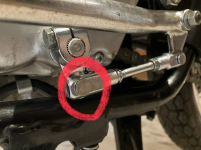
looks like one option some people have done is just replace the whole thing with a simple lever like this - https://4into1.com/gear-shift-lever-long-honda-cb-cl160-175-200-350-360-450-cb500t-750f-900f-1100f/

kbongos
Veteran Member
Enjoying your build thread here! It's completely normal to take your motorcycle apart in you house next to your fireplace. Tear apart and fix hornet invaded speedos - I totally agree with your assessment of how ridiculously non serviceable these are. I may get an old 350 myself, on the fence about it due to limited space in the garage, but I know, from you and other VHT mebers, it's OK to take it in and work on it inside
Enjoying your build thread here! It's completely normal to take your motorcycle apart in you house next to your fireplace. Tear apart and fix hornet invaded speedos - I totally agree with your assessment of how ridiculously non serviceable these are. I may get an old 350 myself, on the fence about it due to limited space in the garage, but I know, from you and other VHT mebers, it's OK to take it in and work on it inside
Yes I love working in the comfort of my living room, especially in winter. As long as theres no fluids theres not much that can go wrong.
DId something dumb last night, was testing the horn and forgot to turn the ignition switch off, was probably on for half hour till I noticed. Left side coil got hot, was still giving spark though. Did resistance test and both coils gave the same numbers, secondary resistance in spec but primary a little high, 6.2 ohms on both. I understand spec is supposed to be around 5 ohms, is 6.2 pushing it? Could you tell a coil is fried from resistance test anyway? Plan was to just run it with the original coils/condensers and see if it works, if not replace it all.
Well guys, I just fired it up, and its not pretty. It started right up, and idles steady, but thats where the good news ends. My worst fear, leaking head gasket, came true. Oil is dripping liberally out of the front, right between the exhaust pipes (the nuts are torqued to 15 ft/lbs). Along with that theres a hanging idle, if I hold the throttle open a crack it feels like it kinda wants to start running away. Backing the mixture screws out doesn't seem to have any effect, so I'm worried its an air leak, perhaps related to this head gasket oil leak? Furthermore theres a nasty rattle noise coming from the top end, sounds like camshaft area. Here's a video showing everything I've just explained:

Sounds to me like the cam chain is not properly adjusted and pretty loose at this point, and I wouldn't run it that way anymore until you get things straightened out. The leak could easily be coming from the left cam bearing cover gasket which could be on backwards, easy mistake to make with the 350 engine so it wouldn't be a situation where you'd have to pull the engine if you follow instructions on how to do it in the frame to the letter (proper preparation before pulling the bearing cover). A view of the left side might show the leak running from behind the cam bearing gasket and down the head fins.
Interesting, I did the cam chain adjustment per the manual when I did the valve lash/points/timing. I'll try it again. Sadly I dont think the leak is coming from the cam bearing cover, its bone dry all around it, no oil anywhere above the head gasket. Upon further inspection it looks like its leaking at the back too by the oil channels. Surprised to see such catastrophic leaking after getting the head/cylinder resurfaced. I'm going to try retorqueing the head nuts.
Well you were absolutely right about the cam chain! I could hear the plunger shoot forward when I loosened the tensioner adjusting nut. Ran it and the sound is gone, sounds great, though timing needs to be redone now. Also I retorqued the head and looks like the oil hemorrhaging has abated... maybe. The hanging idle is better now too, not sure if thats from readjusting the chain or retorqueing the head.
The hanging idle can be a few things, carb synchronization and idle mixture adjustment helps but there's always the possibility that the advancer is sticky or the return springs for the weights are sloppy and allow it to stay advanced too much so it won't decrease to idle speed easily.Well you were absolutely right about the cam chain! I could hear the plunger shoot forward when I loosened the tensioner adjusting nut. Ran it and the sound is gone, sounds great, though timing needs to be redone now. Also I retorqued the head and looks like the oil hemorrhaging has abated... maybe. The hanging idle is better now too, not sure if thats from readjusting the chain or retorqueing the head.
Yeah well I take back what I said about the hanging idle resolving, its still there. very erratic. Messing with mixture/idle speed screws doesn't help. I took apart/cleaned/greased the advancer during the rebuild, it seemed to be in good condition, i'll take another look at it.
Also head gasket def still leaking but not as bad as before.
Also head gasket def still leaking but not as bad as before.
If you used a thick grease like wheel bearing grease so it would stay in place better, it might be part of the problem. But the return springs for the weights need to have zero slack in them when the weights are fully retracted, but not a lot of initial tension so the weights can still start opening freely.Yeah well I take back what I said about the hanging idle resolving, its still there. very erratic. Messing with mixture/idle speed screws doesn't help. I took apart/cleaned/greased the advancer during the rebuild, it seemed to be in good condition, i'll take another look at it.
If you used a thick grease like wheel bearing grease so it would stay in place better, it might be part of the problem. But the return springs for the weights need to have zero slack in them when the weights are fully retracted, but not a lot of initial tension so the weights can still start opening freely.
Ok there was a tiny bit of slack in one of the springs. I took the spring off and bent one of the hooks in a tiny bit and reinstalled the spring, no slack now. The weights snap back into place effortlessly when I separate with fingers. Ran it again and its still hanging bad at 3k. Idk if my attempt to fix the spring is proper, boy they aren't cheap on ebay.
I sprayed carb cleaner around the carb boots, exhaust, head gasket, to hunt for an air leak, no effect on idle. Hmm.
Seems the advancer isn't the issue then.Ok there was a tiny bit of slack in one of the springs. I took the spring off and bent one of the hooks in a tiny bit and reinstalled the spring, no slack now. The weights snap back into place effortlessly when I separate with fingers. Ran it again and its still hanging bad at 3k. Idk if my attempt to fix the spring is proper, boy they aren't cheap on ebay.
This tells me the carbs might not yet be fully clean. Low speed passages are really small, just as the pilot jets orifices are so they're really difficult to get completely clean.I sprayed carb cleaner around the carb boots, exhaust, head gasket, to hunt for an air leak, no effect on idle. Hmm.
Yeah tell you what, I think I just need to work on syncing the carbs better. I noticed the right throttle was lifting before the left, so I adjusted that and its def better, though not perfect, gonna keep at it. 1st time working with these carbs, CV carbs in general.

stl360+450
Veteran Member
Right on. I created this problem accidentally at one point in the past with my CB450 when replacing the carbs and it's a real power killer. You can tool around at low speeds fine, but it will limit you greatly when you need power.I noticed the right throttle was lifting before the left, so I adjusted that and its def better

1969 CL350
Veteran Member
My gearshift linkage had slop in it and I replaced it with a one-piece lever. It positioned the peg a little farther out toward the end of my toes, and it was a bit harder to shift. I rode it that way for a few years and then put the original shift linkage back on. Even with a little slop, it shifts better with the stock setup than that direct lever, maybe because of the extra leverage provided.
As for adjusting the cam chain, Honda released a bulletin clarifying the correct procedure.
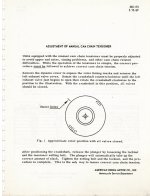
As for adjusting the cam chain, Honda released a bulletin clarifying the correct procedure.
Last edited:
My gearshift linkage had slop in it and I replaced it with a one-piece lever. It positioned the peg a little farther out toward thecend of my toes, and it was a bit harder to shift. I rode it that way for a few years and then put the original shift linkage back on. Even with a bit of slop, it shifts better with the stock setup than that direct lever, maybe because of the extra leverage provided.
I ordered a one piece lever, I'll compare the two. I'd like to repair the original one anyway, replace the clevis pins with a size larger + drill out the holes. The current pins are 8mm, next size up is 10mm looks like. 18mm long. But also I haven't even ridden the bike yet so maybe the slop won't bother me in practice. We'll see.
Its idling decent for now, think there might've been some throttle cable binding in the mix too, something weird was happening that I'm not quite sure of.
Maybe tomorrow I'll take it off the porch.
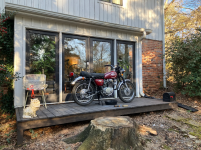
Took it for the first ride, it runs and rides great. Slop in the shifter did not bother me, shifts excellent actually. Handling is fantastic.
Still noticing the hanging idle issue, especially after warm up, rpm just takes too long to come down after a rev.
And the head gasket is still leaking oil badly pretty much everywhere. I will try another retorque. But I have a bad feeling this engine is coming out for a new head gasket, with copper coat and hondabond around the oil passages this time. Really, really surprised and disappointed that it could leak so badly after a resurfacing.
Still noticing the hanging idle issue, especially after warm up, rpm just takes too long to come down after a rev.
And the head gasket is still leaking oil badly pretty much everywhere. I will try another retorque. But I have a bad feeling this engine is coming out for a new head gasket, with copper coat and hondabond around the oil passages this time. Really, really surprised and disappointed that it could leak so badly after a resurfacing.
re: hanging idle - I'm going to go through the carbs again. If it is indeed low speed passages not completely clean, I may need to invest in an ultrasonic cleaner. I also want to ensure the throttle plates are centered in the bore.
I've read quite a few threads on the throttle shaft felt seals, and I'm still not really convinced either way. Some people say they are merely dust seals and not designed to be airtight, and vacuum leakage at the throttle shaft is actually designed into the carb. But there are so, so many anecdotal reports of people saying they replaced or re-oiled the seals and their air leak/hanging idle symptoms resolved. I'd be inclined to side with results.
I am also gonna add an extra 2 ft lbs to the head bolts today. If it still leaks the engine is probably coming back out this weekend. I trust the machinist who resurfaced the head for me, he's done resurfacing for me in the past with airtight results. But something about this doesn't sit right with me, might get a machinist ruler and double check this.
I've read quite a few threads on the throttle shaft felt seals, and I'm still not really convinced either way. Some people say they are merely dust seals and not designed to be airtight, and vacuum leakage at the throttle shaft is actually designed into the carb. But there are so, so many anecdotal reports of people saying they replaced or re-oiled the seals and their air leak/hanging idle symptoms resolved. I'd be inclined to side with results.
I am also gonna add an extra 2 ft lbs to the head bolts today. If it still leaks the engine is probably coming back out this weekend. I trust the machinist who resurfaced the head for me, he's done resurfacing for me in the past with airtight results. But something about this doesn't sit right with me, might get a machinist ruler and double check this.
Last edited:
Thinking about checking advancer function with a strobe light, I have a strobe but never used it. Could someone tell me what exactly I'd be looking for to diagnose a faulty advancer, in regards to hanging idle. I assume I would be confirming that the timing is not hanging at full advance as the revs start dropping below 3k? Going off the info below:
It states that advance should begin between 1600 and 2000 rpm, reaching full advance been 3200 and 3800 rpm.
To check the advancer function you want to manually twist the cam and then let it go to see if it snaps back into place. Quite often the springs are loose and it doesn't fully return which causes the hanging idle.
When using a strobe to check the advancer operation, you want to see a "tight" transition between the idle setting at F and LF up to the maximum advance point (anywhere at or between the 2 unmarked timing marks on the rotor, but not beyond those marks or short of them either). You'd be looking for erratic movement or a too-early advance before the correct rpm range.Thinking about checking advancer function with a strobe light, I have a strobe but never used it. Could someone tell me what exactly I'd be looking for to diagnose a faulty advancer, in regards to hanging idle. I assume I would be confirming that the timing is not hanging at full advance as the revs start dropping below 3k? Going off the info below:

stl360+450
Veteran Member
+1 on the above. I suspect that weak springs may cause a small deviation in the advance angle at idle speed and a larger deviation at maximum advance that could overshoot the the full advance marks.
If the change to the advance angle is sufficiently large at idle speed, that could cause the hanging, higher idle. I've noticed on occasion that flipping the kill switch to stop and back to run in quick succession can sometimes return the high idle to the lower idle. Can be useful while testing in the garage, but not something you want to do on the road!
If the change to the advance angle is sufficiently large at idle speed, that could cause the hanging, higher idle. I've noticed on occasion that flipping the kill switch to stop and back to run in quick succession can sometimes return the high idle to the lower idle. Can be useful while testing in the garage, but not something you want to do on the road!
Pulled the carbs off yesterday, noticed a couple things - the rubber intake manifolds are flaking, leaving little bits of rubber on the carb outlets, so I'm going to replace these. I inspected the felt seals on one of the throttle shafts and they are in horrible condition, they don't even look like felt anymore, shrunken brown little crispy wafers more like. Even if they are only meant to be dust seals, they certainly aren't sealing anything anymore, so I've ordered new ones.

mike in idaho
Veteran Member
How much material did they take off, when doing the re-surfacing? You might check to see if the acorn nuts on the head are bottoming out on the end of the studs. Pull the nuts/washers off, one at a time, and see if you can run the nut all the way down to the head surface without the washer.Took it for the first ride, it runs and rides great. Slop in the shifter did not bother me, shifts excellent actually. Handling is fantastic.
Still noticing the hanging idle issue, especially after warm up, rpm just takes too long to come down after a rev.
And the head gasket is still leaking oil badly pretty much everywhere. I will try another retorque. But I have a bad feeling this engine is coming out for a new head gasket, with copper coat and hondabond around the oil passages this time. Really, really surprised and disappointed that it could leak so badly after a resurfacing.
How much material did they take off, when doing the re-surfacing? You might check to see if the acorn nuts on the head are bottoming out on the end of the studs. Pull the nuts/washers off, one at a time, and see if you can run the nut all the way down to the head surface without the washer.
Couple days ago I retorqued, this time I oiled the threads and torqued to 17 ft/lbs. I rode around the neighborhood for a bit and the results seem very promising, was not dripping oil out the front. Didn't post an update about it, need to ride around more first. I will keep what you're saying in mind though.
A few updates... cleaned carbs again, replaced the carb throttle shaft felt seals, intake manifold rubber boots, and exhaust gaskets. Hanging idle is still there. I saw a video today where someone used a propane torch (not lighting the flame) to diagnose air leaks. Spraying the gas around the engine. So I tried that and the idle def picks up around the intake boots, but it also picks up all around the head gasket area, even in front of the engine. The head gasket oil leak sadly is still there, it is leaking on all sides, everywhere. I am wondering if the leaking head gasket could be the source of an air leak? The hanging idle is virtually non existent when cold but as the engine warms up it gets worse and worse and worse. Wouldn't this rule out an advancer issue? Doesn't seem like advance springs would somehow become weaker/sloppier as the temp rises.
Must admit I am feeling pretty discouraged tonight, with the 175 snapping the cam chain, and the 350 just is not coming together. Surrounded by bikes that don't work.
Must admit I am feeling pretty discouraged tonight, with the 175 snapping the cam chain, and the 350 just is not coming together. Surrounded by bikes that don't work.
stl360+450
Veteran Member
I sympathize — I've had times like that. Take a break and then come back and try to look at something in a new way, like following up on the suggestion from @mike in idaho about the acorn nuts bottoming out.Must admit I am feeling pretty discouraged tonight, with the 175 snapping the cam chain, and the 350 just is not coming together. Surrounded by bikes that don't work.
What was your procedure for retorquing the head?
I sympathize — I've had times like that. Take a break and then come back and try to look at something in a new way, like following up on the suggestion from @mike in idaho about the acorn nuts bottoming out.
What was your procedure for retorquing the head?
yeah I plan to check on the acorn nuts after work today. I torque in 2 steps following the pattern in the fsm.
Maintaining a fleet of vintage bikes is kind of like a full time job i'm beginning to realize, its just always something. Probably wiser to just have 1 that you can focus on completely instead of 4 that are all like half broken down.
Gonna copper coat the intake manifold gaskets today and see if that helps any.
Ok hanging idle solved - I put some hondabond on the intake manifold gaskets and also found that the intake valves were too tight. I suspect it was probably the valves.
Anyway its running great now but it seems to be ticking pretty loudly, see video below, does that seem excessive? Sounds kinda jackhammery rather than sewing machine. I'm pretty confident the valves are adjusted correctly, chain is adjusted correctly. Wanna say it seems more prominent on the right side but hard to tell for sure.
Anyway its running great now but it seems to be ticking pretty loudly, see video below, does that seem excessive? Sounds kinda jackhammery rather than sewing machine. I'm pretty confident the valves are adjusted correctly, chain is adjusted correctly. Wanna say it seems more prominent on the right side but hard to tell for sure.

RobMan
Veteran Member
It does sound like it is running great but I can hear what sound like valve rattle to me not cam chain. Did you have the rattle before you adjusted the valves?
I don't remember noticing it when the intake valves were too tight, I was highly focused on the hanging idle though. I readjusted them again today and its still ticking away. These valve adjusters have been kind of finnicky and weird tbh, difficult to fine tune and tightening the lock nuts throws the adjustment off significantly even when holding the adjustment pin in place with a screwdriver. Still I think I'm getting them close enough that they wouldnt be causing that much noise. I'll keep at it.
If one of the rocker arm pads is a little bit dished, it can make it difficult to get the adjustment accurate.
Worked more on valve lash today and the ticking is much better. Had to modify my feeler gauges and approach, I think I was getting false readings on the intake valves cause of the awkward positioning of the carbs right there.
Got the bike registered, ordered new tires, gonna leave the neighborhood soon.
Got the bike registered, ordered new tires, gonna leave the neighborhood soon.

First week its been out around town, its running fantastic, getting everything fine tuned. Getting used to all this power, its a real kick in the pants, there is a little bit of that feeling where I feel like I'm holding it back when driving around town in traffic. The 175 is probably more appropriate for small town cruising imo. Can probably say this is as big a bike as I'd ever need, in terms of physical size and cc's.
First tank of gas registered 39 mpg, right in time for prices to spike.
Last edited:
Well another idle issue came to my attention, idle seems to slowly drop as engine heats up, I set it at 1200 and it slowly creeps down below 1000. Once fully warm idle starts stumbling and eventually dies if left to idle long enough. Also occasionally makes a high pitched cough/hiccup/chirp sound out the exhaust (misfire?). Other than idle it runs perfect, so that would seem to rule out something like bad coils/condensers. Plugs look good, not fouled.
I double checked static timing and its spot on, valve lash in spec. So maybe carb related? Would low idle when warm indicate lean or rich? Doesn't seem to be fuel delivery, can see gas flowing amply/equally through the fuel lines.
I double checked static timing and its spot on, valve lash in spec. So maybe carb related? Would low idle when warm indicate lean or rich? Doesn't seem to be fuel delivery, can see gas flowing amply/equally through the fuel lines.
Last edited:
stl360+450
Veteran Member
The carb adjustments should always be made on a warm motor, so I would try that and see if you end up in a better state of tune.
The carb adjustments should always be made on a warm motor, so I would try that and see if you end up in a better state of tune.
Yes thats the weird thing, I have been setting the idle speed warm. I get home from a ride and its idling low so I bump it up to 1200. But then the next ride I take its still creeping down below 1k again. So somethings not right. I think the key might be that squeaky chirping/coughing sound, anyone know what that indicates? I have heard that sound before on my MB5 and it always indicates fouled plug, its a very distinctive sound, and I assume indicates misfiring. These plugs look good but I can swap some new ones in just to see.
Last edited:
The interpretation of sounds by words alone is difficult, but if you could get a video of what it's doing we might recognize it.I think the key might be that squeaky chirping/coughing sound, anyone know what that indicates?
stl360+450
Veteran Member
I guess I was assuming you might reset to 1200 on a cold motor the next day. Also, you can adjust the mixture screws and idle screws back and forth to achieve equal back pressure and max idle by following the FSM instructions. Have you done this, too?
Have you verified that it's running on both cylinders when this occurs? It would be fairly obvious when the second one drops in or out, so I'm considering this a longshot.
Stock air boxes? And the cough/chirp is definitely through the exhaust and not the carb intakes? Are the valves maybe too tight?
Have you verified that it's running on both cylinders when this occurs? It would be fairly obvious when the second one drops in or out, so I'm considering this a longshot.
Stock air boxes? And the cough/chirp is definitely through the exhaust and not the carb intakes? Are the valves maybe too tight?
I guess I was assuming you might reset to 1200 on a cold motor the next day. Also, you can adjust the mixture screws and idle screws back and forth to achieve equal back pressure and max idle by following the FSM instructions. Have you done this, too?
Have you verified that it's running on both cylinders when this occurs? It would be fairly obvious when the second one drops in or out, so I'm considering this a longshot.
Stock air boxes? And the cough/chirp is definitely through the exhaust and not the carb intakes? Are the valves maybe too tight?
Wow I am ashamed to say that I did not see that section about idle adjustment in the FSM. Ok, I will be turning some screws when I get home from work today.
And yes stock air boxes, stock everything. Chirp is def coming out the exhaust. I am pretty confident valves are set correct.
The interpretation of sounds by words alone is difficult, but if you could get a video of what it's doing we might recognize it.
will do.
One thing I need to investigate is tank cap not venting correctly. After a long ride, 30+ mins, when the idle starts dipping and stumbling, it kind of looks like the fuel is boiling in the lines, bubbling (vapor lock?). The tank cap hisses loudly, and there are all sorts of weird bubbly lurching noises in the tank. I even saw a steady stream of bubbles rising to the top of the tank once. I can see gas vapor exiting the tank with cap closed. So that all seems weird. I don't know if plugged cap vent is related to all the bubbling.
Opening the cap up when the idle gets stumbly doesn't seem to help anything, so im thinking all the bubbling in the lines would be the issue. especially to the left carb which seems to be the culprit.
Opening the cap up when the idle gets stumbly doesn't seem to help anything, so im thinking all the bubbling in the lines would be the issue. especially to the left carb which seems to be the culprit.
stl360+450
Veteran Member
I experienced a blocked cap vent once. It was a used tank and the PO had unknowingly sealed the cap vent along with the rest of the tank. I could only ride about a mile before fuel flow would stop. There was still enough venting going on that I could usually restart the bike soon after, but would again be stopped down the line. I replaced the cap and all was well. I didn't have transparent lines so had no idea what was going on inside.
I guess it makes sense that the lines might contain a lot of air if the tank is vapor locked.
I would definitely have a look at the cap and maybe replace it if it can't be cleared.
I guess it makes sense that the lines might contain a lot of air if the tank is vapor locked.
I would definitely have a look at the cap and maybe replace it if it can't be cleared.
Yeah i guess the symptoms dont quite comport with inadequate venting, since it still runs off idle perfect even when the idle starts struggling. Also I did clean the cap well/replace gasket during the rebuild. Perhaps the hissing noise is actually the sound of expanded gas fumes trying to escape, pressure buildup, not vacuum.
I will try and get a video of what the fuel bubbling in the lines looks after it gets hot. Even with engine off, petcock off, the gas in the lines is just bubbling and lurching around like crazy. Given that gas begins boiling at 95 deg, I suppose its not farfetched to see this happening, just I never saw that with the 175 for example and the fuel lines are similar proximity to engine heat.
EDIT: reading that inadequate ventilation can actually contribute to vapor lock, because vacuum lowers boiling temp. So perhaps these 2 things are related afterall.
I will try and get a video of what the fuel bubbling in the lines looks after it gets hot. Even with engine off, petcock off, the gas in the lines is just bubbling and lurching around like crazy. Given that gas begins boiling at 95 deg, I suppose its not farfetched to see this happening, just I never saw that with the 175 for example and the fuel lines are similar proximity to engine heat.
EDIT: reading that inadequate ventilation can actually contribute to vapor lock, because vacuum lowers boiling temp. So perhaps these 2 things are related afterall.
Last edited: