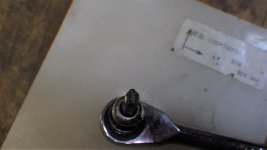
First Time Rebuilding Carbs [1984 Honda CM450E] - Questions about float needles

TomatoThePotato

Veteran Member
Joined
Dec 1, 2023
Total Posts
203
Total likes
74
Location
Ontario Canada
Hey y'all, just joined this community, happy to be apart of it. New to working on bikes but wanted to start somewhere and learn.

So, my CM450E was working perfectly fine until I decided to refill it with some 91 Octane Gasoline. The bike was running smoothly back from the gas station until I realized it was back firing a little bit and noticed a big pool of gasoline coming from one side of the overflow tubes. I did some research and people were saying that my float needle was stuck which was causing the gasoline to leak out. Okay great. I also heard that you can spray some compressed air into the tube and it should fix the float needle, however, I was already planning on rebuilding the carbs anyway and had a carb rebuild kit on me. However what I didn't notice that it was for a 1982 Honda CM450E and not the 1984 model (also for some reason Honda says there were no 1984 CM450E models which is weird). From what it looks like, it still works with the VB22 carburetor but I noticed the needle is slightly different. I don't know exactly what needle my CM450E has since I haven't taken it apart (haven't got the time to just because of school) but I wanted to know if anyone here has worked on specifically the 1984 model. Could the needle I have still work? I had received a bunch of other jets as well, will those be interchangeable with the VB22 carb I have? If I am missing context, let me know! Also any advice for a first time carb rebuild will be much appreciated - no matter how basic/obvious or complicated. I'm here to learn.
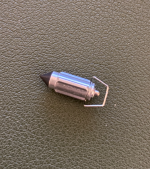
1701402188471.png <-- The float needle that I have gotten
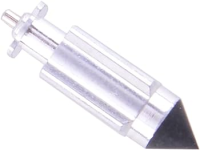
1701402227377.png<-- what I think my CM450E has.

I have also attached a link for the carb rebuild kit I have bought if that gives any extra information that can help you help me.

Thanks again
 
Currently contemplating if I should just keep the original jets/needles and replace the gaskets and clean everything else, however I am worried that the float needle is damaged or needs to be replaced. I skimmed through the other VB22 forum on this website and it seems that I have made the wrong decision to buy an aftermarket kit. Could not find the OEM kit but guess I didn’t research enough. I think the gaskets and springs maybe be of use from the aftermarket kit. What do y’all think?
 
The float needle in the upper photo is used with black plastic floats and these floats are adjustable to get the float height set correctly at 15.5 mm - See the photos in LongDistanceRider's "sticky" carb thread in the SOHC carb sub-forum here.

The float needle in the lower photo is used with white plastic floats and the white floats are not adjustable.

Regarding the rebuild kit you bought : you want to clean carefully and reuse your original Keihin brass jets AND long jet needles. The Chinese needles are significantly heavier than the original ones which are made of beryllium
 
Last edited:
Carb rebuild kits and politicians have a lot in common. False advertising for the most part. You can scrounge some gaskets and such but it's hit and miss, mostly miss on the brass or metal stuff. Never pitch your original Honda jets, just carefully clean them.
 
The float needle in the upper photo is used with black plastic floats and these floats are adjustable to get the float height set correctly at 15.5 mm - See the photos in LongDistanceRider's "sticky" carb thread in the SOHC carb sub-forum here.

The float needle in the lower photo is used with white plastic floats and the white floats are not adjustable.
Definitely read and re-read LDR's VB carb rebuild sticky thread.
 
The float needle in the upper photo is used with black plastic floats and these floats are adjustable to get the float height set correctly at 15.5 mm - See the photos in LongDistanceRider's "sticky" carb thread in the SOHC carb sub-forum here.

The float needle in the lower photo is used with white plastic floats and the white floats are not adjustable.

Regarding the rebuild kit you bought : you want to clean carefully and reuse your original Keihin brass jets AND long jet needles. The Chinese needles are significantly heavier than the original ones which are made of beryllium
Going to go through that thread, thank you. I think I am going to reuse everything, Contemplating the gaskets however, but if that is a bad idea, I'll hold off.
 
Carb rebuild kits and politicians have a lot in common. False advertising for the most part. You can scrounge some gaskets and such but it's hit and miss, mostly miss on the brass or metal stuff. Never pitch your original Honda jets, just carefully clean them.
Wow, I am surprised after 40 years the original Honda jets are still capable. Going to read LDR thread and see how I can refurbish those jets.
 
The float needle in the upper photo is used with black plastic floats and these floats are adjustable to get the float height set correctly at 15.5 mm - See the photos in LongDistanceRider's "sticky" carb thread in the SOHC carb sub-forum here.

The float needle in the lower photo is used with white plastic floats and the white floats are not adjustable.

Regarding the rebuild kit you bought : you want to clean carefully and reuse your original Keihin brass jets AND long jet needles. The Chinese needles are significantly heavier than the original ones which are made of beryllium
How about the float needles? Can they be reused? Since mine is causing the carb to overflow, does that float needle need to be replaced or can I still clean it up? Sorry if I ask a lot of questions, I want to make sure I do it right.
 
How about the float needles? Can they be reused? Since mine is causing the carb to overflow, does that float needle need to be replaced or can I still clean it up? Sorry if I ask a lot of questions, I want to make sure I do it right.
They can be re-used if in good serviceable condition.
 
All the VB22 carbs have the white non adjustable floats. The issue with aftermarket float needles is too short raising the float level or too long lowering the float level. Too long can be used if the little spring loaded pintle is lightly ground down to get the adjustment correct. .1mm ground off makes a .4mm height adjustment so you have to be very slow and careful to not go too far.
I frequently reuse the float needles by lightly sanding the tips with 600 paper.
The Honda gasket set is a good choice to get all the correct rubber bits.
Reusing the original brass is recommended with the exception of the primary main jet which should go up one size. IE; 70 to 72 or 72 to 75
Aftermarket air cut valves and accel pumps are fine to use. The accel pump shaft may be too long so compare to the original. Personally I block the vacuum source for the air cut valves so they're non functional, results in a little decel popping out the muffler.
 
All the VB22 carbs have the white non adjustable floats. The issue with aftermarket float needles is too short raising the float level or too long lowering the float level. Too long can be used if the little spring loaded pintle is lightly ground down to get the adjustment correct. .1mm ground off makes a .4mm height adjustment so you have to be very slow and careful to not go too far.
I frequently reuse the float needles by lightly sanding the tips with 600 paper.
The Honda gasket set is a good choice to get all the correct rubber bits.
Reusing the original brass is recommended with the exception of the primary main jet which should go up one size. IE; 70 to 72 or 72 to 75
Aftermarket air cut valves and accel pumps are fine to use. The accel pump shaft may be too long so compare to the original. Personally I block the vacuum source for the air cut valves so they're non functional, results in a little decel popping out the muffler.
Oh my god beautiful. 600 sandpaper is exactly what I have and what I was thinking about doing. I think that's what im gonna do once i pull the carbs. Ill prolly post a pic of the needle here to see y'alls opinion on if its salvageable or not. I may use the accel pump now that you have mentioned it, but ill first compare to the one within my CM450.

thank you for the advice, you're doing me wonders and giving me the confidence I need to do it myself.
 
Had another question, though not sure if I should make its own post or just add onto here (don't really know forum etiquette, I used to use Reddit before this website). So I have filled up my CM450E with 91 octane from my local gas station (Petro Canada). I knew that having ethanol fuel in my fuel tank was bad, but I had some other people's opinions and they had said that is only bad if you let it sit in your fuel system for a long time. Now when I had done this, my bike had worked perfectly fine until I got home and noticed I was leaking fuel (float needle is stuck, I don't know if this is a coincident or happened to be because I filled up the fuel tank? Not sure). This was exactly a month ago and I let the fuel sit in my fuel tank the entire time. I know I messed up by leaving the gas there, I wanted to know how badly have I messed up. I plan on going to empty out the entire fuel tank sometime this week. I had plans to clean out the fuel tank originally, however, I fear I might have ruined the tank. Will love to hear your guys opinions.
 
You did not ruin your tank and you did not harm it at all by using gas with ethanol in it and you did not mess up by leaving gas in the tank for only a month. All gasses go stale and lose bang-power with time. A general rule of thumb is to avoid using gas that's over 30 days old.
Ethanol-gas ("corn-oiled") turns into a jelly with age (many months if not a year or more) before it hardens into a varnish-like dry crust.
And your float needle is stuck for a different reason altogether because month-old ethanol gas is still too young to jellify.
Use Sta-bil gas stabilizer (it's red and sold inexpensively everywhere, including Walmart) with your gas when storing it for longer than a month and there's no need to worry as much.
Our tanks hold about 3.5 gallons of gas and the Sta-bil label instructs to use 1 ounce per gallon and if I remember correctly, the label also states that it stabilizes gas for 60-90 days.
During riding season, adding Seafoam or Berryman's product into your gas (following their stated instructions, of course) is also beneficial to the carbs and combustion chambers.
 
Last edited:
You did not ruin your tank and you did not harm it at all by using gas with ethanol in it and you did not mess up by leaving gas in the tank for only a month. All gasses go stale and lose bang-power with time. A general rule of thumb is to avoid using gas that's over 30 days old.
Ethanol-gas turns into a jelly with age (many months if not a year or more) before it hardens into a varnish-like dry crust.
And your float needle is stuck for a different reason altogether because month-old ethanol gas is still too young to jellify.
Use Sta-bil gas stabilizer (it's red and sold inexpensively everywhere, including Walmart) with your gas and there's no need to worry as much.
Our tanks hold about 3.5 gallons of gas and the Sta-bil label instructs to use 1 ounce per gallon and if I remember correctly, the label also states that it stabilizes gas for 60-90 da
First of all, thanks so much for the reassuring response.

I'll do some more research on stabilizers but just to get your opinion, do you think I can keep ethanol gas in my tank with stabilizers for a few months if not at least half a year (for the winter at least)?
 
Sta-bil's website states that it'll keep fresh gas stable for up to 2 years. So, I'd think that by adding some of it to your month-old gas it'll still be usable after this winter.
 
Add the Sta-Bil per directions and top off the tank into the filler neck and cap it. This will preserve the fuel and leave no air in the tank to create rust.
 
I put gas+stabil in my standby generator over 5 years ago. Lives outside. Starts on second pull (unless really cold. Glad I don't have to use it much, once in 5 years and that for less than an hour.
 
Sta-bil's website states that it'll keep fresh gas stable for up to 2 years. So, I'd think that by adding some of it to your month-old gas it'll still be usable after this winter.
I think this is what I am probably going to do. I was thinking about emptying it, but I expect it to only sit for another month at least while I finish up school and also rebuild the carbs. So I think I'll just add some stabilizer for now.
 
I think this is what I am probably going to do. I was thinking about emptying it, but I expect it to only sit for another month at least while I finish up school and also rebuild the carbs. So I think I'll just add some stabilizer for now.
I try to run my bike at least once every few weeks whether there's any ethanol-infused fuel in it or not, and I do use a little Stabil myself. Do not leave the petcock on under any circumstances when the bike is sitting though, you can't trust the float needles in these carbs to control bowl overflow
 
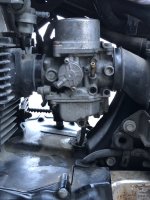
Hey guys, I’m back working on this again. Was working on taking the carburetor off from the boots but because its freezing cold in Canada and these boots probably have not come off in ages, the carb is stuck. I was wondering how you guys would get the boot off without using any sort of lubricant (im afraid it’ll damage the rubber). I’m also thinking about replacing the boots entirely since they are starting to crack but I can’t find the exact model that will ship to Canada (if u guys know any reliable sources, feel free to send). The boots from the air intake to the carb seem to be in decent condition and are still a little flexible however the ones from the carb to the engine are giving me the problem. Any recommendations on how to get the carb off?
 
Hey guys, I’m back working on this again. Was working on taking the carburetor off from the boots but because its freezing cold in Canada and these boots probably have not come off in ages, the carb is stuck. I was wondering how you guys would get the boot off without using any sort of lubricant (im afraid it’ll damage the rubber). I’m also thinking about replacing the boots entirely since they are starting to crack but I can’t find the exact model that will ship to Canada (if u guys know any reliable sources, feel free to send). The boots from the air intake to the carb seem to be in decent condition and are still a little flexible however the ones from the carb to the engine are giving me the problem. Any recommendations on how to get the carb off?
2A745653-4526-4093-98DE-14355B38C2DD.jpeg
Ill send more pics if needed
 
A good first suggestion is to warm the stiff rubber boots, but from reading Jim's suggestions on carb removal on the SOHC 400/450 models he says it's easier to get them out if you pull the rear wheel, take the airbox loose and move it back. He's the resident expert on them, I'm sure he'll be along to provide details.
 
Yeah, you've got to remove the air box boots to get the carbs off. Safest way is following the FSM instructions of moving the airbox backwards, tire removal isn't really ness'y but can help.
Alternative that a number of us use is to squeeze the air box boots down to work them out of the box and off the carbs. There is the danger of damaging them doing it this way and installation is a real booger.
Once the boots are off then release the insulator clamps and just lean down full body weight and the carbs will pop off.
Remove the left upper engine bracket helps to get the cables off AFTER the carbs are loose, don't do it before hand since that's when people break the pull cable eccentric.
 
I did not need to remove the rear wheel to move air filter box rearward. 3 bolts attach box to frame (1 each side, 1 at back. Back one's tricky to reinstall with collar. I used a magnet to hold collar for bolt reinsertion) Then you keep boots attached to box and more simply detach and reinstall boots to carb rack.
I also was not confident I could detach rack from front "insulators" (intake manifolds, boots) by pushing rack down, so I removed rack with insulators attached by removing the 4 little bolts holding them to the cylinder head. Glad I did because 1.) the o-rings between insulators and cyl head were hard and brittle needing renewal and 2.) heating the insulators with a hair dryer to add flexibility only helped a bit because it took a lot of muscle to unsnap them off the rack at my workbench.

Insulators are rubber covered metal ducts - metal at cyl. head end, rubber only at carb rack end, but thick rubber. So, shallow visible cracks doesn't always require renewal. Use your best judgement.
They're still available new from Honda motorcycle dealers. There are also lower priced aftermarket new ones.
Know of www.siriusconinc.com ? It's close to you
 
Also, I used the closed end of my best 8mm wrench to unscrew the 4 bolts that attach the insulators to the cyl. head.
I also would have lightly whacked the wrench with a lightweight or small metal hammer while on any stubborn/stuck bolt to start its unscrewing if needed so to "break them free" if stuck
 
A good first suggestion is to warm the stiff rubber boots, but from reading Jim's suggestions on carb removal on the SOHC 400/450 models he says it's easier to get them out if you pull the rear wheel, take the airbox loose and move it back. He's the resident expert on them, I'm sure he'll be along to provide details.
Tried this, don't think my blow dryer was hot enough, gonna try again soon with a better blow dryer but I think this is gonna helpful.
Yeah, you've got to remove the air box boots to get the carbs off. Safest way is following the FSM instructions of moving the airbox backwards, tire removal isn't really ness'y but can help.
Alternative that a number of us use is to squeeze the air box boots down to work them out of the box and off the carbs. There is the danger of damaging them doing it this way and installation is a real booger.
Once the boots are off then release the insulator clamps and just lean down full body weight and the carbs will pop off.
Remove the left upper engine bracket helps to get the cables off AFTER the carbs are loose, don't do it before hand since that's when people break the pull cable eccentric.
Boosted mentioned removing the boots that connect to the engine and I am kind of thinking about going that route just to see if those boots are in working order. Plus it does seem easier doing that route, but this is my first time doing this so I'll take y'all advice on what to do. I'm scared to damage either of the boots just because they are a bit pricey to replace - gonna call up my nearest honda dealership to see if they have replacements juussstt incase. Also, excuse my ignorance - not really sure bout the terminology yet but what do you mean on FSM instruction? I'm assuming you mean the factory manual?

I did not need to remove the rear wheel to move air filter box rearward. 3 bolts attach box to frame (1 each side, 1 at back. Back one's tricky to reinstall with collar. I used a magnet to hold collar for bolt reinsertion) Then you keep boots attached to box and more simply detach and reinstall boots to carb rack.
I also was not confident I could detach rack from front "insulators" (intake manifolds, boots) by pushing rack down, so I removed rack with insulators attached by removing the 4 little bolts holding them to the cylinder head. Glad I did because 1.) the o-rings between insulators and cyl head were hard and brittle needing renewal and 2.) heating the insulators with a hair dryer to add flexibility only helped a bit because it took a lot of muscle to unsnap them off the rack at my workbench.

Insulators are rubber covered metal ducts - metal at cyl. head end, rubber only at carb rack end, but thick rubber. So, shallow visible cracks doesn't always require renewal. Use your best judgement.
They're still available new from Honda motorcycle dealers. There are also lower priced aftermarket new ones.
Know of www.siriusconinc.com ? It's close to you

Don't have the bike on me at the moment, but when I did a quick glance, I could not find those bolts. However, I did see 1 bolt held onto the chassis near the top of the airbox (where the seat is) mounted to what looks to be the frame. Also regarding those O-ring replacements, are those just standard O-rings you would find at hardware stores or did you find specific replacement ones from Honda.
 
Yes FSM= factory service manual. I hope you are doing this all inside with the bike at room temp to start with. Even then warming rubber above that does help. Reinstalling in the cold is just asking for ruined parts and air leaks.
The O rings are special and plumbing stuff don't cut it. Get the part numbers from Partzilla. com or get our library parts book download from ancientdad and check the dimensions if ordering from Mcmaster-Carr and you do want Viton rubber.
 
I try to run my bike at least once every few weeks whether there's any ethanol-infused fuel in it or not, and I do use a little Stabil myself. Do not leave the petcock on under any circumstances when the bike is sitting though, you can't trust the float needles in these carbs to control bowl overflow
Yeah, woke up to two gallons of home destroying gasoline pooled up in my garage one morning. Never left the petcock open after that.
 
Don't have the bike on me at the moment, but when I did a quick glance, I could not find those bolts. However, I did see 1 bolt held onto the chassis near the top of the airbox (where the seat is) mounted to what looks to be the frame. Also regarding those O-ring replacements, are those just standard O-rings you would find at hardware stores or did you find specific replacement ones from Honda.
The left and right side air-filter box attachment bolts are numbers 23 & 30 in this illustration:
Notice they're both M6x20 hex-headed bolts but one of them is made with a flat washer between its head and the threads, the other is a flange-head.

Anytime you remove your plastic side-covers (you'll need to when removing/reinstalling the air-filter box side-bolts) insert your fingertips behind the covers' lowers attachment nibs and push the nibs out of the rubber grommets in the frame and then slide downward the top of the sidecover off of the flat vertical tab of the frame. THIS WAY you have musch less chance of breaking off the fragile nibs of the plastic sidecovers.

I sourced intake manifold o-rings from my local hydraulics repair-service business that stocks a massive variety and amount of metric o-rings.
I'd called ahead asking if they had any 40x2.4mm ones (the correct Honda size). They did not, BUT they had a size close, so I went with a manifold and theirs fit the groove of the manifold sufficiently.
They're still available from Honda (expensively). And here's a 4-pack at Sirius: https://siriusconinc.com/products/detail/1375

Manifolds (insulators, boots) #16211-447-670 are also still available from Honda (expensively) but if you search eBay with their part number there's less-expensive aftermarket ones. Here's some at 4 into 1
https://4into1.com/set-of-2-reprodu...11-447-670-honda-cm400c-e-t-cb450sc-cm450c-e/


Merry Christmas !
 
Last edited:
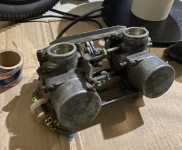
Hey y'all. Update: got the carb off, took me an entire evening just because the carb was so stuck on the engine side. Then getting one of the cables attached to the carb was also a nightmare but got it off eventually.
I did not need to remove the rear wheel to move air filter box rearward. 3 bolts attach box to frame (1 each side, 1 at back. Back one's tricky to reinstall with collar. I used a magnet to hold collar for bolt reinsertion) Then you keep boots attached to box and more simply detach and reinstall boots to carb rack.
This advice was tremendously helpful in getting the airbox side off. What I did was I unscrewed the side screws and slightly loosed the top screw, just not enough to drop the collar or washer or whatever bolt was attached to it on the other side. Unscrewing the side screws gave me another movement to move the airbox back slightly, giving me enough room to kind of twist the carb forward and pop it out to the left of the bike. That diagram was immensely helpful so thank you for that.

I am planning on replacing all the boots (both airbox side and engine side), gonna look into the websites you sent me. Thanks all for the help but I know it's only gonna get harder from here. Time to binge through LDRs' guide to rebuild this carb now.

1704256254285.png
 
The boots (rubber air ducts) between the air filter housing box and carburetor rack were never sold by themselves -
they were only sold as part of the air filter housing box assembly (part number 17210-MC0-670)
..as you can see if you look at the air cleaner parts illustration I attached from Partzilla above in post #29.
Also, they were glued into the air filter housing boxes by Honda as reinforcement.
These air filter housing boxes have not been available for sale new for years.
The only way to replace them is to source a good used air filter box with them still attached.
 
The boots (rubber air ducts) between the air filter housing box and carburetor rack were never sold by themselves -
they were only sold as part of the air filter housing box assembly (part number 17210-MC0-670)
..as you can see if you look at the air cleaner parts illustration I attached from Partzilla above in post #29.
Also, they were glued into the air filter housing boxes by Honda as reinforcement.
These air filter housing boxes have not been available for sale new for years.
The only way to replace them is to source a good used air filter box with them still attached.
Oh damn okay, thanks for the heads up, I wasn't too harsh on the boots when removing them, but I did have to flex them in weird positions since the carb opening kept catching on. So far, I don't see any tears or cracks on them but the one of the boots kind of came off easily, didn't feel like there was an adhesive on it. When reinstalling, what would you recommend to attach the boot back? Some heavy-duty glue or something less aggressive?
 
I recall the back boots being troublesome to get back seated into the air box. My current method to get carbs out leaves those alone. I fully loosen the clamps, take the four bolts off the front boots holding to cylinder, then pull the carbs back hard, wiggle to favor one side and i can slip the front boot(s) off. Taking off one of the engine brackets on top can give room to access cables to detach them at carb. Put back in reverse order. Long ago I had loosened the air box, looking at it today it appears I lost the nut on the bottom side of the top bolt, and I am missing one side bolt. Not sure if this helps or is required to have the box loosened like this. I recall that top bolt giving me trouble with access to lower nut. Apparently just lost that and called it a day. Seems wedged in there just fine with one side bolt.
 
I don't see any tears or cracks on them but one of the boots kind of came off easily - didn't feel like there was an adhesive on it. When reinstalling, what would you recommend to attach the boot back? Some heavy-duty glue or something less aggressive?
How about a rubber cement, like used to patch an inner-tube ? These brands come to mind: Elmer's, Gorilla, Slime
I know Elmer's has an application brush attached to the underside of the jar's cap lid
 
I don't think it's necessary to glue the air box boots into the box, I think it was done originally just to keep them in place during shipping and movement around the assembly line.
 
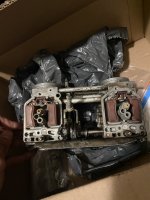
I’m currently in the process of disassembling at the moment, and I’ve noticed that the person I was following on the side had rubber caps in their slow jet hole and my carb didn’t have it? I was really confused. I’ll attach a pic of what my carbs currently look like. 7C9F2C56-59AC-4F4A-9A86-93360B4BEDFB.jpeg

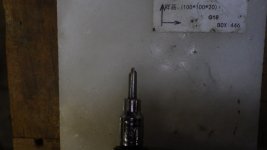
Another thing was, I’m having trouble removing one of the jets and I noticed it slipped and I nearly stripped it, i stopped and came here to ask, what’s a good way of removing these jets without damaging it? I was using those small pocket screw drivers with the flat head attachement (the only tiny flat head I had lying around) and i couldn’t get it to at least break the torque of the jet. What type of flat head would yall recommend to remove this jet?

B6B89221-1872-4F9A-B361-19D9BCBFE70E.jpeg
 
I’m currently in the process of disassembling at the moment, and I’ve noticed that the person I am following on the side had rubber caps in their slow jet hole and my carb didn’t have it? I was really confused.
Another thing is, I’m having trouble removing one of the jets and I noticed it slipped and I nearly stripped it. I stopped and came here to ask: what’s a good way of removing these jets without damaging them? I was using those small pocket screw drivers with the flat head attachment (the only tiny flat head I had lying around) and I couldn’t get it to at least break the torque of the jet. What type of flat head would y'all recommend to remove this jet?
If your rubber plugs (NOT caps) are not stuck to the inside of the float bowl you removed to access the jets, floats, float valves, etc.. THEN someone before you made a mistake of not installing any into those center slow jet holes and you need to buy 2 so to re-plug those holes before putting the float bowls back on.

I'm not entirely sure what you mean by "small pocket screwdriver" but I can tell you that you are setting yourself up for failure if you are using screwdrivers (both flat-head and phillips) that do not tightly and snugly fit the slots in jets, tubes, emulsion nozzles, screws and bolts on not only these carbs but all over your metrically-sized motorcycle.
And, the fact that you are asking what type to use tells me that you either did not read the "How To Rebuild The VB Carburetors" thread at the top of this sub-forum OR you did not read it enough times OR you did not read it carefully enough.

The carb rebuild guide states and warns to use only a 4mm-wide by 1mm-thick flathead when attempting to unscrew the emulsion nozzle.
The slow jet you slipped on is not the emulsion nozzle.
The slow jet's slotted head you slipped on is very similar in size to the slot of all the jets in your carb.
ONLY USE A FLAT-HEAD SCREWDRIVER THAT SNUGLY AND TIGHTLY FITS NOT ONLY THE WIDTH (THICKNESS) OF THE SLOT BUT ALSO THE LENGTH OF THE SLOT !

Once you get a proper-sized screwdriver, insert it squarely and straight into the slot, tap the handle of driver LIGHTLY and SEVERAL TIMES with a TINY-SMALL hammer to help break the corrosion/varnish between the slow jet and carb body and try to then unscrew it. IF still stuck, put a toothpick into the hole of the jet and drip/spray a strong penetrating fluid (Liquid-Wrench or PB-Blaster) around the head of the slow jet, let it soak for 10, 20, 30 minutes and try to unscrew it then.

If you are unable to unscrew the slow jet that you've slipped on and you don't use a 4mmX1mm flat-head driver on the much-more-challenging-to-remove emulsion-tube-nozzle (shown in another thread titled "Extract The Primary Emulsion Tube") at the top of this sub-forum, then you should stop where you are and seek a professional at either a machine shop, or your local motorcycle service shop, etc...

..not trying to be mean here, just want you to get a better idea of the complexity and difficulty level of these carbs.
 
Last edited:
If your rubber plugs (NOT caps) are not stuck to the inside of the float bowl you removed to access the jets, floats, float valves, etc.. THEN someone before you made a mistake of not installing any into those center slow jet holes and you need to buy 2 so to re-plug those holes before putting the float bowls back on.

I'm not entirely sure what you mean by "small pocket screwdriver" but I can tell you that you are setting yourself up for failure if you are using screwdrivers (both flat-head and phillips) that do not tightly and snugly fit the slots in jets, tubes, emulsion nozzles, screws and bolts on not only these carbs but all over your metrically-sized motorcycle.
And, the fact that you are asking what type to use tells me that you either did not read the "Carb Rebuild" thread at the top of this sub-forum OR you did not read it enough times OR you did not read it carefully enough.

The carb rebuild guide states and warns to use only a 4mm-wide by 1mm-thick flathead when attempting to unscrew the emulsion nozzle.
The slow jet you slipped on is not the emulsion nozzle.
The slow jet's slotted head you slipped on is very similar in size to the slot of all the jets in your carb.
ONLY USE A FLAT-HEAD SCREWDRIVER THAT SNUGLY AND TIGHTLY FITS NOT ONLY THE WIDTH (THICKNESS) OF THE SLOT BUT ALSO THE LENGTH OF THE SLOT !

Once you get a proper-sized screwdriver, insert it squarely and straight into the slot, tap the handle of driver LIGHTLY and SEVERAL TIMES with a TINY-SMALL hammer to help break the corrosion/varnish between the slow jet and carb body and try to then unscrew it. IF still stuck, put a toothpick into the hole of the jet and drip/spray a strong penetrating fluid (Liquid-Wrench or PB-Blaster) around the head of the slow jet, let it soak for 10, 20, 30 minutes and try to unscrew it then.

If you are unable to unscrew the slow jet that you've slipped on and you don't use a 4mmX1mm flat-head driver on the much-more-challenging-to-remove emulsion-tube-nozzle (shown in another thread titled "Extract The Primary Emulsion Tube") at the top of this sub-forum, then you should stop where you are and seek a professional at either a machine shop, or your local motorcycle service shop, etc...

..not trying to be mean here, just want you to get a better idea of the complexity and difficulty level of these carbs.
I appreciate the brute honesty, you’re right. I didn’t go through it well enough, and I’m going to learn from this experience going forward.

I’ll look more into finding the perfect tool for this, I remember going through LDR’s post and him mentioning about sanding a previous one down (I may be remembering incorrectly) but I’ll look more into before I make any further steps. I may also take it to a local store and test fit a bunch of flat heads to see which would work best. Ones that fit snugly both width and length of slot - got it.

Thank you for the idea of the penetrating fluid though, I was thinking about using some sort of fluid to break down residue but worried about corrosion or any sort of damage to the needles or body of the carb.

I may consider speaking to a shop about dealing with these carbs, however, I really am still very eager to learn and gain more experience on working on motorcycles.

I apologize if I come off as a kid that doesn’t know what he’s doing (frankly, thats not too far off lol), but I wanna say I appreciate the criticism as much as I appreciate the feedback.
 
As boosted says, read that sticky post of LDR's on cleaning these. All the posts in it, not just his first few.
Here is my experience cleaning those carbs:
Now I ended up not being able to get those primary jets out with the slotted screw driver I made and I stripped my slot probably about the same as yours.
I just left them and cleaned them best I could with them in place and that worked out fine. The rubber plugs I am told are needed, you want to buy some, I found some in a kit on ebay, mine were loose and disintegrating.

The main problem for me(poor start and idle) were the pressed in idle jets in that middle hole where the rubber plugs go. I used a 4-40 tap and a screw to pull them out as described. Worked great and you can see in pics how gummed up they can get and the tiny little holes in the sides that need to be cleaned out. This feeds those tiny idle holes that come out in your in the main air way by the throttle plate.

Next time I do carb work I'm going to make another screw driver for those slotted jets much more carefully as LDR describes so it fits perfectly, has good leverage, soak them in PB(with wood pin to retain PB). RLEELISTON had mentioned applying some heat with a mini torch around the body that sounds useful as well, and mentions that yes these idle jets are the typical big problem these carbs have.

Now you don't have to take apart the two carbs, it's somewhat of a pain to do. I did mine to try and address some other issues. If you do that then use a lot of care, love, PB. There are those two connecting tubes they have o-rings, but after 40 years they can be stuck real good. One end of mine broke where o-ring sits. I improvised a solution(added needed length with a tube between, cut a new groove for o-ring). One tube is for main gas delivery, other is for squirt accelerator gas delivery.

You are half way down the rabbit hole. Stay calm, you can do it, just know it's not an easy or fast job.
 
I am in the Barrie area are you local to me.?
 
Last edited:
As boosted says, read that sticky post of LDR's on cleaning these. All the posts in it, not just his first few.
Here is my experience cleaning those carbs:
Now I ended up not being able to get those primary jets out with the slotted screw driver I made and I stripped my slot probably about the same as yours.
I just left them and cleaned them best I could with them in place and that worked out fine. The rubber plugs I am told are needed, you want to buy some, I found some in a kit on ebay, mine were loose and disintegrating.

The main problem for me(poor start and idle) were the pressed in idle jets in that middle hole where the rubber plugs go. I used a 4-40 tap and a screw to pull them out as described. Worked great and you can see in pics how gummed up they can get and the tiny little holes in the sides that need to be cleaned out. This feeds those tiny idle holes that come out in your in the main air way by the throttle plate.

Next time I do carb work I'm going to make another screw driver for those slotted jets much more carefully as LDR describes so it fits perfectly, has good leverage, soak them in PB(with wood pin to retain PB). RLEELISTON had mentioned applying some heat with a mini torch around the body that sounds useful as well, and mentions that yes these idle jets are the typical big problem these carbs have.

Now you don't have to take apart the two carbs, it's somewhat of a pain to do. I did mine to try and address some other issues. If you do that then use a lot of care, love, PB. There are those two connecting tubes they have o-rings, but after 40 years they can be stuck real good. One end of mine broke where o-ring sits. I improvised a solution(added needed length with a tube between, cut a new groove for o-ring). One tube is for main gas delivery, other is for squirt accelerator gas delivery.

You are half way down the rabbit hole. Stay calm, you can do it, just know it's not an easy or fast job.
Hmm, depending how it goes, I’ll weigh my options of either giving it to a shop, trying to get the jet out one more time with the appropriate flat head, or clean the whole thing with that one jet still in it. I don’t have a mini blow torch lying around, though I think I’ll try a blow dryer - that certainly helped me removing the float bowl screws.

Happy to know that im halfway down the rabbit hole, however, I still gotta go through the other half haha.
 
You have single main jet carbs, there's no rubber plug used on those.
The idle/slow jet is a screw in type and the screwdriver used HAS TO BE AN EXACT FIT. No one makes one so you'll have to do that.
1st find a screwdriver that's a little larger that the bore, 4mm. Turn/file it down so it just fits the bore. Now grind the tip using the main jet slot as a reference. You want full engagement of the blade into the jet.
I've turn down a 1/4" drive hex driver and then cut the blade. This allows me to lean on a ratchet keeping the blade from rising and slipping.
RIMG0152.JPG

RIMG0153.JPG
 
LDR, you said: 'You have single main jet carbs, there's no rubber plug used on those.' I just assumed his VB22 carbs would be same as my 81 CM400T and have those plugs.
Now I am just noticing he states it's a 1984, which surprised me, they must have made the 450's for a few more years than the CM400. And then @RLEELISTON mentioned in related thread that there were a lot of VB22 variations with different letters appended. So I'm not surprised by random changes in Honda designs now. You VB22 maybe ain't the same as your moms VB22.

@TomatoThePotato - did you actually get one of the two slotted primary jets out? Or just try on one and then back off.
 
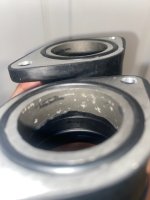
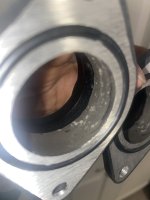
Hey yall, still working on the carbs, waiting for my drainage screws, accel pump, new screws etc to come in the mail at the moment. However, my new intake insulator/boots just arrived. I was inspecting the parts today and I noticed that there was a bit of rubber residue on the engine side of the boot. Wanted to clarify, should I sand some of this off, or is it okay to install onto the bike? 486C222F-1E50-4A90-9294-4A37FFEAB1B4.jpegDEF470CA-E744-4F3F-B805-E1AB73F42F2F.jpeg
Just those white spots. I might be freaking out over nothing but doesn’t hurt to double check.
 
Try centering the insulators on the ports by feeling the ridge between the head an insulator.
What's the purpose for that ? -Don't know of what "ridge" you're writing about...
If they're genuine Honda, there'll be an arrow (along with 447) molded into the rubber on the carb side of each insulator to put at 12-o'clock position to the carb, or if he bolts 'em to the cyl head first, the bolt holes will align 'em to the engine...

.."White Spots" : that looks to be just some mineral that's leached out of the silver metal - if it doesn't wipe off with a clean rag lightly saturated with a little isopropyl rubbing alcohol from your medicine cabinet then don't worry about it
 
Last edited:
I think he intends it as port-matching within the movement of the bolt holes, that's all.
 
Back
Top Bottom