Yes, the insulators are slightly smaller than the ports.I think he intends it as port-matching within the movement of the bolt holes, that's all.

Yes, the insulators are slightly smaller than the ports.I think he intends it as port-matching within the movement of the bolt holes, that's all.


I remember you mentioning removing the boots on the engine then taking the carbs out, I actually chose to take the advice to replace my boots so I am thinking, would it be easier to put the boots on the carb first then slide it in? Though I do worry it will dislodge the gaskets on the engine side of the boot.I described my method in post #33 . I never ever ever want to dislodge my rear boots from my air box ever again.
Checked the float heights using the homemade gauge that LDR recommend and it was correct thankfully (15.5 mm). I tested the floats to see if they float and both passed and did not have any bubbles coming out when submerged in gasoline. the way i checked if the original overflow leak was gone was filling up the float bowl (separated from the carb) with gasoline an see if it continued to leak after replacing the drain screws and it did not. Originally it did leak when I tested with the old screws when i did the exact same test. Let me know if this is an inaccurate way of checking, ill try whatever you guys recommend if i have the tools for it. Double checked again for any visible cracks in the stand/overflow pipe and did not see anything.Before you go to all the trouble of mounting those babies did you.If you replaced the fuel valves with non OEM parts they are usually a different float height setting than stock, so checking the float height is also recommended if they were replaced with aftermarket pieces.
Failure to test them first is a ticket to installing and removing them again and again! I like to use isopropyl alcohol as a test liquid, since it is less stinky and easier to handle than gasoline.
- Test them for leaks with a gas bottle or tank to confirm they are gas tight and no overflow issues?
- Test the accelerator pump circuit to confirm you getting a solid spray of liquid from the brass nozzles on both carbs into the carb throats?
I remember you mentioning removing the boots on the engine then taking the carbs out, I actually chose to take the advice to replace my boots so I am thinking, would it be easier to put the boots on the carb first then slide it in? Though I do worry it will dislodge the gaskets on the engine side of the boot.
With fuel in the carbs just open the throttle really fast, fuel should spray to some degree out the nozzles. Sometimes all you see is a wet spot because the pump wasn't opened fast enough to actually spray.For the accelerator pump, I’ll check how I can test that but how do you reccomend?
In that case, I’ll install the new insulators first.Remove the left side of the top engine mount so the cables can slide in easily.
Install the cables onto the carbs before installing the carbs to engine.
I leave the insulators in place on the engine. I used to fight and finagle the air box boots into place after carbs were in and tight. Now I've taken to doing it the Honda way of moving the air box back, no tire removal though.
So you want to be sure the fuel valves are sealing the fuel inlet since you have had the carbs apart, so even if they were working well previously, it is good to check them now. Did you replace the fuel valves, or just clean and reuse the old ones which is quite acceptable?Checked the float heights using the homemade gauge that LDR recommend and it was correct thankfully (15.5 mm). I tested the floats to see if they float and both passed and did not have any bubbles coming out when submerged in gasoline. the way i checked if the original overflow leak was gone was filling up the float bowl (separated from the carb) with gasoline an see if it continued to leak after replacing the drain screws and it did not. Originally it did leak when I tested with the old screws when i did the exact same test. Let me know if this is an inaccurate way of checking, ill try whatever you guys recommend if i have the tools for it. Double checked again for any visible cracks in the stand/overflow pipe and did not see anything.
For the accelerator pump, I’ll check how I can test that but how do you reccomend?

This might just be a brain fart at the moment but I am not exactly sure what you mean by the fuel valves. Do you mean the air cut off valves that are on the side of each carburetor? I’ve did not replace anything in the carburetor except for the float bowl gasket and drain screws from what I remember. Everything else I cleaned and reused.So you want to be sure the fuel valves are sealing the fuel inlet since you have had the carbs apart, so even if they were working well previously, it is good to check them now. Did you replace the fuel valves, or just clean and reuse the old ones which is quite acceptable?
To check both the sealing/leaking and the accelerator pump circuit you need to improvise a gas bottle or alcohol bottle set up, or your gas tank. I have seen a plastic pop bottle used in a pinch. With the carbs upright on your work area you need to feed the liquid into the fuel hose input and fill the float bowls and let it sit for 20-30 min and look for overflow out those tubes on the bottom of the bowls. If it leaks then there is either an issue with the tube you repaired which is unlikely since to tested it after the fix, so the fuel valves aren't sealing the input of fuel 100%.
Once you confirm they are not leaking and gas tight to need to use the bellcrank that the throttle cables attach to and manually twist it quite a few times to get the liquid to spray from the two tiny brass nozzles in the back of the carbs (air box side). You should have a strong stream shoot from the back to almost the front of the carb body that is equal strength on both carb sides. If you not getting this then there is an issue with something plugged or not assembled or sealed correctly on the carb with the accelerator pump mechanism.
When both of these items test good your good to go and install them.
He's referring to the float needlesThis might just be a brain fart at the moment but I am not exactly sure what you mean by the fuel valves. Do you mean the air cut off valves that are on the side of each carburetor? I’ve did not replace anything in the carburetor except for the float bowl gasket and drain screws from what I remember. Everything else I cleaned and reused.
Oh in that case, yes I kept the original ones, and the float height was 15.5mm. No resistance when I pushed the tiny rod in the back of the needle either. I just cleaned them lightly as someone previously mentioned that they looked fairly clean.He's referring to the float needles
quick question, if i fill the carbs with gasoline while its disconnected from the engine, will it not overflow through the overflow pickup pipe regardless? Or should i wait for the excess fuel to drain then see if there is a leak?To check both the sealing/leaking and the accelerator pump circuit you need to improvise a gas bottle or alcohol bottle set up, or your gas tank. I have seen a plastic pop bottle used in a pinch. With the carbs upright on your work area you need to feed the liquid into the fuel hose input and fill the float bowls and let it sit for 20-30 min and look for overflow out those tubes on the bottom of the bowls. If it leaks then there is either an issue with the tube you repaired which is unlikely since to tested it after the fix, so the fuel valves aren't sealing the input of fuel 100%.
Holding the carb in their normal position with a fuel source connected will fill the float bowls allowing you to see if there's any leak.quick question, if i fill the carbs with gasoline while its disconnected from the engine, will it not overflow through the overflow pickup pipe regardless? Or should i wait for the excess fuel to drain then see if there is a leak?
Ill try this first, if it doesn’t work, I’ll then try this—>Install the cables onto the carbs before installing the carbs to engine.
I leave the insulators in place on the engine. I used to fight and finagle the air box boots into place after carbs were in and tight. Now I've taken to doing it the Honda way of moving the air box back, no tire removal though.
The order I would suggest trying would be to attach the back boots to the air box first, those I recall were troublesome due to odd square fitting and the boots having trouble fitting on there without some large deformations to be worked out. Once those are in place I like to leave the small ones that go to cylinders last(off), where you put the carbs in place with into back boots loose so you can push them around. Get carb cables hooked up in the process, possibly before pushing into place as it makes cable access easier. Then carbs can be set into back boots and hold in place, but with clamps loose give you room to push back and to the side to slip front ones onto carb. Once both front ones on carb, bolt them to cylinders, then tighten clamps and put back on the top bracket(s) removed from frame above.

It's the result of reaching 50 total posts, the software does it automatically. The 'hand-holding' is why we're here, we enjoy helping members and doing our part to perpetuate the life of vintage Honda twins (and vintage Hondas in general).I also saw that my title is now ‘well known member’, I don’t know if this is done automatically by a bot or its because I have asked so many small questions, but hey I appreciate the title and also the hand holding along the way
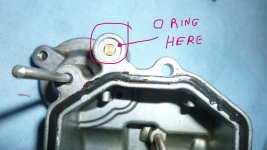
false alarm, i didnt tighten the gas line correctly and I noticed the fuel trailed from the gas inlet on the carb. Tested it for another 30 minutes and no leaks at all. Will do the next test now. Panicked a bit for a second.There is a small O ring that is also in an area where the float bowl gasket resides on that float bowl, its easy to miss or not install it. That will then leak around that edge and the accelerator pump will not work.
If you have to tighten the fuel line it means you're not using the right fuel line. Honda 5.5mm fuel line is a little pricey but well worth it, it fits perfectly and really doesn't even need a clamp which is why Honda put those little /lightweight spring clips on them from the factory.i didnt tighten the gas line correctly
Once you confirm they are not leaking and gas tight to need to use the bellcrank that the throttle cables attach to and manually twist it quite a few times to get the liquid to spray from the two tiny brass nozzles in the back of the carbs (air box side).
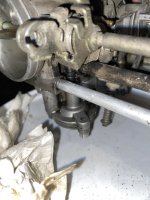 so I’m cranking the bellcrank that attaches to the throttle cable and it is spraying gas in burst quite nucely, i cant send vids he but ill send a photo of its burst. However it looks like the accel rod is leaking from somewhere, it could be that o ring flyin mentioned but its leaking from the boot of the rod. I did replace the boot with a new one but could it be that its not sitting well?
Thank you so much, I thought this wasnt the issue because it wasn’t leaking from there during the leak test, however started leaking when I did the accel pump test. I opened up the float bowel, changed the O-ring and it solved the issue. THANK YOUUUIf you missed the O ring that goes on the float bowl as pictured. It is missing from this pic.
View attachment 29434
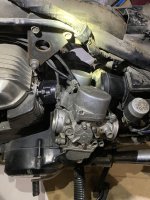
So you did this rebuild yourself and are in the home stretch. You learned some valuable carb lessons and the value of testing first before installationThank you so much, I thought this wasnt the issue because it wasn’t leaking from there during the leak test, however started leaking when I did the accel pump test. I opened up the float bowel, changed the O-ring and it solved the issue. THANK YOUUU
So I have removed the side bolt of the airbox, but I kept the rear bolt loose just because the nut on that bolt looks like a paint put back on. In order to put that rear bolt on, will I have to remove the rear tire and fender? Currently the bolt is just loose enough that i can move the air-box slightly back. The more I think about it, the more i dont mind remove that rear bolt entirely though I want to make sure i dont have to disassemble a bunch of things to put that bolt back on with the nut. The bolt i am wondering about is this one.Remove the left side of the top engine mount so the cables can slide in easily.
Install the cables onto the carbs before installing the carbs to engine.
I leave the insulators in place on the engine. I used to fight and finagle the air box boots into place after carbs were in and tight. Now I've taken to doing it the Honda way of moving the air box back, no tire removal though.
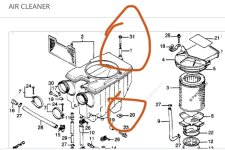
wheres a good spot to use the pry bar that wont damage the carbs? Was worried about prying it because ive been trying to be super careful with it since i almost stripped some of the jets. Also i saw those engine mounts but I am hesitant to remove them, however I think I’ll try removing all 3 bolts. I’ll check the manual and online if theres a torque spec but if anyone knows off the top of the head so i can use a reference, thatd be great.Push the carbs down some and wiggle them around to get them centered up on the insulators.
The carbs will snap into place, the insulators bottom out against the carbs. I've had to use a pry bar at times to get them fully seated.
Might help to pull that left upper engine mount plate off to give the cables more movement room.
i have not tried putting it in the airbox side first, so ill give this a shot.Then carbs can be set into back boots and hold in place, but with clamps loose give you room to push back and to the side to slip front ones onto carb. Once both front ones on carb, bolt them to cylinders, then tighten clamps and put back on the top bracket(s) removed from frame above.
 ), but I was happy to accomplish the tests and getting the cables on. Im gonna come back today stronger though and hopefully give yall the good news tonight.
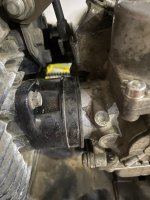
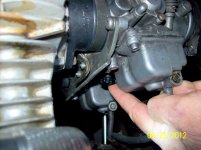
Okay ill try pushing it but im worried the entire airbox boot will come out from the airbox. Ill try, lmk if theres any jdeas u have ill send pics if my bootsIt's only 10:25 here.
The carb isn't fully seated. The insulator seats right against the carb
View attachment 29489

Okay okay will make it happen somehow, its been a PAIN to get the carbs in at the momentI understand that concern but the insulator fitting tight is much more important.
I really fully understand that statement.Okay okay will make it happen somehow, its been a PAIN to get the carbs in at the moment
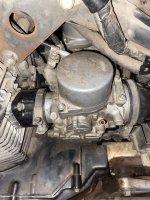
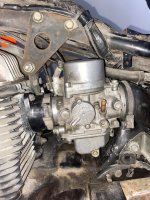

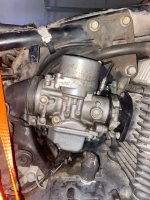
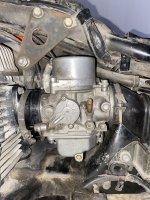 How we looking right now, looks loose on the airbox side so gonnatry pushing that in a bit
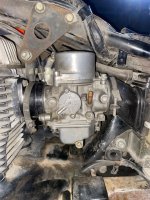
Thank you, I dont have anyone around me that have mechanical knowledge, let alone specifically for a bike, so you guys have been excellent mentors and i have been learning a lot.I knew you could do it.
That's why we do what we do. Glad VHT was able to get you through it.Thank you, I dont have anyone around me that have mechanical knowledge, let alone specifically for a bike, so you guys have been excellent mentors and i have been learning a lot.