

-
Don't overlook our Welcome Package, it contains many links to important and helpful information about functions at VHT like posting pictures and sending PMs (private messages), as well as finding the parts you need.
AD
You are using an out of date browser. It may not display this or other websites correctly.
You should upgrade or use an alternative browser.
You should upgrade or use an alternative browser.
Tidying up my new to me CB450K5
- Thread starter spideypop
- Start date


spideypop
Veteran Member
Ordered from 4into1 along with other stuff
spideypop
Veteran Member
So, I talked to Delkevic today and got some more info on their 71-74 450 exhaust system. They also sent me some pics of their test bike (see below). It looks like the oil sump plug is easier to get to than I thought. The pics also show the center stand installed.
I asked about having to re-jet the carbs and was told it's possibly needed, If stock air boxes are retained, It may not be necessary.
Their next shipment will be the middle of March with an approximate price of $378 I'm still toying with the idea.

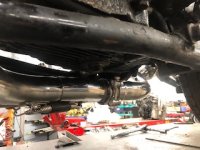
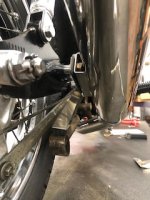
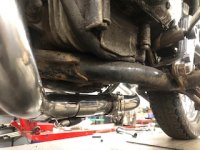
I asked about having to re-jet the carbs and was told it's possibly needed, If stock air boxes are retained, It may not be necessary.
Their next shipment will be the middle of March with an approximate price of $378 I'm still toying with the idea.

stl360+450
Veteran Member
Apologies if this was already addressed. Do you know if the exhaust interferes with the kick starter?
spideypop
Veteran Member
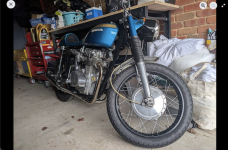
Based on these pics I found on a Facebook post, I'd say there's no interference with the kick starter.Apologies if this was already addressed. Do you know if the exhaust interferes with the kick starter?
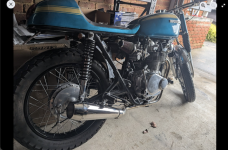

I will say that the Delkevic 2-1 setups I have for my GL and the CX are pretty damn decent for the price point. The headers will blue on you, but the quality and fit are solid.
I was also the guinea pig for adapting the CX pipes to a GL and were really cool to deal with on that. Wish they had a comparable setup for the 160’s.
I was also the guinea pig for adapting the CX pipes to a GL and were really cool to deal with on that. Wish they had a comparable setup for the 160’s.
spideypop
Veteran Member
Got my replacement float and got the carbs back on the bike yesterday. Everything runs good, gonna take it out Thursday for a ride and see how it performs with freshly rebuilt carbs.
Two questions for y'all.
1. Does anyone know the o-ring size for the float bowl drain screw? Or should I just go down to the local hardware store find one that fits?
2. I was looking at the FSM and it shows the main jet size to be 130, mine are 145. I reused the ones that were in there. Should I use the ones that came with the rebuild kit?
Thanks fellas
Two questions for y'all.
1. Does anyone know the o-ring size for the float bowl drain screw? Or should I just go down to the local hardware store find one that fits?
2. I was looking at the FSM and it shows the main jet size to be 130, mine are 145. I reused the ones that were in there. Should I use the ones that came with the rebuild kit?
Thanks fellas

RobMan
Veteran Member
If the bike was running well with the 145's I would leave them. All the wiser heads say not to use the brass that comes in the kits. I would just take the screw to the hardware store and find an o ring that fits.

Yeah, I just tried to find the size of the o-ring but they don't list it separately....If the bike was running well with the 145's I would leave them. All the wiser heads say not to use the brass that comes in the kits. I would just take the screw to the hardware store and find an o ring that fits.

spideypop
Veteran Member
ThanksYeah, I just tried to find the size of the o-ring but they don't list it separately....

I measured an old one and the ID is 3.30 mm and OD is 6.25 mm. This one was old and hard, so a new one might have different dimensions.
spideypop
Veteran Member
Thanks boddy, that gives me a starting pointI measured an old one and the ID is 3.30 mm and OD is 6.25 mm. This one was old and hard, so a new one might have different dimensions.
spideypop
Veteran Member
Got this o-ring yesterday and it appears to work to seal the float bowl drain screw. It's the closest I could find locally. It's not perfect but so far no leaks.
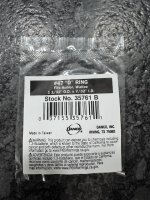
spideypop
Veteran Member
First ride of the season yesterday. In the words of Joe Walsh..."that's-a so nice!"
The bike ran real good, rev'd fast, Started right up cold, and idled steady. Pulled the plugs and they were pretty carbon'd up, that got me wondering about my setup. It seems like I'm over fueling. I remember the P.O. saying something about always carrying an extra set of plugs. That statement didn't register at first.
Current setup:
1. Reused all the original jets and brass after rebuilding Carbs.
2. Set the idle screw at 1-1/4 turns.
3. Air filter boxes look original, but with foam.
4. Running W24ES-U plugs--new
5. Coils and plug wires/caps are new and ohm out correctly.
I'm going back to my main jet being .145 vs FSM .130 stock. I've reset the idle screw to 3/4 but haven't taken another ride yet. I'm not super familiar with the magic of carburetors yet so I'm not real sure how this may or may not affect performance.
Where else should I be looking?
Thanks in advance for advice.
Edit: I did not clean the plugs after last season of riding. Cleaned them back up yesterday after first ride, so I'll see if they are still carbon'd after the next ride this afternoon.
The bike ran real good, rev'd fast, Started right up cold, and idled steady. Pulled the plugs and they were pretty carbon'd up, that got me wondering about my setup. It seems like I'm over fueling. I remember the P.O. saying something about always carrying an extra set of plugs. That statement didn't register at first.
Current setup:
1. Reused all the original jets and brass after rebuilding Carbs.
2. Set the idle screw at 1-1/4 turns.
3. Air filter boxes look original, but with foam.
4. Running W24ES-U plugs--new
5. Coils and plug wires/caps are new and ohm out correctly.
I'm going back to my main jet being .145 vs FSM .130 stock. I've reset the idle screw to 3/4 but haven't taken another ride yet. I'm not super familiar with the magic of carburetors yet so I'm not real sure how this may or may not affect performance.
Where else should I be looking?
Thanks in advance for advice.
Edit: I did not clean the plugs after last season of riding. Cleaned them back up yesterday after first ride, so I'll see if they are still carbon'd after the next ride this afternoon.
Last edited:
stl360+450
Veteran Member
Are you mixing the terminology of the idle and mixture screws? Pun intended.
Have you adjusted the carbs per FSM or Owner's Manual? Max idle, equal pressure at the exhaust?
If your plugs are showing rich why go from 130 to 145 main?
Have you adjusted the carbs per FSM or Owner's Manual? Max idle, equal pressure at the exhaust?
If your plugs are showing rich why go from 130 to 145 main?
From 130 to 145 on the main jet is a significant jump, more than a fine tuning difference (given that both sets of jets are accurately made (and not inaccurately-sized carb kit jets). But, the idle mixture screw adjustments should be done to fit each cylinder's needs and not set to a specific number of turns. The FSM setting for the mixture screws is just a baseline and you tweak each separately for the best idle for each cylinder. Here is the basic procedure:I've reset the idle screw to 3/4 but haven't taken another ride yet. I'm not super familiar with the magic of carburetors yet so I'm not real sure how this may or may not affect performance.
Mixture adjustments
Many riders and wrenchers have asked about mixture adjustments. Many have misunderstood the purpose and function of the mixture adjustments. Screws located on the engine side of the carb (between the engine and the throttle plate) are generally fuel screws. Turning them in (clockwise) makes...
 www.vintagehondatwins.com
RobMan
Veteran Member
For the what it is worth department I just went through my photos and for my 1972 K5 the main jets are 145s.
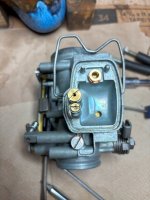
stl360+450
Veteran Member
If it's a 14H I believe 130 was the factory main, but the 723 series used larger 145/150 mains, according to Jay's ready reference.
spideypop
Veteran Member
Yes I'm "mixing" terminology, sorry about thatAre you mixing the terminology of the idle and mixture screws? Pun intended.
Have you adjusted the carbs per FSM or Owner's Manual? Max idle, equal pressure at the exhaust?
If your plugs are showing rich why go from 130 to 145 main?
. I was referring to the mixture screwsAfter looking more closely at the FSM adjustment procedure, I need to redo that part. I'll report back.
145's are what were originally in the carbs. I reused those. 130's came in the rebuild kit.
Last edited:
spideypop
Veteran Member
Sorry for the mixup, 145's are what were in the carbs. I reused those. I was looking at the wrong table when I said the FSM references main jet size of 130. That was for the 14h carb, mine are 723's...my bad.From 130 to 145 on the main jet is a significant jump, more than a fine tuning difference (given that both sets of jets are accurately made (and not inaccurately-sized carb kit jets). But, the idle mixture screw adjustments should be done to fit each cylinder's needs and not set to a specific number of turns. The FSM setting for the mixture screws is just a baseline and you tweak each separately for the best idle for each cylinder. Here is the basic procedure:
Mixture adjustments
Many riders and wrenchers have asked about mixture adjustments. Many have misunderstood the purpose and function of the mixture adjustments. Screws located on the engine side of the carb (between the engine and the throttle plate) are generally fuel screws. Turning them in (clockwise) makes...
Thanks for the mixture adjustment thread.
spideypop
Veteran Member
Yes I adjusted float height on both carbs and double/triple checked.After the cracked float, did you double check float height after replacing?
I think you can still find some Keihin jets at Sirius Consolidated if you can’t get it tuned in via the air mixture screws. It does seem like you could be running a larger main than needed.Yes I adjusted float height on both carbs and double/triple checked.
spideypop
Veteran Member
Ok...I went through the carb tuning procedure again. It took about 3 times to get everything set. took it out for a long test run yesterday and everything felt real good. I cleaned the plugs this morning and will take another run and check the condition to see if they get carbon'd up.
The only question I have is going through the procedure, to get max rpm with the pilot screw, I'm between 1/2-3/4 out from full stop. Looking at the explanation, it seems that this should make the fuel/air mix richer instead of leaner?
b. Starting with either the right or left car-
buretor, manipulate the pilot screw I and
find the point of highest rpm; the same should
be done with the opposite carburetor. Turning
the pilot screw in will give a high fuel air
mixture, turning the screw out will give a lean
mixture. The pilot screw I should b e set
a t a point 1~1%4 of a turn out out from full
close.
The only question I have is going through the procedure, to get max rpm with the pilot screw, I'm between 1/2-3/4 out from full stop. Looking at the explanation, it seems that this should make the fuel/air mix richer instead of leaner?
b. Starting with either the right or left car-
buretor, manipulate the pilot screw I and
find the point of highest rpm; the same should
be done with the opposite carburetor. Turning
the pilot screw in will give a high fuel air
mixture, turning the screw out will give a lean
mixture. The pilot screw I should b e set
a t a point 1~1%4 of a turn out out from full
close.
Correct. That’ll have it running richer.
Don’t get lost in the exact number of turns. Realize that book is speaking to brand new OEM everything, not 50 year old potentially aftermarket or non-original components.
If it’s tuned right. Send it. Just make sure to adjust it when it’s good and warm.
Don’t get lost in the exact number of turns. Realize that book is speaking to brand new OEM everything, not 50 year old potentially aftermarket or non-original components.
If it’s tuned right. Send it. Just make sure to adjust it when it’s good and warm.
The 450 FSM contradicts itself in a couple of places about the mixture screws. The mixture screws on 450 carbs are fuel screws, meaning they adjust fuel and not air. How you differentiate between fuel mixture screws and air mixture screws has to do with the location of the screw. If the mixture screw is on the engine side of the carb, it's a fuel screw, if on the air cleaner side of the carb it's an air screw. Opening the mixture screws more on the 450 carbs gives the engine more fuel, not more air. Also, the FSM spec for number of turns out from gently bottomed is only a baseline to start with, after that you adjust for the best idle and leave them there. If the adjustment makes little to no difference then it usually means the passages in the carb aren't fully clean or the mixture screw is an incorrect replacement from a kit.Ok...I went through the carb tuning procedure again. It took about 3 times to get everything set. took it out for a long test run yesterday and everything felt real good. I cleaned the plugs this morning and will take another run and check the condition to see if they get carbon'd up.
The only question I have is going through the procedure, to get max rpm with the pilot screw, I'm between 1/2-3/4 out from full stop. Looking at the explanation, it seems that this should make the fuel/air mix richer instead of leaner?
b. Starting with either the right or left car-
buretor, manipulate the pilot screw I and
find the point of highest rpm; the same should
be done with the opposite carburetor. Turning
the pilot screw in will give a high fuel air
mixture, turning the screw out will give a lean
mixture. The pilot screw I should b e set
a t a point 1~1%4 of a turn out out from full
close.
stl360+450
Veteran Member
Tom already explained this very well and I agree with all of the above that the specification in the FSM is only a starting point. I just want to point out that the standard setting for the CB450 mixture screw is 0.75 to 1¼ turn(s) for 14H and 723 series carbs, so 0.5-0.75 turn(s) would mean reducing fuel, i.e., leaner than standard setting.Correct. That’ll have it running richer.
spideypop
Veteran Member
Thanks guys. That makes sense now, that turning the screw "in" will lean out the fuel mixture. So with my next ride I'm assuming I'll see that in my plugs since both screws are sitting .5-.75 out from full (gentle) stop.
spideypop
Veteran Member
So here's what the plugs look like after about 30 miles (I cleaned them before the ride).
Left plug
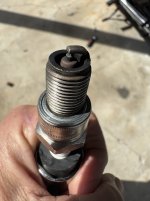
Right plug
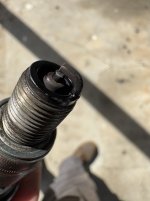
Left plug
Right plug
RobMan
Veteran Member
They do look a bit fuel fouled but at least they both look the same. Just as reminder what plugs are you using and what caps? The reason I am asking is weak spark might be the culprit. Also if the float level was set a bit high in both carbs it could cause the issue. Did you use the clear tube method or a height gauge?
spideypop
Veteran Member
I'm using W24ES-U Denso plugs. These are supposed to be non-resistor, equivalent to the B8ES Ngk's. The caps are resistor type and ohm'd out properly when I installed them. Coils, wires, caps and plugs all have less than 250 miles on them and all ohm'd out good before installing.They do look a bit fuel fouled but at least they both look the same. Just as reminder what plugs are you using and what caps? The reason I am asking is weak spark might be the culprit. Also if the float level was set a bit high in both carbs it could cause the issue. Did you use the clear tube method or a height gauge?
I used my digital caliper to set float height. I'm confident they are both set at 20mm. From the pics I find in threads here, it looks like the clear tube method, height is set with the carbs off the bike.
Later today I'll pull the plugs and see how strong the spark looks.
This is correct.I'm using W24ES-U Denso plugs. These are supposed to be non-resistor, equivalent to the B8ES Ngk's.
stl360+450
Veteran Member
From the pics I find in threads here, it looks like the clear tube method, height is set with the carbs off the bike.
If you can connect a clear tube tightly enough to the overflow pipe on the underside of the bowl, then you can loosen the drain screw to apply the clear tube method as a way of checking the fuel level. This can be done with the carbs mounted.
I would guess that most of the time carbs are removed to set the float height, but one advantage of the 450 carbs is that the float bowls can easily be removed while on the bike. This makes it possible to adjust the floats with the carbs mounted. I could imagine doing this with the clear tube method by trial and error.
I prefer to use a float gauge with the carbs off the bike, but the clear tube method shows you exactly where the fuel is.
RobMan
Veteran Member
Sounds like you have the electrical covered. One thing to check is the caps if they are like the ones I got from 4into1 where the brass screw that holds the ceramic resistor in place comes loose and backs out with vibration. I have had to tighten them a couple of times. Not sure if this is your issue but something to look at. If mine do it again I am going to use a drop loctite on the threads.I'm using W24ES-U Denso plugs. These are supposed to be non-resistor, equivalent to the B8ES Ngk's. The caps are resistor type and ohm'd out properly when I installed them. Coils, wires, caps and plugs all have less than 250 miles on them and all ohm'd out good before installing.
I used my digital caliper to set float height. I'm confident they are both set at 20mm. From the pics I find in threads here, it looks like the clear tube method, height is set with the carbs off the bike.
Later today I'll pull the plugs and see how strong the spark looks.

Those are the easy ones to convert, hopefully the loctite will let go in the future when you want to remove that resistorSounds like you have the electrical covered. One thing to check is the caps if they are like the ones I got from 4into1 where the brass screw that holds the ceramic resistor in place comes loose and backs out with vibration. I have had to tighten them a couple of times. Not sure if this is your issue but something to look at. If mine do it again I am going to use a drop loctite on the threads.
spideypop
Veteran Member
So what would happen if you take the resistor out, replace it with Romex copper wire and used it with non-resistor plugs?Those are the easy ones to convert, hopefully the loctite will let go in the future when you want to remove that resistor
I believe the downside is shorter plug life and shorter spark duration, the latter of which can lead to incomplete combustion.So what would happen if you take the resistor out, replace it with Romex copper wire and used it with non-resistor plugs?
spideypop
Veteran Member
My caps are from 4into1 also. The left cap was pretty secure, I tightened it slightly. The right one was pretty loose. We'll see if tightening it up has any affect.Sounds like you have the electrical covered. One thing to check is the caps if they are like the ones I got from 4into1 where the brass screw that holds the ceramic resistor in place comes loose and backs out with vibration. I have had to tighten them a couple of times. Not sure if this is your issue but something to look at. If mine do it again I am going to use a drop loctite on the threads.
View attachment 55914
Here's are links to the spark of the plugs. It looks pretty strong to me. Let me know if the links open.
Dropbox
Dropbox
RobMan
Veteran Member
Spark does look good to me as well. Perhaps adjust the float level just a tad lower.
Static on AM radios, not so much an issue todaySo what would happen if you take the resistor out, replace it with Romex copper wire and used it with non-resistor plugs?
spideypop
Veteran Member
Ok, I reset the floats to 21mm and took another test ride. Plugs look the same as the pics in post 179, still looks like it's running rich. What else should I be checking?
Thanks
Thanks
RobMan
Veteran Member
Clogged air filters can cause a rich condition. Checking back in your thread I noticed you said the air filter boxes are original but with foam. Was the paper removed from the original filter frames and then covered in foam or some other method? Also was the foam oiled? If too heavy an oil was used it might cause a rich condition.
Except for electronics on other vehicles around it, since there are no electronics on the bike of course.Static on AM radios, not so much an issue today
spideypop
Veteran Member
The boxes look original and the foam is not oiled. That's the way it came when I bought the bike so I suspect the PO made the change. The foam looks pretty porous so I don't suspect any obstruction there. Looking inside the spark plug holes the top of the pistons look pretty sooted up and looking inside the intake ports with the carbs off, the valves look similar.Clogged air filters can cause a rich condition. Checking back in your thread I noticed you said the air filter boxes are original but with foam. Was the paper removed from the original filter frames and then covered in foam or some other method? Also was the foam oiled? If too heavy an oil was used it might cause a rich condition.
RobMan
Veteran Member
Share a picture of the filters, I am just curious. The next time you get the carbs back on take it for a run without the filters (not on a dusty day) and then take a look at the plugs and see if that made a difference. I would hate to see you change any of the jets to compensate for something else that is causing the problem.
spideypop
Veteran Member
I was thinking about removing the filters to see if that made a difference. The number printed on the filter housing is HM CB450-AF1.Share a picture of the filters, I am just curious. The next time you get the carbs back on take it for a run without the filters (not on a dusty day) and then take a look at the plugs and see if that made a difference. I would hate to see you change any of the jets to compensate for something else that is causing the problem.
Here's some pics from the filters. Taking a closer look at the foam, it does seem fairly dense. Someone made cuts in them too, I'm assuming to give it more air flow (see pic)
I'll take another run in a bit with filter housing on and the foam out and update.
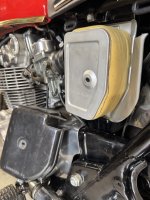
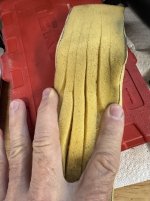
stl360+450
Veteran Member
It does look a bit dense and kind of like something you could use to wash a car. Is it true that beneath that foam is the wire mesh only and not any remnant of the old filter paper?
That’s super dense. I used 3/8” foam sheet rebuilding the filters on my 160 and on the GL intake. Pretty sure the Uni long pods are 1/4”.
I’d be really curious what no filters would have it running like - it’ll be a little “poppy” but I’d bet the plugs lighten up.
I’d be really curious what no filters would have it running like - it’ll be a little “poppy” but I’d bet the plugs lighten up.
spideypop
Veteran Member
Just the meshIt does look a bit dense and kind of like something you could use to wash a car. Is it true that beneath that foam is the wire mesh only and not any remnant of the old filter paper?
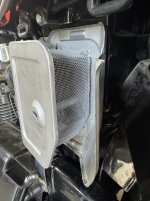
stl360+450
Veteran Member
RobMan
Veteran Member
Of course the lazy mans answer is to throw money at it. New filters from Scrambler Cycle at a reasonable cost. Worked great for me just had to shift the battery box forward a bit.

Honda 72-74 CB450 72-74 CL450 Air Filter Set Left and Right - Reproduction
Honda 72-74 CB450 72-74 CL450 Air Filter Set Left and Right - Reproduction See installation steps below.The 1971 and earlier CB450 and CL450 used a different style of plastic filter housing. These filters fit the original housing on the models shown below.Original filters for the 450's have...
scramblercycle.com