CB360G yard find — ongoing project log

I'm curious though -- was there a gap after you tightened the bolts?
Yes — here's a picture.

SaQUxr1.jpg
 
Regarding tank cleaning. Flash rust isn’t really a problem from what I’ve found. I don’t think you can avoid it anyway. At least I’ve never been able to on the tanks I have de-rusted, no matter what method I used. And I’ve never put in a liner either.
 
I made a couple of small tests recently to learn more about the light flicker on my 360 that I will summarize below.
  • I measured about 0.8 VAC across the battery terminals with the bike running and the headlight switch on (low beam).
  • I replaced the LED tail/stop bulb with an incandescent bulb. The flickering of the stop light was greatly diminished, but was still noticeable in the headlight and neutral light, both of which are incandescent.
  • I put the LED bulb back in the tail light and tried it with the bike running and the headlight switch off. The stop light did not flicker at all, but the flicker returns when the headlight is switched back on.
I suppose this points towards the stator, which I will investigate at my next opportunity.
 
Last edited:
I suppose this points towards the stator, which I will investigate at my next opportunity.
I know the 360 has a different headlight switch than the 350 and 450 (Off and On only if yours is original), so I wonder if something in the switch contacts for the alternator white and yellow connection is not working right and feeding some alternator voltage into the harness.
 
I made a couple of small tests recently to learn more about the light flicker on my 360 that I will summarize below.
  • I measured about 0.8 VAC across the battery terminals with the bike running and the headlight switch on (low beam).
  • I replaced the LED tail/stop bulb with an incandescent bulb. The flickering of the stop light was greatly diminished, but was still noticeable in the headlight and neutral light, both of which are incandescent.
  • I put the LED bulb back in the tail light and tried it with the bike running and the headlight switch off. The stop light did not flicker at all, but the flicker returns when the headlight is switched back on.
I suppose this points towards the stator, which I will investigate at my next opportunity.
Is your rectifier grounded real good? I'm not very trusting and run a separate ground wire all the way to the negative battery post
 
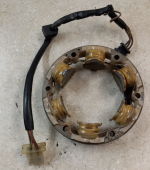
Took a few minutes to test the alternator.
  • Resistances: Y-W 1.6 Ohms, Y-P 1.1 Ohms, P-W 0.6 Ohms. No connectivity to ground.
  • AC Voltage Output: Y-W 16 Vac, Y-P 13 Vac, P-W 2 Vac, all at 1200 rpm idle.
Seems okay.

I know the 360 has a different headlight switch than the 350 and 450 (Off and On only if yours is original), so I wonder if something in the switch contacts for the alternator white and yellow connection is not working right and feeding some alternator voltage into the harness.
I have modified the handlebar switches, but retained the headlight on/off functionality. I'm going to investigate this further to see if I deviated from the schematic when setting up the new switches (a few years ago).

I have a brand new Sparck Moto R/R to swap in if need be. I'll confirm proper wiring before moving on to R/R.
 
Took a few minutes to test the alternator.
  • Resistances: Y-W 1.6 Ohms, Y-P 1.1 Ohms, P-W 0.6 Ohms. No connectivity to ground.
  • AC Voltage Output: Y-W 16 Vac, Y-P 13 Vac, P-W 2 Vac, all at 1200 rpm idle.
Seems okay.


I have modified the handlebar switches, but retained the headlight on/off functionality. I'm going to investigate this further to see if I deviated from the schematic when setting up the new switches (a few years ago).

I have a brand new Sparck Moto R/R to swap in if need be. I'll confirm proper wiring before moving on to R/R.
Since your switches have been the way they are for some time, I'm leaning toward your existing rec/reg unit. If it wasn't causing pulsating lights before and your battery is good and the connections clean and tight, it just feels like ac leakage into the harness.
 
The flickering has been going on for a little while, too, and I decided to address it now since I was already taking the tank off to replace the broken top bridge.

Looks like the wiring is fine. I directly connected the yellow wire to the white wire with the yellow end on the main loom, rather than have that connection occur only when the headlight is turned on. My new headlight switch connects black to both black with red (headlight) and brown with blue (tail light), each of which heads to the fuse box.

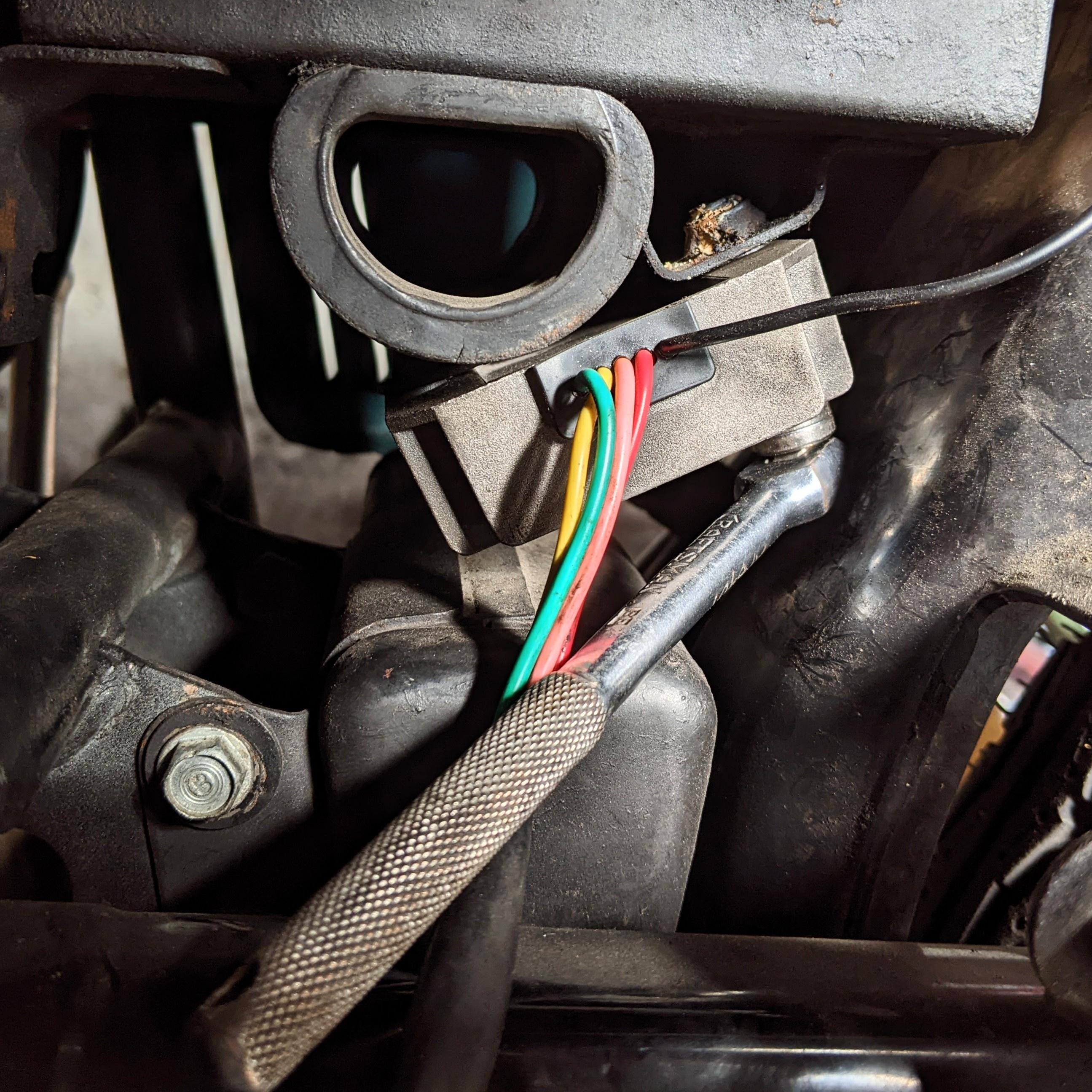
On to the R/R. I mounted the current unit in the place of the old regulator and when I looked at it today I was wondering how I ever got it bolted in there.

2e3pxI7.jpg


With some effort, I removed the R/R. Installation of the new one will wait for another day. I think I will install the new one in a different location.
 
Is your rectifier grounded real good? I'm not very trusting and run a separate ground wire all the way to the negative battery post
The green wire from the modern R/R units is a ground wire, is it not?

Are you running a secondary ground wire from one of your mounting screws so as to ground the body of the unit? Maybe I've been too trusting?
 
If the R/R has a green then the case may not be grounded and an extra wire won't help. If there is no green wire then one can assume the case is connected to the guts for ground and needs grounded.
I've just found that poor R/R grounds cause them to die pretty easy. Just adding an extra ground won't help if the R/R is going bad but will help the next new one to have a long and happy life.
 
If the R/R has a green then the case may not be grounded and an extra wire won't help.
That's why I asked — I have no idea if the case is actually connected to the internals or if it's only there for protection and heat dissipation. I'll continue with no extra ground unless advised otherwise.
 
That's why I asked — I have no idea if the case is actually connected to the internals or if it's only there for protection and heat dissipation. I'll continue with no extra ground unless advised otherwise.
Then I would still add another directly from where that R/R green plugs into the harness to the battery itself.
 
I directly connected the yellow wire to the white wire with the yellow end on the main loom, rather than have that connection occur only when the headlight is turned on.
I re-read this just now and I'm wondering, you connected the yellow and white with yellow sheath at the main harness?
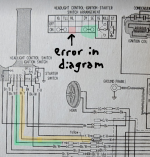
 
Yes, that's the correct pair when done at the harness ends (as opposed to the right handlebar switch ends of course). I did mine further back under the tank instead of inside the headlight case to save main harness thickness going into the case, but still the same. I just wanted to make sure the white with yellow 'tracer' on the sheath were the two involved, since if done in the headlight case or connection box it might be easy to confuse the white/yellow with the white low beam wire, others have done it.
 
Yes, that's the correct pair when done at the harness ends (as opposed to the right handlebar switch ends of course). I did mine further back under the tank instead of inside the headlight case to save main harness thickness going into the case, but still the same. I just wanted to make sure the white with yellow 'tracer' on the sheath were the two involved, since if done in the headlight case or connection box it might be easy to confuse the white/yellow with the white low beam wire, others have done it.

Good deal — I'm glad that you're always here asking these questions and generally covering everyone's back.

On this harness, this connection is also made under the tank. The original handlebar wiring has a long section folded under the tank.
 
On this harness, this connection is also made under the tank. The original handlebar wiring has a long section folded under the tank.
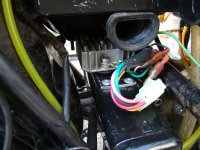
Yes, as I was typing I remembered the connection area the 360 has, kinda like the CB500T uses a plastic box in a similar location.
 
SparckMoto regulator install:

RR Mounted on Toolbox.jpg

I connected the green wire from the R/R to a mounting boly, and ran a ground wire to the same mounting bolt. The green wire from the RR is grounded then, and the case. While you can leave the case ungrounded, in testing, the voltage was the most stable with everything grounded. I helped Matt (Sonreir from SparckMoto) test the regulator when he was developing it.

So it will work without the case grounded, but the grounded case protects the electronics from outside electrical noise. So a best practice.

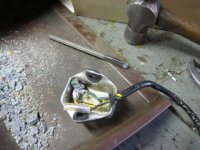
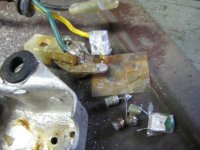
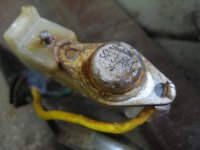
FYI: Stock Voltage Reg.:

Volt Reg Opened Up.jpgVolt Reg Pieces.jpgVolt Reg SCR.jpg
Black Wire is a reference Voltage (Switched 12V DC from ignition Switch)
Yellow wire is A/C Volts from Alternator
Green wire is ground.

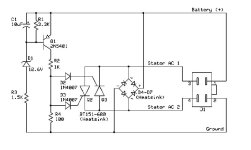
Alternator works by using a Zener Diode (Diode only passes DC electricity above a point built into the diode) The diode is set to conduct at about 15-15.5 Volts.
When the generated voltage on the black wire (DC) exceeds about 15 Volts, the Zener Diode starts passing voltage in it circuit.
The excess DC voltage is routed to the gate of an SCR (Essentially an electronic switch for A/C voltage/current)
When the SCR gatre sees the Voltage from the Zener diode, is turns on and starts grounding the AC Voltage out of the alternator, reducing the the AC voltage reduces the dc voltage.

The grounding effect is proportional, so the more past 15VDC the sense wire gets, the more the Yellow AC voltage from the alternator is grounded.


If you jump start from a running car, and the voltage on the sense wire goes high enough to trigger the SCR, the Car alternator is capable of providing far more current than the motorcycle alternator. A CB360/350 alternator is about 10-11 amps maximum on a good day. A car can supply 80-120 amps or higher. That's why you don't jump a motorcycle with a Permanent magnet alternator from a running car.


Regulator/Rectifier Schematic if it helps:

regulator2small.jpg
The Honda Regulator is a little simpler, but same method.
 
Last edited:
So it will work without the case grounded, but the grounded case protects the electronics from outside electrical noise.

Thanks for answering this question, Richard. I appreciate the extra information as well, especially the reverse engineering photos for the Honda regulator and the schematic for the Sparck Moto R/R. (The hammer and chisel make for a nice visual effect in the photo.) It feels better not having to view the modern unit as a "black box," even when the physical circuit is contained in a black box of hardened resin (or whatever that particular material is called).
 
Thanks for answering this question, Richard. I appreciate the extra information as well, especially the reverse engineering photos for the Honda regulator and the schematic for the Sparck Moto R/R. (The hammer and chisel make for a nice visual effect in the photo.) It feels better not having to view the modern unit as a "black box," even when the physical circuit is contained in a black box of hardened resin (or whatever that particular material is called).
LDR says, "You can't have too many grounds'. The 'noise' issue is new to me but also makes sense. Thanks Richard.
 
I have a little new data regarding the light flicker.
  • Swapped in the Sparck Moto R/R and the flicker persisted.
  • Ran the bike with no R/R connected and it was still flickering!
I guess despite not finding a path to ground from the stator before, perhaps there is an intermittent path. The harness may also have worn through somewhere.

I have only limited time for testing for the next few weeks, but after that I should be able to dive in more fully.
 
I spent some time in the garage today trying to unravel the mysterious alternating current situation with my CB360G. The yellow+white connection associated with the HL switch was left open for all testing today. The headlight was also disconnected for all testing today.
  • I remeasured the resistances at the stator connector using a different multimeter: Y-W 1.9 Ohms, Y-P 1.6 Ohms, P-W 1.1 Ohms. No concern there.
  • I checked for connectivity between any of Y/W/P on the stator and ground using various ranges and found no connectivity.
  • I disconnected the stator from the main harness and ran a jumper wire to connect the neutral light. Running the bike on the battery alone, the neutral light and brake light still flickered.
    • I measured about 1V AC between the battery terminals while the motor was running.
    • Disconnecting the rec/reg made no difference in this test.
    • I swapped out an identical battery that was fully charged with no difference in the result.
Things I'm thinking about:
  • Maybe the stator only shorts while the rotor is turning? Is it time to seek a replacement stator for testing?
  • Maybe the pulsing is not related to charging, but rather to ignition (coils/condenser)? How is such pulsing suppressed by design?
  • Maybe the AGM battery I'm using is too small (~5 Ah)?
  • Maybe I should have purchased @likembikem's 360... still too many bikes in my garage, but I do miss riding this one.
 
If the small battery is the culprit because of the draw from the coils at low rpm, has it been doing it the whole time that battery has been in there? For whatever reason I got the impression this is something that only started happening recently. I could understand the flickering at low rpm with a smallish battery because of the regularly-interrupted load from the points/coil draw, but is it the same at higher rpm? Or does it seem to go so fast that it diminishes at higher rpm?
 
If the small battery is the culprit because of the draw from the coils at low rpm, has it been doing it the whole time that battery has been in there?
I can't say for sure. I noticed it a while before doing anything about it, but when I needed to replace the top bridge I decided to look into it, especially after a fellow motorist complained about it in traffic.

is it the same at higher rpm? Or does it seem to go so fast that it diminishes at higher rpm?
The flickering speeds up with the engine speed. It diminishes somewhat, but is still noticeable at higher engine speed.
 
The flickering speeds up with the engine speed. It diminishes somewhat, but is still noticeable at higher engine speed.
Maybe try disconnecting your negative battery terminal, then using a set of jumper cables to run the bike off your car's battery with the jumper cable negative connected to your negative cable and not include your bike's battery (car not running, of course). Much bigger capacity battery, see how it acts then.
 
Maybe try disconnecting your negative battery terminal, then using a set of jumper cables to run the bike off your car's battery with the jumper cable negative connected to your negative cable and not include your bike's battery (car not running, of course). Much bigger capacity battery, see how it acts then.
Good idea. The logistics are tough because I can't get my car close to the garage without blocking an alley. I have a standard size AGM battery in the 450 I could use or I could connect two identical 5Ah batteries in parallel. The parallel deal is probably the easiest to pull off.
 
I tried the parallel 5Ah battery test after reconnecting the stator and rec/reg. The lights become pretty solid above around 3500 rpm with the charging system going, so the pulse is mainly noticeable at idle. Adding the second battery in parallel didn't seem to make much difference.

The bike will run off the charging system with the battery disconnected, so I tried that and found that the pulsing is much more pronounced. This suggests that the battery helps dampen the pulsing, so it may be worth trying a properly sized battery.

I will also make sure the coil bracket is properly grounded (again).
 
I'm actually surprised it will, most won't.
I also checked the DC voltage across the terminals at idle (while the battery was connected) and it was over 12V. It increased to close to 14V as I increased the engine speed a bit. I feel like it's charging okay and the issue is more ignition related.

Addendum: I may also try putting a battery eliminator in parallel with the battery tomorrow to see if it helps dampen the pulses.
 
Last edited:
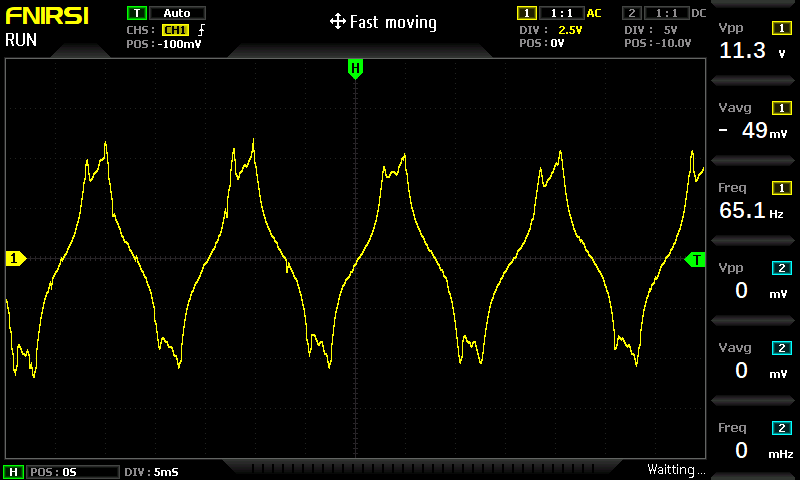
I recently purchased an inexpensive oscilloscope and tried it out today. I'm still learning how to use it and will be exploring its limitations, but for today I was happy to record a screenshot of the output between the Pink and White leads on the stator at idle. The 11V peak-to-peak indicates an amplitude around 5V, which is normal for this pair at idle. The other combinations had similar waveforms, but were saturating the scope's range. I think I may need to use another probe to avoid the saturation, but the instruction booklet is a bit terse so I'll have to play around with it more to learn how it all works. The displayed frequency of 65 Hz would correspond to 3900 cycles per minute, which suggests to me that there are three separate phases produced by the stator and the engine speed was 1300 RPM.

2FybzqV.png
 
The displayed frequency of 65 Hz would correspond to 3900 cycles per minute, which suggests to me that there are three separate phases produced by the stator and the engine speed was 1300 RPM.

Are there are three pairs of coils on your stator ?
 
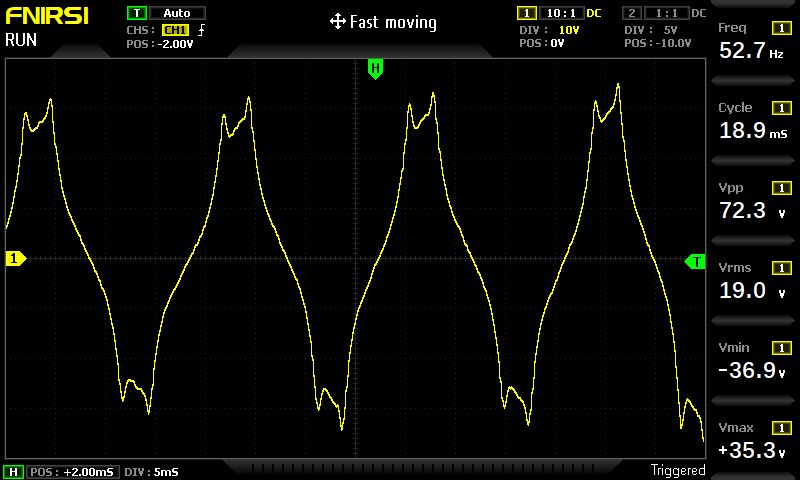
I spent some more time with the scope and figured out the 10x probe that will allow for voltage differences of 400 V — the standard 1x probe only allows for a 40 V differential. The first screenshot shows the output of white+yellow at idle. If the frequency can be trusted this would seem to be 1054 rpm (running off battery) with about 20 V rms output.

PkXiXXu.png


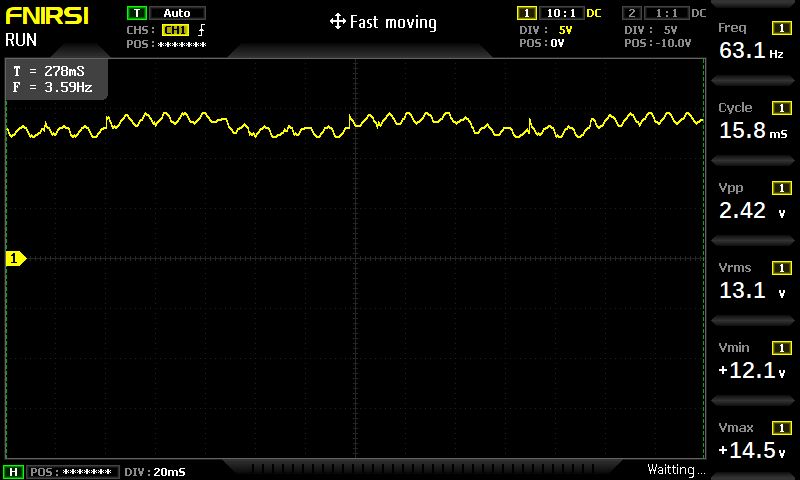
My other goal was to capture the fluctuation at the battery. The next graph shows the voltage across the battery terminals at idle. This is a small 5 Ah AGM sealed lead acid battery. The voltage fluctuates between 12.1 V and 14.5 V and the oscillation appears to be a combination of two frequencies. The horizontal grid length is 20 ms and I count about 18 cycles of the higher frequency across seven boxes on the right, leading to a cycle length of 0.0514 ms, i.e., 19.4 Hz or 1166 rpm. This seems to be due to the ignition.

Kn1g5eu.png


My current plan is to order a larger battery to see how it affects the voltage oscillation at the battery. I will also plan to remove the coil bracket and make sure the contact with the frame is good. I should try this same test with my CB450k7 to see how the battery voltage looks on it.
 
How much magnetism is in rotor?
If stator is checking good (and it seems to be with your readings) either rotor is weak or idle is too low.
5A/Hr is a bit small but should work fine (I use 7 A/Hr on mine, with decent reg/rect they charge 1 amp at idle)
I think Matt at Sparc Moto made a comment few years ago that you need 4 amps for ignition and neutral light on a 360.
Your batteries are good and hold charge well?
One thing I did forget to mention, I use 5 or 6 wire regulator/rectifier off late 80's or mid 90's bikes and wire to stator as if it's a 3 phase system, the lighting coil 'booster' can be connected directly to the White or Pink and use a Harley Davidson (or any other ) two wire R/R.
 
Last edited:
One thing I did forget to mention, I use 5 or 6 wire regulator/rectifier off late 80's or mid 90's bikes and wire to stator as if it's a 3 phase system, the lighting coil 'booster' can be connected directly to the White or Pink and use a Harley Davidson (or any other ) two wire R/R.

Is it possible for you to draw a electrical diagram with wire colors ?
 
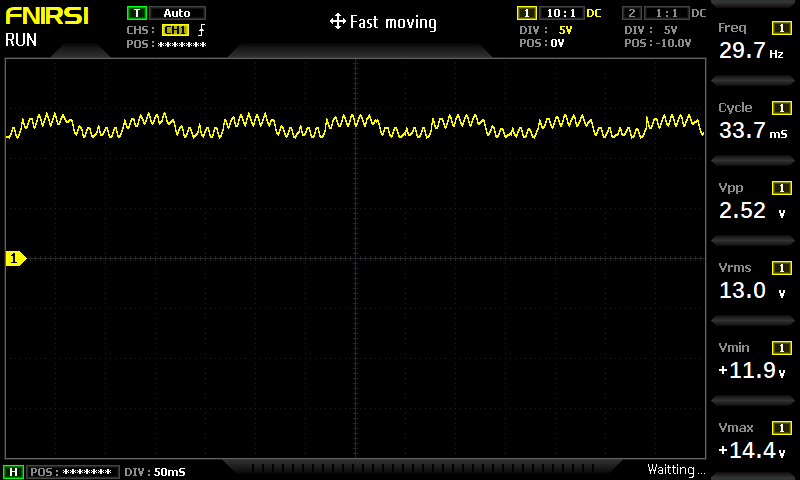
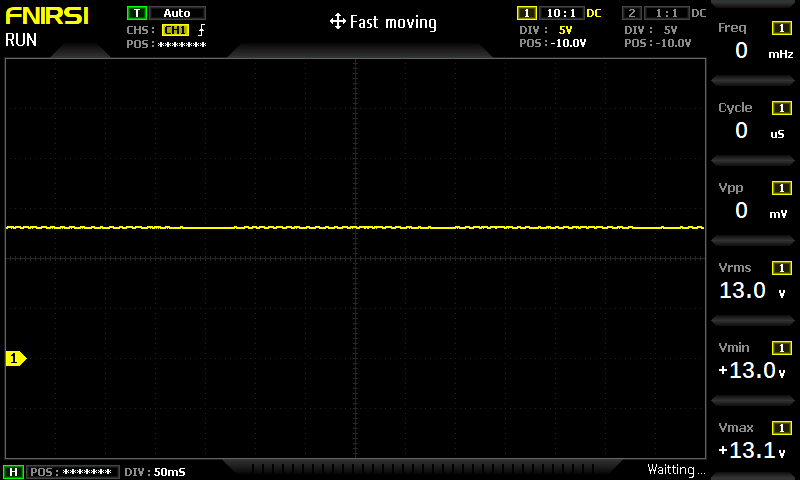
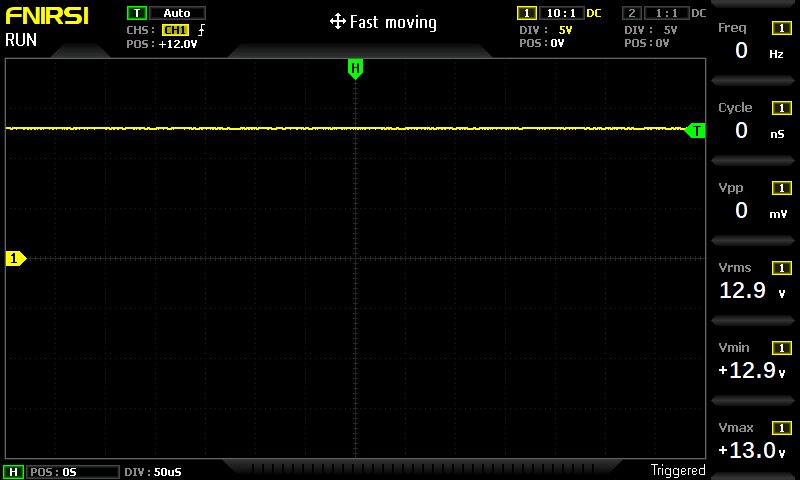
This morning I put the scope on the battery terminals of my CB450k7 while it was idling for comparison. The CB450 is using an AGM battery with approximately 12 Ah capacity. The CB360G graph is on the left, CB450k7 on the right. I shifted the graph down on the screen when measuring with the 450, but otherwise there should be no difference in vertical/horizontal scaling. The 450 shows essentially no fluctuation — the neutral light and tail/stop lights are solid even at idle.

v1bkgrU.png
rXGUiFq.png


The plan for the afternoon is to inspect and improve the ground between the coil bracket and the frame on the 360 and see if there is any change. I ordered a larger battery that I will install as soon as I have it.
 
Why not take the battery out of the CB450 K7, connect it to CB360G and see if it will stabilize ? If so, it's the battery capacity, if not, it's something related to the CB360G.
 
Why not take the battery out of the CB450 K7, connect it to CB360G and see if it will stabilize ? If so, it's the battery capacity, if not, it's something related to the CB360G.
I will do that before doing anything with the coil bracket. My only hesitation is due to the fear that alternating current could damage the battery from the 450.
 
The plot thickens... the larger battery was able to suppress the oscillations across the battery terminals at idle, yet the stop light and neutral light still flicker/pulse. The video linked below was taken at the same time as the voltage readings on the scope.

o0Dc7MB.png


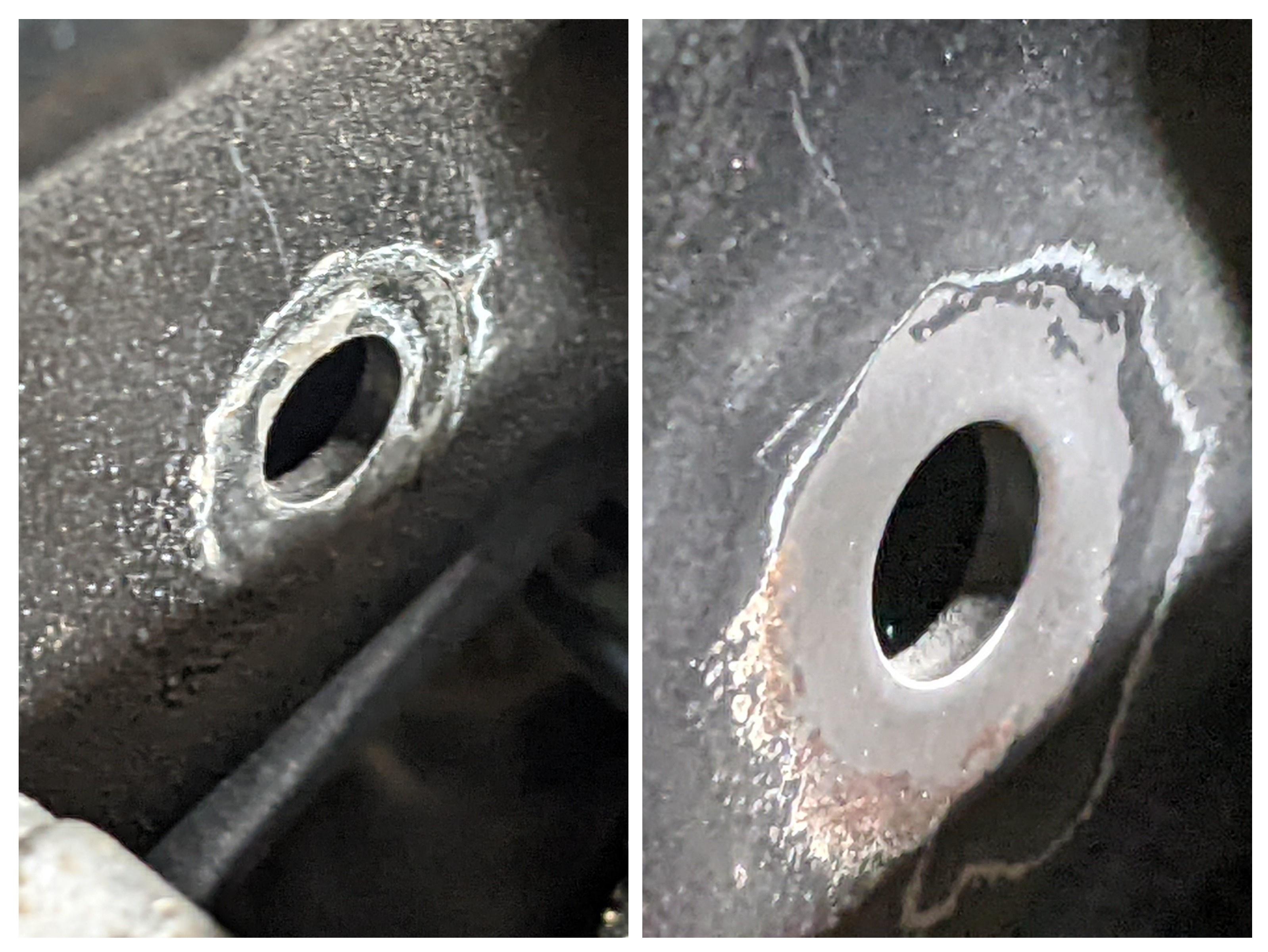
I checked the ignition connections and cleaned off part of the frame at each of the four bracket mounts. The picture below is a before-and-after comparison for one of them.

AGMiexn.jpg


I measured the capacitance of each condenser and obtained about 230 nano Farads for each. I put everything back together and the light flicker is still present. I did not bother to put a scope on the battery this time.

I'm starting to consider the idea of replacing the wiring harness...
 
Last edited:
I'm starting to consider the idea of replacing the wiring harness...
This is perplexing. The wiring harness on my 450 was not the cleanest or the least molested when I got it, and then it spent the last 6+ years being doubled over and back, spliced here and there and taped up to fit under the tank, then recently all undone and revised back to somewhat original and I've never seen anything odd about the electrics on it. It's as if your alternator is still influencing the current flow whether it's involved or not.
 
There's people that pay good money to have the pulsing brake light. :ROFLMAO: https://www.customdynamics.com/moto...iring-accessories/brake-light-flasher-modules
Now back to the subject.
Unless there's a physical problem with the wires of the harness replacing it won't do anything for this. It'll be a wire by wire resistance and current testing to verify which and if there's a problem. I would begin with the brake circuit starting at the ignition switch, thru both brake switches and thru the taillight. From there I would attack the charging system wiring.
 
Thanks to both for the input.

This is perplexing.
I hope it ends up being something simple. I have modified the wiring in various small ways over the years, so I think I'll try to establish minimal connectivity for ignition + neutral light and see what happens.

Unless there's a physical problem with the wires of the harness replacing it won't do anything for this.
Fair. It can be difficult to find some defects, e.g., a bare spot rubbing on the frame, but I agree that it will be better to isolate the problem rather than blindly replace the harness. Thanks for keeping me on task.

I'll have another go at it tomorrow. I have a few ideas to try, but I don't want to jinx them by writing them down.
 
Your taillight and neutral light are bulbs I presume ? or LED's ?

If bulbs, you have to think in short circuit's. You have a scope, so when you put a low ohm resistor between the battery + and connecting wire, you can measure the current (voltage over the resistor). What is the current draw of your system anyway ?
 
Your taillight and neutral light are bulbs I presume ? or LED's ?

If bulbs, you have to think in short circuit's. You have a scope, so when you put a low ohm resistor between the battery + and connecting wire, you can measure the current (voltage over the resistor). What is the current draw of your system anyway ?
Only the tail/stop light is LED and I tried replacing it with an incandescent bulb without any significant change.

Thanks for the current draw suggestion. I should be able to assess this.
 
Back
Top Bottom