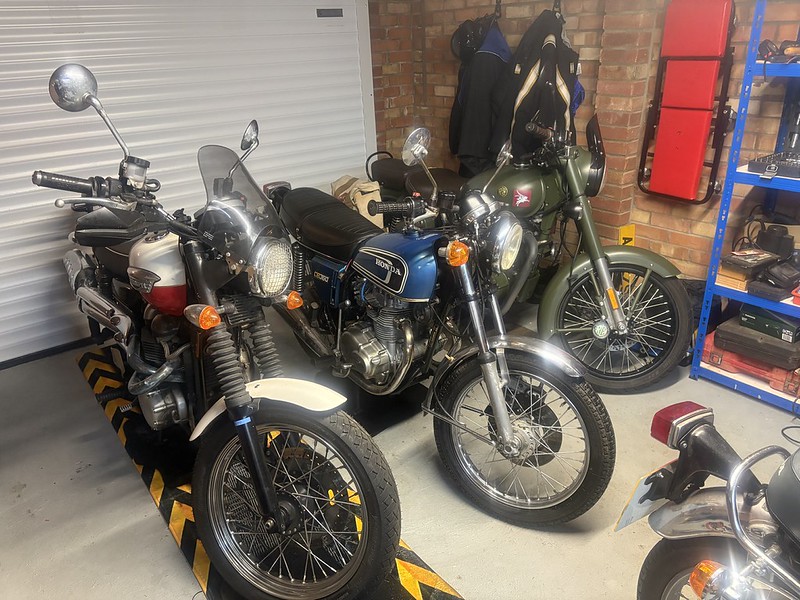
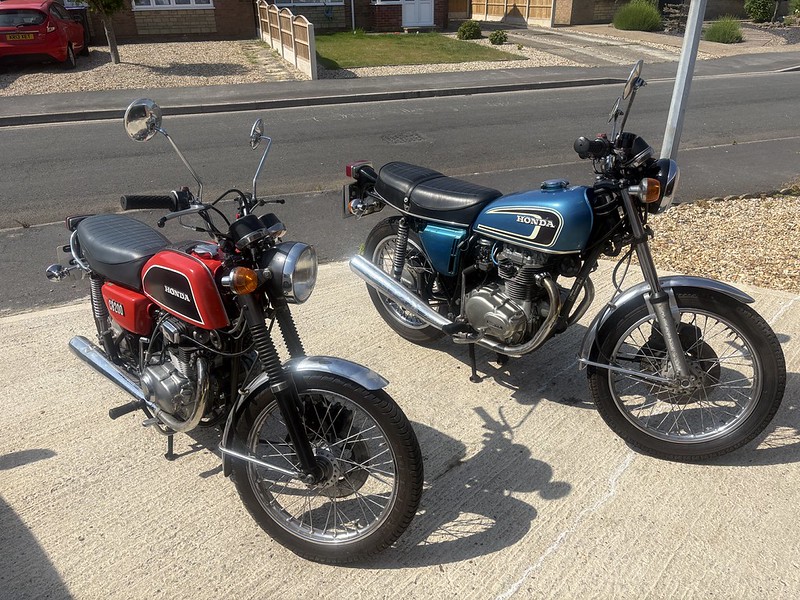
1975 CB360

Othen, Reading through this interesting project I don’t see mention made of re-staking the three starter clutch countersunk screws? Even if using thread locker ( some are temperature sensitive and soften as temp rises above a certain point ) the temp in that area will go up as the bike is ridden for any length of time.
When I restored my 1973 CB350 K4 I staked and used a high temp thread locker.
 
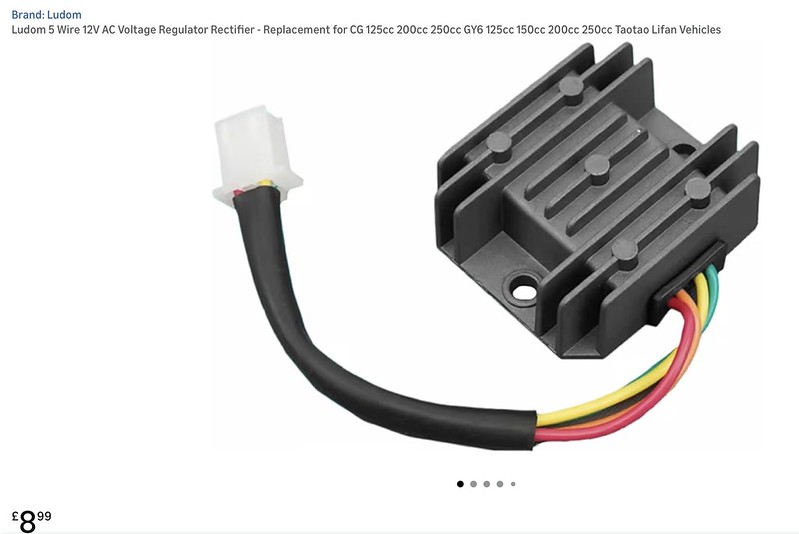
You'll want the 5 wire.
Rec/Reg will have:
Yellow - Connect to Pink from Alternator
Yellow - Connect to the Yellow and White spliced together from the Alternator
Green - Connect to Negative terminal or solid ground
Red - Connect to Red/White
Black to anywhere in the black 12V+ circuit (likely have to add a splice here).
Thank you for that - I rather suspected that might be the case.

I could look around for a 5 wire solution of about the right size (both electrically and physically) here in the UK, then splice on the Honda 4 pin connector, or import the Sparckmoto item the USA (only about £50 with the postage, I understand shipping takes about 3 weeks). The advantage of the Sparckmoto item is that it already has the right connection for 4 of the wires and bolts straight on.

The 12v+ (black) wire I could take from the existing Honda voltage regulator (the cigar box that sits under the air filters), which I’d delete anyway - that might need a little fly lead with a bullet connector each end, but nothing more.

The item I already have spare is a cheapo eBay one - perfectly good I’m sure - is a 4 wire item that would be a direct replacement for the Honda component, which would I think still need the Honda voltage regular to be fitted (which is the part I think may be getting a bit tired).

Thank you so much for your input, it is really appreciated.

Alan :)

Addendum: it looks like this item (available here in the UK, tomorrow from Amazon and costs under a tenner) would do the job perfectly well. I’d just have to acquire half the 4 post connector that Honda has used for the original (a pretty standard item I suspect) to splice on.:

[url=https://flic.kr/p/2sd9RYx]IMG_0644 by Alan Othen, on Flickr[/URL]

Worth a go? I’ve just found a wiring diagram for the Lifan GY6, which confirms the wiring scheme you gave:

red - 12v+ battery (red)
black - 12v+ switched (black)
green - earth return (green)
yellow - alternator AC (pink)
yellow - alternator AC (yellow)


This is the Sparckmoto item, different wire colours and connector, but would seem to do the same thing:

Sparckmoto R-R
 
Last edited:
I've used both four and five wire units. With the five wire unit, when the voltage regulator is removed, you can use the redundant black wire to that to connect the voltage sense wire from the new reg rec. Also important to ground the redundant green wire from the voltage regulator, just blank off the yellow wire.

EDIT With the four wire type, the old voltage regulator is still redundant, and I remove it. I suppose that it could remain in place, cut the voltage in case the new cheapo unit ever failed to keep the voltage down to 14.4v.

I don't pretend to understand what the fifth black wire does, 'voltage' sense means nothing to me. In practice, I'm getting similar charging results from either 4 or 5 wire types. The cheapo units I've been using have been reliable so far, nearly 10 years on a four wire one on the CL175. I have a spare in stock just in case, at these prices it's a no brainer.

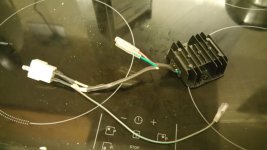
Here's a photo of the wiring arrangement I use. As Expete describes, I combine the Yellow and White alternator wires at a new socket ( from Kojaycat ), does away with all the wiring to the lighting switch. I also connect the red and white wires directly to the battery, using new wire through out, Doesn't require any mods to the existing loom.

Note the extra lead for the neutral switch. In other ones I've done, I fitted an male alternator plug on that, so that it just plugs straight into the existing loom so neutral light still works as normal.

1778829100497.jpeg
 
Last edited:
I've used both four and five wire units. With the five wire unit, when the voltage regulator is removed, you can use the redundant black wire to that to connect the voltage sense wire from the new reg rec. Also important to ground the redundant green wire from the voltage regulator, just blank off the yellow wire.

EDIT With the four wire type, the old voltage regulator is still redundant, and I remove it. I suppose that it could remain in place, cut the voltage in case the new cheapo unit ever failed to keep the voltage down to 14.4v.

I don't pretend to understand what the fifth black wire does, 'voltage' sense means nothing to me. In practice, I'm getting similar charging results from either 4 or 5 wire types. The cheapo units I've been using have been reliable so far, nearly 10 years on a four wire one on the CL175. I have a spare in stock just in case, at these prices it's a no brainer.

Here's a photo of the wiring arrangement I use. As Expete describes, I combine the Yellow and White alternator wires at a new socket ( from Kojaycat ), does away with all the wiring to the lighting switch. I also connect the red and white wires directly to the battery, using new wire through out, Doesn't require any mods to the existing loom.

Note the extra lead for the neutral switch. In other ones I've done, I fitted an male alternator plug on that, so that it just plugs straight into the existing loom so neutral light still works as normal.

View attachment 57649

Excellent, many thanks :)
 
Our 50-odd year old classic motorcycles have the ability to take us from elation to desperation in a heartbeat.

First I took a look at the carburettor that had been overflowing yesterday. I decided that dropping the float bowl down without removing the carburettors would be unlikely to work - so I just blew through that fuel line. Whatever was causing the valve not to seat must have moved because the overflowing stopped; the motor was running perfectly so I took the motorcycle for a test run around laps of out residential estate. It was perfect - no leaky carburettor, sweet engine and gearbox…

In a state of some elation I decided to take the bike out on the highway for the first time - as far as the gas station - to fill up and check everything over. What could possibly go wrong? Everything was fine, then just as I pulled into the gas station I had no clutch, Grrrrrrrrrrrr! The over-rotating issue I thought I’d fixed by careful adjustment reappeared. Fortunately it was only about a half mile push back home - we have all been there.

It took just a few minutes to pull off the sprocket cover and take out the mechanism:

IMG_0645 by Alan Othen, on Flickr

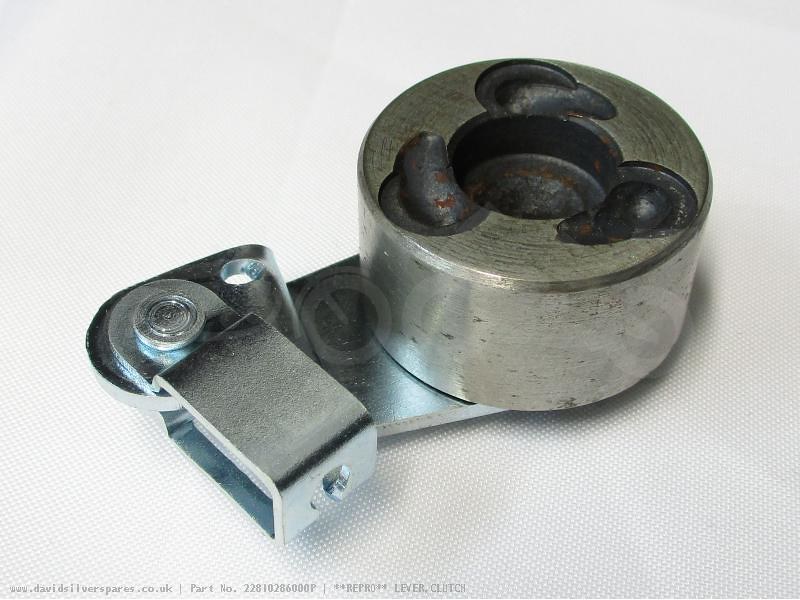
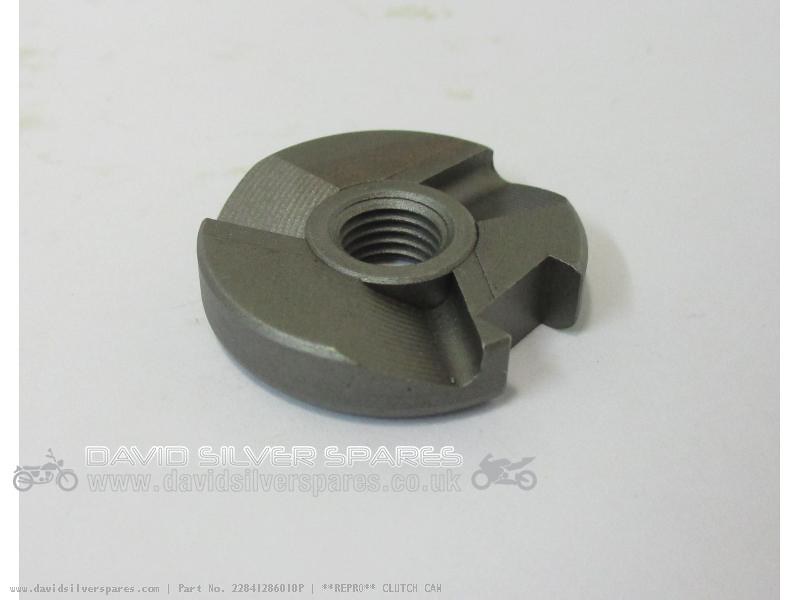
I can’t particularly see anything wrought with either the actuating arm or the adjuster - both are a bit worn (but the bike is 51 years old). This is a new one (DSS picture:

IMG_0640 by Alan Othen, on Flickr

… and:

IMG_0639 by Alan Othen, on Flickr

Perhaps the actuating arm looks like the most likely culprit? I can’t keep guessing though, so I’ve re-loaded the parts cannon from DSS and ordered both, plus the #10 ball bearing that was ment the other day.

… so close, but so far :)
 
It's likely still just adjustment. I've always wondered why the 350 mechanism needed to be so different from the 175 and 450 version, which never over-rotate. Too bad the designs are enough different that they can't be interchanged without some engineering.
 
Likely the tiny bit of expansion from a longer heat cycle in the cable - since it was already stretched past the adjustable range (as evidenced by the much larger bearing still fitting) the final mm or two was just enough.
 
I would go for replacement if you can find better or new replacement parts. Both of your components show heavy wear. The DSS pictures show sharper edges and I worry that the rounded edges on your parts allow the actuator to over rotate more easily.
 
I would go for replacement if you can find better or new replacement parts. Both of your components show heavy wear. The DSS pictures show sharper edges and I worry that the rounded edges on your parts allow the actuator to over rotate more easily.
But the over-rotation is primarily caused by excess cable adjustment, instead of the screw adjuster that directly moves the assembly closer to the rod first.
 
Thank you chaps - that is all good discussion. It is possible that I might get away with finessing the adjustment, but this morning’s push home (fortunately not to far) convinced me that replacement of the whole actuator train was justified. The other parts were only about £60 and hopefully will avoid a longer push home :cool:

I‘ve found with all my older cars and motorcycles that it took a bit of time, effort and cash to get them to that plateau of reliability where the MTBF becomes acceptable. This little Honda has thrown up a few issues that have caused me a bit of head scratching, but none was very expensive to fix, and the advice from this forum has been first class.

Many thanks,

Alan :)
 
I think that's a good move. I agree with Tom that it's likely still adjustable, but it might be more finicky due to the wear.

The clutch actuator sees a lot of use over 20,000 miles and if you can squeeze that much more out of the new parts, it'll be well worth the 60 pounds.
 
It's like the degrees symbol, many just use the asterisk but it can be done with the keyboard too - 80° F (like it is here most spring and summer mornings, LOL)
80°F - that is 28°C, it almost never gets that hot here - we had a couple of days when it got to 30°C last year and the country almost stopped. People were calling on the government to legislate that air conditioning should be fitted to all buildings. That was all forgotten a few weeks later when the British summer returned to normal.

:cool:

Addendum: I have no idea to make the degrees symbol on my iPad - I just cut and pasted it from some place on the internet :cool: .
 
80°F - that is 28°C, it almost never gets that hot here - we had a couple of days when it got to 30°C last year and the country almost stopped. People were calling on the government to legislate that air conditioning should be fitted to all buildings. That was all forgotten a few weeks later when the British summer returned to normal.
Hah! We wake up to that and more all summer long here. And fortunately my detached garage has a/c for those times when I can actually get out there for more than a few minutes.
Addendum: I have no idea to make the degrees symbol on my iPad - I just cut and pasted it from some place on the internet :cool: .
Whole different story on a device with no mouse or true keyboard.... plus, some of the commands are different in the Mac OS
 
Hah! We wake up to that and more all summer long here. And fortunately my detached garage has a/c for those times when I can actually get out there for more than a few minutes.
… if one had an air conditioned garage here it would probably make the papers!

:)
 
… if one had an air conditioned garage here it would probably make the papers!

:)
Ugh - and now I'm reminded of the check I get to write for a new mini split for mine this summer. Last summer was unbearable - often reaching 35°C inside the shop. (double size dark brown rollup door facing southwest, no amount of insulation could stop that Texas heat).
 
Just watching the new series 'Dutton Ranch', where Rip and Beth move from Montana (Yellowstone) to Texas. Beth wakes up in the middle of the night ( Kelly Riley :love: ) all sweaty, complains to Rip who has had to go sit outside, his reply 'This is Texas'.
 
The clutch actuator parts arrived with the postie this morning, and were fitted in a jiffy (I’ve had that apart so many times I could do it in my sleep). I’d also taken the precaution of giving the cable some lubrication overnight. That should solve the issue, the clutch feels fine (but it did before, except when it over-rotated).

I’m pleased to say the CB360 carried me all the way to the gas station and back this time. It is a fun little bike, but a few issues to be addressed emerged:

1. One of my neighbours (a retired biker) told me the left hand exhaust was smoking as I passed. That is one for investigation, the compression tested healthy when I bought the motorcycle so it may just clear itself, it may be a valve stem seal or it may just be running rich. One to have a look at another day.

2. Sometimes the motor starts instantly, as it should, other times it is reluctant. I seem to have plenty of sparks, so this is probably a fuelling issue. I’d already ordered a couple of carburettor rebuild kits from a supplier in the Orient, so I’ll wait for them to arrive and see if they make the problem go away.

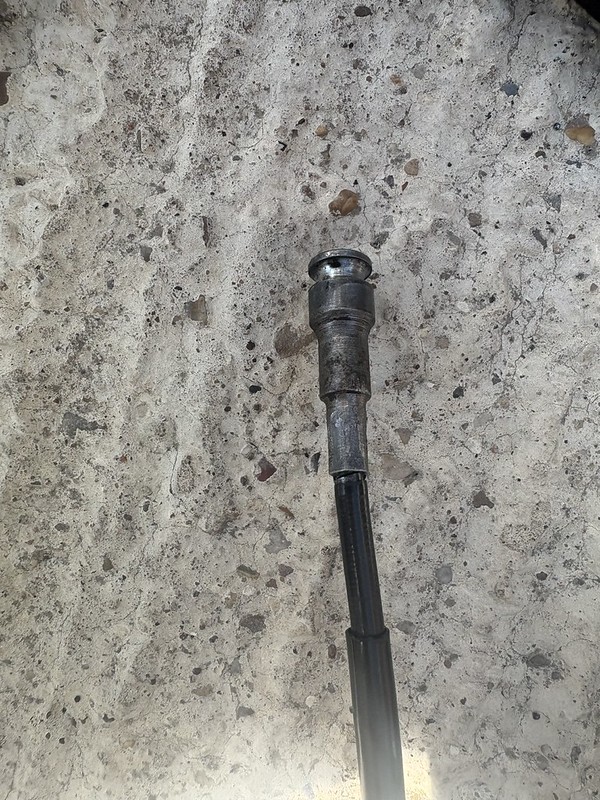
3. The tachometer suddenly stopped working. When I checked the cable it has sheared fairly close to the cylinder head end. I suppose these things just happen with a 51 year old machine that has been standing for the last 15 years. I’ll order a new one later.

So, inevitably a few issues to work on, but the machine is officially back on the road after a 15 year break :cool:
 
2. Sometimes the motor starts instantly, as it should, other times it is reluctant. I seem to have plenty of sparks, so this is probably a fuelling issue. I’d already ordered a couple of carburettor rebuild kits from a supplier in the Orient, so I’ll wait for them to arrive and see if they make the problem go away.
Just in case you aren't familiar, Hondas of that era prefer the throttle to be left at or barely above idle, choke on, for cold starts. Once the engine fires then you can raise the throttle and reduce the choke right away as needed, but opening the throttle during cranking is often counter-productive.
 
Othen, Reading through this interesting project I don’t see mention made of re-staking the three starter clutch countersunk screws?
Did you see this earlier question from @GaryJames ?

One of my neighbours (a retired biker) told me the left hand exhaust was smoking as I passed.
Did he mention which way you were headed when he saw that? If it was happening right after starting the motor it could have been moisture burning off or maybe excess fuel if the motor was started with choke.

Sometimes the motor starts instantly, as it should, other times it is reluctant.
Are you using the choke? I find it helps most of the time and I'll crack the throttle slightly as needed. My motors seem to like more "priming" the longer they've been sitting. Mine are kick only.

The tachometer suddenly stopped working. When I checked the cable it has sheared fairly close to the cylinder head end.
I guess it couldn't keep up with what you were doing to that motor!

Sometimes I think I've replaced just about every wear part on one of my bikes and then something will fail and I'll realize that it was something I hadn't yet replaced. It's a process.
 
Othen, Reading through this interesting project I don’t see mention made of re-staking the three starter clutch countersunk screws? Even if using thread locker ( some are temperature sensitive and soften as temp rises above a certain point ) the temp in that area will go up as the bike is ridden for any length of time.
When I restored my 1973 CB350 K4 I staked and used a high temp thread locker.
Thank you for that.
No, I didn’t re-stake the bolts - I thought about it, but balanced it against disturbing the thread locker I’d already used by then. Do you think that was a mistake?
:)
 
Did you see this earlier question from @GaryJames ?


Did he mention which way you were headed when he saw that? If it was happening right after starting the motor it could have been moisture burning off or maybe excess fuel if the motor was started with choke.


Are you using the choke? I find it helps most of the time and I'll crack the throttle slightly as needed. My motors seem to like more "priming" the longer they've been sitting. Mine are kick only.


I guess it couldn't keep up with what you were doing to that motor!

Sometimes I think I've replaced just about every wear part on one of my bikes and then something will fail and I'll realize that it was something I hadn't yet replaced. It's a process.
Thank you so much for taking such an interest - that is really helpful. In order:

1. I had missed GaryJames’ post - I’ve just replied. Let me know what you think.

2. On the way out to the gas station - I’m mindful that this engine hadn’t run for 16 years, so I don’t want to do anything rash, It may just be burning off excess fuel.

3. I only use the choke for cold starts - about 1/2 as it is quite warm (for England) about 15C (59F).

4. Having sat still for 15 years it isn’t entirely surprising that 51 year old tachometer cable gave up the ghost this morning! I’ve given it quite a shock.

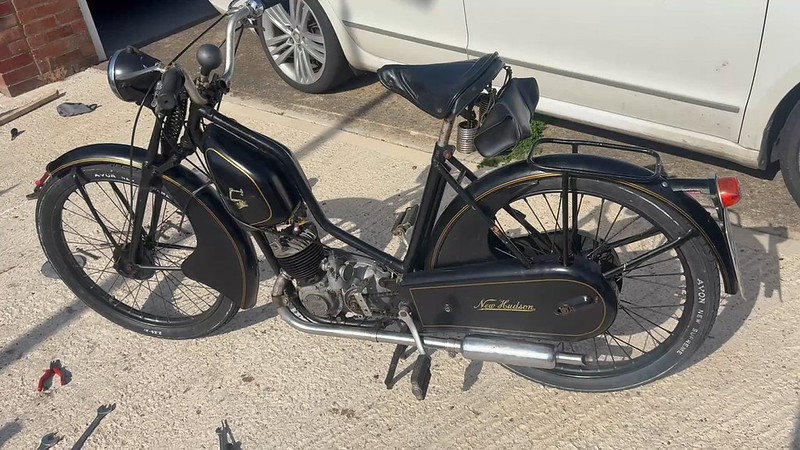
5. I take your point. I’ve found with all my older vehicles (1963 Volvo Amazon, 1972 Volvo 1800ES and 1951 New Hudson Autocycle) they each took several months, some head scratching, some money and plenty of my time before reaching an acceptable mean time between failure. I think this little Honda will be the same :cool:
 
Last edited:
Well chaps - I think I’ve solved the problem of the smoking left cylinder and the intermittent poor starting all in one go: it would seem to have been just one duff spark plug!

I seemed to be going round in circles: sometimes the motor would run pretty well (if a bit lumpy), at other times it wouldn‘t. After checking lots of things (compression (still 165psi both sides), both ignition circuits (including changing a couple of dodgy looking bullet connectors))… almost everything I could think of, I noticed the left cylinder was running considerably cooler than the right - in desperation I swapped the plugs left and right - and the issue swapped sides.

Ho hum; I found a (new looking) plug in the spares box that came with the bike - swapped out the duff one and everything is sweetness and light. Instant starting, both exhausts running at the same temperature and the rough running has gone.

Later I had a better look at the duff plug: I could see it was sparking, but all over the place, only sometimes at the electrode, otherwise inside and around the edge. I imagine the insulator must be cracked inside, and maybe that crack was getting worse as it got hotter? It looks like the duff plug was only firing at the electrodes sometimes, so on some strokes fuel/air was being pumped out of the exhaust and looking like smoke.

Our 50 year old motorcycles are exasperating sometimes - if changing a single plug has sorted the intermittent starting and running issues I’ve been struggling with for the past 2 weeks then I’ll be both delighted and frustrated!

Fingers crossed :cool:
 
Last edited:
Well chaps - I think I’ve solved the problem of the smoking left cylinder and the intermittent poor starting all in one go: it would seem to have been just one duff spark plug!

I seemed to be going round in circles: sometimes the motor would run pretty well (if a bit lumpy), at other times it wouldn‘t. After checking lots of things (compression (still 165psi both sides), both ignition circuits (including changing a couple of dodgy looking bullet connectors))… almost everything I could think of, I noticed the left cylinder was running considerably cooler than the right - in desperation I swapped the plugs left and right - and the issue swapped sides.

Ho hum; I found a (new looking) plug in the spares box that came with the bike - swapped out the duff one and everything is sweetness and light. Instant starting, both exhausts running at the same temperature and the rough running has gone.

Later I had a better look at the duff plug: I could see it was sparking, but all over the place, only sometimes at the electrode, otherwise inside and around the edge. I imagine the insulator must be cracked inside, and maybe that crack was getting worse as it got hotter? It looks like the duff plug was only firing at the electrodes sometimes, so on some strokes fuel/air was being pumped out of the exhaust and looking like smoke.

Our 50 year old motorcycles are exasperating sometimes - if changing a single plug has sorted the intermittent starting and running issues I’ve been struggling with for the past 2 weeks then I’ll be both delighted and frustrated!

Fingers crossed :cool:
Good find on the plug, I have had several plug issues over the years and now when an engine running issue arrises it is the first item I check. A simple check with a multimeter set to hi ohms should show infinity on a good clean plug. ( tested between the top cap and the plug body ) Anything in the low M or K ohm ranges is bad. However I have found that using a home or commercial plug cleaner, the type that sprays fine abrasive dust, can rescue a plug. Carbon build up down in the guts between the centre electrode and the body is what causes the issue in my opinion.
my thoughts on re-staking the three clutch counter sunk screws. I think having a mechanical lock is essential as there are a lot of tangential and centrifugal forces going on when using the electric starter. Counter sunk screws do have more friction area to grip when tight but the vibration and forces might easily loosen them off. Since you haven’t re-staked but have used a thread locker you may be okay but each time you use the starter keep an ear out for a noise like “nuts in a coke can” beginning to happen ( as I think Ancient Dad says……)
 
Good points about the re-staking chaps; perhaps I made the wrong call there?

Because I don’t really know anything about this motorcycle, I’m planning to run it for 3 months (probably only 500 miles) then change the oil again, check the oil trap and replace the gaskets that hadn’t arrived last time. With the engine covers off it would only take 15 minutes to pull the rotor/starter clutch out for an inspection at the same time. Have a look and see if the 3 screws have backed off at all and probably re-stake them at the same time.

Alan :)
 
Last edited:
Good points about the re-staking chaos; perhaps I made the wrong call there?

Because I don’t really know anything about this motorcycle, I’m planning to run it for 3 months (probably only 500 miles) then change the oil again, check the oil trap and replace the gaskets that hadn’t arrived last time. With the engine covers off it would only take 15 minutes to pull the rotor/starter clutch out for an inspection at the same time. Have a look and see if the 3 screws have backed off at all and probably re-stake them at the same time.

Alan :)
Or you could just wait and at the very first sign of any slippage, pull the rotor and check them then. When it all begins the looseness isn't enough to do damage, the bad stuff happens when people keep using it with looser and looser screws under cranking load.
 
Cleaning spark plugs - Allen Millyard heats them red hot then lets the oil and carbon burn off, leaving ( he claims ) a nice clean plug ready for reuse. Not sure what I think about that. I can see this working for two stroke plugs perhaps.

I have read that cleaning with a wire brush isn't that great an idea.
 
Cleaning spark plugs - Allen Millyard heats them red hot then lets the oil and carbon burn off, leaving ( he claims ) a nice clean plug ready for reuse. Not sure what I think about that. I can see this working for two stroke plugs perhaps.

I have read that cleaning with a wire brush isn't that great an idea.
I use the Millyard method: get the electrode glowing red with the gas torch.

:)
 
I’m always loath to describe project motorcycles as finished, because they never really are, but I’m happy to say the CB360 is done (for the time being at least).

Two good things happened today: first the new registration document (called a V5 here in the UK) arrived, so the bike is officially an ‘Historic Vehicle’ - it is now back on the road, exempt from tax and doesn’t need a MoT (annual roadworthiness test). The second was the new tachometer cable arrived, it must have taken all of 3 or 4 minutes to fit and everything is again sweetness and light.

IMG_6643 by Alan Othen, on Flickr

There are a couple of little smartening up jobs to do as parts arrive, but there is no rush about any of them. I’ve got a new clutch cable to put on (the old one is okay, but a bit stiff) and I’ll have a couple of carburettor reconditioning kits here soon. The fuel system is working fine, so that may end up being a winter job.

This has only taken 3 weeks and cost just £240 in parts. Thank you so much for all the advice and information. It looks like we are due some nicer weather soon, so I’ll start getting some miles on this little motorcycle.

Alan :)
 
Last edited:
and I’ll have a couple of carburettor reconditioning kits here soon. The fuel system is working fine, so that may end up being a winter job.
Well, be advised that virtually all carb kits sold have incorrect or improperly sized parts in them, often including float needles and especially jets. Clean and reuse your brass parts so your jetting doesn't suddenly change. Here's an article about it.

 
Just caught up with this interesting thread. My UK CB250G5 had then same clocks as this CB360, ie no separate idiot light cluster.

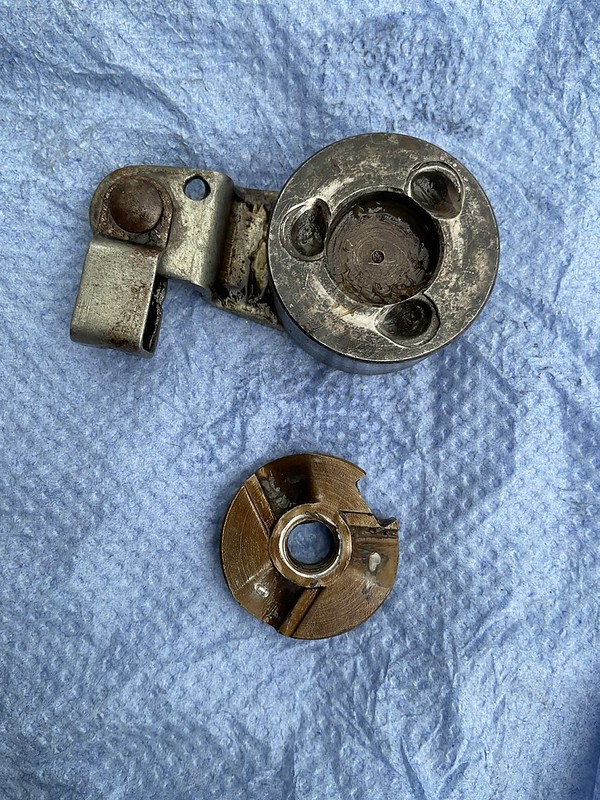
Also, bit late to the party, but one of my 175s had a totally knackered starter clutch, here's a pic of the screws and locating pin compared with new parts.View attachment 57634
Locating hole in the rotor completely worn oval.
View attachment 57635
Replaced with a better part from DK breakers ( CB200 same as 175 ). Made a daft mistake on reassembly, used grease to stick the springs and plungers in place while rebuilding. Clutch would not then engage when starter operated, has to swill all the grease out then OK.
Regarding my CB200. I’ve got the left side engine case off at the moment (rebuilding the starter motor- which had become very tired). I thought I might as well check the roller clutch as it would only take another 5 minutes to pull off the rotor. Do you happen to remember whether the extractor bolt for the rotor was the same size on the 200 as the 250/360 (16mm)?

Alan :)
 
Yes, it is. 16mm, that is. I use a high tensile bolt with my mains powered impact driver, whips the rotor straight off. :eek:
Many thanks, I’ll pull off the rotor and have a shooftie at the starter clutch before I put the motor back on.

:)
 
It Is an unseasonably warm spring day here in England, so I took the CB360 out for a confidence building ride to see if I have everything together properly. It started instantly and rode really well. I only did about 10 miles, but I now have confidence in the motorcycle and will take it for a longer ride this evening.

Yesterday I’d taken my Triumph on a longer trip (about 150 miles), which was very good, but the little Honda is every bit as much fun in its own way. I’m entirely happy with it.

:)
 
This morning was another glorious Spring day, so feeling more confident in the CB360 I went for a longer ride up the coast to Sutton on Sea (about a 25 mile round trip). On the way back I stopped at Winthrop for a photo by the beach:

IMG_6670 by Alan Othen, on Flickr

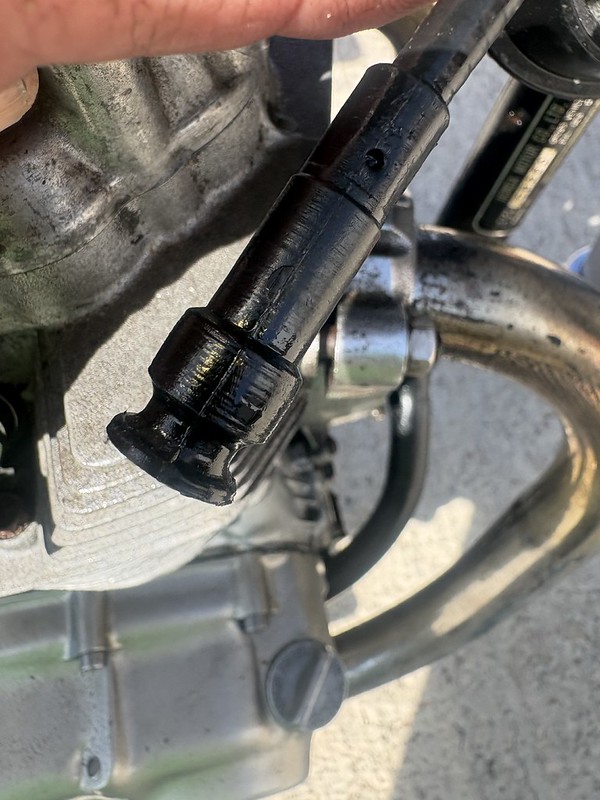
… which was lovely. I noticed the Honda was impersonating a BSA and leaking a little oil (drops, not puddles though). A bit of investigation when I got home suggested it was coming from high up on the cylinder head: the tachometer drive. There doesn't seem to be an oil seal there that I might have omitted when I swapped the cable recently, here is the plastic ended replacement cable:

IMG_6673 by Alan Othen, on Flickr

… it looks like it relies on a tight fit between the shank and the hole into which the cable fits, but the plastic part was 0.7mm slimmer than was the metal one (I imagine Mr Honda’s original) it had replaced:

IMG_6675 by Alan Othen, on Flickr

Unfortunately the old and new cables were slightly different lengths, so I couldn’t just use the new inner with the original outer, so I sweated on some heat-shrink tube around the shank of the replacement, which seems to have tightened everything up.

We’ll see whether my Heath Robinson fix works. If it stops that little oil leak then fine - if not I’ll have to buy one of Mr Honda’s cables (£21 from DSS rather than £8 for the pattern part).

:)
 
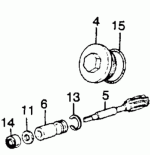
On the positive side, you have confirmed oil flow through the cylinder head cover. There is an oil seal (#14 below) around the tachometer gear, perhaps yours is original to the bike.

1114.png

It's great that you are getting some longer rides in now.
 
On the positive side, you have confirmed oil flow through the cylinder head cover. There is an oil seal (#14 below) around the tachometer gear, perhaps yours is original to the bike.

View attachment 57892

It's great that you are getting some longer rides in now.
Ah ha - perhaps that is it? If the problem persists that may need changing - I hope one doesn’t need to take the engine out to gain access!

I enjoyed riding the CB360 - it is a really nice motorcycle.

:)
 
One of the really nice things about working on the 360 is that the top end can be done in the frame. I'm not completely sure, but it may be possible to replace that tachometer gear seal without any disassembly. At most you would need to remove the cylinder head cover.

Of my small troop, I feel the most comfortable on the 360 and, I agree, they are very nice motorcycles.
 
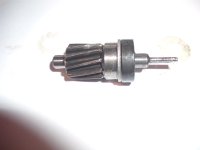
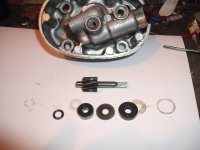
That oil seal looks very similar to the one on the 175 /200 engines. When it fails, it can allow a surprising amount of oil to leak out under pressure while riding. I was once convinced that I had a major top end problem until advice from this forum ( or the one before ) to check this seal. Replacement is easy. Just grasp the flats on the tacho drive mech with pliers and pull it straight out, change the seal and press back into place using a small socket.

This is the 175 part, guess the 360 parts are similar. Note the tiny washer at the far end.

1779624696281.jpeg
1779624743492.jpeg
 
Many thanks chaps - this really is a first class forum - that information would have taken me ages to find (and it doesn’t really seem to be covered in the manual). I’ll monitor the problem for the time being.

Alan :)
 
Many thanks chaps - this really is a first class forum - that information would have taken me ages to find (and it doesn’t really seem to be covered in the manual). I’ll monitor the problem for the time being.

Alan :)
Thanks, it really is what we do here Alan. I keep telling people, but I suppose in these times it's hard to believe there are still some who will offer personalized help at no charge.
 
On the positive side, you have confirmed oil flow through the cylinder head cover. There is an oil seal (#14 below) around the tachometer gear, perhaps yours is original to the bike.

View attachment 57892

It's great that you are getting some longer rides in now.
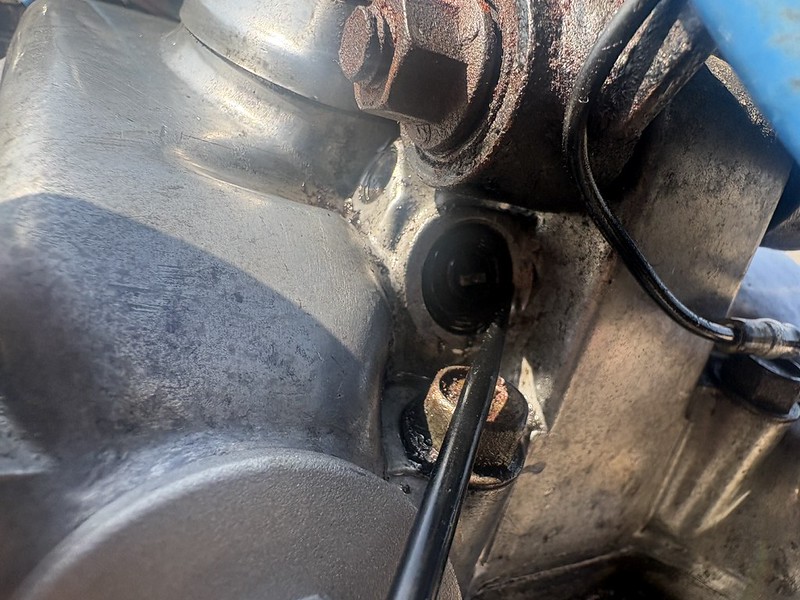
The tachometer drive oil seal turned out to be a much easier job than I had expected - just remove the tank and the drive end of the cable, then the seal is visible and can be pretty easily hooked out with a longish seal pick:

IMG_6689 by Alan Othen, on Flickr

I used a long 10mm socket to push in the new seal and the whole job took about 10 minutes. I did take the opportunity to replace the very cheap generic cable I’d put on the other day with one from DSS (much better quality and still remarkably cheap). The end of the cable fits in the drive much more securely so the tachometer needle doesn’t bounce around so much now.

IMG_6690 by Alan Othen, on Flickr

No more oil leaks. The CB200 is also running well now; I just have to re-route the wires through the handlebars and that is probably as much as I’ll do on that project. It looks nice.

In other news I spent half a day de-coking my 1957 New Hudson Autocycle this week, ready for a camping weekend in June (yes really - but it will be travelling to and fro by trailer).

IMG_6683 by Alan Othen, on Flickr

…. It starts much easier now - and even ticks-over, which is quite an achievement for a 98cc Villiers!

Alan :)
 
I took the CB360 out for a longer ride this splendid spring morning - about 30 miles of mixed fast A roads, B roads, farm tracks and urban traffic. What a fun bike it is to ride: lots of revs, pretty close ratio 6 speed gearbox, really small and light, good brakes (for the day)… all of a sudden it was 1978 and I was 17 again! The air was thick with nostalgia and I got home wearing a huge grin; this is surely why most of us have these 50 year old motorcycles :) .

The excuse for the ride out was to make sure that oil leak was fixed, It was of course - and I knew that after the first mile, the rest of the trip was just huge fun.

Alan :cool:
 
Last edited:
If you and your 360 find yourself venturing far enough from home to be in my neighborhood (stateside!), I'll be happy to join you!
How kind. I have very happy memories of riding in the USA (I lived in Virginia for 3 years, 2005-2008), mostly with the ‘Old Line Motorcycle Club’ from Rockville, Md.

image001 by Alan Othen, on Flickr

… you can probably guess which is my motorcycle from the licence plate.

Alan :)
 
The air was thick with nostalgia and I got home wearing a huge grin; this is surely why most of us have these 50 year old motorcycles :)
Yes it is, and I remind myself every time I turn 10,500 rpm on my 450. It's a glorious sound and feeling that I enjoy revisiting as often as possible.
 
Back
Top Bottom