1966 Honda CL160 commissioned build

Those look great. Now I'm going to have to buff my levers and switches, sheesh, more work :ROFLMAO:
I've always thought the older bikes with polished switches looked nice and while you're at it, you may as well make the levers and perches match. Tough day on the polishing wheel ahead, LOL
 
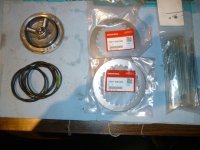
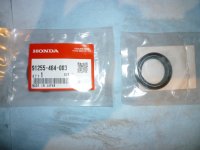
I received a few parts yesterday from both Chris and the post office. The new rear wheel hub spokes arrived from DSS in the UK, as it was cheaper shipping from there vs their US location. Honda Canada still had the metal clutch discs available and I needed two to replace the warped ones. The silly expensive eBay vendors selling the NLA large O rings for the outer oils spinner engine case cover came from a local seal and packing vendor. They were $2.00 each Canadian vs some shocking US dollar amount off eBay.

I am waiting on the replacement engine gear shift shaft, which is close to entering Canada from the US. Hopefully by the end of this coming week I can finish putting the motor together and start assembling the bike.


P1110092.JPG


Engine case interior large O ring was missing when I disassembled the engine initially.


P1110094.JPG
 
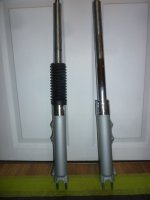
So the saga continues. I installed the forks on the front end and discovered the seals are leaking. It was hidden by a PO fix with the wrong gaiters which were cut and stuffed and zip tied around the top of the lower slider.
I have a couple of issues in trying to get the sliders apart and access to the old seals. These forks are the later aluminum style, so the internals don't match the FSM parts fiche. They have a C clip above the seal like a modern fork and a Allan bolt on the bottom of the slider. The C clips were a bear as they were stuck with rust and crud,but I got them out. The Allan bolt stripped on one which was my fault as my Allan socket was slightly worn and I didn't heat the area first. So I drilled the head off and it has released the internal lower assembly.
In using the slide hammer lower slider trick nothing. I heated the chrome trim ring around the top of that fork well and the jack hammer procedure. Absolutely nothing not a budge at all.
The other fork I removed the C clip above the seal and heated the Allan bolt and compressed the fork with a jack to apply pressure on the internals. The Allan bolt spins but will not let go of the internals. I did used heat on the Allan bolt in the slider to help break it free. I could drill the Allan head off, yet I am stumped with this setup and no response to the usual tricks.
I don't think that chrome cover needs to be removed from the top of the slider. It doesn't have any indents for the correct tool for removal. The fork seal sits into what appears to be the middle section of that chrome fitting. It seems totally open above now and should just come out of the assembly?

I'm all ears for suggestions from anyone who is more familiar with these aluminum CL175 fork sliders and any other options to try for the removal of the Allan bolt before I drill the head off. Plus the removal of these sliders to replace the fork seals.

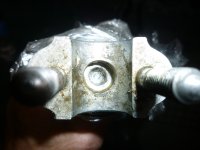
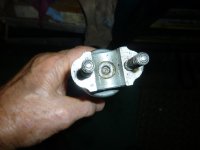
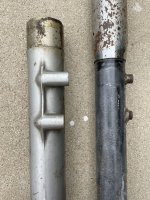
Here are the pictures of the forks both the topside and the bottom Allan bolt areas.

P1110097.JPG

C Clip is removed and seal seems open with nothing I can see retaining it any further above the seal???

P1110099.JPG

Allan bolt head drilled off here.

P1110101.JPG

This Allan bolt just spins slowly and is still attached to the internal parts of the lower fork assy. Even under load on the internal spring there is nothing releasing.

P1110098.JPG
 
Are you using your hands or an air impact wrench? If it were me, I would pound a torx bit into the stripped allen head and give it a bunch of quick bursts with a good sized impact wrench (not one of those battery operated things)
 
Are you using your hands or an air impact wrench? If it were me, I would pound a torx bit into the stripped allen head and give it a bunch of quick bursts with a good sized impact wrench (not one of those battery operated things)
Used both on the good Allan head bolt. The issue as I noted even with the upper fork tube compressed the inner tube and the Allen head bolt are spinning and not releasing. I have pretty well pushed the upper tube well into the slider with a hydraulic jack. It should be enough to lock up the system and release it but nothing?
I am using an air impact gun, yet it doesn't matter the internals are not grabbing and locking up.
That second last picture you see is the head removed from the Allen bolt and the stub of the bolt internally in the fork. I can press that stub inward, so it is free.
The bigger issue is why the fork with the Allen head bolt removed and the stub can be pressed into the fork bottom the seal will not release using a slide hammer action. I even heated the area with a torch around the seal and still nothing the seal will not budge.
 
That is a problem. Never met a fork bolt that wouldn't bump loose with a 1400lb impact.

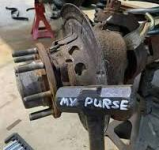
In terms of the slide hammering, that is not that uncommon - at least in the sport bikes that I rebuild. Those bushing get stuck like you can't believe. I've had a few where clamping the lower in a pipe vice (fork wrapped in rubber) and using 200 lbs of me slamming it down won't work - in those cases you need to break out the purse - stick a rod through the bolt hole and beat it like it owes you money. Not a picture of mine, but you start with the framing hammer, move to the blacksmith hammer and then the 20lb sledge. Comes apart one way or another ;)
1762893930558.png
 
Next time, leave the allen screw in the bottom fork leg, Honda considers that fork leg/bump stop/allen screw assembly to be one part#, individual components are not listed. Also, if you do get the screw out, it is a dirty rotten bugger to get back together and tightened.
 
Next time, leave the allen screw in the bottom fork leg, Honda considers that fork leg/bump stop/allen screw assembly to be one part#, individual components are not listed. Also, if you do get the screw out, it is a dirty rotten bugger to get back together and tightened.
Great. I drilled the head off the one fork Allan head bolt. So your saying the slider will come apart with that Allan head bolt attached to the internals? That is different that what I have encountered with more modern forks that require the removal of the bolt to remove the slider.
Whats the trick on the seal stuck into the top of the slider? Heat didn't faze the unit. Where is that spring located in the lower section of the forks? Is it up inside the bottom of that lower internal tube.

Should that seal just release now through the top of the chrome slider section?
 
Next time, leave the allen screw in the bottom fork leg, Honda considers that fork leg/bump stop/allen screw assembly to be one part#, individual components are not listed. Also, if you do get the screw out, it is a dirty rotten bugger to get back together and tightened.
Getting them back in is easy. Push a broom handle in it when you tighten - same with old Kawasaki's. This is assuming that you clean up the threads before re-assembly, which is a must on even modern fork cartridges/bolts.
 
Totally different design. It has a tall metal inner tower not a small internal cup like modern forks. I got the other one with the Allan bolt apart so Mike was correct you don't need to remove the bolt. The other one is still not coming apart. I have it soaking in some fluids overnight since it is only the seal that is holding it together.
Strange that heat and tapping the circumference as I did on the other one still doesn't work. If the Allan bolt was out inserting a rod would be working against the spring and not transferring anything meaningful to the seal.
The slide hammer method is the best since there is a inner sleeve that butts up against the bottom circumference of the seal. It is just a matter of time and working the problem. :D
 
Still stuck on this one fork seal refusing to budge. I spent some time soaking it overnight with Acetone which removed the top of the seal rubber cover. I now have bare metal top on the seal. The Acetone didn't soak down the seal sides as I would have liked to help release the seal from the fork inner. I have tried to get a razor knife blade down the edge with little success.

I tried to use Joes large work table and vice to remove it using the slide hammer method with no success. I am off to Paul's place tomorrow, since he has a small slim dremmel tool and cutting bits. I hope we can get into the seal area with this tool and grind away some of the seal metal to collapse and pry it out.

What an ordeal with this seal, it is amazing how resistant it is to anything tried so far on removing it from it's home. It is a "squatter seal" I believe! :mad:
 
If you want to make a huge mess - put a plug in the bolt hole that you can support at the bottom of shop press. Fill the fork about half full of oil, reinstall the top cap and use the press to hydraulicly remove the seal (and bushing). Its gonna be a big mess though.
 
I'm in the same boat as you. I have two sets of the aluminum lower forks- one is apart (not by me) and I'm still trying to get the other set apart to use the sliders from the set that's taken apart in the set that is not yet apart. I've got the same issue where the Allen bolts on the bottom of my legs are both stripped out- but I was told you don't actually have to get those out for the forks to come apart. I guess it does help to get those top chrome trim pieces off the lowers, and from there it's just a matter of digging the seal out and / or using some other method to get that seal to budge... I've been staring at this problem for a good six months and I just keep wanting to not deal with it lol.

So I'll be taking cues from you once you figure out a good way to get them apart :)
 
I'm in the same boat as you. I have two sets of the aluminum lower forks- one is apart (not by me) and I'm still trying to get the other set apart to use the sliders from the set that's taken apart in the set that is not yet apart. I've got the same issue where the Allen bolts on the bottom of my legs are both stripped out- but I was told you don't actually have to get those out for the forks to come apart. I guess it does help to get those top chrome trim pieces off the lowers, and from there it's just a matter of digging the seal out and / or using some other method to get that seal to budge... I've been staring at this problem for a good six months and I just keep wanting to not deal with it lol.

So I'll be taking cues from you once you figure out a good way to get them apart :)
I just PM'd a member to see if that chrome cover can be removed to allow shallower access to the seal. You are either patient, or not too serious about getting them apart :unsure:
The Allan bolts don't have to be removed, so leave them alone. That chrome trim ring was pressed on during manufacturing and it also may not be a piece to remove easily without damage.
 
I just PM'd a member to see if that chrome cover can be removed to allow shallower access to the seal. You are either patient, or not too serious about getting them apart :unsure:
The Allan bolts don't have to be removed, so leave them alone. That chrome trim ring was pressed on during manufacturing and it also may not be a piece to remove easily without damage.
Yeah the chrome piece can come off- whether or not you are really supposed to take them off is questionable.

Here's a shot of one of the aluminum fork legs I have with it removed (I wasn't the one that removed it). Total press fit as you mention.

My buddy who I got the fork legs from removed the trim pieces- if I recall he said he just wedged something between the base of the trim and the leg and sort of wiggled them up very slowly- maybe a really strong knife edge or something to get it started, and then work it with a screwdriver? There's no major damage to the fork leg (I don't have the trim rings he took off) so I guess it's possible...

Oh yeah I'm not in any hurry on this- I've been squirting the legs I want to remove the trim from with penetrant randomly for a good six months now. I'm still working on my motor, but once that is done I'll have to deal with this.

IMG_2618.jpg
 
Ok didn't mean to sound harsh there in the last post. :D

I suspect the chrome trim ring didn't look great after removal. They are not supposed to be removed was the answer I got from Mike. On the aluminum leg you have the slider is apart so your halfway there.
Paul used a flex shaft driven electric tool with a double cut carbide burr about 1/8" diameter. I held the fork and the flashlight doing the heavy lifting. :unsure: He cut through the top of the seal close to the outer edge at 12-3-6-9 o'clock and then opened the holes a little larger with the pick tool. Two slide hammer type bumps holding the upper tube in the vice and it was out.
 
So I am finally able to work on the two forks and received the Honda fork seals today. I am trying to repair two areas on both lower fork tubes close to the bottom area that are badly pitted from rust. These forks have never been apart since new and there was some nasty sludge/oil with a little water mixture in there. I think the damage will be below the seal slide area once the forks are under load when mounted on the bike. I am filling the damaged area with a clear JB Weld epoxy and will sand it smooth later. The Tech Steel filler was so thin that it wouldn't stay in place once sanded and checked for level.

So here we are today with hopefully the last surprise on this build. :unsure:

P1110102.JPG

Fork damage on lower fork area. it is close to the bottom where the lower metal stop clip is located near the bushings.

P1110105.JPG
 
Last edited:
Ok didn't mean to sound harsh there in the last post. :D

I suspect the chrome trim ring didn't look great after removal. They are not supposed to be removed was the answer I got from Mike. On the aluminum leg you have the slider is apart so your halfway there.
Paul used a flex shaft driven electric tool with a double cut carbide burr about 1/8" diameter. I held the fork and the flashlight doing the heavy lifting. :unsure: He cut through the top of the seal close to the outer edge at 12-3-6-9 o'clock and then opened the holes a little larger with the pick tool. Two slide hammer type bumps holding the upper tube in the vice and it was out.
Oh no harshness detected at all!

I saw a pic of one of the chrome trim rings he took off and it honestly looked perfect- minus some rust. Note this set of forks was from a later year CB, so the trim piece was the tall version/no gaiters- not sure if those are easier to remove than the CL ones...

Well unfortunately this isn't the set of forks I'm planning on using- I just needed the tubes from this set and he offered to take them apart for me. My other set of actual CL forks are still fully assembled and those are the ones I need to get apart (because the hard chrome on the tubes is totally destroyed.) I thought about just running these, but he sent me everything but the fork springs, so either way I'd need to get my other set apart at the very least for the springs...

Glad you were able to get yours apart- that technique sounds like the way to go. If I can't get mine to budge I'll probably have to go that route.
 
I was able to install the new fork seals and used 30W oil in the forks which was a slow process through the top tiny hole that takes the upper triple tree chrome bolt. The internal C clips are toast from age and corrosion. NLA from Honda other than maybe CMSNL or DSS which incurs shipping charges. A few vendors on eBay had some for sale at the usual mark up and shipping from the USA or Thailand.
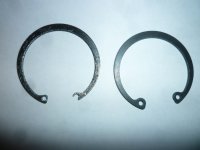
I found a solution from Amazon with 20 pcs delivered today for $11.00 which looked like a quick fix option. Not so fast! The OEM C clip has a very tiny area where the pliers engage the two loops. The replacements were bigger through that area and wouldn't fit the inner groove clip in the slider before they hit the outer fork tube section.
Some filing and working the area making it smaller worked out. I destroyed a few first by filing too much off before I got the technique down right. Good thing there were 20 pcs in the bunch. (y)
I need to repaint the sliders again as all the messing around getting the forks apart damaged the painted area. Joe has an indoor small paint booth. Next week I will repaint those sliders and spray some clear coat on the polished rear hub, before I lace the rear wheel and new spokes.

Have we turned a corner on this build! :unsure:

P1110109.JPG


C Clips with OEM on the left with the broken tool area and the Amazon replacement on the right with the larger area around the tool insertion sections.

P1110111.JPG
 
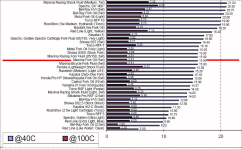
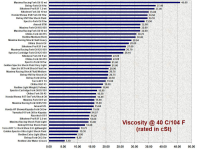
I used 10wht. Maxim fork oil, probably closer to OEM. Heavy riders may use 15wht., 30 may be too much and conceivably cause seal issues. I couldn't find 1mm thick C-clips on amazon, only 1.5mm for the 350 oil filters and had to grind thinner to get them to fully seat the groove. I bet you can get them to work.
 
The weight marked on fork oil is pretty irrelevant since the actual viscosity varies so much by brand. If you can find the Viscosity Index for your particular choices then you can do a reasonable comparison using some of the info that is already out there.
1763385454308.png
1763385586951.png
 
I will note that for future use for sure. I actually used 30W diesel oil with the remainder going into the engine at a later date. This isn't going to be a regular rider and Chris is a big guy. So I expect he will realize at some point it was meant for a younger fellow with 125 less pounds to tote around. :unsure:
I recall in some of the early FSM it did recommend engine oil of a straight weight viscosity for these 60's bikes for the forks..
If it is an issue then changing it out is easy, other than the slow pour into that top opening of the fork.
 
Well I didn't read the for sale instructions on DSS for the fork gaiters. :D

So I received only one of the gaiters. Try again! The second one is now on order, so I will eventually have a matched set. ;) I did repaint the lower sliders in Joe's mini indoor paint booth a few days ago, so they look good again. Once I get the second gaiter I can install the front forks.

I ordered a new head gasket again. The aftermarket old gasket set I bought has been a disappointment. Non of the gaskets are fresh, so something to consider when buying a 50 year old gasket set. The holes are not well aligned for the parts with some adjustments needed. The head gasket would not fit the studs without some filing of the one outer hole. I then realized the head gasket was about .5mm thicker than the one that was on there. Since the rear two outer studs are oil feed holes to the top end there are two green Viton O rings that seal the area. The O rings are 1.5mm thick and the replacement head gasket was 1.95mm thick. The head gasket on there when I took the motor apart was 1.3mm thick.
I was concerned that even when squished the thicker head gasket may not allow those sealing O rings to seal correctly. There was also some very slight corrosion on the fire rings on this head gasket too. For the sake of $45.00 Canadian it wasn't worth a roll of the dice. I will eat the cost.

A note to self. "Don't buy anymore 50 year old aftermarket gasket kits." (n)

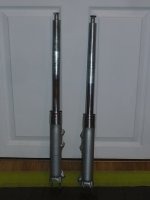
Forks with one gaiter. The good news is the new gaiter fits both the lower slider and the upper headlight bracket perfectly.


P1110113.JPG
 
Last edited:
Well I didn't read the for sale instructions on DSS for the fork gaiters. :D

So I received only one of the gaiters. Try again! The second one is now on order, so I will eventually have a matched set. ;) I did repaint the lower sliders in Joe's mini indoor paint booth a few days ago, so they look good again. Once I get the second gaiter I can install the front forks.

I ordered a new head gasket again. The aftermarket old gasket set I bought has been a disappointment. Non of the gaskets are fresh, so something to consider when buying a 50 year old gasket set. The holes are not well aligned for the parts with some adjustments needed. The head gasket would not fit the studs without some filing of the one outer hole. I then realized the head gasket was about .5mm thicker than the one that was on there. Since the rear two outer studs are oil feed holes to the top end there are two green Viton O rings that seal the area. The O rings are 1.5mm thick and the replacement head gasket was 1.95mm thick. The head gasket on there when I took the motor apart was 1.3mm thick.
I was concerned that even when squished the thicker head gasket may not allow those sealing O rings to seal correctly. There was also so very slight corrosion on the fire rings on this head gasket too. For the sake of $45.00 Canadian it wasn't worth a roll of the dice. I will eat the cost.

A note to self. "Don't buy anymore 50 year old aftermarket gasket kits." (n)

Forks with one gaiter. The good news is the new gaiter fits both the lower slider and the upper headlight bracket perfectly.


View attachment 52835Ets

That looks my sock drawer….. where there is supposed to be a pair I can only find one!!🤣

Also thanks for the comments on NOS gasket sets. I was leaning toward NOS for my cl160D project but you have convinced me otherwise.
 
That looks my sock drawer….. where there is supposed to be a pair I can only find one!!🤣

Also thanks for the comments on NOS gasket sets. I was leaning toward NOS for my cl160D project but you have convinced me otherwise.
I have bought two NOS old gasket sets in the last few years. No more for me!

Not original Honda gasket sets but aftermarket ones from back in the day. Both had issues with the first one having a badly corroded fire ring on the head gasket. I contacted the seller with some pictures and he replaced it N/C with a newer style one. That gasket set fit well and was not too bad otherwise.

This latest one I bought the gaskets are brittle and have broken in places, since the holes don't align correctly on the dowels in the engine side covers etc. The head gasket wouldn't fit the cylinder studs properly without some help. Plus it seemed thicker than the one I took off of the motor. This motor was never ran from the previous work done, so that head gasket would have only had some squish.
The original one from the previous work done was unfortunately stuck in a few areas when I took the motor apart, so it left sections on the head and barrels. It needed replacing and the one in the questionable gasket set seemed pretty robust, yet with issues. It wasn't worth taking a chance on the O rings not sealing correctly and having to pull the motor and engine again at some future point.
 
Twiddling my thumbs waiting on some parts for both the motor and front forks to proceed further.

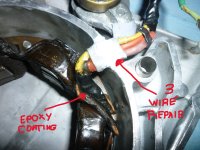
I discovered an issue with the 3 wires off the stator windings where it enters the rubber block that secures the wiring into the left hand case interior. I had checked the stator continuity previously which was good. While getting ready to install the cover gasket I noticed two of the three stator wires were badly cracked at the insulation against that rubber block. These were thread bare down to just a few wire strands holding onto where the wires entered the rubber block.

Well 2.5 hrs later after careful dissection of the wires from said rubber block and dealing with continued cracking of the petrified insulation when the wires were moved for soldering. I was successful in correcting the issue. I needed to wrap a few of the newly cracked wire insulation areas down the line where these wires attach into the stator windings. I used electrical tape custom cut into smaller strips to get the job done there. The issue though is this area is a wet area with hot oil circulating around the stator to some extent.
Solution was to use the JB Weld epoxy I previously used on the pitted front end forks for an outer casing to protect the electrical tape covering from oil deterioration. The wiring still tests good off the stator, so another save for Chris vs a stator replacement.

P1110115.JPG
 
Last edited:
I received the replacement head gasket which was a thinner design the same as the one I removed when I took the engine apart. With a few work arounds namely a couple of small wooden blocks to support the head a few inches above the barrels at rest. I was able to thread some wire down each side of the head internal cam chain tunnel and pull each cam chain half up each side. Remove the wood blocks and drop the head into position.
The cam chain was about 1/2 a tooth out from aligning to allow the clip link to be installed. I stacked two stacks of 8mm flat washers on opposite sides of the cam chain tunnel studs covering the bare unthreaded section of the studs. I then used the top cap nuts to tighten down the head and that gave me enough gasket compression for that 1/2 a link to be closed up.
The cam chain link clip went on quite easily. I then buttoned up the top cover motor cover with the new OEM sealing washers from Honda. I installed the oil pump and clutch assembly tonight and then the outer engine case cover.

Slowly but surely it is starting to look like a motor again.

P1110116.JPGP1110117.JPG
 
Looks so nice. What did you paint and what did you leave alone after blasting?
Troy,

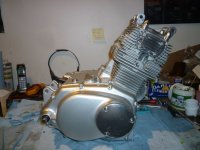
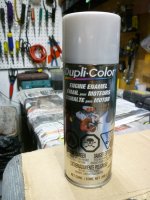
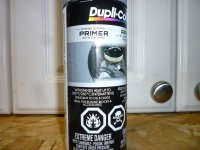
I used the DupliColor engine primer and the aluminum paint from the same manufacturer. The barrels and head were bead blasted already when I received the bike. Since it has .75 O/S pistons in there that were never run. I suspect it was done by the machinist who did the overbore and the previous work.

I believe the barrels and head should be raw aluminum and not painted from the factory. I painted my first set of barrels and head on the 1968 CL175K0 I sold this year. Yet when I researched the second go round motor rebuild with a replacement head and barrels, I had those vapor honed back to raw aluminum.

I believe that raw aluminum is possibly the correct finish, yet after 60 years you would need a original bike to confirm for sure. Our member "Rizingson" has a lot of original bikes and a number of this series, so he would possibly be a member to confirm paint vs raw finish.

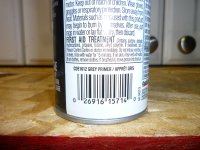
Here are the DupliColor paints. FOR THE US MEMBERS TAKE THE "C" OFF THE FRONT OF THE NUMBER FOR YOUR CORRECT PART NUMBER (IE) DE1615 PAINT CODE.

P1050740.JPGP1050741.JPGP1070716.JPGP1070717.JPG
 
Last edited:
Looks similar to the VHT engine enamel paint that I use.
 
Looks similar to the VHT engine enamel paint that I use.
Those are older paint cans from 4-5 years ago. So DupliColor may have changed the graphics on their latest products. The SKU numbers haven't changed on the Canadian products for many years now though.
 
Those are older paint cans from 4-5 years ago. So DupliColor may have changed the graphics on their latest products. The SKU numbers haven't changed on the Canadian products for many years now though.
I meant color on the engine. Duplicolor kinda sucks compared to VHT in terms of how it sticks. It is definitely not the same stuff. They have same parent company, but the Duplicolor tends to be the - I can't sell VHT markets.
 
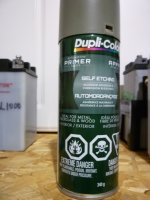
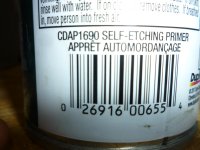
OK missed the VHT part. I use both actually, as the VHT normally has a higher temp rating than Dupli-Color. I have used both this paint and VHT on many projects with no issues. It is all in the prep work with painting and putting down a good primer coat. Before Dupli-Color came out with that engine primer I used this self etching primer with great results.
The CB1100F has the Dupli-Color semi gloss on the engine upper barrels and head and 10K kilometers with no issues with the paint adhering or fading etc. I will agree though that the VHT is likely a superior product to the Dupli-Color paint.

Dupli-Color self etching flat green primer. Not temp rated, yet I have used it in the past on many air cooled and water cooled motors with zero issues.

P1060115.JPGP1060116.JPG
 
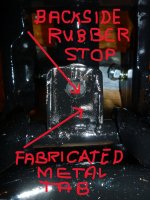
I received the main stand back from my neighbour who made a custom bracket like the OEM and I drilled and placed the Honda rubber bumper into the top section. The stand was missing the spring (surprise) I have an assortment of used ones from all the bikes I kept parts from in the past. This one fit perfectly, as the first one I tried before I discovered the missing bumper stop was too tight. This main stand is from a CB160 which is a different design, hence requiring the modification.

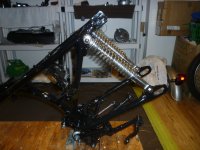
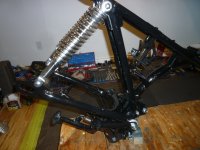
I installed the shocks again after a polish and the rear footrest frame holders. They needed some metal persuasion to push them both outward, likely bent from past miss adventures.


P1110124.JPG


P1110122.JPGP1110120.JPG
 
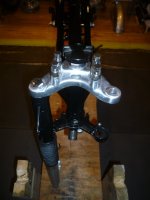
I decided to put the single fork on the triple tree and install the steering damper. The bike came with about half the parts for the steering damper including a botched top knob and shaft. Someone shortened the shaft and drilled through the top plastic knob section and placed a cap nut on there to secure the rod. LOL!
Two issues were the rod was now too short to work and fit the assembly. The cap nut didn't secure the rod enough to stop the rod spinning when tension was applied.

So a shout out to @chris Crawford who supplied a number of missing parts that I needed off his CL160 parts bike, including a good steering damper shaft and knob. (y) There are 6 other small parts that make up this complete assembly. Of course 50% were missing in the parts bags. So CMSNL to the rescue, as they had every missing part at a reasonable price. I was able to find quite a few missing pieces from many areas of this bike at both CMSNL and DSS.

Still waiting on the other fork gaiter boot and then it will be a two legged frame. :D

P1110125.JPG
 
Last edited:
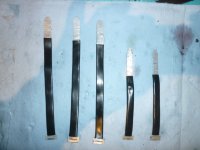
A small surprise with the 5 wire bands that hold the wiring harness to the frame area and they are in good original condition too. The black rubber outer sheathing is about twice as thick as the modern equivalent ones from Honda parts these days.
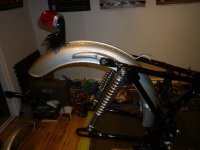
I installed the rear fender with the correct mounting hardware after a search everywhere. I had previously attached it to the fender in a zip lock bag. :D

P1110127.JPG

P1110131.JPG
 
Except that isn't Chris Crawford above, this is - @ChrisCrawford

That Chris hasn't been here since 11-29-20, probably a good thing in this case.
Gadzooks, yet ANOTHER Chris Crawford! There's a Chris Crawford master knife maker in Arkansas, a Chris Crawford professional basketball player, a Chris Crawford in jail for murder in Pennsylvania, a Chris Crawford computer game designer, and a Chris Crawford realtor in Maryland. I won't tell you which one I am because the warden will revoke my computer privileges if I do. 🤪
 
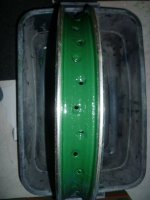
Chris cleaned up the rear wheel from some heavy rust. The spokes when cut away were still frozen into the wheel spoke pockets. o_O

I used the Dominion Sure Seal rust remover gel for two days to get the rust down a little more. The interior of the rim is heavily pock marked, yet with the tube it should be fine. I wire wheeled it further today and painted it with a brush with some leftover Tremclad rust paint. Dark green which is now heavily coated and should be fine for what Chris has planned.

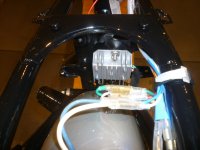
I bought a Thailand aftermarket new reproduction wire harness and an Amazon 12V regulator/rectifier and installed both of them tonight. The wire harness has lots of extra connections to use on the CB model too. It has the built in F/R signal wires and starter solenoid wiring and flasher wiring etc. I plan to add a few extra ground wires to the frame area F & R . Although the new wiring harness is such a great addition vs an original 60 year old one.

The rubber inner seals for the rear inner swing arm are missing. I was able to order those from Barrie Honda and they are still available. (y)

As of tonight. Luck of the Irish!

P1110132.JPG


New R/R installed in the original location.

P1110133.JPG

Wiring harness under installation.

P1110134.JPG
 
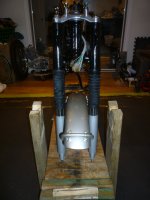
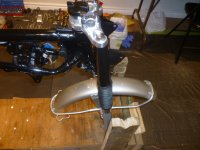
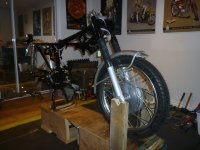
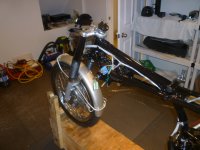
A win and a loss today as I received some of the outstanding parts from suppliers. The used LS air filter arrived and it is quite useable once a little TLC cleaning is done. I received the other fork gaiter, so now it is a two legged front end. I installed the front fender and will attach the front wheel soon.

I spoked the rear wheel with the DSS aftermarket spokes and it went quite well until I started to tighten everything up. The rear wheel and the hub that came on the bike was incorrect for the bike. The rear wheel that came on this bike had a completely incorrect rear wheel hub assembly and the wrong rim width. This was a 1.85 width where the correct rim width is 1.60. I had previously bought the correct CL160 hub assembly and brake plate. The plan was to use new this new correct hub assembly and lace it to the existing 1.85 width rim.

The issue is the rim is still incorrect in other unforeseen ways with the wrong angled spoke nipple configuration in it's design. When the nipples are tightened the nipple angles are off enough that the spoke is bent and stressed not in a good way. o_O

So I have listed a "parts wanted ad" on this forum. I have found a possible candidate rim on eBay for a reasonable price and condition for a CL160. I am just waiting on a shipping cost to Canada and Chris to approve the expenditure.

One step forward. :unsure:

P1110145.JPGP1110146.JPG
 
Last edited:
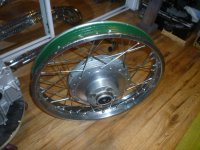
Well I was able to sort out the rear rim issue. It was my mistake, as I painted the inner rim nipple cavities with a lot of paint using a brush. That paint restricted the movement of the nipples inside the cavity. I measured the front rim spoke/nipple spacing this morning and the two rims are identical. So I used a couple of carbide shaped bits to remove the inner paint inside the rim pockets.
I then used the front rim as a pattern for the lacing of the hub. I originally used a YouTube video demo and while the spokes aligned with the spoke holes, I think the pattern was a little different.
Regardless the combination of the paint removal from the rim pockets and spoking the rim exactly the same as the front rim. The stars or should I say spokes all aligned correctly now. I trued the rim this afternoon and will get the rear tire mounted, so I can get both wheels attached to this frame.

Another save and one less dollar spent. (y)

P1110147.JPG
 
A little more progress tonight and a realization the FSM from this era leaves a lot to be desired. There are very limited specs on torque values for some key areas, I did find a specs at the rear of the FSM regarding the front end area. I question the translation though. The front axle nut is 89 ft lbs per the info. I cannot see that spec being correct?
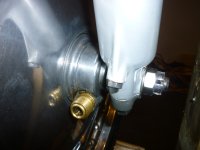
The speedo drive unit doesn't have a lock tab to hold it against the front right fork leg? When tightening the axle to about 35-40 ft lbs the speedo drive locks up and now rotates with the wheel. There is zero info on any of the assembly of the front end beyond some info regarding the fork seal replacement and inner workings of the slider/tubes etc.
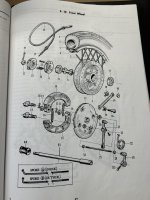
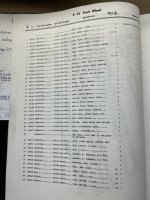
The parts fiche is also missing the axle spacer for the right hand side of the front axle, which is present and sits outside the speedo drive. The parts fiche only shows the speedo drive and then the axel nut in the FSM diagram?

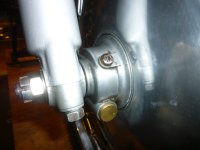
Here is the front speedo drive anyone see anything amiss???

P1110152.JPG

P1110153.JPG


P1110148.JPGP1110149.JPG
 
Do you think there’s a chance that the speedo drive varies with the lower fork slider type?

Agreed on the FSM. It’s a bit sketchy at points. My understanding is that many of the specs and some of the other parts are in the generic Honda repair manual, with the FSM designed as a supplement.
 
Do you think there’s a chance that the speedo drive varies with the lower fork slider type?

Agreed on the FSM. It’s a bit sketchy at points. My understanding is that many of the specs and some of the other parts are in the generic Honda repair manual, with the FSM designed as a supplement.
The fork in the parts fiche is a steel fork I believe not the aluminum one. I checked the 1968 CL175KO Sloper which has the aluminum fork lower. It does show the wheel spacer on the right hand axle which this bikes uses. I am unsure how the speedo drive is affixed permanently when the axle is tightened. It rotated with the wheel when I torqued the axle. I can’t see the speedometer cable outer is the holder/stopper to hold it in place?
I also can’t see the correct axle torque being 89 ft lbs that is a very high number for a small bike. Big 4 cylinder bikes are normally only 65-75 ft lbs on the rear axle.
 
I wonder if I have the right side spacer on backwards on the front wheel? It has a flange on one side only which is on the castle nut side presently. Since there is no parts fiche showing this item it is a best guess. The flange on the inner fork section would apply more tension to the side load of the outer part of the speedometer drive unit?
 
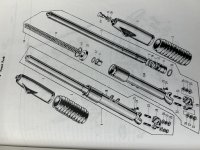
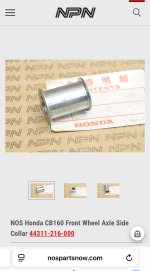
Flying , reading the above I realized I have a CL160 parts catalog!!! It shows the aluminum fork lowers not the steel. Shows an axle spacer with flange on both sides ; part #44311-216-000. One appears to be available at NOS Parts now. Maybe this will help sort front wheel?IMG_3180.jpeg
IMG_3179.jpegIMG_3177.jpeg
IMG_3178.jpeg
IMG_3181.jpeg
 
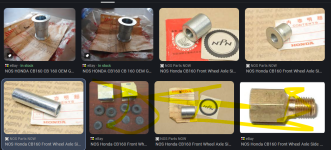
If you google that part number - there are a whole lot of different pictures of what people claim that it is
1765381261803.png
 
Yeah, eBay sellers can rarely be trusted for correct part number application, but you'd expect better from NOS Parts Now.
 
Best bet would be to remove the wheel. Show a picture of the wheel side and the back side of the speedo unit. that should narrow down what (if anything) would look like to fill the space.
 
Back
Top Bottom