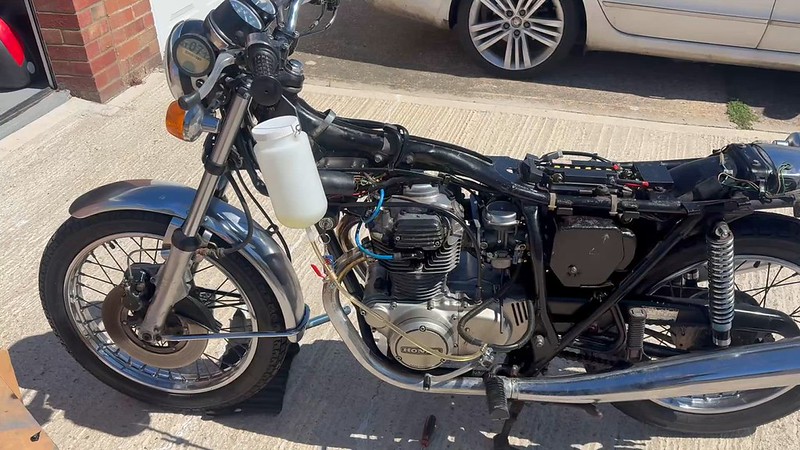
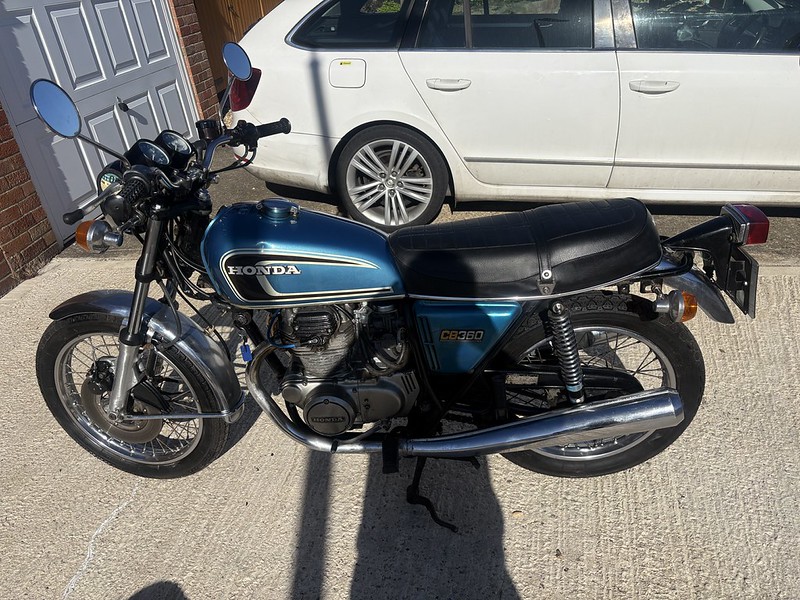
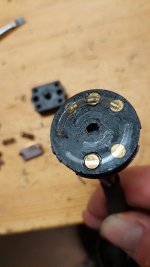
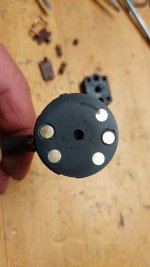
1975 CB360

Othen

Veteran Member
Joined
Jan 7, 2024
Total Posts
323
Total likes
292
Location
Lincolnshire
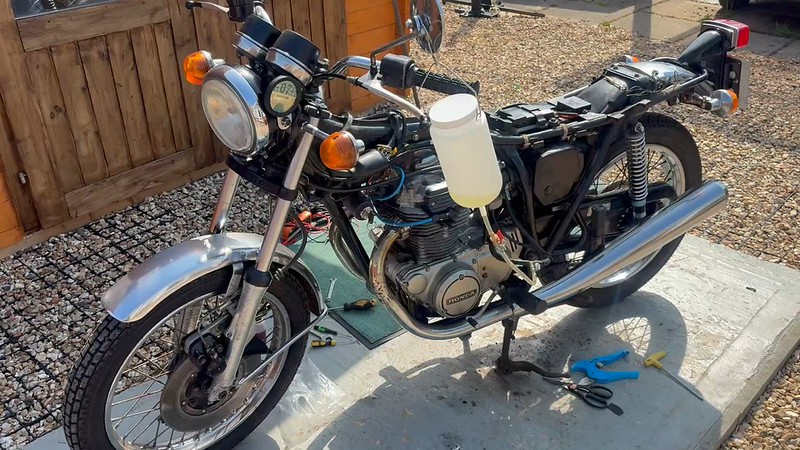
What an exciting day today has been; I’d bought a 1975 CB360 unseen on eBay a few days ago, so today Bob (the dog), Nev (my neighbour) and I made a 7 hour round trip to Whitby to collect it. Once the morning coastal mist cleared, today has been a lovely spring day. Having got home, walked Bob and cooked his dinner, I’ve unloaded the trailer and had a first look at the motorcycle.

My first impression is: this is a very nice bike. The last tax disc would suggest it hasn’t been used on the road since 2012:
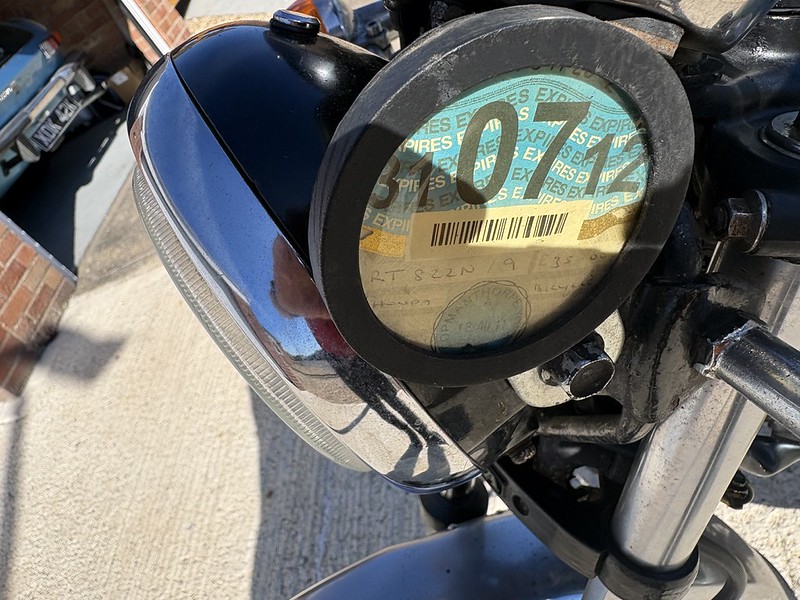
IMG_6503 by Alan Othen, on Flickr

… but it has only had 4 previous owners, only 21,781miles:
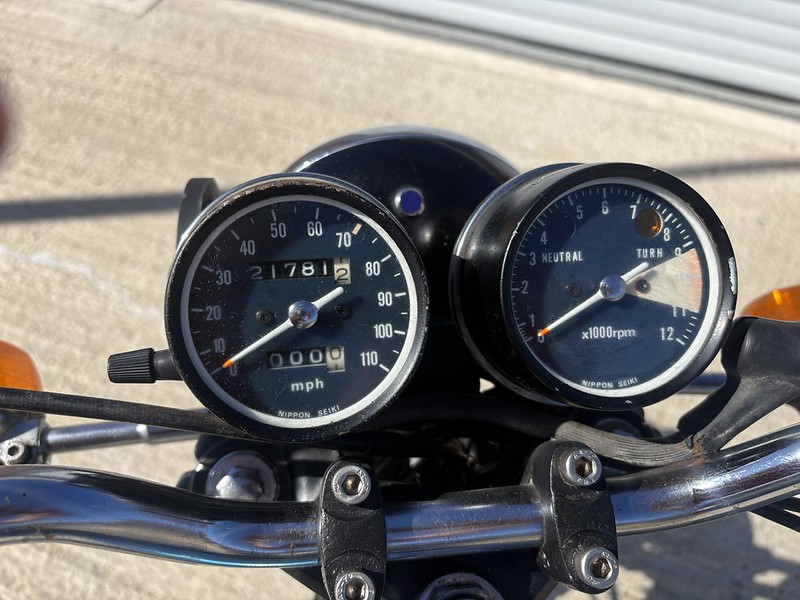
IMG_6502 by Alan Othen, on Flickr

… and seems to have had some restorative works since - the cam chain and tensioner have been changed (old ones in the small box of spares) and the oil looks and smells new.
IMG_6504 by Alan Othen, on Flickr

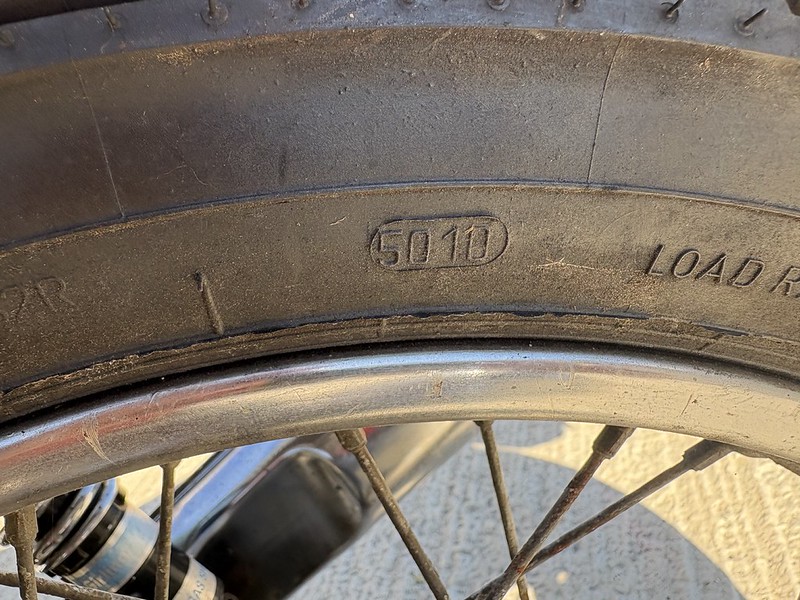
The tyres look almost unused, but seem to date from 2010 so I’ll order some new ones on Monday.
IMG_6505 by Alan Othen, on Flickr

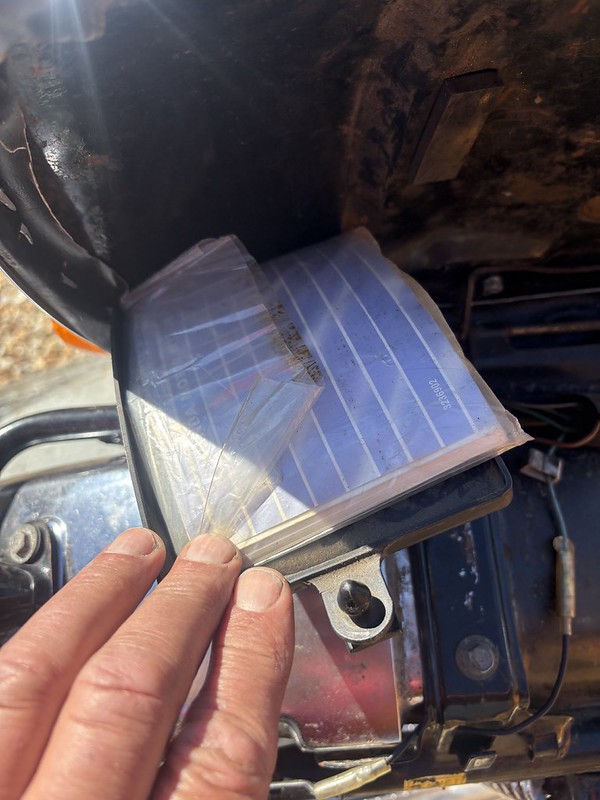
It looks like it has been well cared for in the past - not only does it still have its original owner’s handbook in its wallet under the seat:
IMG_6509 by Alan Othen, on Flickr

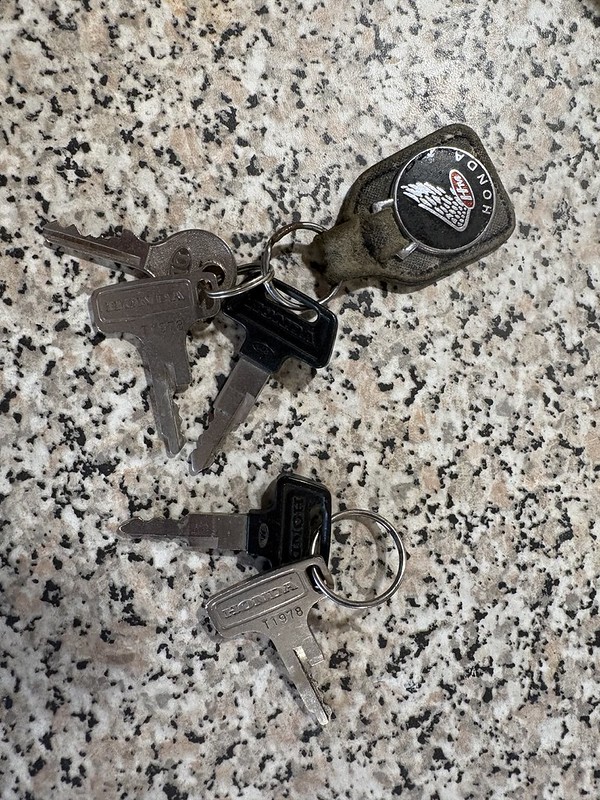
… but it also has two sets of original Honda keys.

IMG_6496 by Alan Othen, on Flickr

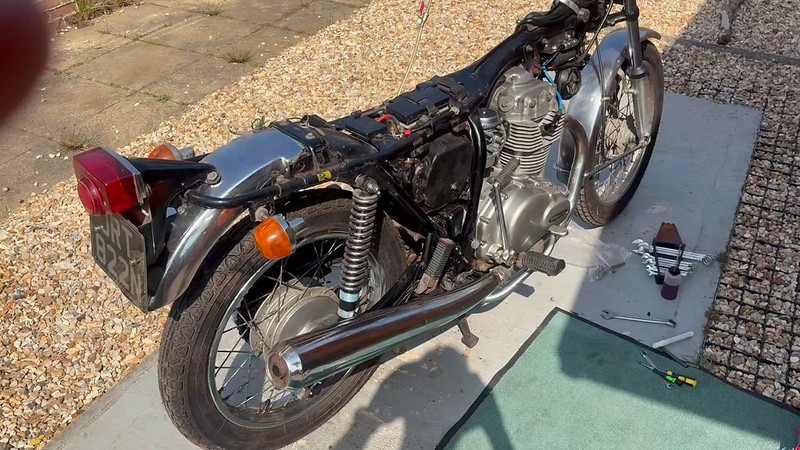
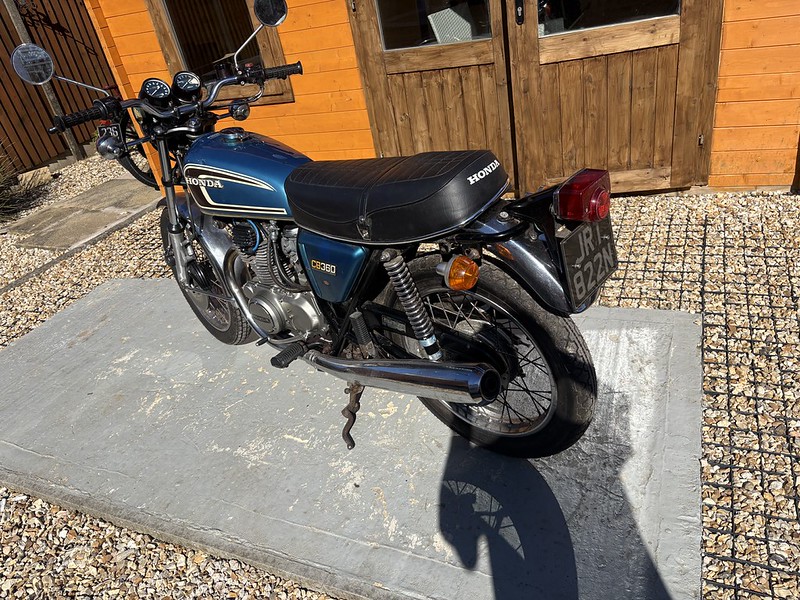
The first thing that struck me was the motorcycle’s originality. Apart from the rear shock absorbers (Hagen) it all seems to be there - even the silencers (mufflers) seem to be the original Honda parts, as does the seat cover - which are both rare:
IMG_6506 by Alan Othen, on Flickr

I think the wheels will polish up okay, the paintwork has a few dings and scratches here and there - but I don’t intend to change that, I like the ‘patina’ and it just needs a clean and polish up.
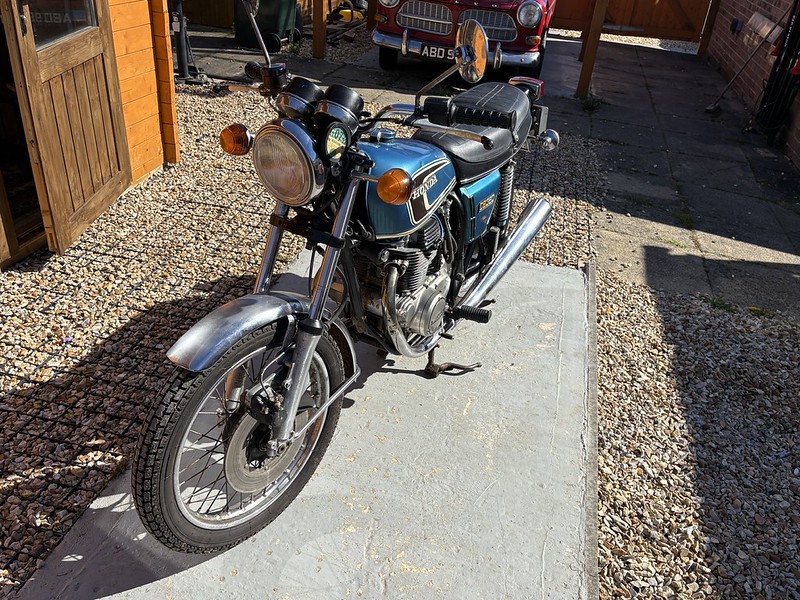
IMG_6507 by Alan Othen, on Flickr

A quick look at the motorcycle this evening established a few faults. It does start and run, but had a misfire on the right hand cylinder which results in the occasional backfire. I suspect there is a blocked pilot jet, so I’ll put the carburettors in the ultrasonic washer tomorrow and see if that solves the problem. You may be able to hear the problem in this short video:

IMG_6495 by Alan Othen, on Flickr

Also there appears to be no clutch - perhaps the cable is broken? I’ll have a look tomorrow.

Overall this looks like a very nice bike, much better than I was expecting. Tomorrow I’ll do some triage and work out what it needs. It doesn’t look like it will need much in the way of parts: just oil, a set of tyres and tubes and maybe a clutch cable. The rest looks like it will be down to cleaning and adjusting what is already there.

I’ll register the motorcycle as an ‘historic vehicle’ next week - so tax exempt and no requirement for annual MoT (roadworthiness) testing.

Until the next episode :cool:
 
Looks good overall. I suspect it originally came with only one key for all locks (two keys when new but both identical appearance), like the older Honda style key. I'd guess the seat lock was changed requiring the second plastic-headed looking later Honda key.
 
Last edited:
Looks good overall. I suspect it originally came with only one key for all locks (two keys when new but both identical appearance), like the older Honda style key. I'd guess the seat lock was changed requiring the second plastic-headed looking later Honda key.
Ah! now that is interesting. It is the plastic headed keys are the ones that operate the ignition, the plain metal ones are for the seat lock. That would suggest that it is the ignition barrel that has been changed at some time in the past 51 years.

Many thanks,

Alan :cool:
 
Ah! now that is interesting. It is the plastic headed keys are the ones that operate the ignition, the plain metal ones are for the seat lock. That would suggest that it is the ignition barrel that has been changed at some time in the past 51 years.

Many thanks,

Alan :cool:
My original thought was that the plastic-headed key WAS the original but I tried to validate that by looking at parts fiches. But the parts fiches apparently show aftermarket replacements in the pictures that use the older style Honda key, and though I owned a new CB360 for about 6 months when they first came out in '74 I can't recall what the original keys looked like so I wasn't sure.
 
Many thanks - it doesn’t really matter much - it would seem that one of the locks has been replaced some time in the past 51 years - but I have both keys.

:cool:
 
Many thanks - it doesn’t really matter much - it would seem that one of the locks has been replaced some time in the past 51 years - but I have both keys.

:cool:
Yeah, it's just more convenient when you only have one key to carry. Did you check the fork lock too?
 
Yeah, it's just more convenient when you only have one key to carry. Did you check the fork lock too?
I’d agree about just having one key, but it isn’t a show stopper.

The third key on the bunch with the leather Honda tag (the all metal one with the part circular head) seems to operate the steering lock.

Alan :cool:
 
I am enjoying this CB360 recommissioning project so much; it was a lovely spring day today, so I spent most of the day (except when walking Bob the dog) in the back yard working on it. The motorcycle is the sort of project I like: no need for parts, just putting everything back together properly and adjusting correctly.

First I took the tank and seat off, drained the small amount of petrol and gave the tank a good look over. I’m pleased to report it is pretty good, no rust inside and pretty clean, even in the petcock bowl. The seat has come up really well: it has no rips or tears, after a bit of leather reconditioner it looks lovely.

Next the carburettors came off.: the diaphragms looked fine to I put the rest in the ultrasonic washer and they came up really well.The motor runs pretty well now:

IMG_6518 by Alan Othen, on Flickr

… the popping and backfiring on the right cylinder has gone, it ticks over at a nice, steady 1,200RPM and revs up nicely. It sounds like at least one tappet is a bit loose, so adjusting them all will be the next job, then I’ll check the ignition timing with a strobe and clean the plugs. I think the carburettors still need a bit of balancing, then the Motor should be running nicely.

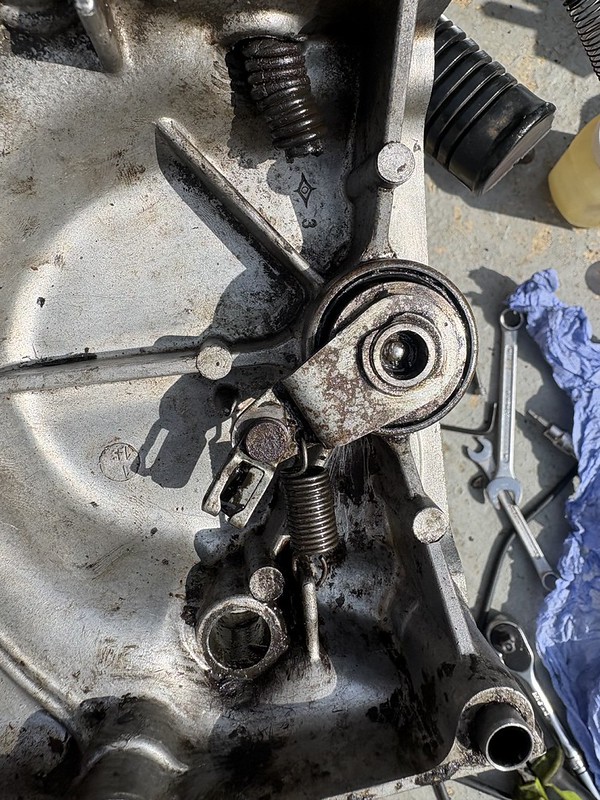
Readers may recall there was no clutch when I collected the CB360. I’d already taken the adjuster cover off to remove the carburettors, everything looked okay, but it was impossible to adjust it properly. This caused my lots of head scratching. I was convinced there was something wrong with the actuation mechanism:

IMG_6515 by Alan Othen, on Flickr

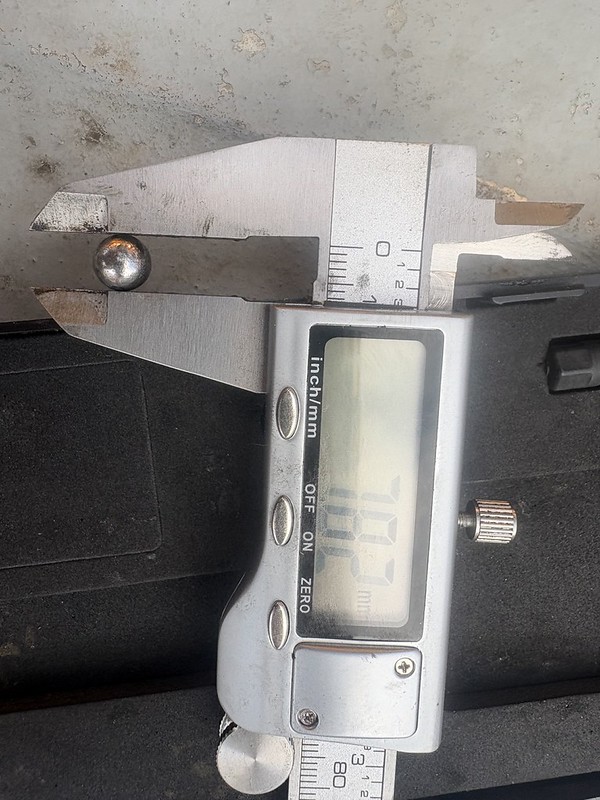
I spent quite a while looking through the workshop manual, and noticed the point about there being a 10mm ball bearing between the mechanism and the actuation rod. It was a bit of a long shot, but I’d run out of other ideas, so I look the ball bearing out for a shooftie, only to find:

IMG_6520 by Alan Othen, on Flickr

… it was only 7.8mm! What was the story? Did the chap that changed the cam chain and tensioner lose the 10mm ball bearing taking it apart, and just used whatever he/she found lying around the workshop? Amazingly, I managed to generate a 10 mm ball bearing by dismantling an old thrust bearing (I have no idea which machine it came from). I’m pleased to say that the clutch can now be adjusted properly and it buttery smooth.

I just wonder whether that issue with the clutch was the reason the motorcycle was taken off the road in 2012, perhaps after the cam chain was changed? That is entirely speculation on my part - but it is plausible - and it was just so satisfying to work out and fix that long standing issue for no cost. I feel quite smug.

In other news the throttle cable for the CB200 arrived in the mail today - so that project can move forward as well.

Coolio :cool:
 
Last edited:
One step forwards… one step back.

Having succeeded in getting the CB360 running pretty well yesterday, I thought I‘d do a few service items before finishing with the carburettors. First I checked and adjusted the tappets, then the points gaps, and finally the ignition timing with a strobe.

Everything seemed fine, so the covers were screwed back on and the motor re-started to warm up - then the popping and banging on the right hand cylinder reappeared and the motor will only run fir a minute it two before cutting out.

It seems to be a fuelling issue on the right hand cylinder, I checked the plugs and could see the left one is quite dark (as one might expect after a start up), whilst the right one is ashen white. Having carefully cleaned both carburettors, I wonder whether this somewhat intermittent fault could be due to a faulty diaphragm on the right hand side?

Tomorrow I’ll run a compression test, although I’m pretty sure this isn’t a mechanical issue it will eliminate one more possibility, and at the same time make sure both cylinders have a spark. There were no obvious leaks in the diaphragms when I took them out to clean the carburettors, the only way I can think of to test them is to swap them left for right and see if the problem moves with the change.

Any advice on how to check our the diaphragms would be much appreciated.

Alan
 
I took a few steps backwards in order to eliminate possible issues today. First I re-checked the tappet clearances, then did a compression test and got 160 psi on both sides, which is fine for a cold engine. Having eliminated mechanical issues I turned my attention to the ignition: checked the points gap, static timing (it was a bit retarded), tested the condensers and had a look at the sparks. Next it was time to start the engine and see if it was still playing up - in which case the poor running would have to be down to the fuel/air system.

The starter wasn’t engaging well - it turned out the battery was Holding less than 12v - I‘ve ordered another (less than £25 delivered for an AGM battery - cheap as chips). The motor still started on the kick starter (after a bit of persuasion) and ran pretty well:

IMG_6527 by Alan Othen, on Flickr

… the left side float bowl was overflowing a little, so I plugged it to let the motor run up for about 5 minutes - everything seemed good. After turning off and starting again (on the kick starter) the intermittent rough running had returned on the right hand cylinder.

IMG_6528 by Alan Othen, on Flickr

… I just don’t know what is wrong yet, but there is something amiss with the fuel system on the right hand cylinder. The carburettors have to come off again anyway to adjust the float level on the left side, so I’ll inspect the diaphragms carefully, as also blow all the jets through again with an air line.

I have a feeling this could be a diaphragm issue, I don’t have much evidence to support that apart from I’ve checked everything else. I’m sure the new battery will help get the bike set up more easily - it should be here Wednesday.

Alan :cool:
 
Last edited:
When you're trying to sort out issues with low speed or idle performance and the battery is below 12v, know that trying to run the engine below 2500 to 3000 rpm where the charging system begins replenishing the battery only allows the battery to further discharge. A discharged battery might still allow the engine to start with the kickstarter, but it doesn't guarantee good spark on both coils when sitting at less than 12v.
 
When you're trying to sort out issues with low speed or idle performance and the battery is below 12v, know that trying to run the engine below 2500 to 3000 rpm where the charging system begins replenishing the battery only allows the battery to further discharge. A discharged battery might still allow the engine to start with the kickstarter, but it doesn't guarantee good spark on both coils when sitting at less than 12v.
Yes, of course you are right - but I didn’t have any alternative apart from just wait for the new battery to arrive. I have to take the carburettors off again anyway, so I’ll have another look inside them tomorrow so the bike is back together in time for the new battery on Wednesday. I’m sure you are right and the new battery will help diagnose what is wrong - it might even fix the rough running problem!

I had an idea that I might swap the diaphragms from side to side and see if the poor running moves to the left cylinder.

Many thanks.

Alan :cool:
 
Yes, of course you are right - but I didn’t have any alternative apart from just wait for the new battery to arrive. I have to take the carburettors off again anyway, so I’ll have another look inside them tomorrow so the bike is back together in time for the new battery on Wednesday. I’m sure you are right and the new battery will help diagnose what is wrong - it might even fix the rough running problem!

I had an idea that I might swap the diaphragms from side to side and see if the poor running moves to the left cylinder.

Many thanks.

Alan :cool:
It may or may not be contributing to the problem, and swapping sides with the diaphragms is a good idea as well, but I just wanted to be sure you realized that even though it does run with a battery below 12v it could still be causing weak spark and adding to the troubleshooting frustration. And that's a decent price for an AGM so hopefully you're on your way to more riding and less diagnosing. (y)
 
It may or may not be contributing to the problem, and swapping sides with the diaphragms is a good idea as well, but I just wanted to be sure you realized that even though it does run with a battery below 12v it could still be causing weak spark and adding to the troubleshooting frustration. And that's a decent price for an AGM so hopefully you're on your way to more riding and less diagnosing. (y)
Absolutely yes - comments are gratefully received. With hindsight I should have ordered a new battery as soon as I picked up the motorcycle - I suspect it is at least 15 years old. Everything is easy with hindsight though - and on Saturday I was keen to just get on with the recommissioning.

I am really looking forward to riding this little motorcycle :cool:
 
Last edited:
It looks exactly like the CB250G5 that I had brand new back in the day. ( Same 'N' registration year as yours ) Mine never ran properly, often limped home running on one cylinder. At the time, I was convinced that there was something wrong with the carbs, lost count of the times I took them off and refitted them. I found that really difficult back then, even with nice pliable rubber manifolds, so kudos to you wrestling with what must be age hardened parts.

I was a clueless 18/19 year old back then. ( As opposed to a clueless 72 year old now ). With hindsight, I'm convinced that my problems were ignition related, and that's where I'd be looking at now. I would also be kicking down the door of the dealers workshop, given that it was a brand new bike. Back then, I was scared of the big greasy blokes down at my local dealer, who just laughed at my non functioning front disk brake. I also didn't help myself by insisting on fitting Champion spark plugs, which just had to be better than those crappy NGK things :unsure: ( which might be a clue, problem seemed to go away for a while on new plugs, but of course it should not have needed new plugs every few hundred miles, clearly just masking some underlying issue )
 
Last edited:
It looks exactly like the CB250G5 that I had brand new back in the day. ( Same 'N' registration year as yours ) Mine never ran properly, often limped home running on one cylinder. At the time, I was convinced that there was something wrong with the carbs, lost count of the times I took them off and refitted them. I found that really difficult back then, even with nice pliable rubber manifolds, so kudos to you wrestling with what must be age hardened parts.

I was a clueless 18/19 year old back then. ( As opposed to a clueless 72 year old now ). With hindsight, I'm convinced that my problems were ignition related, and that's where I'd be looking at now. I would also be kicking down the door of the dealers workshop, given that it was a brand new bike. Back then, I was scared of the big greasy blokes down at my local dealer, who just laughed at my non functioning front disk brake. I also didn't help myself by insisting on fitting Champion spark plugs, which just had to be better than those crappy NGK things :unsure: ( which might be a clue, problem seemed to go away for a while on new plugs, but of course it should not have needed new plugs every few hundred miles, clearly just masking some underlying issue )
Now that is interesting.

Just consider this and give me your thoughts:

1. I topped up the old battery and left in on charge overnight using the ‘recovery’ mode on my CTEC charger, it seemed to have come back to life and was reading a healthy 13.5v this morning.
2. I re-fitted the battery, and the motorcycle started first turn of the key - and I mean instantly (much better than the laboured starting of the past few days) and seemed to be running perfectly - no popping or banging, good tickover and throttle response for about 4-5 minutes then just died.
3. The battery voltage was then down to 12.3v - so half charged.
4. The motor did start again. But it was more difficult (even though the engine was warm by then), it would not tick over, but was running a bit rougher when above 2,000 RPM.
5. The charging system seems to be working fine - it was reading well over 13v with the engine running at 4-5,000 RPM.
6. With the engine stopped the battery voltage quickly drops to 12.2v. I’ll monitor it over the next hour to see if it goes any lower.

I‘m wondering whether this whole issue could be down to a battery not holding charge? I should have a new battery here on Wednesday, so I’ll be able to test that theory then. I can’t really think of anything else on the ignition side of things.

The carburettors will have to come off again today to fix the very slightly overflowing float on the LHS, so I’ll inspect the diaphragms and swap them side to side as well as blow through the jets (again) at the same time.

Intermittent faults like these are so very difficult to diagnose. Any ideas?

Alan
 
Whilst walking Bob on the beach I developed a theory that perhaps the real issue lies with the regulator/rectifier (as well as the battery, which may have become bad as a result). One thing I noticed when the motor was running this morning was that the charging voltage did reach over 13v (with the motor at 4-5,000 RPM), but it took a long time to get there - probably 30 seconds to a minute, but it quickly dropped down to 12.3v and the engine stalled once the throttle was released. I’m wondering whether there might be a chain of events whereby the R-R isn’t maintaining the voltage correctly, and perhaps that is the intermittent bit, which is leading to a weak spark?

Aftermarket R-R unit’s for this motorcycle aren’t expensive (less than a tenner) so I’ve ordered one, at that price it is worth taking a chance.

Any other ideas would be welcome.

Alan :cool:
 
Whilst walking Bob on the beach I developed a theory that perhaps the real issue lies with the regulator/rectifier (as well as the battery, which may have become bad as a result). One thing I noticed when the motor was running this morning was that the charging voltage did reach over 13v (with the motor at 4-5,000 RPM), but it took a long time to get there - probably 30 seconds to a minute, but it quickly dropped down to 12.3v and the engine stalled once the throttle was released. I’m wondering whether there might be a chain of events whereby the R-R isn’t maintaining the voltage correctly, and perhaps that is the intermittent bit, which is leading to a weak spark?
The quick drop probably represents the old tired battery's inability to hold the voltage level it reached while running, but the slow rise in voltage could easily be explained by two things - the charging system isn't overly robust so any voltage gains take a few minutes of riding, and the tired battery probably doesn't react to a modest charge rate very quickly.
Aftermarket R-R unit’s for this motorcycle aren’t expensive (less than a tenner) so I’ve ordered one, at that price it is worth taking a chance.
Hopefully that very inexpensive unit will suffice, because the best one available for the money would cost you significantly more because of our current global tariff and shipping conditions. http://www.sparckmoto.com/Products/Detail/7
 
Thank you for that. A new battery may fix the issue. My idea with the cheap R-R is to identify whether that could be an issue by changing the old one, I fitted a cheap 3 phase one to my Goldwing and had no issues with it in the 3 years I owned the motorcycle.

if the replacement does help the problem I’m happy to buy a more robust solution, such as you suggest. I notice that is a 5 wire (rather than 4) fit so I’m guessing it needs an additional one from the switched live for the voltage sensing?

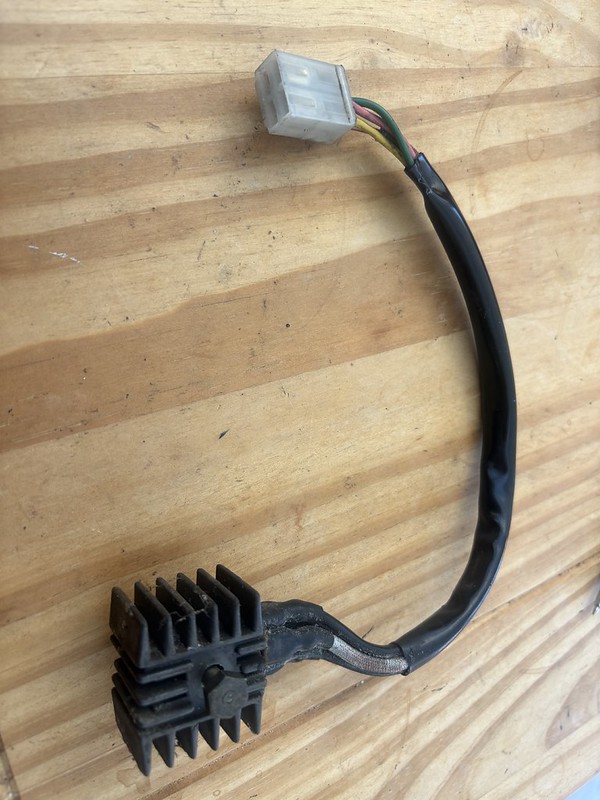
I took the opportunity to remove the old R-R whilst the carburettors were out and access is good:

IMG_6538 by Alan Othen, on Flickr

… nothing obvious wrong, but I think the original fitment.

Many thanks,

Alan
 
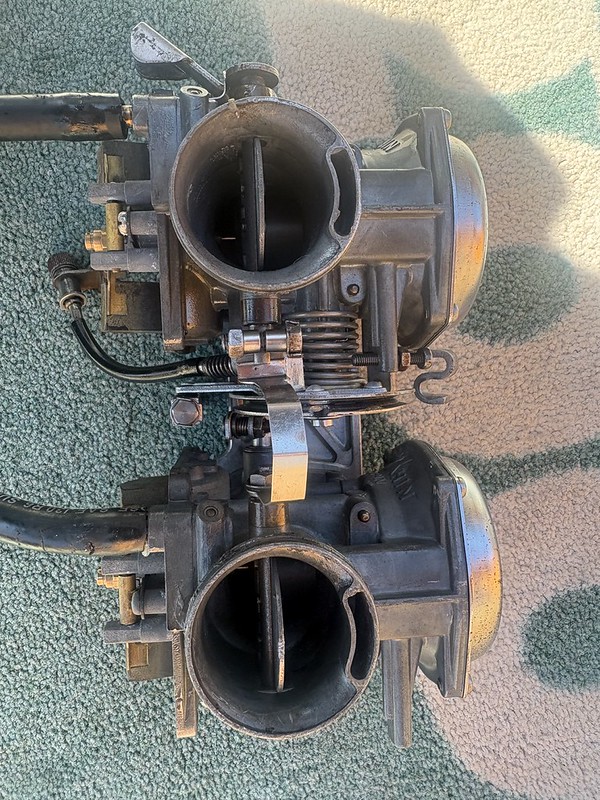
This being the second time I’ve removed the carburettors, it was a much quicker job this time. First I tested both diaphragms by blowing into the sausage shaped hole at the top of each inlet tract - I could hear the slides rising and falling as they should, so I decided the diaphragms must both be good and so left them well alone.

IMG_6537 by Alan Othen, on Flickr

Next I’ve addressed the float height in the left side float chamber - it seemed fine, but I’ve tweaked the float downwards a smidgeon, hopefully that will solve the issue. Finally I blew through all 4 jets again. The carburettors are ready to go back on the motorcycle again, but I’m tempted to leave that until the rectifier-regulator arrives to make access easier.

Alan :cool:
 
I’ve bought the regulator rectifier inside and checked the forward and reverse bias to the +ve (red/white) and ground (green) wires, and everything seems to check out exactly as it should. It seems to be working fine, so I’ll clean up all the connections and re-fit it, plus the carburettors, tomorrow.

The only working hypothesis I have left now is that a bad battery is causing all the problems - I can’t think of anything else - unless anyone has another idea?

Hopefully the new battery will show up tomorrow and I’ll be able to test my remaining theory :cool: .
 
The battery in my lawn tractor was totally dead so I removed it and put it on a 6 amp charger overnight. By morning it was 13.5 Volts and it stayed around 13 Volts after removing the charger. Sounds good, right? Unfortunately it dropped to 0 with any load. New battery from Napa solved the problem. Point is, batteries can be tricky to diagnose.
 
This being the second time I’ve removed the carburettors, it was a much quicker job this time. First I tested both diaphragms by blowing into the sausage shaped hole at the top of each inlet tract - I could hear the slides rising and falling as they should, so I decided the diaphragms must both be good and so left them well alone.
They could still have a tiny cracks in them which will only get bigger over time and further movement, but at least they're accessible after the carbs are mounted.
 
I thought I’d already replied to this - perhaps a few posts have disappeared from the forum?

Alan :cool:
 
I thought I’d already replied to this - perhaps a few posts have disappeared from the forum?

Alan :cool:
That might be the case, I don't know if you saw it but we went through a brief highjacking of our domain. It went to a wedding planner site, I'm waiting to hear the explanation for it, but in the process some posts could have gotten lost.
 
That might be the case, I don't know if you saw it but we went through a brief highjacking of our domain. It went to a wedding planner site, I'm waiting to hear the explanation for it, but in the process some posts could have gotten lost.
Gosh! Was that just an engineering accident, or a deliberate act by someone do you think?

Alan :cool:
 
The discussion on rectifiers and regulators has disappeared - which is a pity.

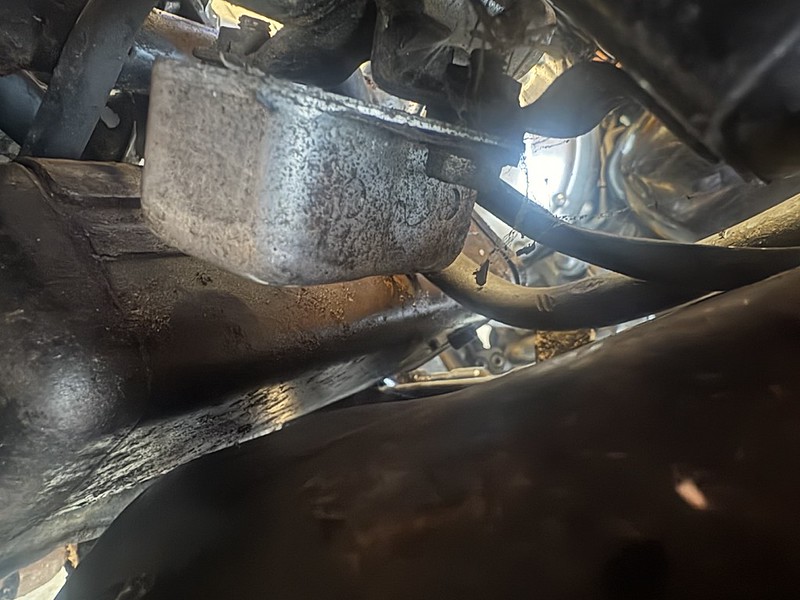
I turns out that the CB360 has a voltage regulator as well as a rectifier (the solid state bit I pictured in the above - and tested out fine). It is this tobacco tin under the air filters:

IMG_6541 by Alan Othen, on Flickr

… I have no way of testing that at the moment- and the Honda workshop manual covers it very poorly. The Sparckmoto item mentioned above would replace both boxes; the item I’ve ordered for a tenner may (or may not), we will see:

Cheap RR

This has been a voyage of discovery in the sea of 1970s Honda electrical systems :cool:
 
Last edited:
If it is anything like my 175's, the cheap Ebay reg / recs are fine. I've had the same one on my CL175 for around 10 years now, without issue. I'd expect to see a tad over 14v when the engine is running at 3k rpms or more. I've used both the four and five wire types, both appear to work exactly the same, the fifth wire is the voltage sense wire, I connected this but don't pretend to understand what its function achieves. I removed the voltage regulator, superfluous with the new combined unit.

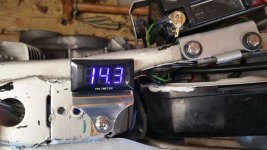
Engine running on test stand, cheapo reg rec fitted. Voltage rises to 14.3v, then stays at that level as engine is revved.

1777446645549.jpeg
 
Many thanks. I had no problems with a cheap regulator/rectifier on my Gold Wing in the 3 years I owned it.

The fifth wire is to monitor rectified voltage, I think most folk use the black wire that goes to the voltage regulator, then just terminate the alternator live and earth wires to the regulator (from the wiring diagram it looks like they should be yellow and green). Once that is done it looks like the old regulator can be removed. Is that what you did?

I‘m not sure whether the cheapo one I’ve ordered will turn out to be a 4 or 5 wire solution. Either way I may try removing the regulator - see if everything still works.

The original setup I have seems to top out at about 13.3v, which seems a bit low to maintain a battery in good condition to me. I’m hoping the new battery will solve the poor running issues, if it does I’ll do some experimenting with the R-R.

Alan :cool:
 
Gosh! Was that just an engineering accident, or a deliberate act by someone do you think?

Alan :cool:
Though it did look like a deliberate highjacking, it was apparently caused by a server update. The explanation I got from our host is here.
 
Another episode of ‘The Honda CB360 Mystery’.

I’d made myself a list of jobs that needed doing whilst reassembling the motorcycle, once Bob and I got back from an early morning walk on the beach I got on with them.

First I’d noticed the pop rivets that fixed the capacitor bracket onto the coils was a little loose - it was a fiddly job to remove it, carefully adjust the rivets with a big hammer, a punch and the bench vice, and re-fit it, but it eliminated one possible source of problems. Whilst I was doing that I noticed the bullet connectors that join the coils, condensers and points weren’t pushed in properly - that again was a fiddly job for a chap with enormous hands as the wires are only just long enough. I wondered whether that could have been the source of the bike’s issues all along?

Next up was the carburettors. First I removed both diaphragms, inspected them up to the light, and installed them each in the opposite carburettor. They looked good and passed the blow test. I set up a rig to test the adjustment I’d made to the LHS float height with them off the bike - I really didn’t want to take everything apart again - all was good.

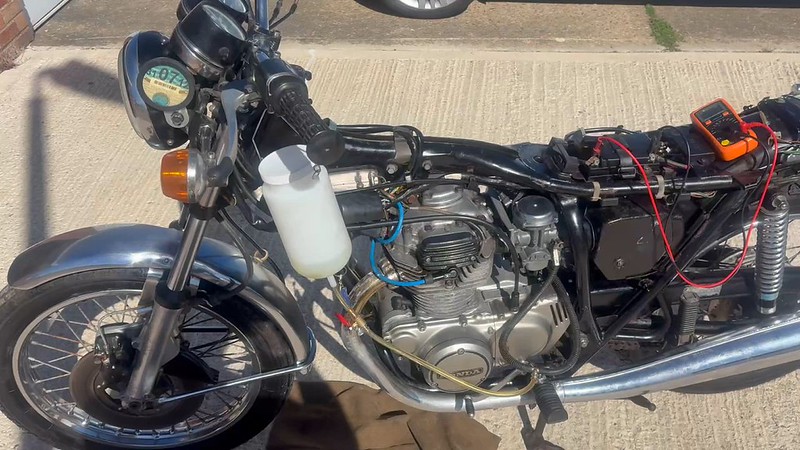
The old rectifier was replaced as it had passed testing and the replacement won’t be here for a few more days. It was easy to get the carburettors back on this second time, so it was time to hook up a fuel feed and try it out. The replacement battery hadn’t arrived, but I’d charged the old one in recovery mode again overnight… and the result was:

IMG_6544 by Alan Othen, on Flickr

All of a sudden everything seems okay (subject to a bit of fettling). What made the difference? Was it riveting on the condensers more firmly, or perhaps pushing home and crimping tight the bullet connectors to the coils - or perhaps even changing the diaphragms from side to side? We may never know.

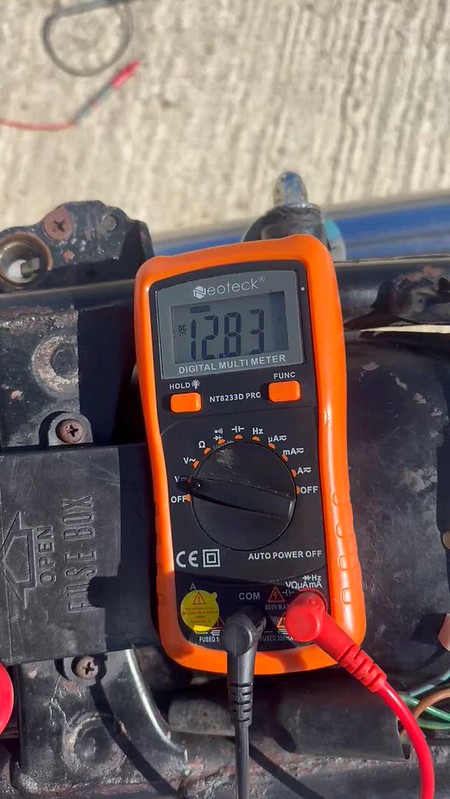
I‘m still not convinced the charging system is working exactly as it should:

IMG_6545 by Alan Othen, on Flickr

… but I’m hoping the new battery (arriving via Mr DPD in about an hour) may address that. There are still a few issues to resolve: an oil leak from the left exhaust tappet cover where a gorilla did it up once (I have some new ones on order), balance the carburettors and a bit of fine tuning, change the oil and clean the filter, re-fit the tank, seat and side panels. The motor is producing quite a lot of discharge via the breather pipe at the back of the head, but if it hadn’t been run for 15 years then there is probably quite a bit of moisture trapped here and there. It will probably improve after a bit of use and an oil change.

I‘m looking forward to riding this motorcycle :cool:
 
Last edited:
… and a second episode for today.

The battery showed up towards the end of the afternoon, a sealed AGM one that was already charged. It was fitted in a few minutes and was all good news.

IMG_6548 by Alan Othen, on Flickr

Starting is very easy, the charging issue seems to be completely solved and the motorcycle is generally running much better :cool: .

I was itching to try the bike out, so quickly put the CB360s party clothes back on:

IMG_6549 by Alan Othen, on Flickr

… and we set off for a few laps (maybe a mile or so) of our local residential roads. Everything was lovely: a sweet engine, excellent 6 speed gearbox, good brakes. Then, on about the fourth lap I pulled in the clutch and the issue I thought I’d fixed a few days ago with a 10mm ball bearing reappeared. The operating mechanism over-rotated and stuck with the clutch disengaged.

It only took a few minutes to pull the rear cover off and have a shooftie. It looks to me that either this part:

Clutch ball retainer

… or this part:

Clutch adjuster cam

… or this one:

Clutch actuating lever

- or maybe a combination of all three - has worn beyond limits. They are all in stock at David Silver Spares, rather than just guess I’m tempted to order all three parts this evening, and maybe get delivery on Friday (before the bank holiday weekend). The total cost for all 3 parts would be around £80.

Does anyone have any experience of these parts failing (or exceeding wear limits) and is able to advise on what is most likely?

Any advice would be much appreciated.

Alan :cool:
 
I'm sure you're aware of this, but a big part of keeping that style mechanism within the operating rage of its design is proper adjustment. It's best to start with both ends of the cable's adjusters reduced to zero adjustment (maximum cable slack) and then performing about 95% of the adjustment at the straight screwdriver-slotted adjuster on the front sprocket cover first, then use the lever and/or lower cable adjuster for fine tuning. Getting the center of the mechanism as close to zero movement to the clutch rod end as possible is key.
 
I'm sure you're aware of this, but a big part of keeping that style mechanism within the operating rage of its design is proper adjustment. It's best to start with both ends of the cable's adjusters reduced to zero adjustment (maximum cable slack) and then performing about 95% of the adjustment at the straight screwdriver-slotted adjuster on the front sprocket cover first, then use the lever and/or lower cable adjuster for fine tuning. Getting the center of the mechanism as close to zero movement to the clutch rod end as possible is key.
Many thanks - I’ll just run through that again this evening in case I don’t need any parts after all (it is too late to order anything today anyway, it’s nearly 19:00 here).

… back in 10 minutes :cool:
 
I may have missed this in your thread but did you disassemble the clutch actuating mechanism, clean and inspect for wear or damage other than the incorrect ball bearing? If so was there any obvious wear and how did the parts compare to the photos of the parts from DSS? Also what shape is the clutch rod in?
 
Well how wonderful was that: I just ran through the Ancientdad method of clutch cable adjustment and that seems to have saved me £80 worth of motorcycle spare parts.

Many thanks :cool:
 
I may have missed this in your thread but did you disassemble the clutch actuating mechanism, clean and inspect for wear or damage other than the incorrect ball bearing? If so was there any obvious wear and how did the parts compare to the photos of the parts from DSS? Also what shape is the clutch rod in?
See above - I think this issue was down to operator error on my part.

To answer: yes, I took the actuating mechanism apart and removed the solidified grease. I couldn’t see anything obviously wrong, apart from the incorrect size BB. I packed it with some fresh grease - but I’m guessing I should pump some grease in via the nipple?

Alan :cool:
 
See above - I think this issue was down to operator error on my part.

To answer: yes, I took the actuating mechanism apart and removed the solidified grease. I couldn’t see anything obviously wrong, apart from the incorrect size BB. I packed it with some fresh grease - but I’m guessing I should pump some grease in via the nipple?

Alan :cool:
Glad you got it sorted. It wouldn't hurt to give it a little more grease, worst thing that can happen is a blob of excess on the garage floor later.
 
Whilst adjusting the clutch last evening I noticed the headlamp doesn’t work - the bulb and fuse look okay; it is probably a bullet connector pulled out.
 
The headlamp now works - fixing it was a little bit more involved than I’d expected, but the good news was it was free.

It was easy enough to trace the voltage from the master switch on the right hand bar to the fuse, and then to the big rubber boot under the tank. I still had 12v at the black/yellow wire there, so the fault had to be either in the switch on the left bar or the wires going to or from it. There was no continuity from the black/yellow wire to either the blue or white that end up in the headlamp - it was unlikely that both wires had failed simultaneously, so the most likely culprit was the hi/lo switch:

IMG_6553 by Alan Othen, on Flickr
…sure enough, I don’t think this chap had moved in the 15 years since it was last used on the road and the continuity tester was giving MΩ readings on both circuits. Several soakings with contact cleaner spray and working the switch to and fro perhaps a hundred times had both circuits below an Ω, which would be good enough for government work.

It looked to me like a PO had fitted an aftermarket headlamp - this one was made in France, so I don’t think that was one of Mr Hondas - also it took a H4 bulb. I don’t think the person that fitted it understood electricity though, and just guessed where the wires went - the way it was wired only the pilot lamp and the telltale for the high beam can possibly have worked. It didn’t take long to connect it up properly, and now I have a nice, working headlamp.

I wonder whether anyone can help me with routing the wiring (also the throttle and clutch cables) under the tank?

IMG_6554 by Alan Othen, on Flickr

I can’t find a good picture in the Honda manual, this is the way I found it - I’m guessing the cable guide on the tank mount does something to make things tidier, but I can’t work out what it is. Does anyone have a picture of what it should look like?

Many thanks chaps,

Alan
 
Readers may recall there was no clutch when I collected the CB360. I’d already taken the adjuster cover off to remove the carburettors, everything looked okay, but it was impossible to adjust it properly. This caused my lots of head scratching. I was convinced there was something wrong with the actuation mechanism:

IMG_6515 by Alan Othen, on Flickr

I spent quite a while looking through the workshop manual, and noticed the point about there being a 10mm ball bearing between the mechanism and the actuation rod. It was a bit of a long shot, but I’d run out of other ideas, so I look the ball bearing out for a shooftie, only to find:

IMG_6520 by Alan Othen, on Flickr

… it was only 7.8mm! What was the story? Did the chap that changed the cam chain and tensioner lose the 10mm ball bearing taking it apart, and just used whatever he/she found lying around the workshop? Amazingly, I managed to generate a 10 mm ball bearing by dismantling an old thrust bearing (I have no idea which machine it came from). I’m pleased to say that the clutch can now be adjusted properly and it buttery smooth.

I just wonder whether that issue with the clutch was the reason the motorcycle was taken off the road in 2012, perhaps after the cam chain was changed? That is entirely speculation on my part - but it is plausible - and it was just so satisfying to work out and fix that long standing issue for no cost. I feel quite smug.

The bearing called for in the reference material is a #10 ball bearing, not a 10mm ball bearing. They are not the same by any means.

What that means is you need a 5/16, which is about 8 mm ball bearing. Or, in other words, what was in there to start with was correct.

Honda part number 9621110000

A couple of clicky's which give the dimensions and description....


Last edited:
The bearing called for in the reference material is a #10 ball bearing, not a 10mm ball bearing. They are not the same by any means.

What that means is you need a 5/16, which is about 8 mm ball bearing. Or, in other words, what was in there to start with was correct.

Honda part number 9621110000

A couple of clicky's which give the dimensions and description....


Well, it would appear that you are right - and you have exposed my lack of knowledge of ball bearing sizes!

I‘ve kept the old ball bearing (of course, never throw away anything with 50 year old motorcycles) and could go back to using it in a trice, but the issue is with it fitted the clutch was impossible to adjust properly, whereas with a 10mm ball bearing fitted it works very well. I’ve just been out on a 4 mile ride around our local residential area, deliberately using the clutch much more than I needed to: lots of stops, starts and gear changes - and it worked very well.

I suppose one explanation might be that over the past 50 years (but only just over 20,000 miles) there might have been significant wear on the other components, which the larger ball bearing is perhaps making up for?

Thank you for pointing out my ignorance and error, but for the time being I think I’ll leave the motorcycle as it is and maybe just think about the issue.
 
I missed your reference to the size and should have picked up on it, but if the 10mm diameter still fits fully into the lifter mechanism then the range of adjustment available has allowed compensation for the 2mm size difference. I believe you mentioned that your original had flat spots worn on it, which would have made proper adjustment more difficult if it were still being used. Either way, if it's working well now and adjusts properly, it's a win.
 
Well, it would appear that you are right - and you have exposed my lack of knowledge of ball bearing sizes!

I‘ve kept the old ball bearing (of course, never throw away anything with 50 year old motorcycles) and could go back to using it in a trice, but the issue is with it fitted the clutch was impossible to adjust properly, whereas with a 10mm ball bearing fitted it works very well. I’ve just been out on a 4 mile ride around our local residential area, deliberately using the clutch much more than I needed to: lots of stops, starts and gear changes - and it worked very well.

I suppose one explanation might be that over the past 50 years (but only just over 20,000 miles) there might have been significant wear on the other components, which the larger ball bearing is perhaps making up for?

Thank you for pointing out my ignorance and error, but for the time being I think I’ll leave the motorcycle as it is and maybe just think about the issue.

I'm certainly not a bearing guru by any means. Coincidentally I was dealing with this exact part and measurements on my own bike earlier this week. I have an obscene amount of NOS bearing balls on hand from a lifetime of restoring old bicycles so I was at my work bench with the lap top open researching and measuring bearing sizes when I stumbled on the little nuance of #10 vs 10mm in this application.

It sounds like the slight oversize is compensating for wear on your bike so that's a definite win.
 
Thank you both Ancientdad and 10mm Nut - every day is a school day.

I rather suspect I’ve hit on a solution for my particular motorcycle by coincidence. I had no idea of the difference between a No,10 ball bearing (which sounds like it might have been invented by IK Brunel) and 10mm. By chance the 50 year old parts allow the smaller ball to roll around a bit too much, whereas the 10mm seems to just fit. Well, that is my hypothesis until it gets proven wrong!

Many thanks chaps.

Alan
 
Our classic vehicles can take us from elation to despair (and vice versa) in a heartbeat!

I’ve been enjoying the CB360 running very well so much that I took it out for yet another spin this evening. I only did about 5 miles, but it was a lovely spring evening and the motorcycle was a delight to ride. When I got back to my driveway the motor started popping and banging on the right cylinder only. It wouldn’t run below about 2,000 RPM, wouldn‘t tick over and re-starting had again become really difficult.

We were back to the beginning - I quickly pulled the right hand plug and the spark seemed weak (wandering around the electrode) and erratic. I also checked the charging voltage - which was down to 12.7v - having been 13.3v yesterday. I can’t help thinking these two issues are related.

Now, this could be a bad coil playing up when it gets warm - so to eliminate that I’ll swap the coils side to side tomorrow. I think we can discount carburettor Issues.

So, assuming the problem doesn’t move to the left cylinder when I swap the coils tomorrow, I’m thinking there is some component in the rest of the electrical system that is affecting the coils’ output. A Google search turned up this quote from a forum (I don’t know the source - it was one of those AI generated quotes) in italics and indented:

I've finally, after a lot of fooling around, got my 450 running perfectly. I had problems with the Keyster carb kit needles and needle jets but I also had a problem with my ignition switch. After it got hot the switch resistance would go up and it would get to the point where I had about 4 volts dropped across the switch. The coils didn't like running at 8 volts so the engine would develop a miss-fire as it got hotter. I wound up installing a relay to feed the coils directly from the battery using the original coil feed from the switch to trigger the relay. I had the bike out for a long ride today and it ran perfectly the whole day for the first time. I've been frustrated with the damn thing and have been ignoring it for quite a while so I'm glad I finally figured it out. :D
Well, the reason I checked the voltage drop across the switch was because I had checked and re-checked everything else and found numerous small problems along the way. I replaced the coils with aftermarket ones and found one set of points with an intermittent short to ground. I found that the needle jets and jet needles in the Keyster carb kits did not have the correct profile and caused poor part throttle performance. I finally was re-checking the voltage to the coils when I found the problem. The voltage supplied by the ignition switch is plenty to turn on the relay as it only draws 150 milli-amps. Hindsight says I should have checked this sooner, after all it is a 40 year old switch! :roll: Oh well lice an learn I guess. I'm glad someone else found this information useful.
After it got hot the switch resistance would go up and it would get to the point where I had about 4 volts dropped across the switch. The coils didn't like running at 8 volts so the engine would develop a miss-fire as it got hotter. I wound up installing a relay to feed the coils directly from the battery using the original coil feed from the switch to trigger the relay

My apologies to the author - I really don’t know what was the source. That article got me thinking - and looking at the wiring diagram to see how the electrons get to the coils. It looks like the route is from the main fuse, via the ignition switch (the one with the key) to the run/kill switch on the right side bar then on to the coils. So, could either the ignition switch or the run/kill switch have an intermittent poor connection that cuts the voltage going to the coils, and somehow also affects the charging rate? I can see on the wiring diagram that there is an electrical connection from the keyed switch to the voltage regulator - so that is certainly possible.

Adding an ordinary 4/5 post relay - switched by the run/kill switch and allowing a connection directly from the main fuse to the black/white wire that feeds the coils would be a trivial job. I’m wondering whether anyone on this forum has already done something similar?

I did a similar modification on my 1963 Volvo Amazon, although actually a relay that powered up the starter solenoid - but because the 60 year old ignition switch was getting very tired. It works fine.

The first thing to do is swap the coils over then. If the problem doesn’t just move to the left cylinder (in which case I’ll need a new coil) then if the motor is still in its fault state I’ll see what voltage is getting to the coils. After that I could either try to fix whatever is causing a voltage drop to the coils (if that is happening) or just fit a relay.

Any thoughts would be much appreciated - am I on the right track?

Alan :cool:
 
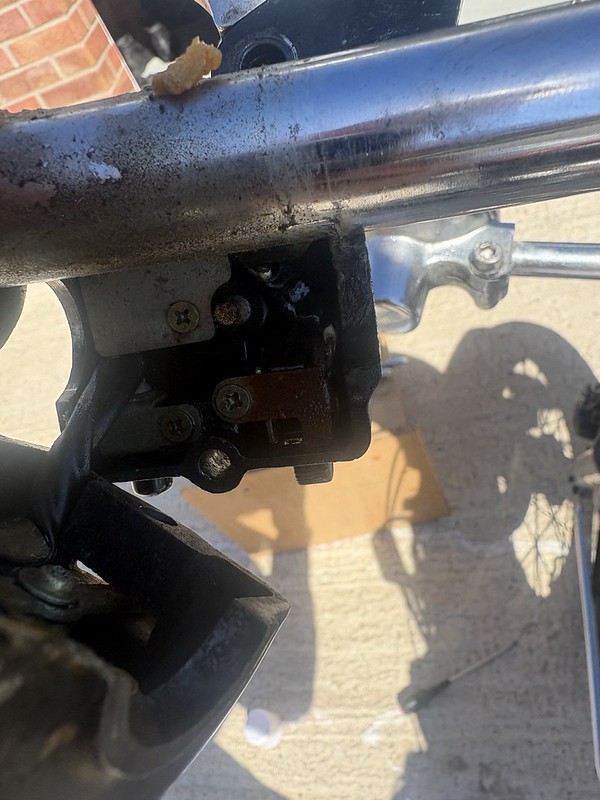
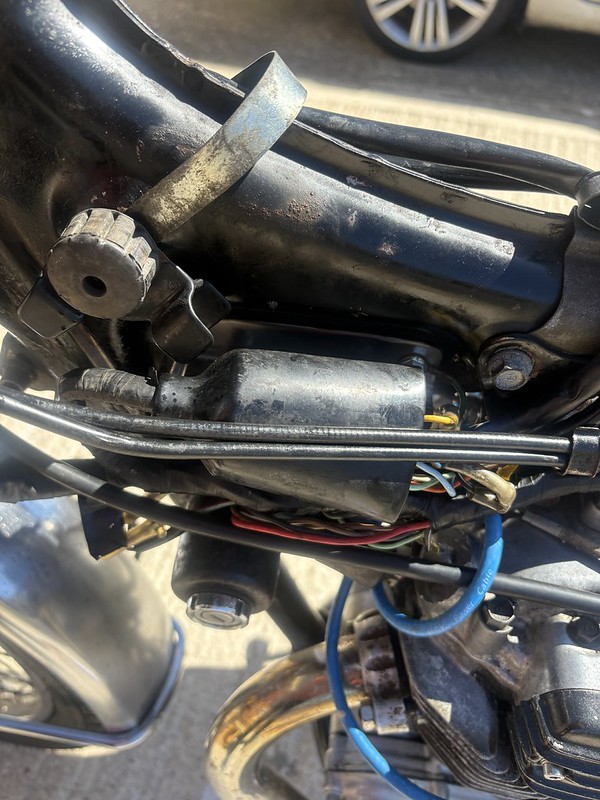
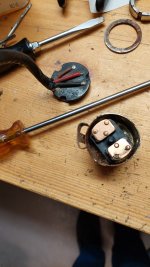
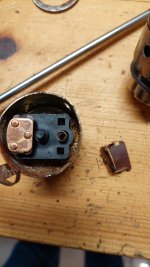
If you suspect the ignition switch, some of the earlier switches can be taken apart and cleaned. Not sure about the CB360 switch though. On my CB450 I was getting 12v in but not getting any voltage out of the switch. Turned out to be dirty contacts. Tabs on the back of the switch can be bents back to open up the switch, then it's a matter of cleaning the contacts and not losing any of the little springs or balls. Use some dialectric grease upon reassembly.
20241015_173613.jpg 20241015_173715.jpg 20241016_133046.jpg 20241016_133337.jpg
 
… just a thought on the above. Thinking back to this morning and the hi/lo switch on the left hand bar that was the cause of the headlamp not working - I wonder whether it would be worth opening the right hand switch, spraying in a good amount of contact cleaner and working the kill switch around a hundred or so times? I suspect the switch will be a couple of metal contacts that haven’t moved for the past 15 years.

Has anyone else had a problem like this?

Alan
 
If you suspect the ignition switch, some of the earlier switches can be taken apart and cleaned. Not sure about the CB360 switch though. On my CB450 I was getting 12v in but not getting any voltage out of the switch. Turned out to be dirty contacts. Tabs on the back of the switch can be bents back to open up the switch, then it's a matter of cleaning the contacts and not losing any of the little springs or balls. Use some dialectric grease upon reassembly.
View attachment 57321 View attachment 57322 View attachment 57323 View attachment 57324
Many thanks. I have a feeling that the ignition switch may have been changed because the motorcycle has different keys for it and the seat lock. I suppose it won’t be too difficult to check the voltage drop across the switch and so get an idea of whether it is worth taking it apart for cleaning.

Alan
 
Back
Top Bottom