The gas tank - patch with super glue and baking soda? Seriously, try it some time.
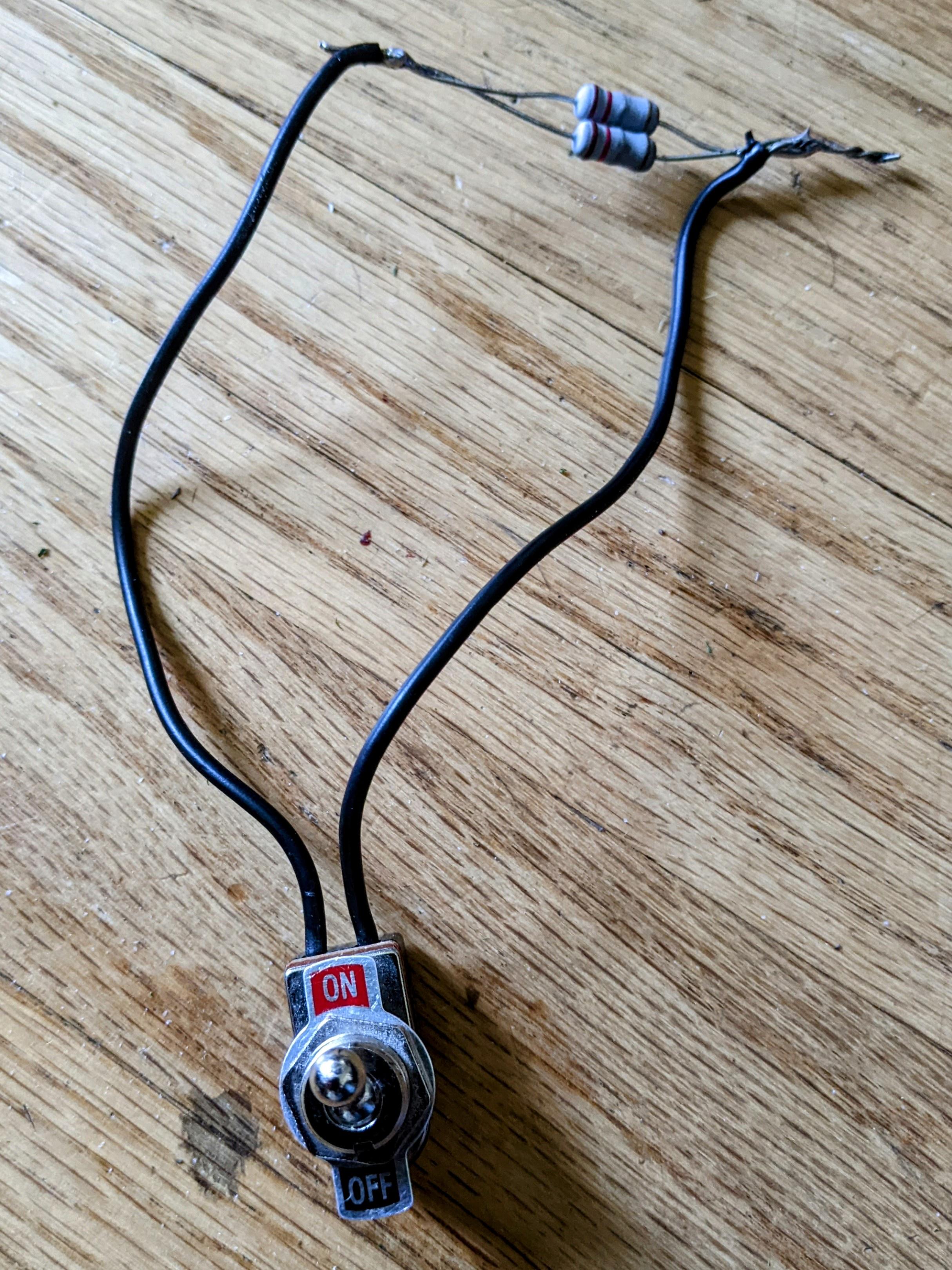
So I did try my hand at measuring over my 3 fuses to use as current measure load resistors.
They seem to work very well for that purpose, if you think about, makes perfect sense,
they have to consume enough to work, but not get in the way. So for example with multimeter
I measured 280mV across the 7A fuse with filament headlamp on, consuming around 4A.
Now the measure across the 3 fuses can be interesting, but limited. But you could also
just arrange a add on fuse with some wire and arrange it where you want to measure current.
It's easier to find fuses compared to low ohm resistors.
If you have more than one channel on the scope, realize they will share a common
negative/ground path, so they are not truly independent. But if your load resistor is anchored
to ground then that can work.
It's unfortunate the output of the regulator does not go straight to the battery. Mine goes thru
the 15A fuse, and maybe up to the front to key switch, possibly thru connectors. It's a
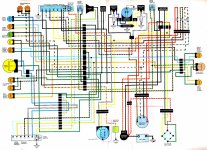
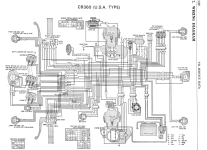
little confusing, my CM400 schematic shows Bk, G, R/W connections coming from regulator. G being ground,
other two being positive. I would expect just a single positive output. And preferably a nice chunky
short wire going to the battery and not up and down the bike harness, thru connectors and maybe the main
switch. That's disturbing. Your car alternator doesn't do that, thru switches or connectors,
it's pretty much a short fat wire trip to the battery. And then the 360 and older 500 wiring is worse
as you have the stator coil wires making trips up to the switches and back again.
Makes me wonder if the blinking is just part of that problem. Like you should get to know where those
coil and regulator wires go and if they go thru any connectors or switches, make sure those are solid. The charging
current going thru the 15A fuse should be scrutinized. The battery is the main buffer to even out those
charging spikes. If that battery is behind a bunch of switches, connectors and fuse, then those things
can go bad from large currents degrading them. Maybe scope right at filament that is blinking could see this. But a little ripple from regulator is too be expected.
I had a car headlamp connector at the lamp that was melting the plastic connector due to oxidized degraded
contacts. Head light would stop working, I'd jiggle it and it works again. After this happened again and
again, I took a closer look to see the melting and determined I needed to clean that contact as a proper fix.
So my CM400 manual indicates it does use SCR's for regulation. It's 3 phase so a little different, but still
a lot in common. I see 6 charging cycles, whereas your 360 we see 3 charging cycles per crank rotation.
Now if it's just some ripple, at faster than 60hz, why do we even see this? Old filament lamps work just
fine at 60Hz and your brain generally doesn't see any 60Hz flicker. Maybe some of that is the type of
filament, I recall annoying flicker in florescent lighting.
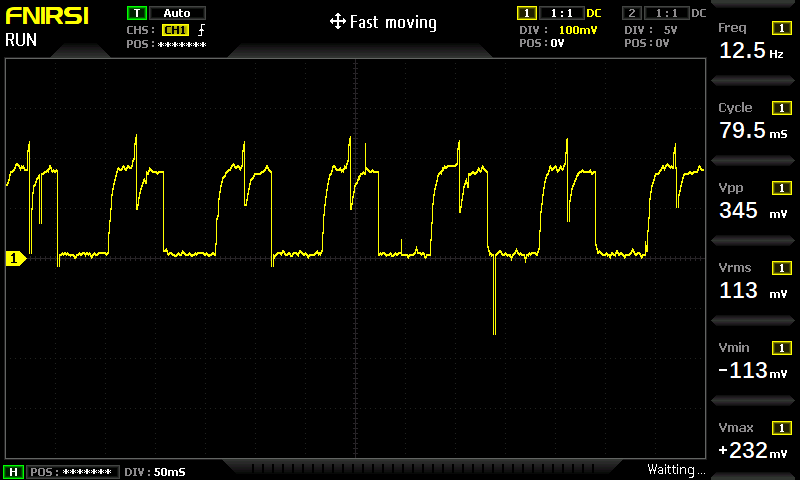
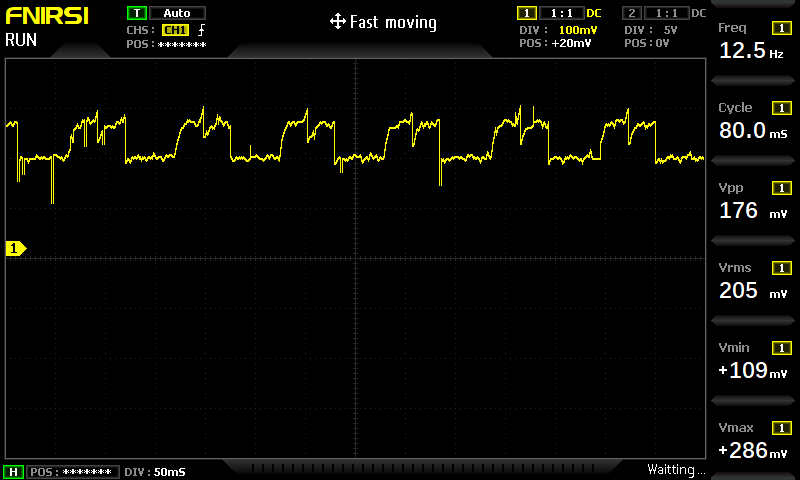
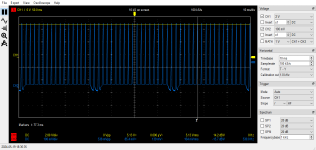
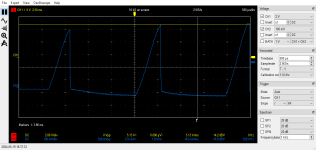
Here are some screen shots. Here is mini scope seeing charging pulses across 15A fuse.
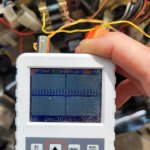
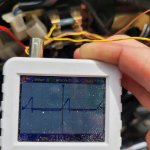
And then the Hantek scope.
I'm using the DC-CDI on this bike recently to verify that works, you can see it consuming power
after fire time at each crank rev to charge up the CDI.
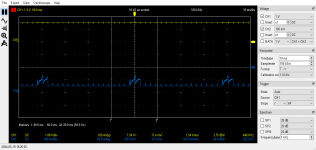
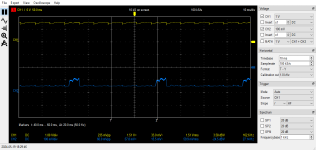
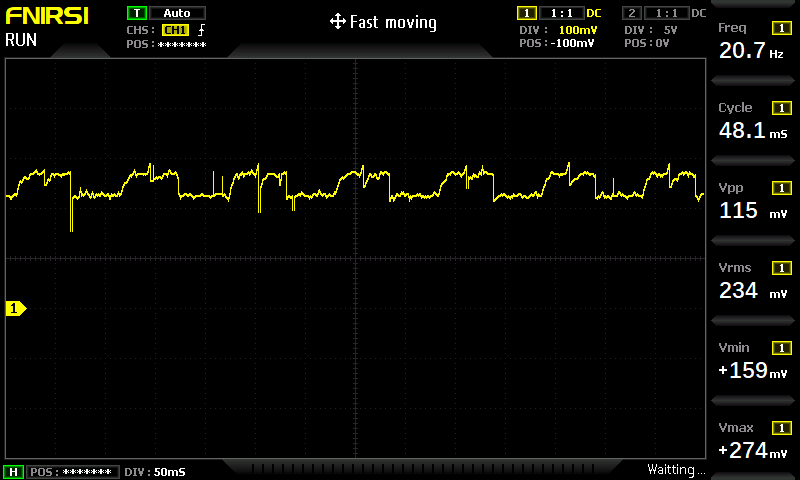
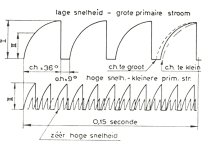
The regulator output consists of short sudden bursts of amperage(up to around 4A) delivered to
the battery. The coil is delivering it's amps and then the SCR cuts it off suddenly at a target voltage level.
The last one here is with the current probe around the fat positive wire at the battery, at 10A/v setting.



 So yes, just right at battery would not work unless you disconnect stator charge. You could just pick the signal off after that, so putting load resistor after the connection to regulator. The smaller fuses after should be after that. And measuring across fuses after is probably really small unknown resistance so involves some guess work. Multimeters do not do well at measuring anything less than 10ohms. I prefer to determine resistance against known resistance and measure voltage drop in a comparison.