Shrimpie
Well-known Member
Some progress: 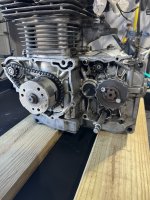




Springs and ball bearings that will go flying when you open it up!I took the wire cup to the clutch cover....need to attack the other side covers but my main job is taking the head off and finding out what's in there!

Honestly, if anything comes flying out of there it would be the first time. But we do have a member who once found a second cam chain tensioner slipper in his 360 engine when he had it apart to replace the one that was being used. The other was somehow jammed in below it, partially in the bottom end. So at this point in their lives you really never know for sure.Well....my luck usually runs that way!
If only they could talk, the horror stories we'd hear from most of them at this point.I just keep thinking how much could have happened in the last 54 years!
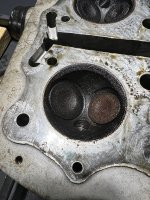
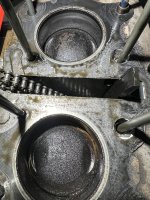
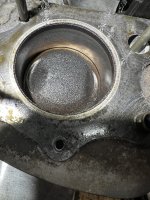
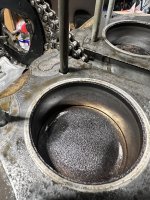
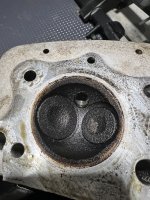
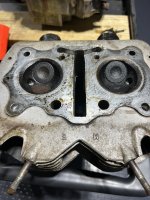


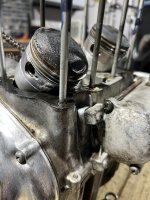
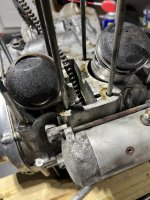
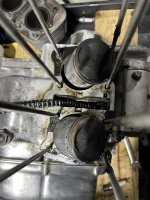
IMO, you should replace all rubber cam chain-related parts while in there, and if the age of the cam chain itself is unknown then replace it too. I'll be curious to see the inner areas of the crankcase once the cylinders are off, it will tell you a lot about how often the cam chain was adjusted. The pictures don't show any obvious wear on the sides of the cam chain tunnel, which are often quite worn off when maintenance is neglected because the loose chain slaps and rubs the walls.Wondered if that valve was burnt?
Also chewed up Cam Chain tensioner it looks like.


Short answer .... OE valves were soft and wore quickly. A thin stellite coating was supposed to help with wear but does little so what you end up with is instead of a flat surface for the valve to match the flat surface of the valve seat ... which are also soft compared to newer seats .... you end up with a cupped surface instead of flat and thus the valve recession into the head.Thank you...can you explain the 'valve recession'?

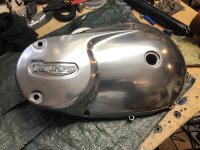
Be careful with wire brushes on those aluminum covers, it will take a lot of effort to get those scratches out. I would use progressively finer grits of sandpaper to clean up and polish those covers instead.I took the wire cup to the clutch cover....need to attack the other side covers but my main job is taking the head off and finding out what's in there!
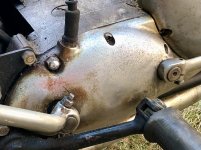

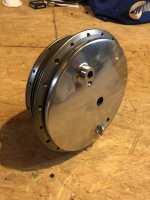
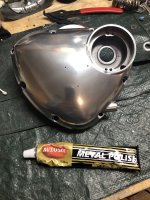

You have the later style forks with internal springs and the clamp-type top bridge, they should slide out of the top bridge and steering stem clamps if they're loosened. Sometimes words don't describe things well enough. Pictures?Good advice above.... I'll sand that side back out.
Got myself into trouble trying to remove the forks this morning. I had loosened the top, drained the oil but apparently not tightened it down enough after that. Was driving it out the bottom and the spring released. Now I can't get the top threaded back in to continues driving it out and can't get it to come free from the bottom. Any suggestions?
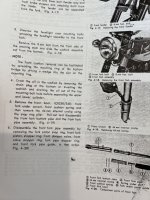
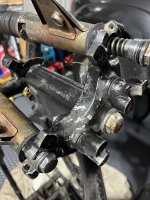
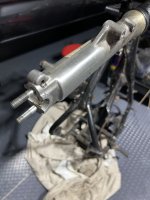
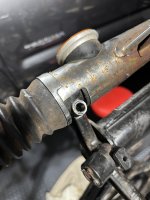
There's likely rust under the headlight ears, though I believe the later clamp-style forks were chromed all the way to the top unlike the earlier versions but I might be wrong on that. Did you use a flat screwdriver to spread the lower pinch points a little?Thanks....then they must be rusted on since they won't budge. I even took my rubber hammer and tried to force the bottom out but no luck
The steering stem is the lower clamp area, the bolts are removed but you still might need to spread them slightly to allow the tubes to slide in them.I'll try that. I thought since it was cracked and the busted piece fell out it was unnecessary but might be too tight still.
Have you taken the time to read through the engine disassembly section of the FSM? It doesn't go into the finest of details because they're intended for Honda mechanics, but it outlines the process and shows pictures of the main components.Removed the cam chain tensioner and only have one guide. The one I found was dislodged when I pulled the jug off. Should I assume it fell deep and go hunting there? How much trouble am I in?

 www.cmsnl.com
 www.cmsnl.com
If those rubber pieces are not in their slot with the roller pin, odds are that they took a dive into the oil pan.I think what I mean here are the little roller pin rubber parts....
That might work, but my first guess would be it's on top of the windage tray right under the crankshaft. You might try magnet fishing through the cam chain tunnel first.I'm hoping I can go in through the drain plug and fish around with my magnet. Sure don't want to have to split the case.