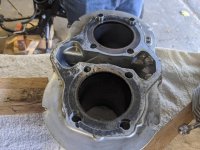
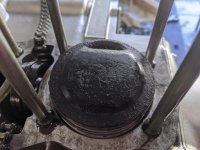
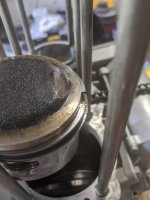
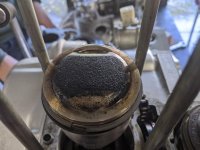
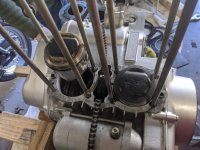
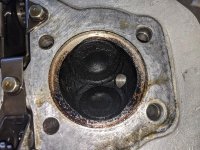
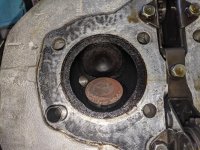
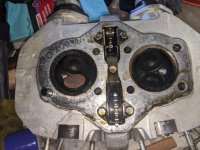
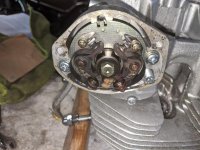
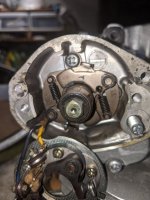
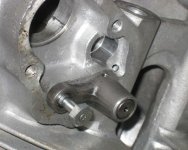
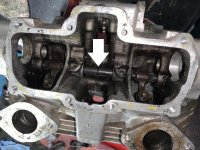
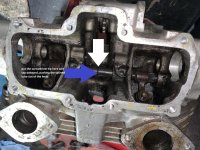
Just plain old hard work, any shortcuts often result in gouging the aluminum or removing some aluminum from the surface by digging too hard with a sharpened chisel or gasket scraper. I've tried practically everything, paint remover, carb spray, some of it helps but mostly it's just time and patience while carefully scraping. Trust me, it's the bane of all of our overhaul existences.
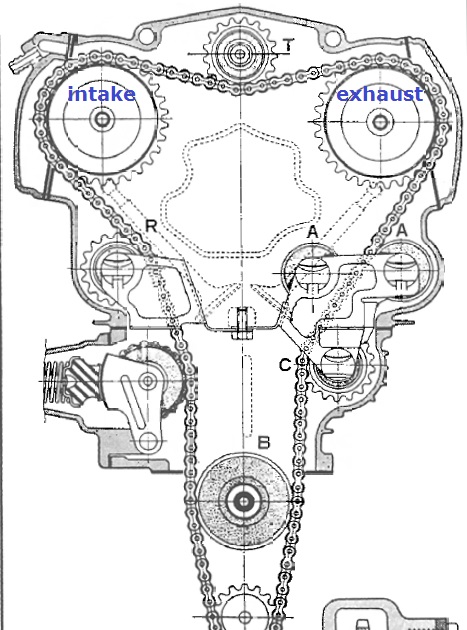
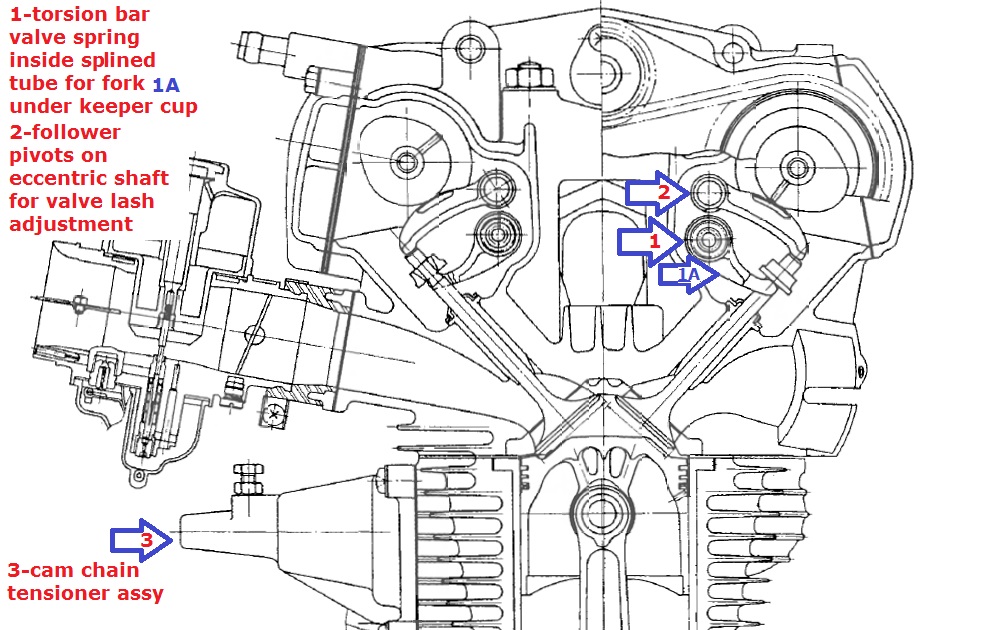
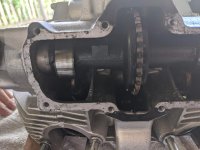
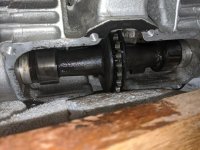
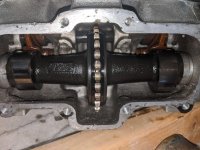
I want to try to clarify something I think you might not have clear in your mind, and if you do then correct me. You don't orient the cams while putting it together, it would be impossible to set the cams at their timing marks while assembling the head. Just as I alluded to about disassembly of the cams from the head so you don't have to force the cam bearing caps off the cams (like those guys in Houston's video incorrectly shows), you have to put the cams back in the head in the positions where all valves are closed, then use a flat screwdriver (as I mentioned a few posts earlier) to lever the cam sprocket teeth against the valve cover opening in the head to turn the exhaust cam until the mark comes up and aligns with the index on the right exhaust cam bearing next to the cam (tach drive side). The intake cam can't be positioned before you put the head on, as the mark comes up just as one of the intake valves is beginning to open and the cam will spring back since the lobe is just starting up its ramp on the follower. You align the intake cam after the head is on, right before you lift the lower section of the cam chain to the sprocket and slip the master link in. To which point, the cam chain is connected in the intake valve cover during assembly because the exhaust cam does sit still when the mark is aligned since it has both valves in play, which helps hold it in place.