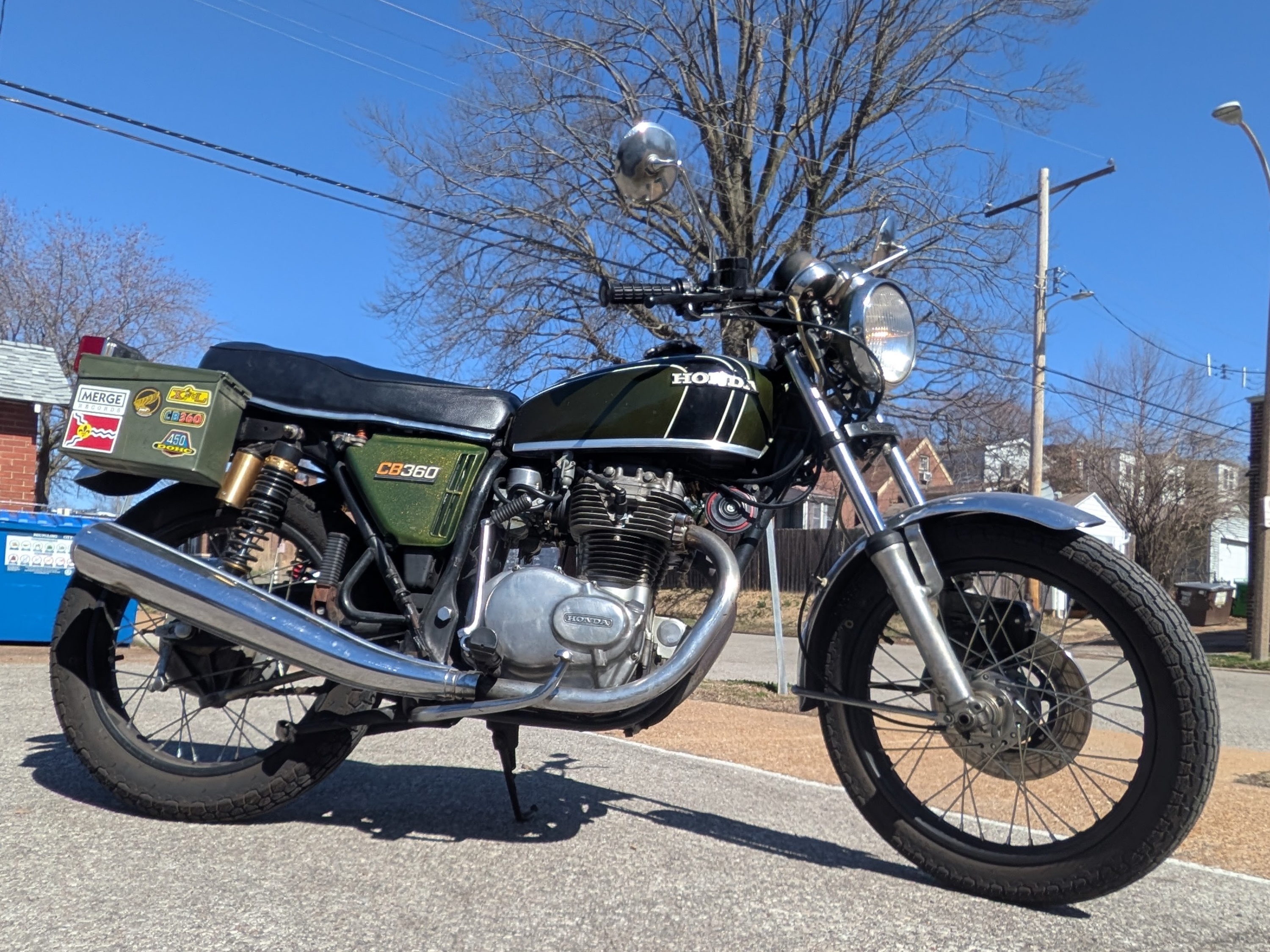
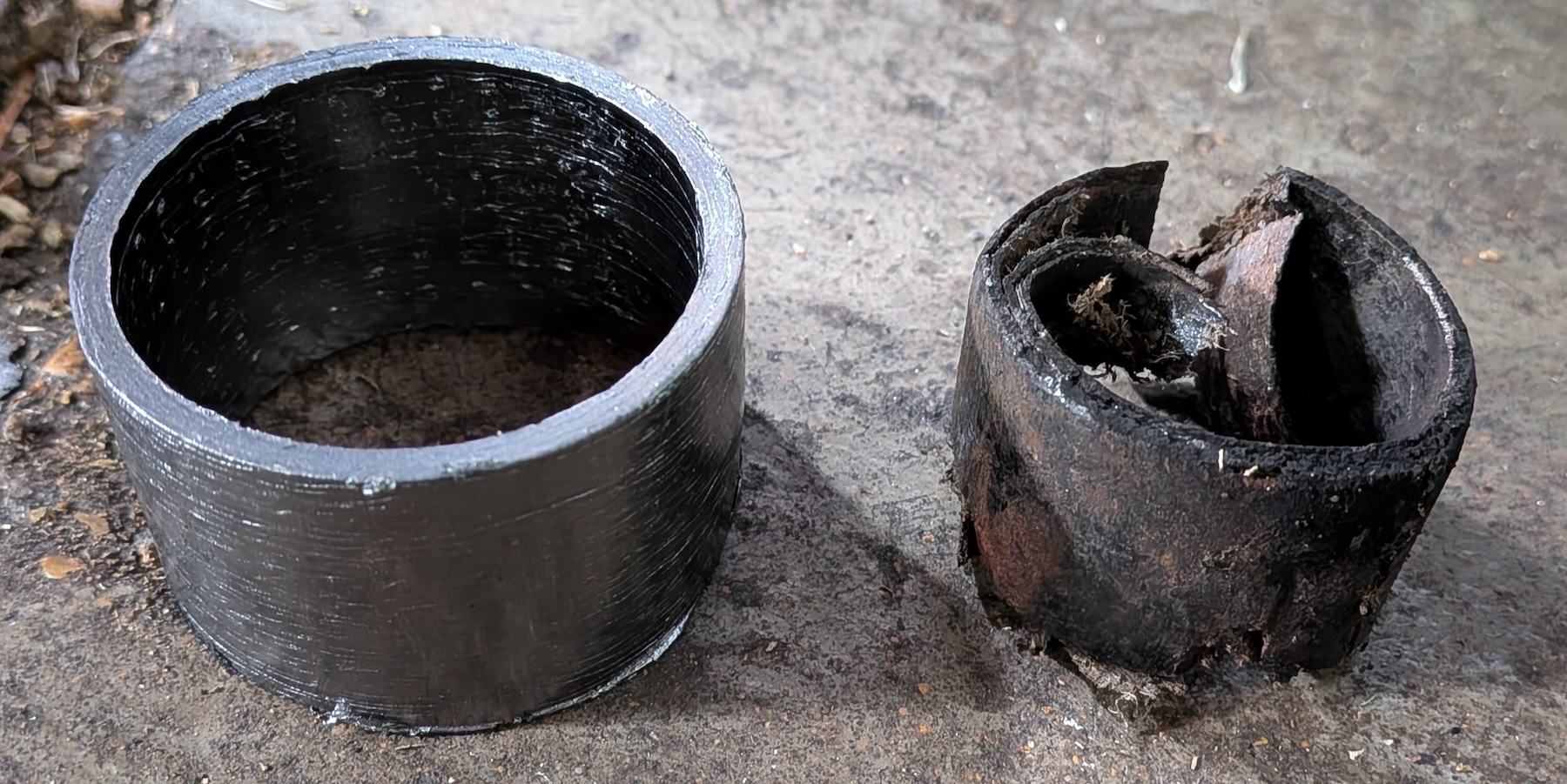
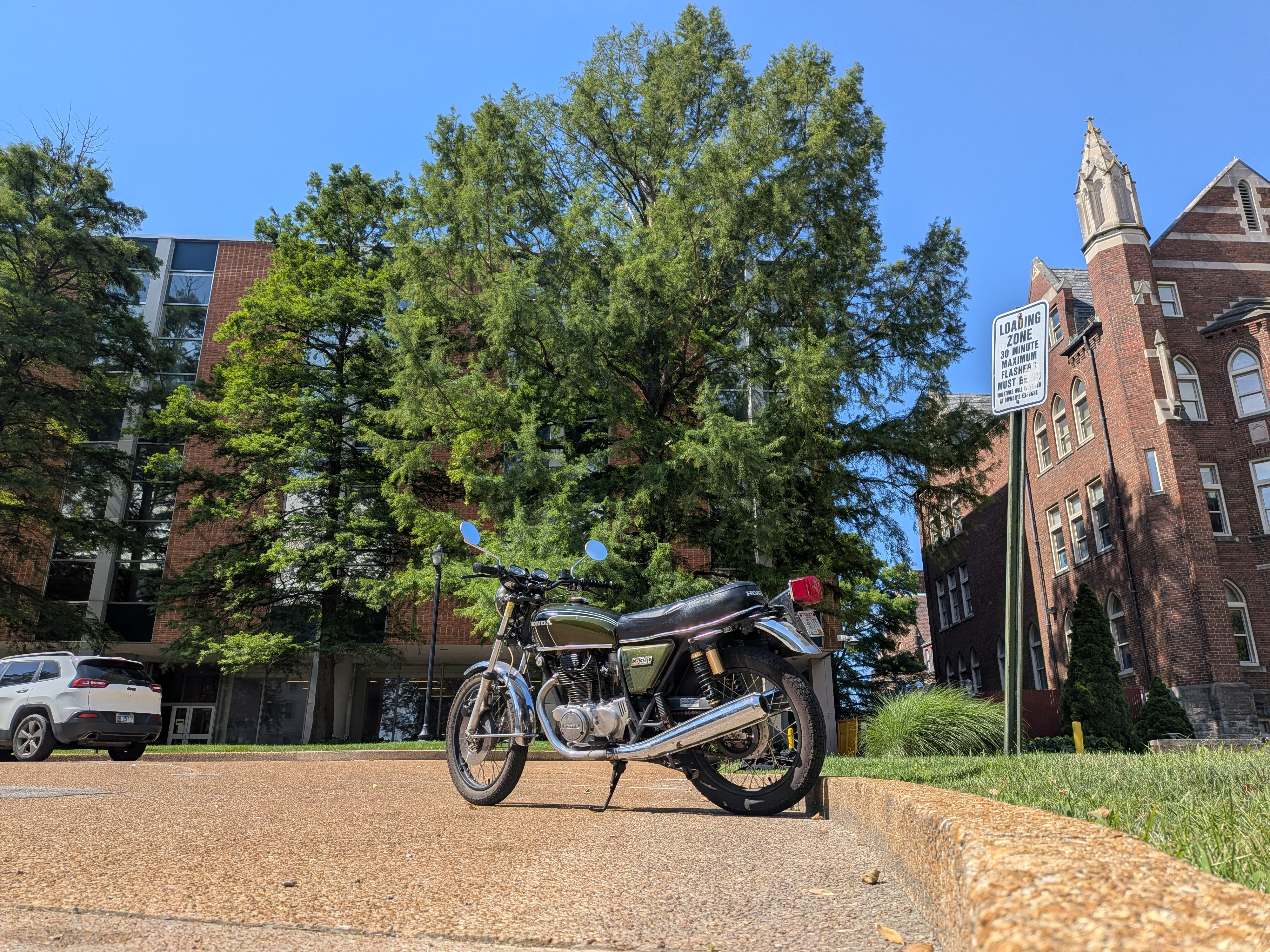
CB360G yard find — ongoing project log

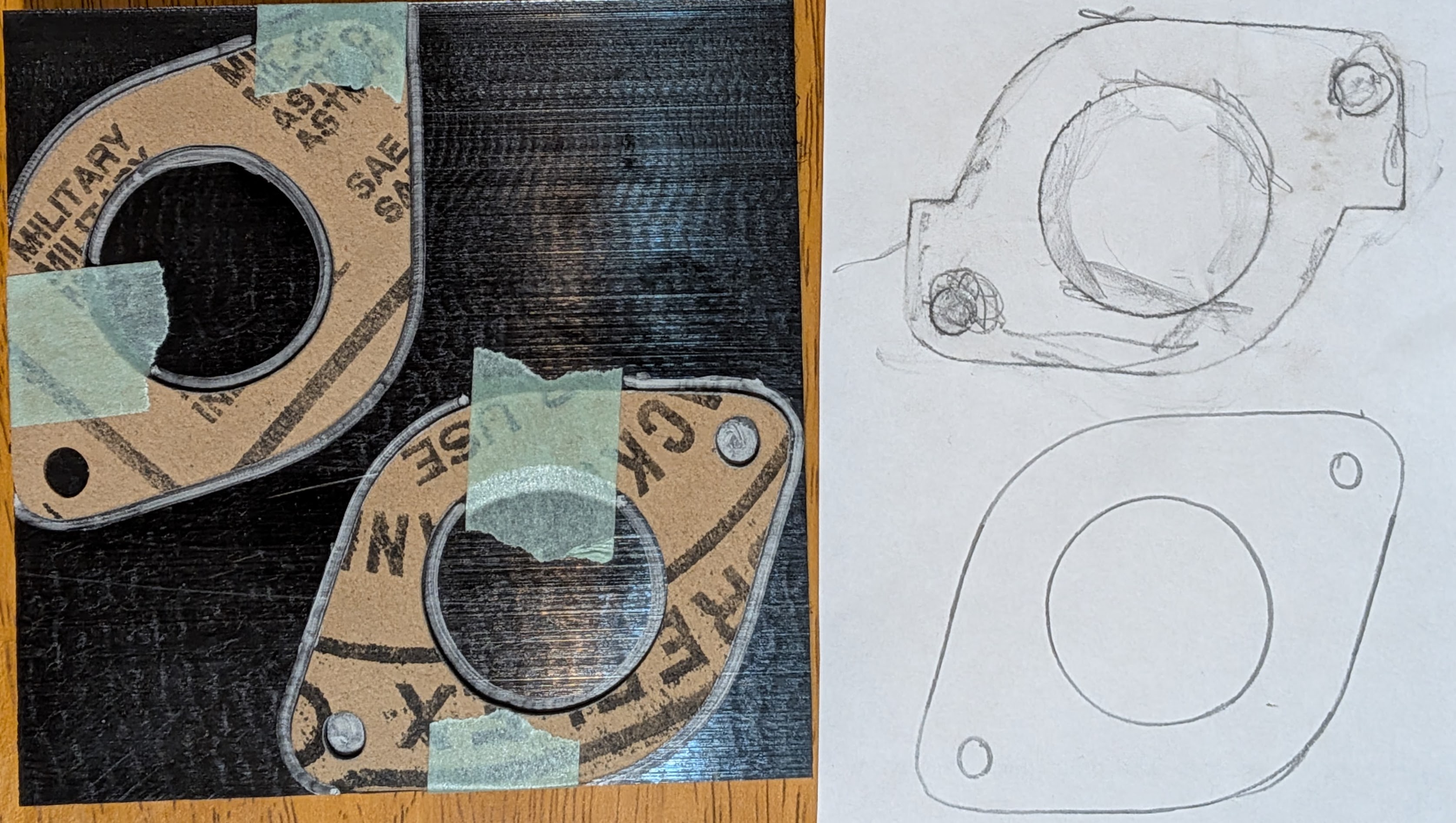
Things are moving slowly here, but today I found time to attempt production of carburetor spacers. Following @jensen's advice, I ordered a small sheet of black PEEK material 100mm x 100mm x 10mm to serve as the raw material along with a 32mm carbide hole saw to produce a clean hole in the center of the spacers. These items came from China and it took a few weeks for everything to arrive. The picture below shows a tracing of the intake flange on the CB360 head (top right) with a tracing of a CB450 insulator gasket (bottom right). The PEEK sheet is on the left with gaskets laid out for tracing.
YysfsTU.jpg


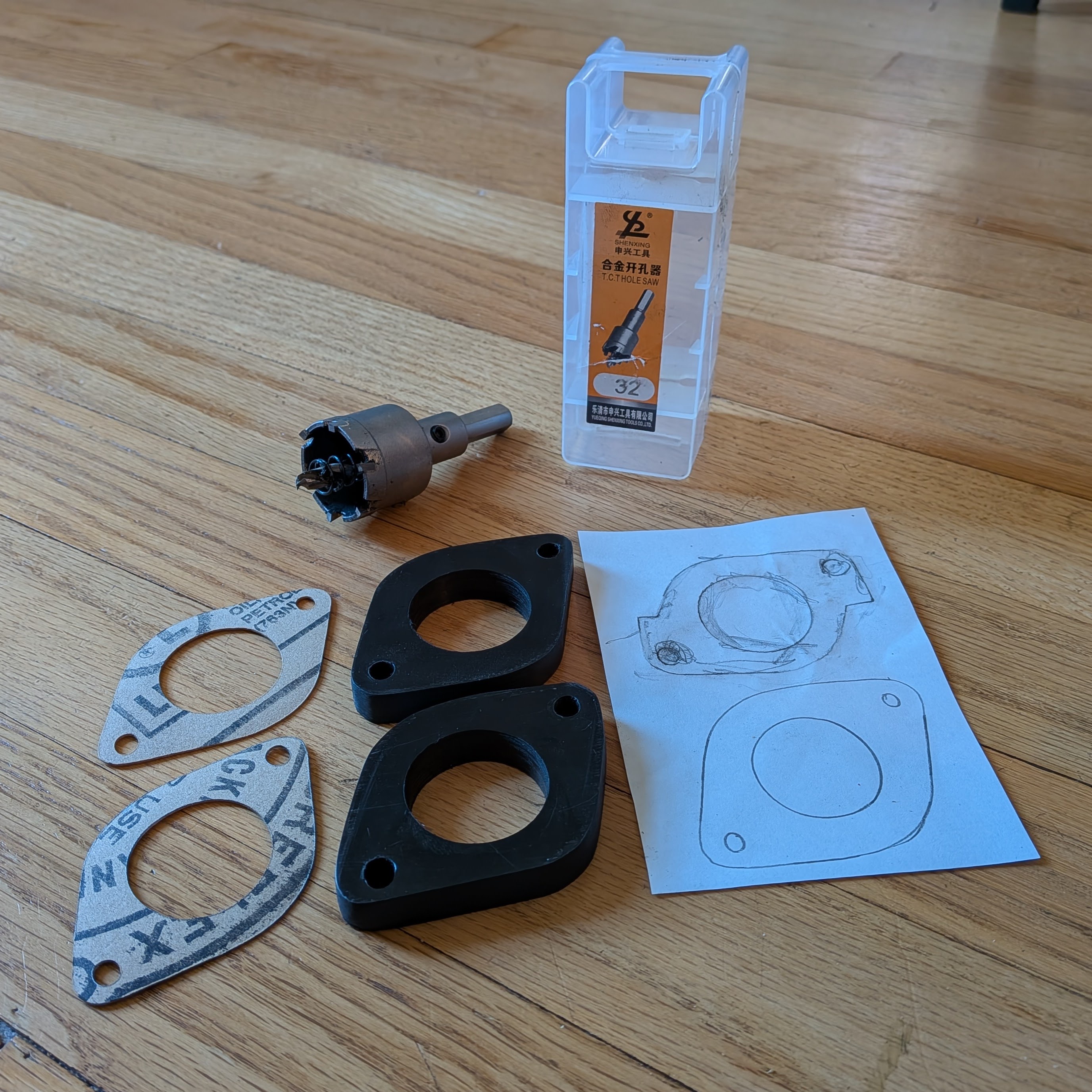
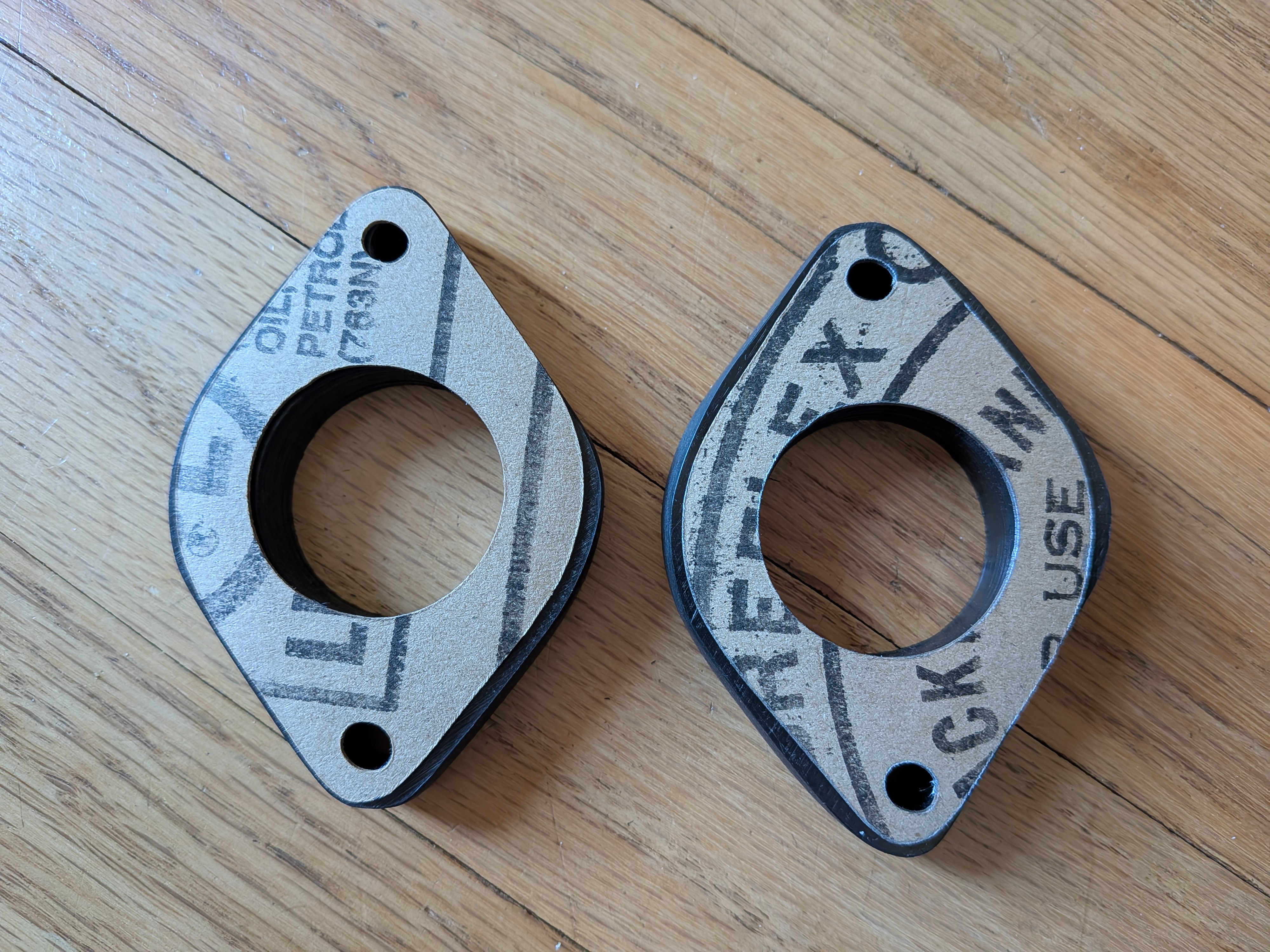
The next picture shows the finished product along with the hole saw. I used both a hacksaw and a coping saw to roughly cut the two spacers from the sheet and then used the coping saw and an orbital sander to trim small bits off the outer edge. Once each spacer was cut roughly, I drilled the two mounting holes, which then allowed me to bolt the spacer to a piece of wood before cutting the 32mm bore using the hole saw on my Harbor Freight drill press. Once that was finished, I used the orbital sander, a paint grinding tool in the drill press, and 400 grit wet-dry paper to polish the outer edges.
q0maOCE.jpg


The final picture shows the spacers with the gaskets. I could certainly continue to remove material from the outer edge to improve symmetry and better match the gasket shape, but I'm content for now. I may need to slot the mounting holes slightly before mounting on the bike, which will be a project for another weekend. I did acquire a new set of air boxes and I am excited to get them on the bike. Hopefully it will be warmish for Thanksgiving.
AJG1KOU.jpg
 
Things are moving slowly here, but today I found time to attempt production of carburetor spacers. Following @jensen's advice, I ordered a small sheet of black PEEK material 100mm x 100mm x 10mm to serve as the raw material along with a 32mm carbide hole saw to produce a clean hole in the center of the spacers. These items came from China and it took a few weeks for everything to arrive. The picture below shows a tracing of the intake flange on the CB360 head (top right) with a tracing of a CB450 insulator gasket (bottom right). The PEEK sheet is on the left with gaskets laid out for tracing.

YysfsTU.jpg


The next picture shows the finished product along with the hole saw. I used both a hacksaw and a coping saw to roughly cut the two spacers from the sheet and then used the coping saw and an orbital sander to trim small bits off the outer edge. Once each spacer was cut roughly, I drilled the two mounting holes, which then allowed me to bolt the spacer to a piece of wood before cutting the 32mm bore using the hole saw on my Harbor Freight drill press. Once that was finished, I used the orbital sander, a paint grinding tool in the drill press, and 400 grit wet-dry paper to polish the outer edges.

q0maOCE.jpg


The final picture shows the spacers with the gaskets. I could certainly continue to remove material from the outer edge to improve symmetry and better match the gasket shape, but I'm content for now. I may need to slot the mounting holes slightly before mounting on the bike, which will be a project for another weekend. I did acquire a new set of air boxes and I am excited to get them on the bike. Hopefully it will be warmish for Thanksgiving.

AJG1KOU.jpg

Nice !, but when I mentioned PEEK, I meant 3D printing with peek (I think I mentioned that as well), anyway, These are good to go ! Good isolation of heat, and fairly easy to cut holes in it as well ;)
 
Nice !, but when I mentioned PEEK, I meant 3D printing with peek (I think I mentioned that as well), anyway, These are good to go ! Good isolation of heat, and fairly easy to cut holes in it as well ;)
I did realize you were suggesting 3D printing, but I don't have easy access to a 3D printer, so I improvised.
 
I found a little time today to fit the spacers and airboxes. The motor has been running rich with the current setup, so I made a few additional changes.
  • Pilot jet was 40 and is now 35.
  • Slow jet was 40 and is now 38.
  • Float height was 22mm and is now 20mm.
  • Mixture screws were reset to 1¼ turns.
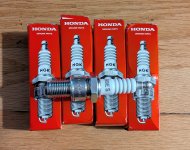
  • Installed two of the NOS Honda NGK B8ES plugs.
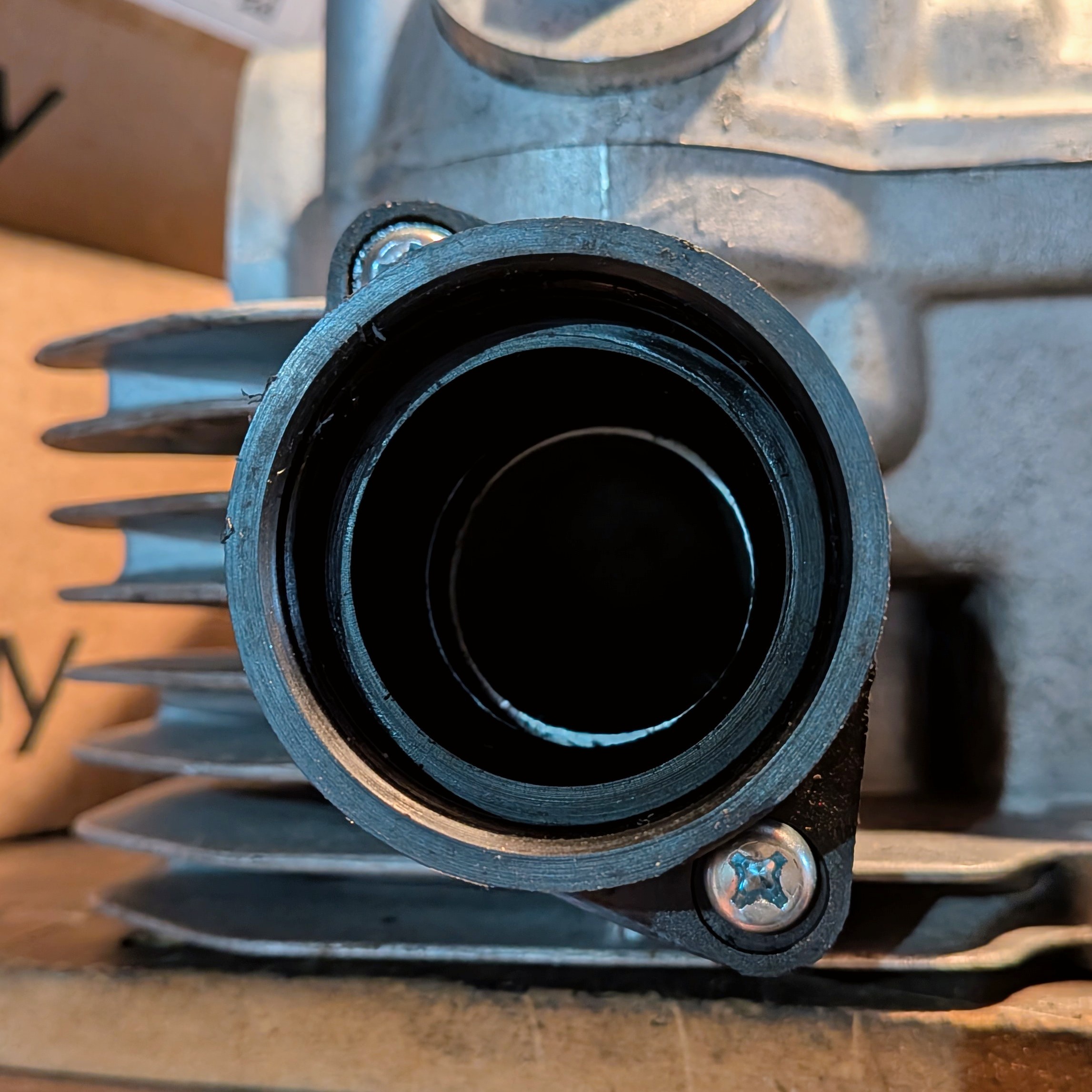
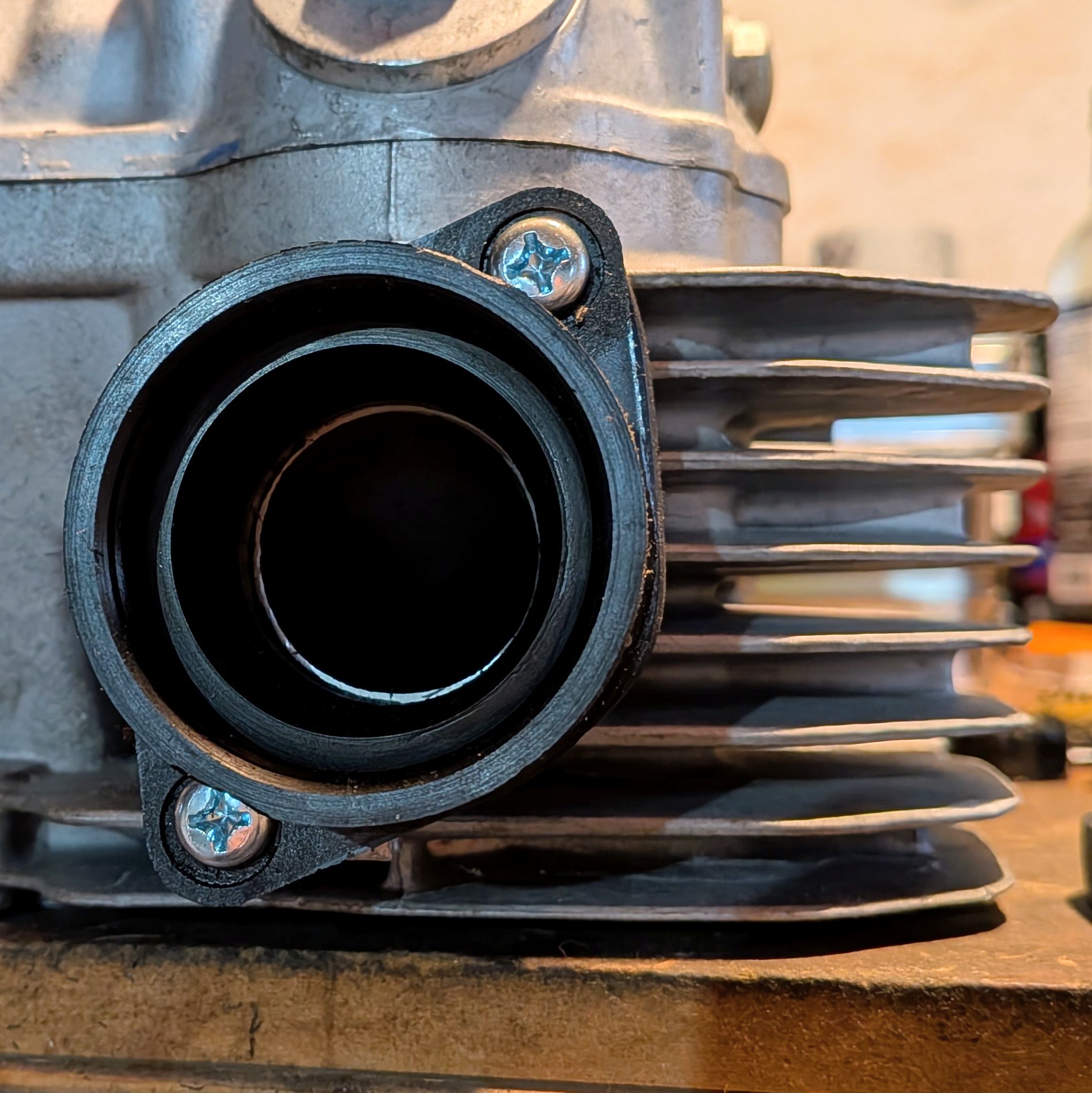
I had to slot the mounting holes on the spacers a bit for fitment and my spare CB360 head came in handy for that trial-and-error process.

BrG1KM2.jpg
.
Ywn2hG5.jpg


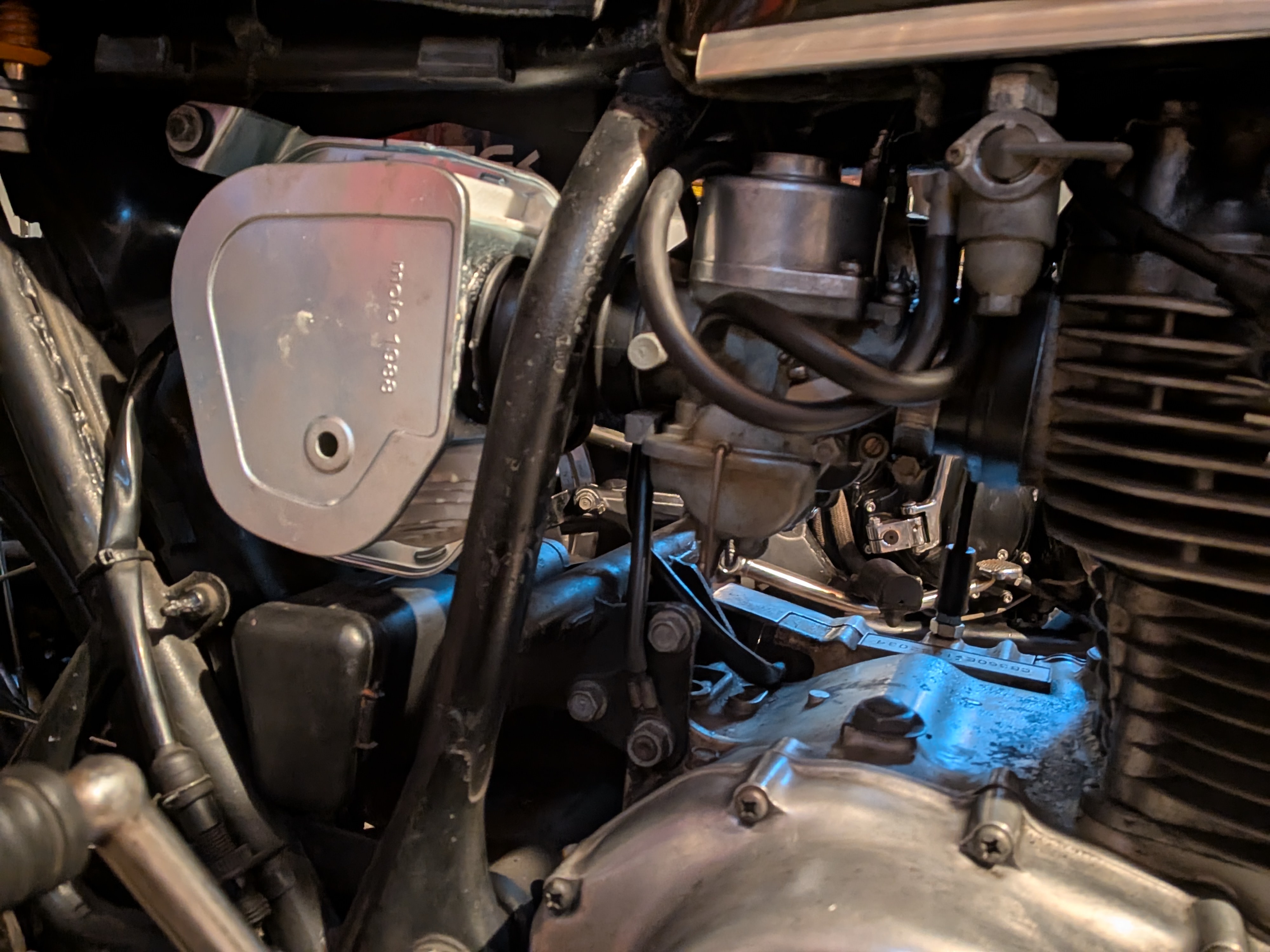
I managed to transfer the 50 year old grommets from the old air boxes to the new ones — I had forgotten about those when ordering things. I did order clamps for the airbox on the carb, but they haven't arrived, so I'll do without for the time being. It was getting pretty dark by the time I was able to start the bike, but I grabbed one picture of the setup before doing that.

8wThF0x.jpg


The right throttle cable was hung up on the first start, but once I got that sorted out the bike was idling smoothly. Hopefully there will be a warmish afternoon while I'm off later this week to do some test rides and tuning.
 
I think reducing float height will increase float level, make it richer.
That is true, but I think the overall effect of these changes will make the idle mixture leaner. I have a suspicion that the 22mm float height was making it harder to [kick]start — 20mm is the standard float height when these carbs are used on a CB450. That's the reason I made "opposing" changes, but we'll see how it pans out. Thanks for bringing this up!

A common setup for the 450 uses 38 for both the pilot and slow jets, so the new jets should put me at a leaner than stock setup.
 
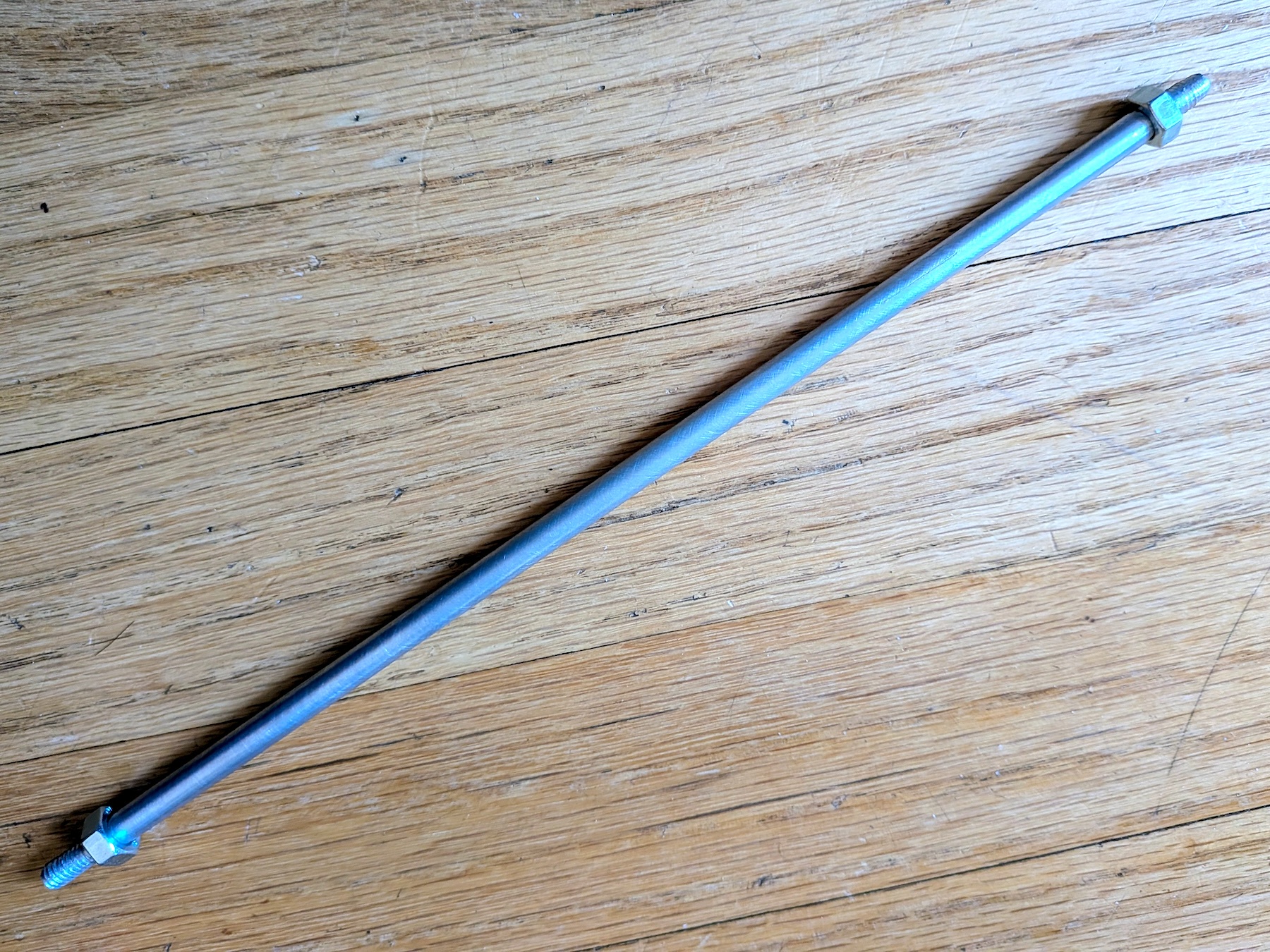
One side effect of installing the CB450 carbs with CB360 air boxes on the CB360G was that the original threaded rod for the CB360 air boxes came up a bit short. I thought about buying a pre-threaded rod at a box store, but didn't want to mix any SAE fasteners into the picture if it could be avoided. So, I bought a ¼" aluminum rod with the idea of adding M6 x 1.0 threads.
  • I chucked the rod in my drill, ran the far end through a block of wood for support, and then used a hand file to remove material at the far end. My goal was to reduce the diameter to about 5.9mm before trying to run the die over the end of the rod. Material was coming off very slowly so I gave up on the file.
  • I repeated step one, now using an angle grinder with a flapper disc. Material came off much more quickly and I checked with calipers a couple of times before calling this step complete.
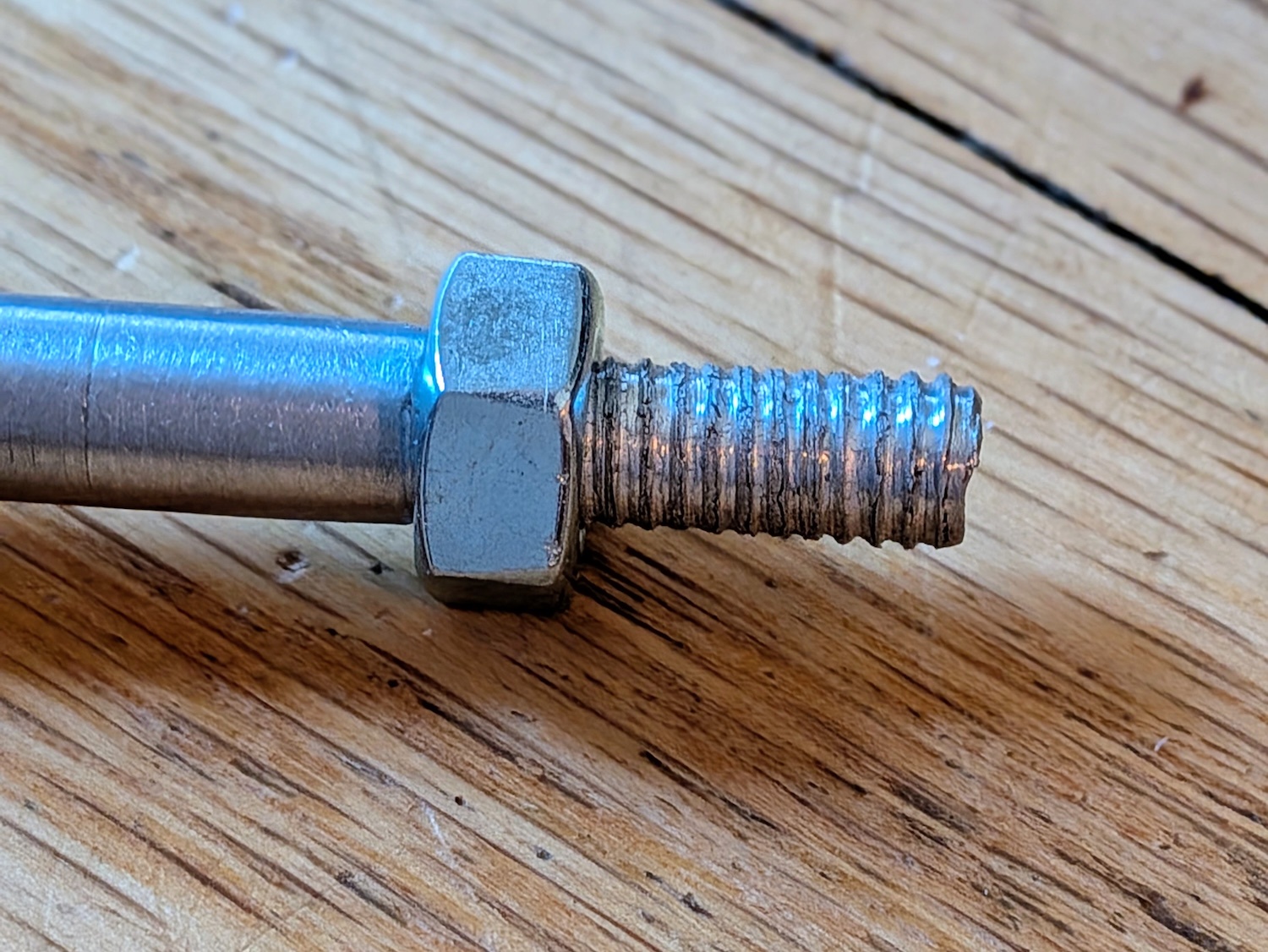
  • I cut the threads dry, holding the rod in a pair of vice grips. I have some cutting fluid, too, but am always anxious to move quickly and forgot to use it.
Tasks like this make me admire the many members with excellent fabrication skills and equipment. I enjoy the independence of doing things myself, but often settle for a lower standard based on my setup and abilities. The threads on the rod did not come out very pretty, but should be adequate for this application.

Tk6DPvs.jpg


ummyatJ.jpg
 
Last edited:
It's absolutely the right idea, and if you had remembered to lube the die the threads might have come out a little cleaner but it's certainly good enough for the purpose. I agree that keeping the parts metric is the best plan.
 
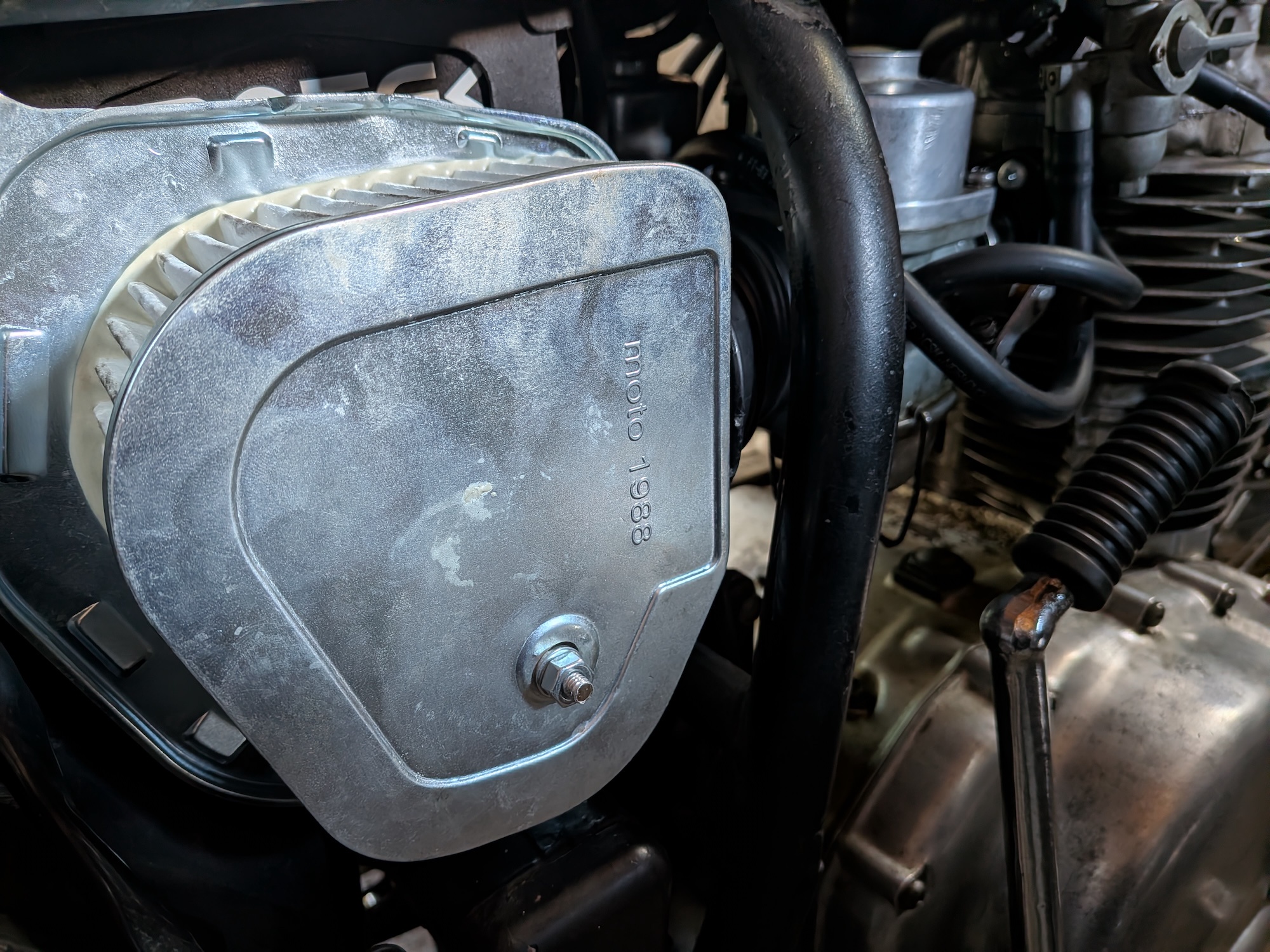
I installed the rod across the air boxes earlier this afternoon, woke the bike up from its winter slumber, and ran it up and down the block. I'm looking forward to riding to/from work now that warmer weather has arrived. The carb spacer more or less blends in with the carb insulator, but made the difference in terms of installing the air boxes.

gt3DTp1.jpg


G4olYu7.jpg


qHM0V6A.jpg
 
I've been riding the 360G off and on lately and after all the futzing around with the carb spacers, air boxes, and homemade air box rod I noticed a couple of irregularities. Keep in mind that I'm running Keihin 723A carbs from a CB450.
  • The throttle cable was binding under the tank, preventing the right throttle arm from resting on the stop at idle.
  • The choke linkage arm was reluctant to stay fully down despite working well since I first installed these carbs on the 360. This may have changed after the spacers were introduced.
  • The air boxes did not align well with the crossover channel under the battery box, partially due to interference with aftermarket rec/reg wiring and perhaps also due to the non-OEM carbs.
  • The throttle cables had gotten out of synch, enough that I could hear and feel it while riding.
It was still ridable, but I was happy to find time to remedy all of the above this afternoon. I didn't have time to test ride it, but the choke linkage was operating smoothly, the cables were synched, and the air boxes fit much better after adjusting the position of some of the wiring.

It started up easily and the back pressure felt well balanced after minor adjustment. The next time the motor is warm, I'll plan to adjust the carbs again.

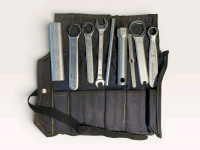
I rarely carry much in the way of tools when I ride, but I decided to put together a kit today. I'm frequently wearing a backpack when I ride and my plan will be to carry the kit in the backpack — this way it'll be with me regardless of which bike I ride.

I found a reasonably priced cloth tool pouch from a GL1000 on eBay and will fill it out with odds and ends that I already have.

947.png

For example, it seems to be missing the screwdriver handle and pliers. I was surprised to see what appears to be a 12-point 14mm wrench. Wonder what that was for.
 
The onboard tool kits have saved my bacon several times over the decades. My freshly refurbished 1979 CBX had the small bleed hole in the front master cylinder get plugged on a test ride with the result that the front brakes locked up gradually. I used the wrench in the kit to bleed off the pressure and rode home using just the rear brake. Saved my day for sure.
 
The onboard tool kits have saved my bacon several times over the decades.
I can think of some instances when it would have been helpful for me also. Once I bummed a zip tie from a gas station clerk to secure a 12" muffler on this 360 that had fallen off while riding! I found the muffler easily enough, but who knows where the fasteners parted ways...

Most of my rides are short and I can usually limp a bike home, but I do want to be more intentional about being prepared for small things that come up.

I've already had to have my bacon saved by friends with trailers or pickups more than I'd like!
 
Last edited:
I've been riding the 360G off and on lately and after all the futzing around with the carb spacers, air boxes, and homemade air box rod I noticed a couple of irregularities. Keep in mind that I'm running Keihin 723A carbs from a CB450.
  • The throttle cable was binding under the tank, preventing the right throttle arm from resting on the stop at idle.
  • The choke linkage arm was reluctant to stay fully down despite working well since I first installed these carbs on the 360. This may have changed after the spacers were introduced.
  • The air boxes did not align well with the crossover channel under the battery box, partially due to interference with aftermarket rec/reg wiring and perhaps also due to the non-OEM carbs.
  • The throttle cables had gotten out of synch, enough that I could hear and feel it while riding.
It was still ridable, but I was happy to find time to remedy all of the above this afternoon. I didn't have time to test ride it, but the choke linkage was operating smoothly, the cables were synched, and the air boxes fit much better after adjusting the position of some of the wiring.

It started up easily and the back pressure felt well balanced after minor adjustment. The next time the motor is warm, I'll plan to adjust the carbs again.

I rarely carry much in the way of tools when I ride, but I decided to put together a kit today. I'm frequently wearing a backpack when I ride and my plan will be to carry the kit in the backpack — this way it'll be with me regardless of which bike I ride.

I found a reasonably priced cloth tool pouch from a GL1000 on eBay and will fill it out with odds and ends that I already have.

View attachment 57542

For example, it seems to be missing the screwdriver handle and pliers. I was surprised to see what appears to be a 12-point 14mm wrench. Wonder what that was for.
I would also add an 8mm open ended wrench along with a 12mm size too which is the most common small hex head bolt size on the bike. A 14mm bolt is very common on many larger models of Honda bikes. Used on quite a few mounting bolts like muffler hangers and some disc brake parts.
 
I would also add an 8mm open ended wrench along with a 12mm size too which is the most common small hex head bolt size on the bike. A 14mm bolt is very common on many larger models of Honda bikes. Used on quite a few mounting bolts like muffler hangers and some disc brake parts.
Good call. I actually ordered another partial kit from a CB350 at the same time to round out the assortment of tools. The full kits are expensive, so I was looking for discounts on incomplete sets.

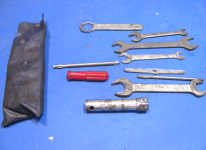
Looks like I'll pick up open 8/12 mm wrench and a few other wrenches, but I was mostly after the red screwdriver handle.

952.png

The GL1000 kit was chosen as a way to acquire one of those roll-up tool pouches on the cheap. I like the aesthetic and prefer the vintage tools to anything new.

My 360G still had the Owner's Manual and factory tool kit intact when I acquired it, albeit somewhat worse for wear. I'll take a few things from it as well, including the pliers.
 
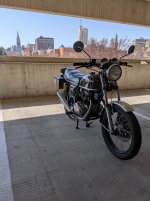
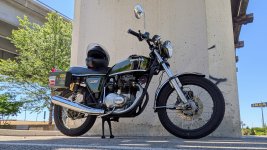
I've ridden the 360G the last two days and it's doing pretty well — it would be pretty easy to geolocate this photo.

971.jpg

One area for improvement would regard popping through the exhaust while decelerating in gear with no throttle. If I pull in the clutch or open the throttle slightly, the popping goes away.

I turned the mixture screws out slightly on both sides at the end of my ride without any drop in rpm — we'll see if that helps at all.

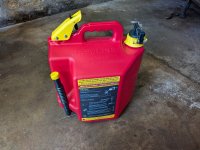
On a side note, I made my 40-mile drive last week to buy non-ethanol gas and decided to buy an extra 5-gallon can, so 12 total. Anyone ever used something like the one shown below? The yellow lever releases fuel through the spigot at bottom left. I guess it's supposed to cut down on spilled fuel.

959.jpg
 
Last edited:
Nice to hear it's running well overall. Interesting gas can, as usual loaded with save-you-from-yourself safety features but it looks more easily functional than the last 5 gallon can I bought (read: least expensive). I don't care for pouring from a 5 gallon can so I transfer some to a 2 gallon plastic (of course) can I've had for a while now, much more convenient for filling the bike.
 
I'm with you. I'll be continuing to fill my bikes from a 2-gallon can, but would really like to find one that is less susceptible to drips. I have to be careful to tighten the cap enough without over-tightening it. I've even tried a replacement spout that was worse. If anyone knows of a good aftermarket spout, I'm open to suggestions.

This weirdo can will be used to fill the 2-gallon can. I did that today and it worked well.
 
I'm with you. I'll be continuing to fill my bikes from a 2-gallon can, but would really like to find one that is less susceptible to drips. I have to be careful to tighten the cap enough without over-tightening it.
I've had that problem with plastic cans before, I'm lucky to have a couple of 2 gallon cans that actually seal well but you're right, you have to learn how much to tighten them. Gone are the days of well-made metal cans with screw-on spouts that seal.
 
FYI, a small exhaust leak (Either at the head or at the muffler/downpipe clamp) can cause popping on decel. as well as slightly out of sync carbs.
 
Last edited:
FYI, a small exhaust leak (Either at the head or at the muffler/downpipe clap) can cause popping on decel. as well as slightly out of sync carbs.
Thanks, Richard. I know I do not have graphite gaskets at the header/muffler joint and I've wondered if they would help.

The 360G parts list doesn't show them, but the 75 360T parts list does. It would be worth trying.
 
I s
I've had that problem with plastic cans before, I'm lucky to have a couple of 2 gallon cans that actually seal well but you're right, you have to learn how much to tighten them. Gone are the days of well-made metal cans with screw-on spouts that seal.
I saw a temu add for metal old style gas cans. No idea if they are good
 
I know. Somebody must know where old mil-spec cans can be bought. Maybe Midway.com. Hmm.
I need to look up where I got this, but I thought this was the solution at one point and was again disappointed that it would drip from the plastic extension. I removed the extension and found that the remaining spigot was a little short.

f377a821-9263-48b9-80c8-a41d7739c96a-1_all_1831.jpg
 
I s

I saw a temu add for metal old style gas cans. No idea if they are good
I buy stuff from Temu quite regularly (not petrol cans yet). Generally I find the items are incredibly cheap, arrive pretty quickly (sometimes just a week from China to England) and are pretty good quality. I think Temu is well with taking a chance on - I’ve found that disappointments are rare.

:)
 
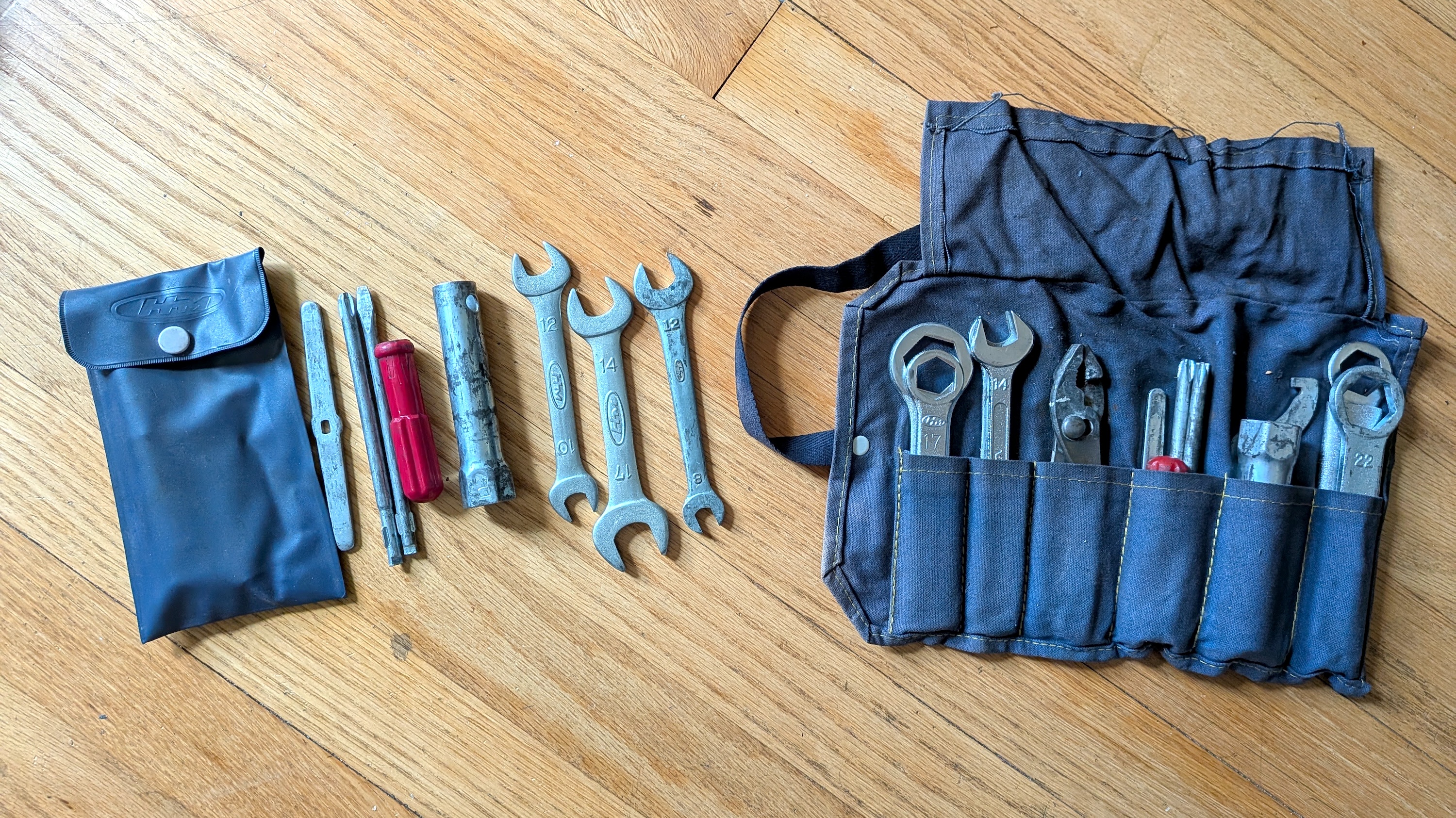
I gathered various Honda tools that I've acquired over the years and put together two kits from those plus the two partial sets I recently ordered on eBay. I plan to carry the cloth tool roll in my backpack and I'll put the smaller kit in the tool box on the XL350. The tool roll weighs 2.06 lbs (935 g) as shown below.

YJZpa5I.jpg


Contents of the [GL1000] tool roll:
  • box wrenches: 17mm, 19mm, 22mm, 24mm. (plus extender)
  • open wrenches: 10mm/14mm, 12mm/8mm.
  • screwdriver handle, T-handle, JIS #2, JIS #3, flathead
  • pliers
  • spanner wrench
  • 21mm spark plug socket.
Contents of the tool pouch:
  • open wrenches: 14mm/17mm, 12mm/10mm, 12mm/8mm
  • screwdriver handle, T-handle, JIS #3, flathead
  • 18mm spark plug socket.
The tools in the GL1000 kit have a very nice finish, but the rest of the tools could use replating. I'm not sure if I'll go to the trouble, but we'll see. I may introduce some additional cloth to protect the tools that are stacked in the same pocket. I am also thinking about trying to dye the tool roll black to make it look a little fresher.
 
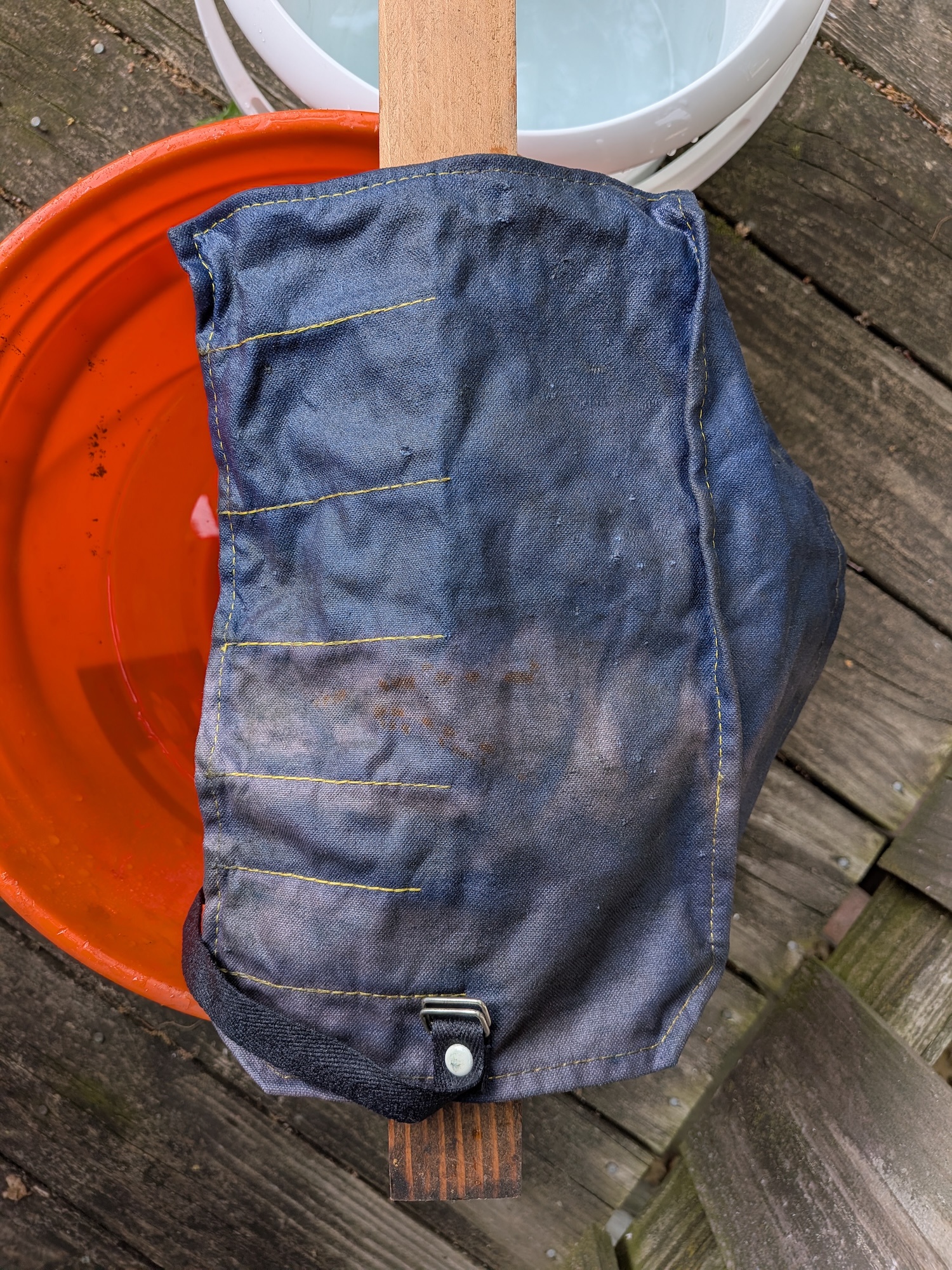
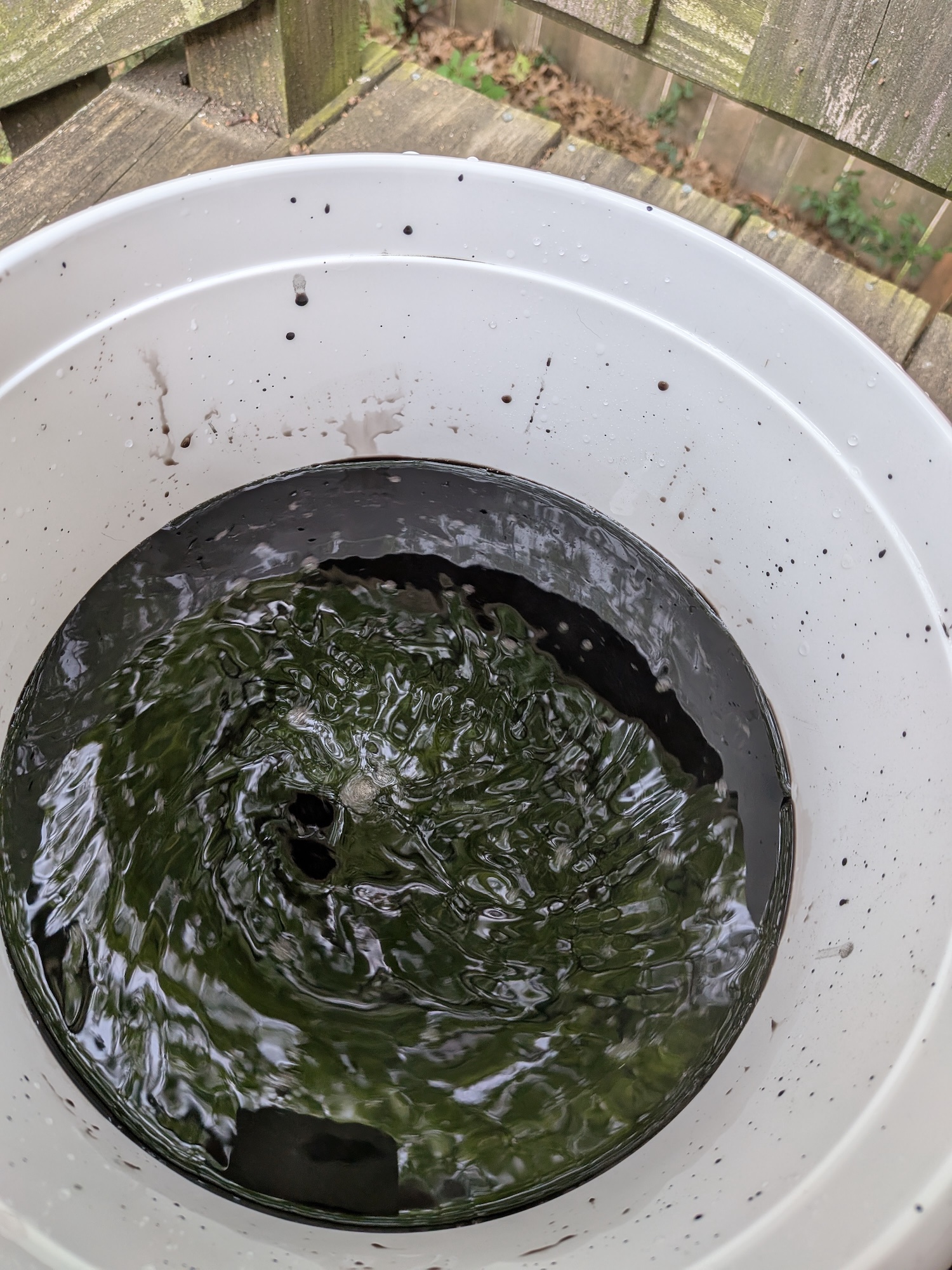
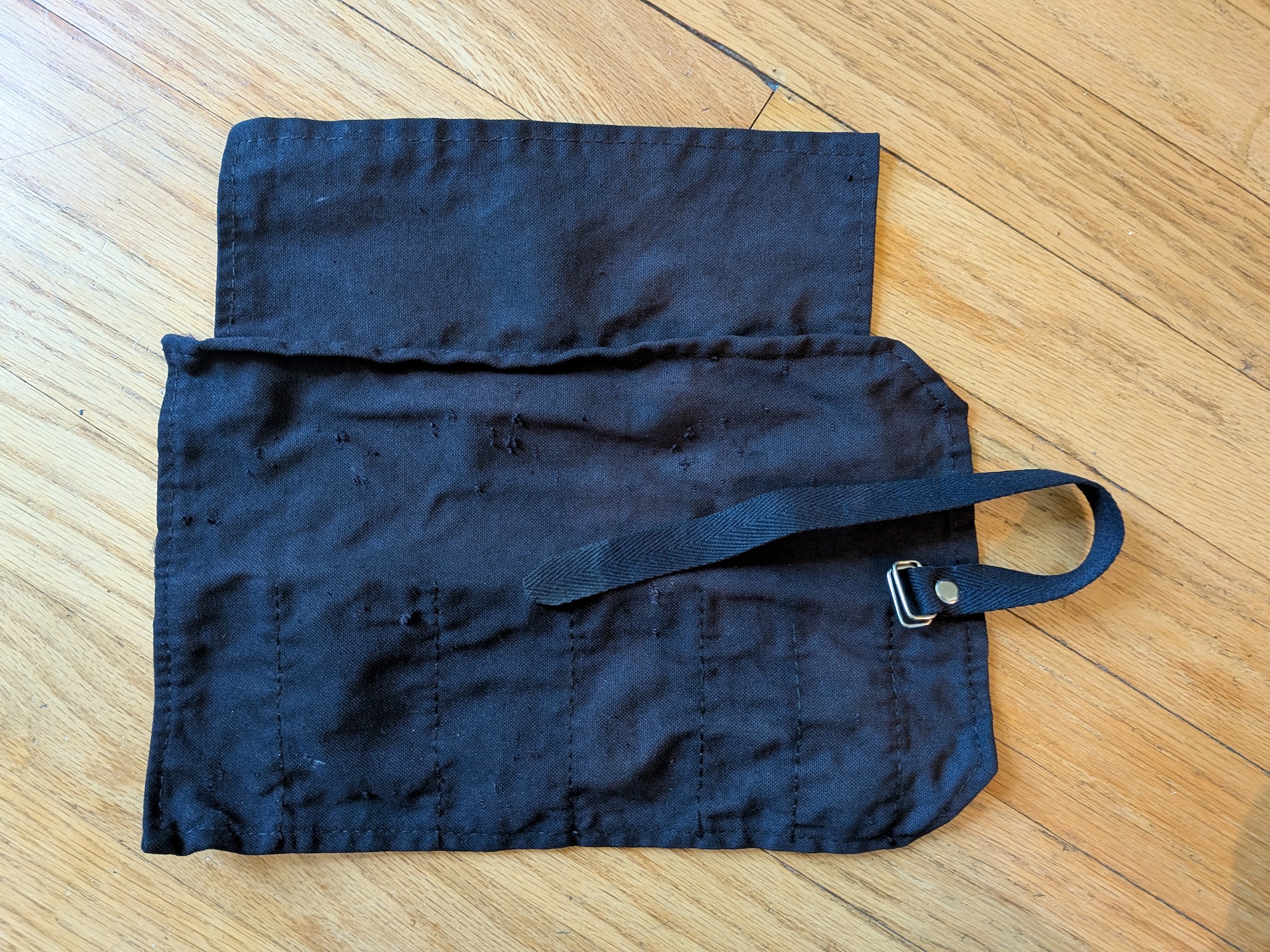
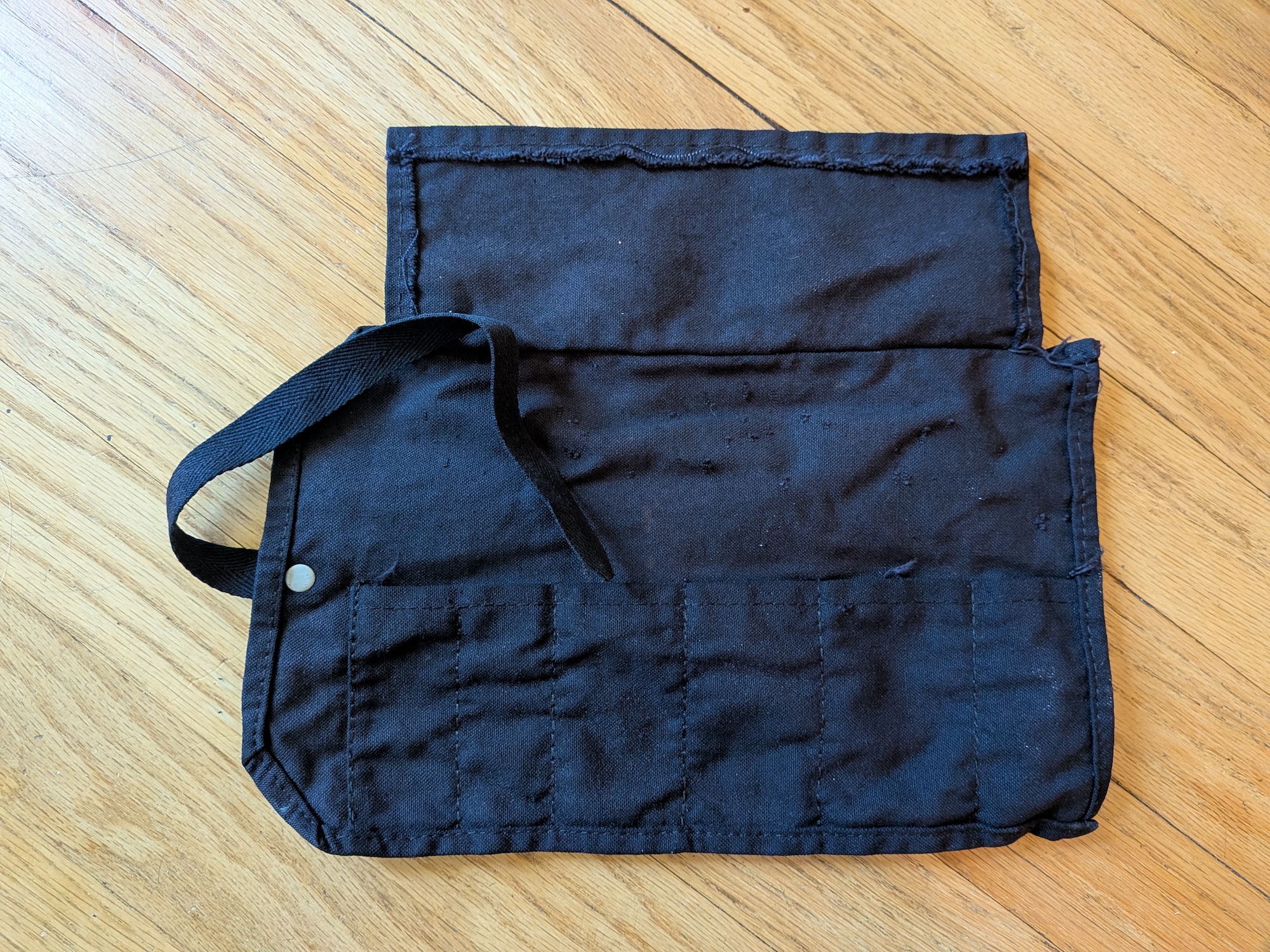
It's amusing to me how many different skills one gets to try one's hand at in the interest of vintage motorcycles. Today I made my first attempt at dyeing fabric in order to freshen up the recently acquired GL1000 tool roll. It worked out pretty well.
  • Here is a before shot of the sun-faded exterior of the tool roll.

    5RD0EU7.jpg


  • Now a cauldron of water, Rit black liquid dye, some salt, and a bit of liquid dish soap.

    7b3i75W.jpg


  • And the finished product after rinsing in a bucket of clean water, wringing under a faucet, rinse/spin cycle, and a little time in the dryer.

    U6l2ALB.jpg
    Tl9D195.jpg
 
Last edited:
Looks pretty good, and for any of those tools to look even halfway decent after all these decades is amazing.
The pliers are the worst and that's partly my fault for using them to pull things out of an acid bath when I was playing around with home plating.

Partzilla sells a new replacement that I found from the 360G parts list, so I decided to order one. This will allow the uglier one to go in the XL350 kit.
 
Looks really good. Never thought to look for used tool kits. The original red screw driver handle is tough to replace. The current one that Honda makes is now black.
 
The pliers are the worst and that's partly my fault for using them to pull things out of an acid bath when I was playing around with home plating.

Partzilla sells a new replacement that I found from the 360G parts list, so I decided to order one. This will allow the uglier one to go in the XL350 kit.
Nothing wrong with "Used Tools" unless you are in a Concourse Competition. That Tool Bag looks great.
 
Very nice, looks like new.
Looks pretty good, and for any of those tools to look even halfway decent after all these decades is amazing.
Looks really good. Never thought to look for used tool kits. The original red screw driver handle is tough to replace. The current one that Honda makes is now black.
That Tool Bag looks great.

Thank you, all. Friends and family see an obsessed motorcycle nerd wasting time on a ratty piece of canvas.

Only on a vintage motorcycle forum can you find people who appreciate this sort of tomfoolery.
 
Thank you, all. Friends and family see an obsessed motorcycle nerd wasting time on a ratty piece of canvas.

Only on a vintage motorcycle forum can you find people who appreciate this sort of tomfoolery.
I've had that issue all my life. My wife thinks I am a Hoarder. I prefer Collector. People who can fix things see value in what, to other people, is garbage. You looked at that bag, and restored it. Most people would of thrown it away, not seeing the value. Than you cleaned it up, and restored it's value and now even those who couldn't see it, now the value is apparent. It can be a blessing or a curse. I prefer blessing.
 
The onboard tool kits have saved my bacon several times over the decades. My freshly refurbished 1979 CBX had the small bleed hole in the front master cylinder get plugged on a test ride with the result that the front brakes locked up gradually. I used the wrench in the kit to bleed off the pressure and rode home using just the rear brake. Saved my day for sure.
I think I've mentioned it before but I stopped carrying tools because I was always fixing other peoples bikes.
 
I think I've mentioned it before but I stopped carrying tools because I was always fixing other peoples bikes.
Yeah, I don't carry tool because there's no place to store them on my 450. But fortunately it hasn't broken down on the road so far in over 9 years, worst problem I had was a loose condenser connection at the coil a few years back while in the Carolinas but it just caused a sputter the last day we rode, simple fix when I got home.
 
I have been planning to address the decel popping with new muffler gaskets, but my efforts were foiled by ordering the wrong parts. The 1976-1977 CJ360T gaskets that I ordered are much larger than the correct gaskets, listed at 4-into-1 for the 1975-1976 CB360T. Here's a comparison of the two, although it requires some imagination with the worn out gasket I pulled out of the left-side muffler.

6nikExz.jpg


After discovering I had the wrong gaskets, I stuffed some aluminum foil between the headers and muffler as an interim attempt to solve the popping, but there was no perceivable benefit. The correct gaskets are on order.


I think I've mentioned it before but I stopped carrying tools because I was always fixing other peoples bikes.
If you prefer fixing people's bikes with their tools instead of yours, that's your choice — I'm guessing you'd still help them out if you could.
 
Last edited:
CJ is two into one so much larger diameter after collector.
Be careful with those, it's one of the few components where asbestos is still allowed (even though they are mainly graphite)
NOS will have higher asbestos content, it wasn't 'banned' until 1977 and is reason I always went crazy with techs using airline to 'clean brake drums'.
If they did it a second time (being too lazy to do things properly) they were gone.
Yep, I will still help out using whatever tools available although teaching people to fix their own stuff is more productive.
 
The correct muffler gaskets arrived and I installed them yesterday. Turns out that I did have gaskets on both sides, but they were no longer snug on the headers. The new ones made for a much tighter fit. I made a 15-mile ride for the safety inspection only to realize that the shop is closed on Mondays. In any case, there was no popping, so the new gaskets are doing their thing.
 
Back
Top Bottom