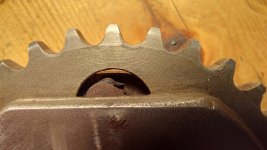
A C78 project

Did a few more pieces today. Polished up the front winker with some Scotchbright. The other one was cleaned and lightly buffed. I think I prefer the buffed result on the left.
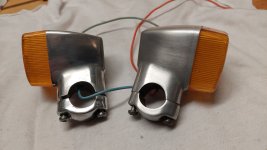
20251104_145818.jpg

Put some more parts in Evaporust to soak off the rust/grime. Shift selector after it's bath...
20251031_151849.jpg 20251104_170659.jpg
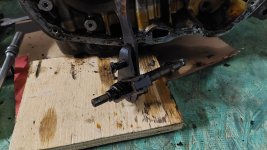
Decided to remove the cam shafts. The FSM shows what looks like a screw driver and hammer to knock out each side. I tried hitting on the outer race but you can only reach the top of the bearing due to the advancer/sprocket being in the way. My bearings were a bit notchy and I am going to replace them anyway, so I was not too concerned about staying on the outer race.

With a small drift I finally got the right side out and then used a hardwood dowel to knock out the left side via the bearing holders. Getting them out I think is the easy part.

What is the best way to re-assemble. Put the center bearings in the head first then put the cams in, followed by the outer bearings? I'd love to hear from anyone who has done this.

20251104_143919.jpg

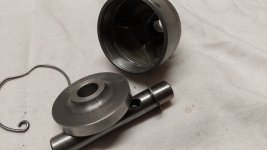
Finally got the oil spinner apart by soaking in PB Blaster for several days, and pushing from the backside with a small screw driver. There was not too much in the way of debris. Got everything cleaned out and then polished the edge of the spinner lid as well as the inside of the spinner where the lid meets. I noticed that for the lid to go in and out easily, I needed to rotate the lid to a certain position. Makes me think someone gave it a whack and it's now slightly out of round, which is also why it was hard to get apart.
20251104_143730.jpg 20251104_160105.jpg
 
Last edited by a moderator:
Brad it is the same design as the CL77 in the cam setup. I will defer to Jensen since he has likely done more of these bearing installs. Honda still had the OEM cam bearings available a few years ago when I did mine. I see you got the cam lock nut apart. I had a heck of a time with mine initially, since it was threaded backwards from what the FSM indicated. I found a footnote somewhere that indicated that some models were reverse threaded.
I replaced the advancer spring from either one of the regular suppliers (DSS or CMSNL) or maybe it was Classic Honda that you referenced earlier in your thread. He had a lot of reproduction early parts for these 305cc models.

Here you go.

 
Brad it is the same design as the CL77 in the cam setup. I will defer to Jensen since he has likely done more of these bearing installs. Honda still had the OEM cam bearings available a few years ago when I did mine. I see you got the cam lock nut apart. I had a heck of a time with mine initially, since it was threaded backwards from what the FSM indicated. I found a footnote somewhere that indicated that some models were reverse threaded.
I replaced the advancer spring from either one of the regular suppliers (DSS or CMSNL) or maybe it was Classic Honda that you referenced earlier in your thread. He had a lot of reproduction early parts for these 305cc models.

Here you go.

The advancer weights snap back and there seems to be a fair amount of tension on the springs with no looseness on any pf the rivets holding the advancer together.
I will nevertheless check out some new springs.
 
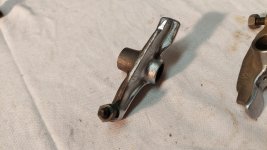
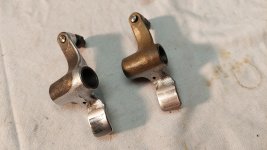
After cleaning I noticed one rocker arm was very silvery on one side and another there was a distinct line of silver. I'm thinking the rocker arms were dipped in something to harden the pads and maybe these two rockers got a little more treatment than expected. Strange that Honda let these go out, unless of course these are re-conditioned rockers.
20251104_210907.jpg20251104_210923.jpg
20251104_210957.jpg
 
Polished up the front winker with some Scotchbright. The other one was cleaned and lightly buffed. I think I prefer the buffed result on the left.
Both look good. I think I like the buffed finish better also and I would imagine that the smoother finish will hold up better over time as well.
 
I recommend Bill Silver's Engine Repair Guide before reassembling the head. MrHonda member here at VHT. There are several pitfalls like rocker shaft minor diameter differences and inserting point shaft into advancer without breaking the center plate.
He does say to put new bearings on cams before into the soft head for alignment. I did not replace mine as they are pretty robust.
 
Did a few more pieces today. Polished up the front winker with some Scotchbright. The other one was cleaned and lightly buffed. I think I prefer the buffed result on the left.
View attachment 51994

Put some more parts in Evaporust to soak off the rust/grime. Shift selector after it's bath...
View attachment 51996 View attachment 51995
Decided to remove the cam shafts. The FSM shows what looks like a screw driver and hammer to knock out each side. I tried hitting on the outer race but you can only reach the top of the bearing due to the advancer/sprocket being in the way. My bearings were a bit notchy and I am going to replace them anyway, so I was not too concerned about staying on the outer race.

With a small drift I finally got the right side out and then used a hardwood dowel to knock out the left side via the bearing holders. Getting them out I think is the easy part.

What is the best way to re-assemble. Put the center bearings in the head first then put the cams in, followed by the outer bearings? I'd love to hear from anyone who has done this.

View attachment 51998

Finally got the oil spinner apart by soaking in PB Blaster for several days, and pushing from the backside with a small screw driver. There was not too much in the way of debris. Got everything cleaned out and then polished the edge of the spinner lid as well as the inside of the spinner where the lid meets. I noticed that for the lid to go in and out easily, I needed to rotate the lid to a certain position. Makes me think someone gave it a whack and it's now slightly out of round, which is also why it was hard to get apart.
View attachment 52002 View attachment 52003
Replace the cam bearings anyway, these are standard bearings and don't cost much. the bearing is an 6004 bearing, but if you buy a bearing, please buy a C3 bearing, like this one: https://www.lagerkoning.nl/skf-kogellager-6004-c3.html?gad_source=1&gad_campaignid=17190396926
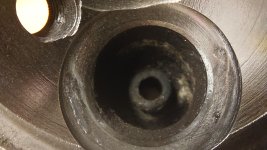
I know, it's a Dutch site, but that bearing type (Stock Keeping Unit) is a worldwide, item, thus also in the US.

Mounting the bearings is simple, but takes some time :

- clean head and bearing surfaces.
- put the cams in the fridge for several hours until freezing cold (in a plastic bag !)
- heat up 2 bearings
- put on your gloves (!), and shift the bearings on the cam 1
- heat up the other 2 bearings
- put on your gloves (!), and shift the bearings on the cam 2

- put the cams and bearings in the fridge until freezing cold (in a plastic bag !)
- heat up the head
- drop the cam1 with bearings in the head
- heat up the head again
- drop cam 2 with bearings in the head

Another method is to place the inner bearings first in the head, and drop the two cams with the outer bearings in the head and bearing.

I prefer the last method, but takes more time, more heat cold cycles.

Anyway, use heat / cold cycles to drop in bearings / cams. Try to shrink one part as much as possible (cold) and expand the other part as much as possible by heat.

Heating up a cylinder head can be done best in an oven, I use temperatures for the head of 100 degrees Celcius (212 F) steel parts can be heated to a higher temp, but 100 C is enough.
 
Last edited:
After cleaning I noticed one rocker arm was very silvery on one side and another there was a distinct line of silver. I'm thinking the rocker arms were dipped in something to harden the pads and maybe these two rockers got a little more treatment than expected. Strange that Honda let these go out, unless of course these are re-conditioned rockers.
That is an odd look as compared to any of the engines from 5 or so years later, almost like the pad surface could stand to be dressed a little bit each. But Jensen and others know these engines, I've only ever been inside one of them.
 
I recommend Bill Silver's Engine Repair Guide before reassembling the head. MrHonda member here at VHT. There are several pitfalls like rocker shaft minor diameter differences and inserting point shaft into advancer without breaking the center plate.
He does say to put new bearings on cams before into the soft head for alignment. I did not replace mine as they are pretty robust.
I did get Bill Silver's package for the Dream. I had read that part about installing one bearing on each cam but wasn't sure if that was the easiest way since that bearing has to pass twice through the bearing holders.
 
Replace the cam bearings anyway, these are standard bearings and don't cost much. the bearing is an 6004 bearing, but if you buy a bearing, please buy a C3 bearing, like this one: https://www.lagerkoning.nl/skf-kogellager-6004-c3.html?gad_source=1&gad_campaignid=17190396926

I know, it's a Dutch site, but that bearing type (Stock Keeping Unit) is a worldwide, item, thus also in the US.

Mounting the bearings is simple, but takes some time :

- clean head and bearing surfaces.
- put the cams in the fridge for several hours until freezing cold (in a plastic bag !)
- heat up 2 bearings
- put on your gloves (!), and shift the bearings on the cam 1
- heat up the other 2 bearings
- put on your gloves (!), and shift the bearings on the cam 2

- put the cams and bearings in the fridge until freezing cold
- heat up the head
- drop the cam1 with bearings in the head
- heat up the head again
- drop cam 2 with bearings in the head

Another method is to place the inner bearings first in the head, and drop the two cams with the outer bearings in the head and bearing.

I prefer the last method, but takes more time, more heat cold cycles.

Anyway, use heat / cold cycles to drop in bearings / cams. Try to shrink one part as much as possible (cold) and expand the other part as much as possible by heat.

Heating up a cylinder head can be done best in an oven, I use temperatures for the head of 100 degrees Celcius (212 F) steel parts can be heated to a higher temp, but 100 C is enough.
Thanks Jensen for the explanation.
I will definitely replace the bearing as mine were notchy with grit. Perhaps I could have cleaned them out but they are not expensive and better to replace.

I did notice that the bearing had an interference fit on the cams, so the bearings should go in easier with the hot and cold as you described.
 
Thanks Jensen for the explanation.
I will definitely replace the bearing as mine were notchy with grit. Perhaps I could have cleaned them out but they are not expensive and better to replace.

I did notice that the bearing had an interference fit on the cams, so the bearings should go in easier with the hot and cold as you described.
Make sure you buy C3, these bearings have a little play, that's important in this application !
 
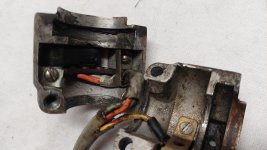
I was inspired by Jensen's recent recent refurbishment of his flasher switch and decided to tackle mine which was in rough shape.
20251106_153627.jpg20251106_153951.jpg
I started by taking off the slider that controls the flasher side, by removing the two small screws and lock washers.
20251106_153849.jpg
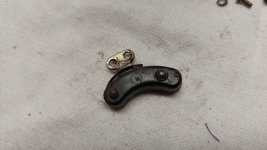
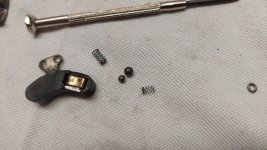
Next was the slider piece itself. It has two small springs and two different size locating bearings. The bigger one centers the switch and also pushes the small contact plate located on the opposite side of the big bearing (sorry didn't get a pic of that).
20251106_154510.jpg
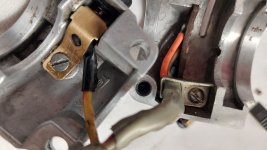
Next was to remove the contact board that the wires are soldered to. There are two screws and plates that hold it in place.
20251106_154628.jpg
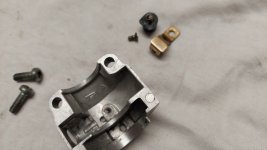
I then removed the plate that holds the starter wire and push button.
20251106_160911.jpg
Now it was time to clean all the pieces, including the switch housings. I used electrical contact cleaner on the insides and finished the outside with some Scotchbrite.
20251106_163816.jpg
Next I assemble the starter button side as this was the simpler one to do.
20251106_164946.jpg
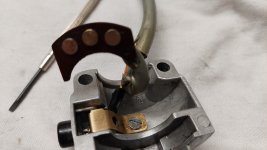
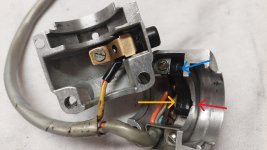
The flasher side is a little trickier due to the 2 ball bearings that are spring loaded as well as the contact plate that all have to go in at the same time. I found the best way to do that was to first put in the board with the 3 contacts and keep it in place with the 2 hold down plates and screws. At this point I only had one of the plates in place.
20251106_171029.jpg
Next up is the slider and I found the easiest way to do this was to put dialectric grease on the springs and little balls as well as the contact plate to keep the pieces together while I wriggled the piece into place. I started by inserting the end with the bigger bearing into the middle of the curved part of the switch so the bearing was in the centering groove (red arrow) and then with an exacto knife I pushed the plate in to cover the contacts (yellow arrow). With the bulk of the slider in place, the only piece left was the small bearing at the end of the slider (blue arrow). With the tip of the exacto I was able press the bearing into the hole on the slider and keep it retracted while pushed the slider into place.
20251106_171755a.jpg
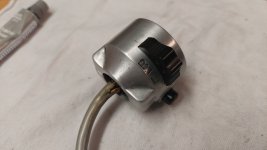
Next was to attach the slider button from the outside with the two little screws and lock washers.
20251106_171919.jpg
I have seen some switches with the lettering in red but can't remember if that was how they came from the factory. I might just leave it unpainted.
 
I was inspired by Jensen's recent recent refurbishment of his flasher switch and decided to tackle mine which was in rough shape.
View attachment 52117View attachment 52118
I started by taking off the slider that controls the flasher side, by removing the two small screws and lock washers.
View attachment 52119
Next was the slider piece itself. It has two small springs and two different size locating bearings. The bigger one centers the switch and also pushes the small contact plate located on the opposite side of the big bearing (sorry didn't get a pic of that).
View attachment 52120
Next was to remove the contact board that the wires are soldered to. There are two screws and plates that hold it in place.
View attachment 52121
I then removed the plate that holds the starter wire and push button.
View attachment 52123
Now it was time to clean all the pieces, including the switch housings. I used electrical contact cleaner on the insides and finished the outside with some Scotchbrite.
View attachment 52124
Next I assemble the starter button side as this was the simpler one to do.
View attachment 52125
The flasher side is a little trickier due to the 2 ball bearings that are spring loaded as well as the contact plate that all have to go in at the same time. I found the best way to do that was to first put in the board with the 3 contacts and keep it in place with the 2 hold down plates and screws. At this point I only had one of the plates in place.
View attachment 52127
Next up is the slider and I found the easiest way to do this was to put dialectric grease on the springs and little balls as well as the contact plate to keep the pieces together while I wriggled the piece into place. I started by inserting the end with the bigger bearing into the middle of the curved part of the switch so the bearing was in the centering groove (red arrow) and then with an exacto knife I pushed the plate in to cover the contacts (yellow arrow). With the bulk of the slider in place, the only piece left was the small bearing at the end of the slider (blue arrow). With the tip of the exacto I was able press the bearing into the hole on the slider and keep it retracted while pushed the slider into place.
View attachment 52128
Next was to attach the slider button from the outside with the two little screws and lock washers.
View attachment 52129
I have seen some switches with the lettering in red but can't remember if that was how they came from the factory. I might just leave it unpainted.
Looks good! The work isn't very difficult, by doing it step by. The only issue's are the small parts with older eyes. Getting the springs and balls in place can be frustrating sometimes.

A good description in detail ! This is how a forum should work, sharing knowledge.

Thank you for the time and efford you spend for the write-up !
 
Yes, and tweezers would have helped to get some of those screws back in :ROFLMAO:
Need to get one of those magnets that you put around the screwdriver shaft. Or just rub it on a big magnet
 
Need to get one of those magnets that you put around the screwdriver shaft. Or just rub it on a big magnet
The smallest screws that hold the thumb switch on are brass so a magnet would not be much help, but I agree, for the other screws that would work well.

I use an

I use an angled tweezers to hold the little screw....
I'll have to see if the wife has any of those, if so, they might disappear :ROFLMAO:
 
The smallest screws that hold the thumb switch on are brass so a magnet would not be much help, but I agree, for the other screws that would work well.
I put a touch of silicone grease on the end of my screwdriver for those screws. Sticks just long enough to get them installed and wipes right off to clean up.
 
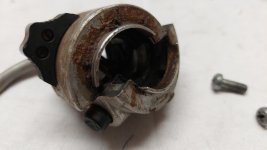
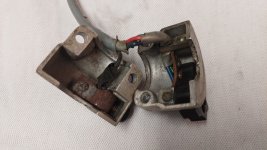
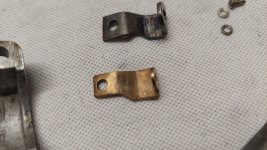
Took apart the left switch today and gave it the same treatment as the right switch. I notice the hold down plate for the horn button was corroded. I thought that was strange since it's made of copper.
20251107_150424.jpg
When I took it apart I saw that this was a homemade item. I guess the PO had the switch apart when they swapped over to the ape hangers and maybe lost the part. It's a pretty good facsimile just the wrong material. I had another switch that I was going to use the hold down piece from but it didn't line up well and the button didn't move freely. I ended up using the one that was in there.
20251107_152038.jpg
Here is a shot of the contact plate on the other side of the slider. Forgot to include that in the previous refurb of the right switch.
20251107_151145.jpg
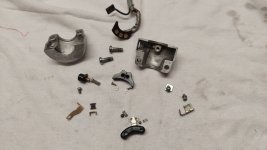
Here are all the components you need to deal with in one of these switches. Not too difficult, just don't lose anything.
20251107_155736.jpg
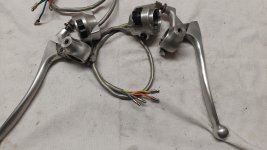
Spent a little time on the perches and handles to clean them up. I can now put aside two bags of parts and call them complete.
20251107_213920.jpg
 
Took apart the left switch today and gave it the same treatment as the right switch. I notice the hold down plate for the horn button was corroded. I thought that was strange since it's made of copper.
View attachment 52162
When I took it apart I saw that this was a homemade item. I guess the PO had the switch apart when they swapped over to the ape hangers and maybe lost the part. It's a pretty good facsimile just the wrong material. I had another switch that I was going to use the hold down piece from but it didn't line up well and the button didn't move freely. I ended up using the one that was in there.
View attachment 52163
Here is a shot of the contact plate on the other side of the slider. Forgot to include that in the previous refurb of the right switch.
View attachment 52164
Here are all the components you need to deal with in one of these switches. Not too difficult, just don't lose anything.
View attachment 52165
Spent a little time on the perches and handles to clean them up. I can now put aside two bags of parts and call them complete.
View attachment 52166

Check the small hole in the bottom of the lower halve. This hole is there to let water out, in some cases this hole is clogged. If there is no hole, just (I have seen a few), make one in the lowest point. Sometimes people use a lot of grease and clog the hole with grease, or, and I have seen a few too, clogged with hardened polishing debris / paste.
 
Check the small hole in the bottom of the lower halve. This hole is there to let water out, in some cases this hole is clogged. If there is no hole, just (I have seen a few), make one in the lowest point. Sometimes people use a lot of grease and clog the hole with grease, or, and I have seen a few too, clogged with hardened polishing debris / paste.
There are holes in the bottom of each switch that are about 2 to 3 mm in diameter and they are free and clear. I also noticed even the front winkers have tiny drain holes and I cleared those with a small piece of wire.
 
There are holes in the bottom of each switch that are about 2 to 3 mm in diameter and they are free and clear. I also noticed even the front winkers have tiny drain holes and I cleared those with a small piece of wire.

I think, that in the past, one of these holes was clogged, since you found corrosion inside. Normally the inside parts stay reasonably.
 
I think, that in the past, one of these holes was clogged, since you found corrosion inside. Normally the inside parts stay reasonably.
It was probably a combination of a plugged hole and the fact that the hold down plate was fabricated by the PO out of metal, not copper.
 
The one I cleaned up was definitely a lot of filthy dielectric grease.
 
Nice work. The PO's bracket looks better than the one I had to make for my Benly. Couldn't find a button, at the time so I pulled the trigger and made one. :D

wlfV9nOm.jpg
P7AvkSkm.jpg
 
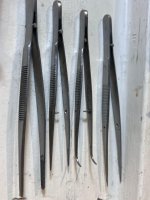
I would love a set of those especially with the guides to keep the tips from twisting off the part.
 
I was fortunate to inherit a set like that when my brother-in-law passed a few years ago. Very handy indeed.
 
I remember using a piece of nylon zip tie as the sliding shoe against the throttle pipe free play adjustment screw. The original was worn out and came loose jamming the action. All the 5mm fasteners are the .90mm extinct thread, of course.
 
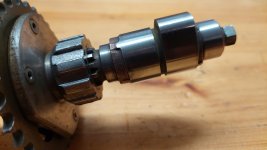
Got to the cams today and cleaned them up. Happy to see there is no pitting or scratches on any of the surfaces.
20251110_145903.jpg20251110_145921.jpg
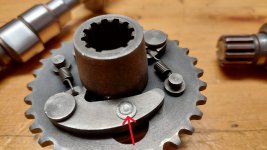
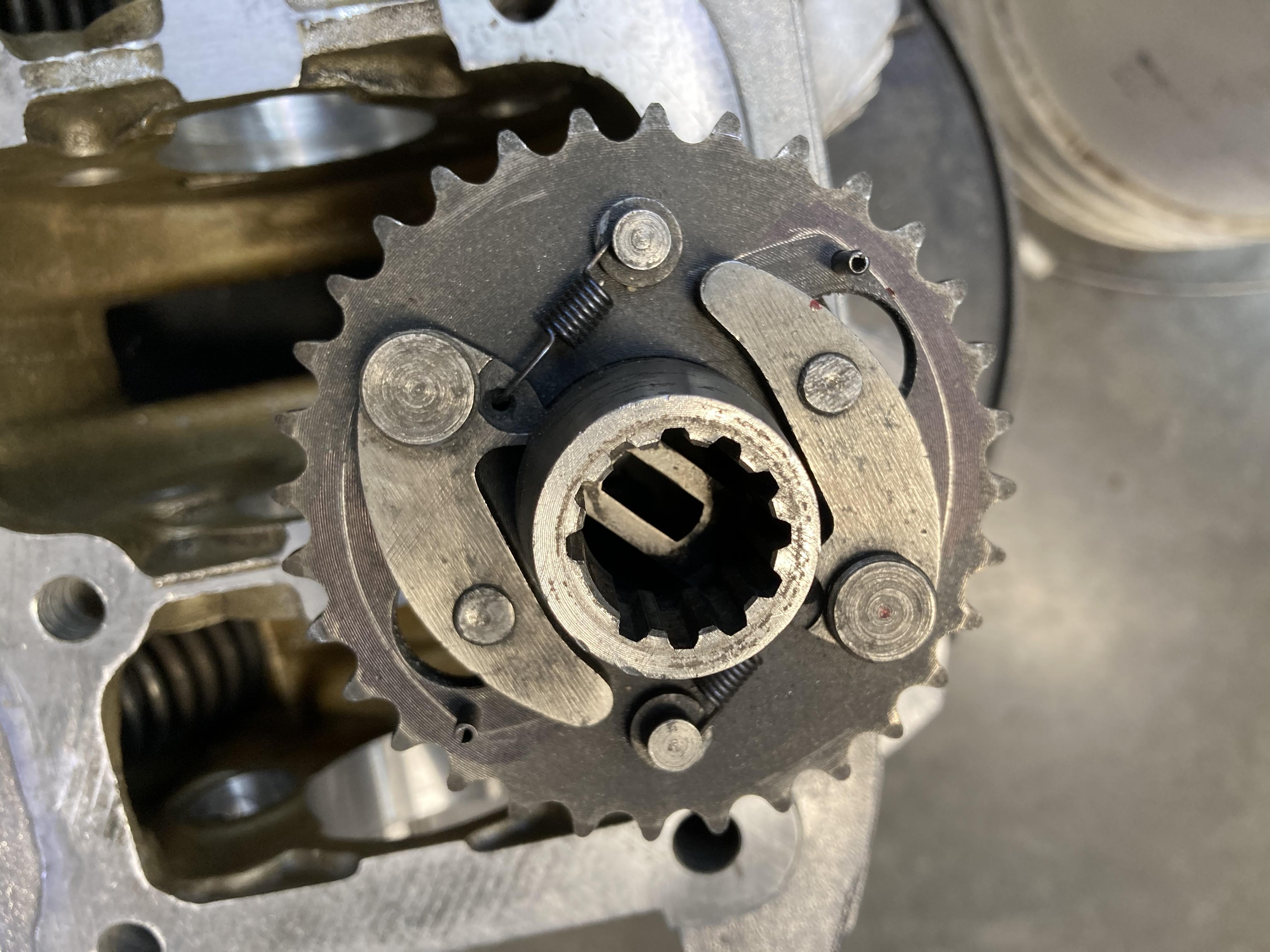
I've been reading where the advancer weights on the baby Dream needed a stop to keep them from over-advancing. I guess not the case with the dreams as the stop pin is limited by the hole inside the sprocket.
20251110_150000a.jpg

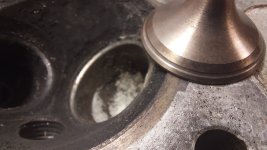
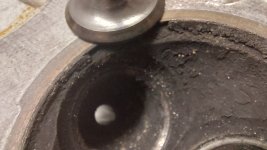
My cheapo Amazon valve spring compressor arrived today so I took the opportunity to remove the valves. After removing the carbon buildup, it looked like the intake valves had a ridge all around the circumference above the seat area. I've never seen a valve like that before.
20251110_142518.jpg
The exhaust valve was just as strange, no grey area you would normally see where the valve was seated into the head. The head as well showed no signs of the valve seating.
20251110_142557.jpg20251110_143623.jpg

Will need to find a shop that can re-cut the valve seats.
 
Very unusual rim on those intake valves. It almost looks like it was an original design, as it is almost a perfect circumference line. If the intake seats are not ridged then it is a mystery. Jensen hasn't commented and BB also has experience with these early bikes.
 
Valve faces should be straight, not cupped, or even worse, with a groove like your intakes. The intake seats show considerable pitting and should be re-faced by a powersports machinist. I'd get new ones and send them with head to be fitted. Tell machinist not to reface new valves if OEM (stellite hardened coating will be destroyed). Aftermarket valves may or may not have this coating and may be fitted in standard manner.
Exhaust valves and seats are still dirty but they may be newer and replaced the last go round. Seats, I can't tell. Machinist can advise. Light lapping of exhaust valves may be ok. Seats, of course, should be pit free.

Highly recommend you read all of Bill Silver's rebuild guide.

Superficially, your advancer looks ok. Sprocket teeth good, springs not excessively baggy. The advance range limit stoppers are rubber on the pins inside the sprocket holes. These rubbers disintegrate over time and can add 10+ degrees of advance that must be dealt with somehow. Read the guide. I came up with a partial modification ( with inspiration of 66Sprint !!), using roll pins drilled into the sprocket. 1K miles on it so far and still showing good with strobe so maybe a successful hack. There are no decent replacements available. Simply allowing it to over-advance is unacceptable.

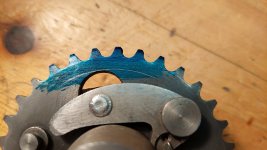
Roll pin modified advancer. I was going to also pin the lower limit but skipped out as this was sort of an experiment. I have some idle timing fluctuation (about 5 degrees), but it's not as bad as Charles unmodified one that had to be retarded from static setting to TDC instead of F. Still starts mostly ok and only over advances a couple degrees.

ebJ1aOh.jpg


You can see all the discussion and measuring on my build


Actually, Steve's help started a page earlier.

 
Last edited:
Valve faces should be straight, not cupped, or even worse, with a groove like your intakes. The intake seats show considerable pitting and should be re-faced by a powersports machinist. I'd get new ones and send them with head to be fitted. Tell machinist not to reface new valves if OEM (stellite hardened coating will be destroyed). Aftermarket valves may or may not have this coating and may be fitted in standard manner.
Exhaust valves and seats are still dirty but they may be newer and replaced the last go round. Seats, I can't tell. Machinist can advise. Light lapping of exhaust valves may be ok. Seats, of course, should be pit free.

Highly recommend you read all of Bill Silver's rebuild guide.

Superficially, your advancer looks ok. Sprocket teeth good, springs not excessively baggy. The advance range limit stoppers are rubber on the pins inside the sprocket holes. These rubbers disintegrate over time and can add 10+ degrees of advance that must be dealt with somehow. Read the guide. I came up with a partial modification ( with inspiration of 66Sprint !!), using roll pins drilled into the sprocket. 1K miles on it so far and still showing good with strobe so maybe a successful hack. There are no decent replacements available. Simply allowing it to over-advance is unacceptable.

Roll pin modified advancer. I was going to also pin the lower limit but skipped out as this was sort of an experiment. I have some idle timing fluctuation (about 5 degrees), but it's not as bad as Charles unmodified one that had to be retarded from static setting to TDC instead of F. Still starts mostly ok and only over advances a couple degrees.

ebJ1aOh.jpg


You can see all the discussion and measuring on my build


Actually, Steve's help started a page earlier.

Sorry for the late reply, 15 hour power outage yesterday due to heavy wet snow in my area.

Thanks for the clarification BB. I'll have to do some more homework on the advancer.
 
Sounds like you need a generator! Our typical outage reasons are fallen trees or car crashes into power poles around here.
I do have a small generator (3K watts) but I only use it to power things within a 20 foot range of the garage door. My router is on the second floor and running an extension is not practical.
 
I do have a small generator (3K watts) but I only use it to power things within a 20 foot range of the garage door. My router is on the second floor and running an extension is not practical.
Battery backups large enough to support a computer last a long time when used only for a router, I have one on my modem and router pair from Spectrum since we finally got fiber in our neighborhood. Problem for us is, when our power goes out it's likely their equipment a few miles from us loses power too so the internet goes down as well. That's when I use my phone as a hot spot, but that eats up data in a hurry.
 
Battery backups large enough to support a computer last a long time when used only for a router, I have one on my modem and router pair from Spectrum since we finally got fiber in our neighborhood. Problem for us is, when our power goes out it's likely their equipment a few miles from us loses power too so the internet goes down as well. That's when I use my phone as a hot spot, but that eats up data in a hurry.
I suspect the cell tower near me was on backup power as well as I only had one bar of reception. Creating a hot spot was a no go for me at least. We get maybe 3 or 4 outages a year usually lasting only a couple of hours, so I usually just wait it out.
 
Cost is obviously a factor, but installing a whole house generator was the best decision my family ever made. It paid for itself the very first outage we had. Runs off our natural gas, and turns on and off automatically when the power goes off or back on. And it's kinda bougie to be the only house on your block with lights on...
 
Cost is obviously a factor, but installing a whole house generator was the best decision my family ever made. It paid for itself the very first outage we had. Runs off our natural gas, and turns on and off automatically when the power goes off or back on. And it's kinda bougie to be the only house on your block with lights on...
We can't afford a whole house unit so we spent about 10% of the cost and bought a 13,000 watt 50 amp service standalone unit and I drag it out and plug it into a dryer receptacle connected to our panel, main breaker off to isolate us from the grid. And we use our across the street neighbor's Generac as a clue to when the power comes back on, I can see the green light blinking on theirs when it's running.
 
There are a few Generacs in my area but being out in the suburbs, there are no gas lines so that means a tank outside that has to be filled every so often, plus the cost of the unit and installation does not make sense at my stage in life. Maybe if I win the lottery...
 
Be careful inserting the points cam blade into the slotted advancer plate, can ruin the advancer.
I've read that since you can't see if it is lined up correctly, you have to go by feel to ensure it is engaged in the slot.

I re-read your thread on your fix for the advancer. Was 17.5 degrees the number you used to position the roll pin. My weights are roughly in the same position as yours were at full advance. I'm thinking to do the same fix as you did but would like to confirm 17.5 degrees is the magic number.
20251112_165521.jpg

There were some remnants of the rubber that was attached to the pin, however it does not look like there was much rubber missing in the area where it contacts the full advance position in the hole.
20251112_163609.jpg

On Mr Honda's blog he had an article describing the advancer problem and had a pic of the pins and the rubber that disintegrates.

The missing rubber is actually on the "closed" side of the pin, and if I understand correctly, the advance at idle is not correct when the dynamic timing is set correctly. Using the roll pin to restrict the full advance allows the static timing to be set correctly - am I right or did I completely misunderstand?
 
Back
Top Bottom