69 CB 450 K2 starter rebuild

stu

Veteran Member
Joined
Mar 13, 2024
Total Posts
262
Total likes
121
Location
Toronto ON Canada
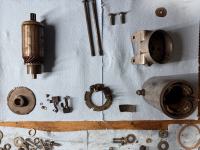
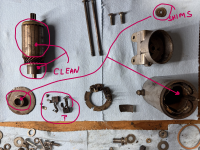
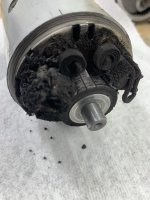
Hey all..tested starter on bench and got quadraphonic nothing so thought I'd have a look see. The armature was coated in brown residue and you couldn't see the plating underneath if you tried. This is what it looks like after several cleaning shifts with a toothbrush and iso (haven't got to the top part yet). It could still be cleaner and I was wondering if i could use a little steel wool on it? I've seen wool used on the top part for the brushes contact but wasn't sure if that was allowed for the armature. Also, how can you tell if the bushings need replacing? (asking because it looks like a pain that I'd like to avoid):)


1734210853580.png
 
Last edited by a moderator:
For the commutator area I would used some fine emery to clean that up. You also need to clean the gap between each commutator. You can do this with a file or a piece of a fine hacksaw blade of the correct width. That gunk in the gaps is probably shorting out the commutator.
 
Any idea how many miles on the engine the starter came off of? I never could find bushing clearence specifications for the starter itself but you can check the front bushing by eye pretty easily just by slipping it on the shaft and seeing how much play you got or by using a caliper. Be careful not to lose any thrust washers when cleaning the parts. Here is a link to a CB450 starter rebuild guide from Motorcycle Classics I found which is good. https://www.motorcycleclassics.com/...ir/honda-cb450-starter-overhaul-zmmz18jfzhur/

I also watched the starter rebuild YouTube video from from those guys in Houston which I found helpful. They recommended using a heat gun to remove the bushings which worked for me.
 
  • Like
Reactions: stu
Couple of thoughts here. As Brad noted the small slits in the commutator need the be cleaned up carefully and don't damage the area by being aggressive with the part. Honda states not to use any abrasive material on the area for the clean up. I have very lightly cleaned the small commutator brush end with WD 40 oiled 2000 grit paper, yet 0000 steel wool may also work. Just be mindful of the fine debris off the wool. I usually use brake cleaner in the whole area and a old tooth brush like you did. Clean the brass bushings internally with brake clean or another cleaner fluid and then a wipe of higher temp grease or 3 in 1 very light oil to relube the inner bushings.
Those shims I noted in your picture must go back in the correct places you removed them from, since they space the internal parts for proper alignment.
Your brushes look possibly reusable and I thought there was a line scribed on the thin top end of the brush noting the wear limit. I could be confusing that with the brushes on the rotor parts on the DOHC bikes. ;)

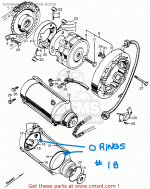
Oh there are usually thin rubber O rings to seal the both ends from dirt or water. I don't see those in your parts assembly. It could also be another material so check a parts fiche if you don't have them as they may or may not be required.

Also test it once reassembled as originally suggested on the floor, or in a vice to confirm it still works before putting back in the motor. (y)


1734210853580.png


honda-cb450k2-1969-usa-alternatorstarter-motor_bighu0100e2009_868e.gif
 
Last edited:
  • Like
Reactions: stu
Thanks for all this my friends. Another question: any idea where this piece belongs? (Now, it may be part of another bike part, but while removing the planetary gear assembly, I thought I heard something hit the shop table and all I could see was this thing)IMG_0200.jpeg
 
Check the FSM under starter service, as the parts fiche has only the basic stuff shown. It is some type of pin possibly for the starter (maybe a bearing roller pin), yet I have never seen such a pin in the starter motors I have done. I think the bearings are all ball bearings?? and not a roller pin type.
You have a lot of extra parts/bolts screws etc on your bench in your first picture. Not a good plan, so it could easily be something from another one of your projects.
 
I can't remember a pin like that when I rebuilt my starter either. I can check the bad starter I have tomorrow to see if it has such a part when I have a chance.
 
  • Like
Reactions: stu
Happy holidays all!

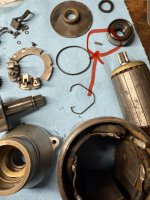
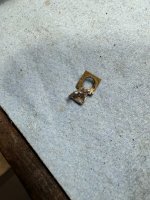
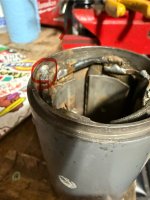
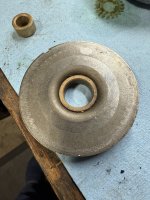
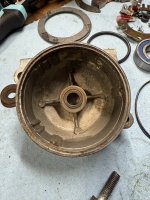
Finally have all the parts for my starter rebuild and now come the questions. Small terminal lug broke off (more like disintegrated) the terminal on starter and I’m having trouble locating a decent replacement. The terminal on starter is 4mm wide and the lug is about 6mm across the top. Smallest I could find was about double the size. The lug attaches to the brushes plate. IMG_0208.jpegIMG_0205.jpegIMG_0207.jpegIMG_0206.jpegAny hack suggestions would be most appreciated. And the bushings both top and bottom don’t seem to be responding to my heat gun efforts. Could I take a torch to them or would that do damage?
 
I wouldn't use a torch, I had to heat the heck out of mine with a heat gun. I had to wear welding gloves and I used a socket to tap the big one out after heating but came out easily. If you can find a drift punch that will just fit inside the small bushing you can try heating the housing and then pack bearing grease inside the hole and then try tapping the drift punch down the hole. If the drift fits tight enough the grease can't compress and will push the bushing out. I also put my new bushings in the freezer overnight before trying to install them.
 
  • Like
Reactions: stu
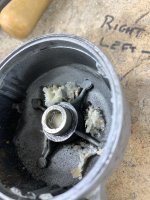
Adding this late to the game because I just finished extracting this bushing, I always like to add value, and I'm bored.

A buddy of mine here in small town southern British Columbia recommended a perfectly matched brass drift (filed to the ID of the bushing) and white bread.

I kid you not

White. Bread.

Picture was taken with the bushing almost completely extracted. I did it with my own hands, a brass drift and a ball peen hammer.

Whack, whack, add bread, whack whack, add bread, etc. Eventually the bushing began to budge.

IMG_1281.JPG
 
I was going to try that. It seems to me no matter what you use it would just be too thin. The bread seemed like a logical solution and worked like it was designed for the job.
If you find a drift that just fits in the bore of the bushing then bearing grease works but it is messy.
 
I was going to try that. It seems to me no matter what you use it would just be too thin. The bread seemed like a logical solution and worked like it was designed for the job.
Yep. I’ve knocked really stuck idler bearings and throw out bearings with the wonder bread method. It certainly does make you wonder what’s in that bread.
 
Back
Top Bottom