1974 CB450 - maintenance, repair, and upgrade log

I looked through all of the springs I have and there's nothing left in my assortment that will be better than the ones I've already tried. Mine are all 15mm long or 20mm long. When installed on the advancer, the static spring length is about 21mm. So, the short springs have a high preload that delays the start of the advance curve, while the longer springs have very little preload and have felt a little bouncy/soft off-idle.

I found a company online called Lee Spring and ordered two stainless steel springs with a length of 17.5mm and other physical dimensions that seem appropriate. I also ordered another random set off eBay with 16mm long springs. Will report back with more details once those arrive and I can test them. I'm running the 500T advancer in the interim.
 
I rode the CB450 to work today with the new set of springs from the Lee Spring Company. All in all, it felt okay, but I plan to map the advance curve as the final measure of suitability.

PXL_20250921_173322091.NIGHT~2.jpg

@Danager4792 shared another Lee Spring Company design with me recently that originated in a Facebook group for the CB450. I will plan to acquire and test those as well.

I decided to order a spare tach that I will hook up while checking the dynamic timing. I want to make a video with both the rotor and tach visible in order to map out the curve.

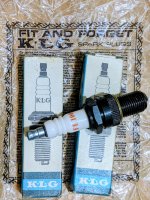
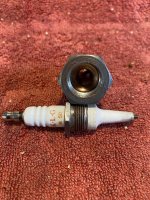
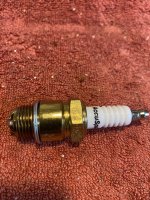
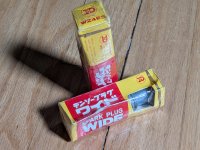
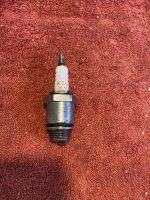
I also received a package today with two KLG FE100 spark plugs. Supposedly these are an equivalent for the NGK B8ES. I had never heard of this company, but found them accidentally and then looked up the equivalent plug. I paid $7.34 for the pair as a novelty and don't really plan to use them, although I wonder if anyone has any experience with them.

PXL_20250923_013237176.NIGHT~2.jpg
 
I use them in my 1946 Ariel VB600 Side Valve. Model M50.
KLG were a big UK manufacturer back in 1920/30/40 and 50’s.
co manufacturing was done in France upto the WWII.
the earlier models could be disassembled to clean carbon off the centre porcelain part. I have had to do this a few times when I forgot to run the bike on near full advance when on the road.
later types are like the one you pictured which I don’t believe can be disassembled for cleaning.
Some models have multiple earths around the centre electrode, which is okay for motorcycles with a magneto as dwell time is not important.
Accuspark in the UK manufacture a range of multi earth spark plugs. I use these in my 1933 Austin 10/4. Sidevalve. So far no problems. They have a NGK B8ES equivalent.
even earlier that 1920 KLG made mica insulated plugs for the British aviation and the Royal Flying Corps fight aircraft.

have a look at this wikedia entry on the man himself. https://en.wikipedia.org/wiki/Kenelm_Lee_Guinness

KLG got sold in the 60’s I think and absorbed into some other sparkplug company never to arise as KLG again.
It is amazing that there is still NOS KLG about particularly on eBay uk.
 
I use them in my 1946 Ariel VB600 Side Valve. Model M50. KLG were a big UK manufacturer back in 1920/30/40 and 50’s.

It is amazing that there is still NOS KLG about particularly on eBay uk.
Thanks for responding, Gary! It's good to know that they have a good reputation and are still in use among VHT members. I'm reading up on Mr. Guinness presently — they missed the chance to market these using Guinness branding!

The seller in this case is located in Colorado and I guess few people recognize them in the US.

Thanks for the tip on Accuspark, also.
 
No problem, looking again at your pic and some on eBay uk I am wondering if the black anodising shown means that the name KLG has been resurrected since the box and plugs look very new. Much newer than 50 year old NOS items. The Green Sparkplug Company has few different KLG‘s for sale from time to time.
The KLG plugs I use are all designated M meaning 18 mm and the following number is the temperature rating, 50 being hotter than 60 etc. F designates 14 mm .
some of the plugs have an L in the number indicating longer reach.
this link shows what the plugs that you can disassemble look like. Two Hex’s….
incidentally KLG plugs were the default for motorcycle racing back in the day, HRD Vincent especially.
 
No problem, looking again at your pic and some on eBay uk I am wondering if the black anodising shown means that the name KLG has been resurrected since the box and plugs look very new.
Everything I've found indicates that production of KLG plugs ceased in the early 1980s, although they may have continued under another name beyond that. I think it was the website of the Green Sparkplug Company where I learned about KLG plugs. Then I looked up the NGK B8ES equivalent and went to eBay.

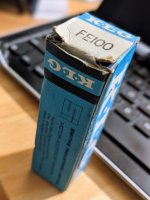
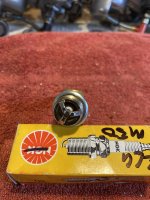
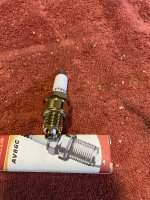
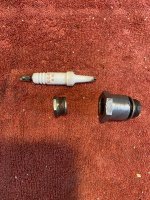
The packaging shows that mine were produced under the Motor Accessory Division of Smiths Industries Limited, but I see no date information. The wax paper wrapping (shown above) seems a vintage touch as does the stamping on the box for the model number (below). I think you're probably right that they are among the last of the KLG plugs to be produced and likely after the company or rights were sold at least once.

PXL_20250923_115947849.NIGHT~2.jpg
 
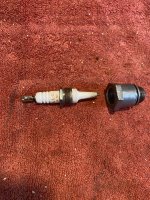
I’ll take one of mine apart later today and post some pics on what they look like.
if your engine is prone to carboning up they are a boon since so easy to clean and reuse.

I get very good performance from the Accuspark multi electrode ones as well.
the trick to understanding how they work is this: the spark will jump from only one electrode but if it fouls the spark will then go from another electrode.… and so on constantly switching electrode paths. I think this keeps the plug clean.
 
Clearly! And as a side note, I've always wanted to go to Australia... too damn old to make the trip now even if I could afford it.
mm, so Australia is that little island to west of where I am.....
we constantly drip feed people to Aussie thereby raising the IQ of both countries !!!
 
mm, so Australia is that little island to west of where I am.....
we constantly drip feed people to Aussie thereby raising the IQ of both countries !!!
Can't tell you how many times I've done that... :rolleyes: probably should send a little my way too.
But I have wanted to go to Australia for a very long time, and now that I watched a Smithsonian show on NZ the other night I want to go there too! So many cool and unique creatures there that do not exist anywhere else.

But now that I have my geography lesson yet again (as well as the one about paying closer attention), let's return to the professor's 450 thread long since in progress.... :ROFLMAO: (to save me additional embarrassment as well)
 
Looking at your pic I dont think it is detachable..
To be so there should be two hex's for two spanners. no special tool required.

There does look like there is some knurling on the base but that is probably for hand winding the plug in before tightening.

Here is a good resource for KLG plugs. This guy is an englishman living in Asia ( India I think )

The FE decodes as F=14MM
E= 3/4" reach
100 = same heat range as NGK B8ES
 
Looking at your pic I dont think it is detachable..
To be so there should be two hex's for two spanners. no special tool required.
That makes sense. At first I thought the knurled section might unscrew.

There does look like there is some knurling on the base but that is probably for hand winding the plug in before tightening.
That's the only purpose I could think of, but it's a nice feature.

Thank you, Gary!
 
Excellent! Thanks for sharing all of those photos. I'll have to look up the Accuspark equivalent for the NGK B8ES as well.
Alas, it seems that there is no plug from Accuspark that can be used to replace the NGK B8ES plugs. Gonna need a classic British machine in order to benefit from Accuspark.

I did find a second pair of KLG FE100 plugs, so I'll try at least one set out on one of my bikes, just for kicks.
 
I have been planning to create a set of non-resistor spark plug caps for my CB450 for a while and finally got around to it today. Tom (@ancientdad) already posted a thread to document this process in the Tips and Tricks list of the Technical Stuff forum. The caps I worked with seem to have slightly different internal parts, but everything goes together in the same way that it is shown there.

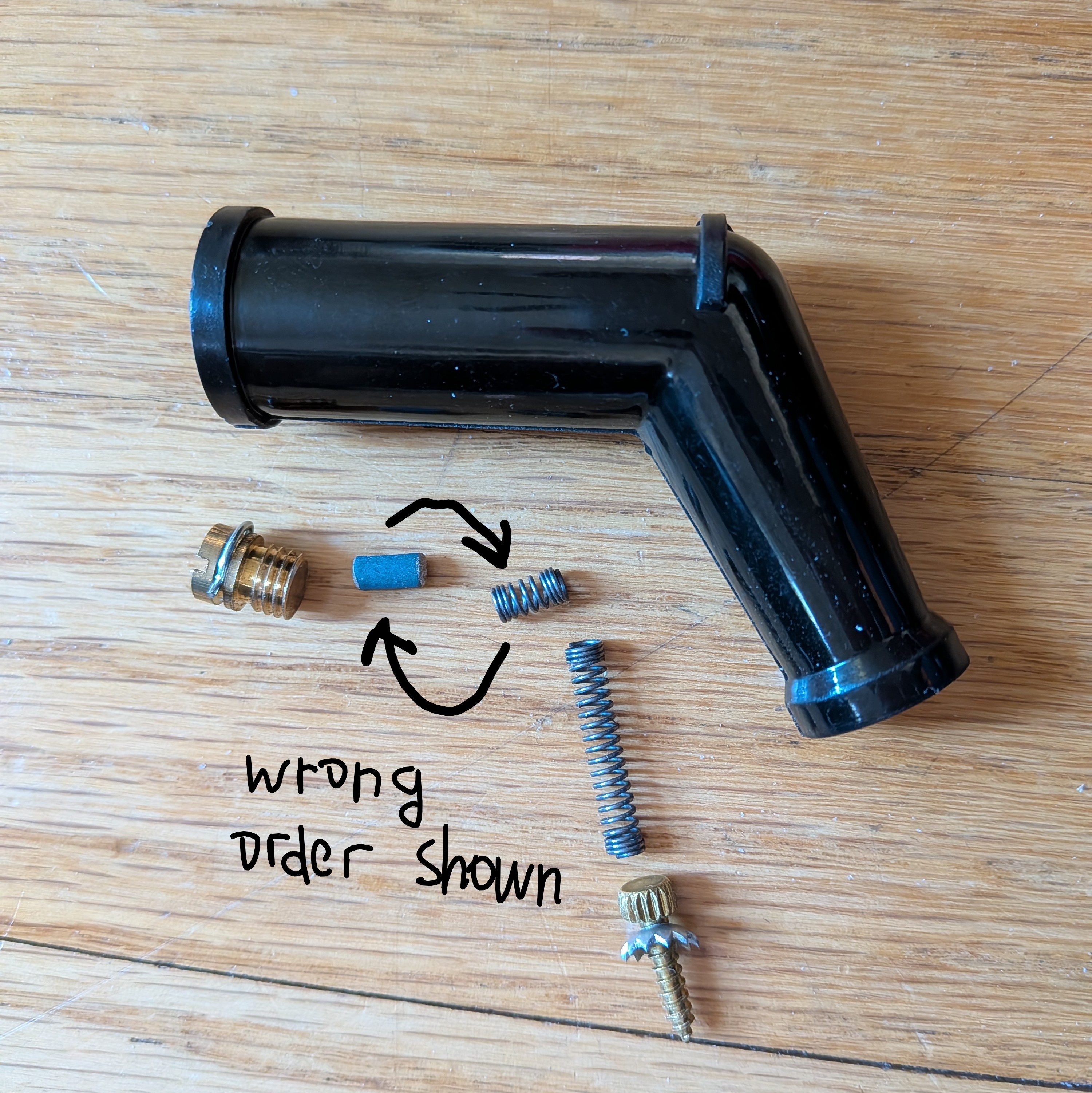
I purchased new caps from 4-into-1 in November 2025. Below is a photo of the internal parts. Unbelievably, I put them in the wrong order for the photo, but I did not want to take one apart again to correct the photo, so annotated it instead. The short blue segment is the 5kΩ resistor and I think the blue is some sort of thin shielding material. To be clear, the resistor should be between the two springs.

jbrD7Vl.jpg


To remove the resistor, it is sufficient to unscrew the spark plug connector with a flat blade screwdriver. I cut a short segment of bare 6 gauge copper wire to replace the resistor, dropped it in, place the short spring on top and then threaded the plug connector back in. I purchased one foot of bare wire from Home Depot.

nNLpdPk.jpg


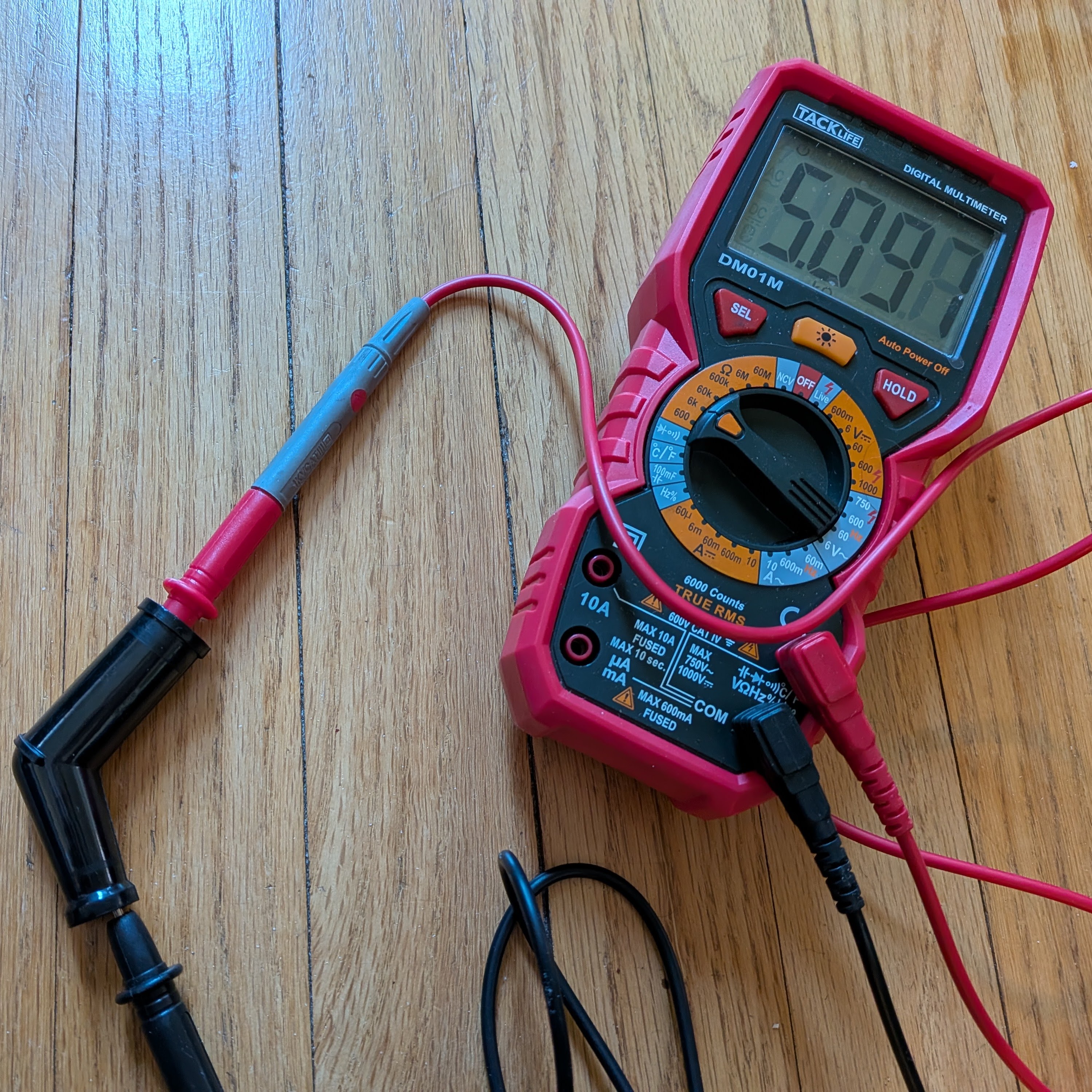
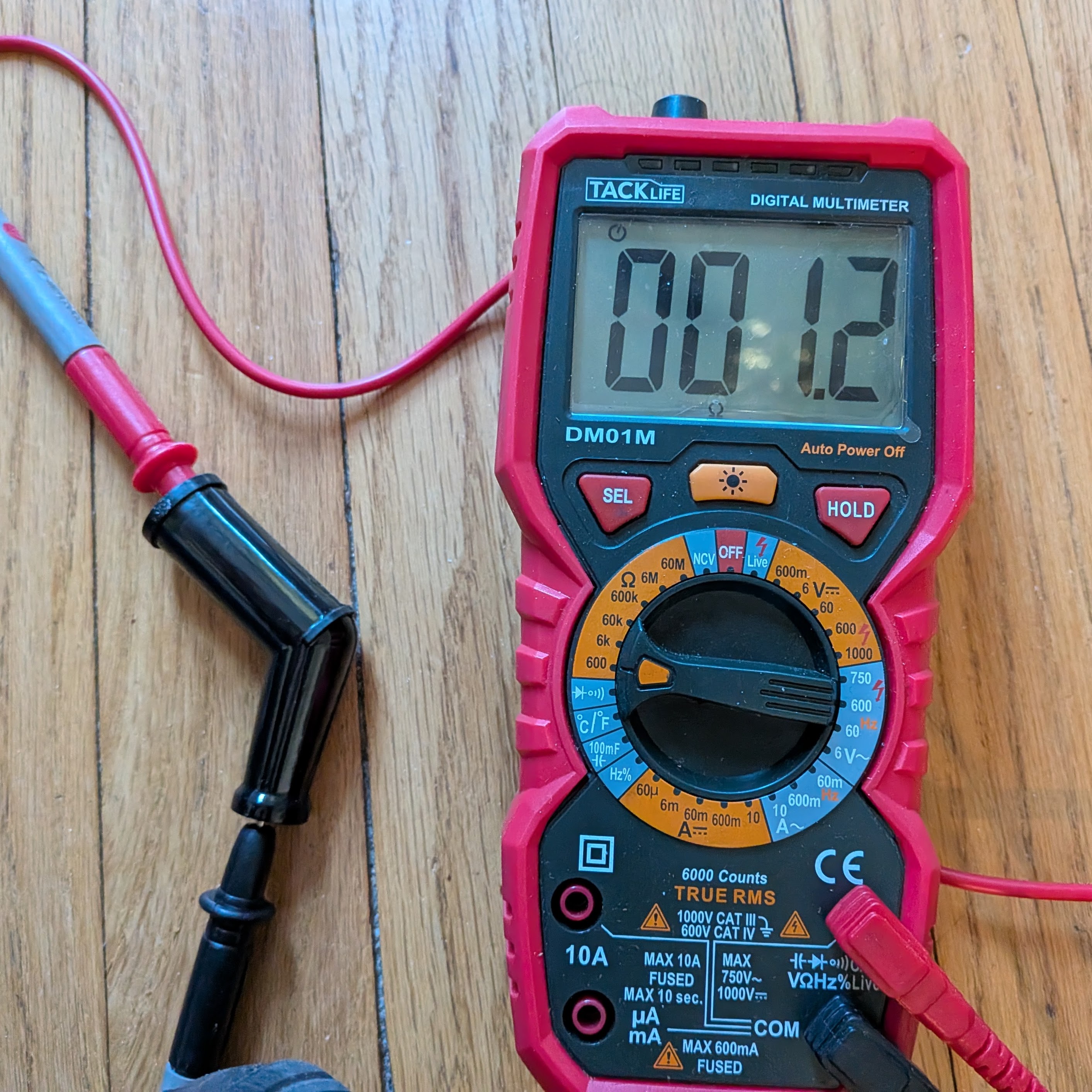
I measured slightly over 5kΩ before modification and about 1Ω after the modification.

UXvMtEv.jpg


ou4iUlh.jpg


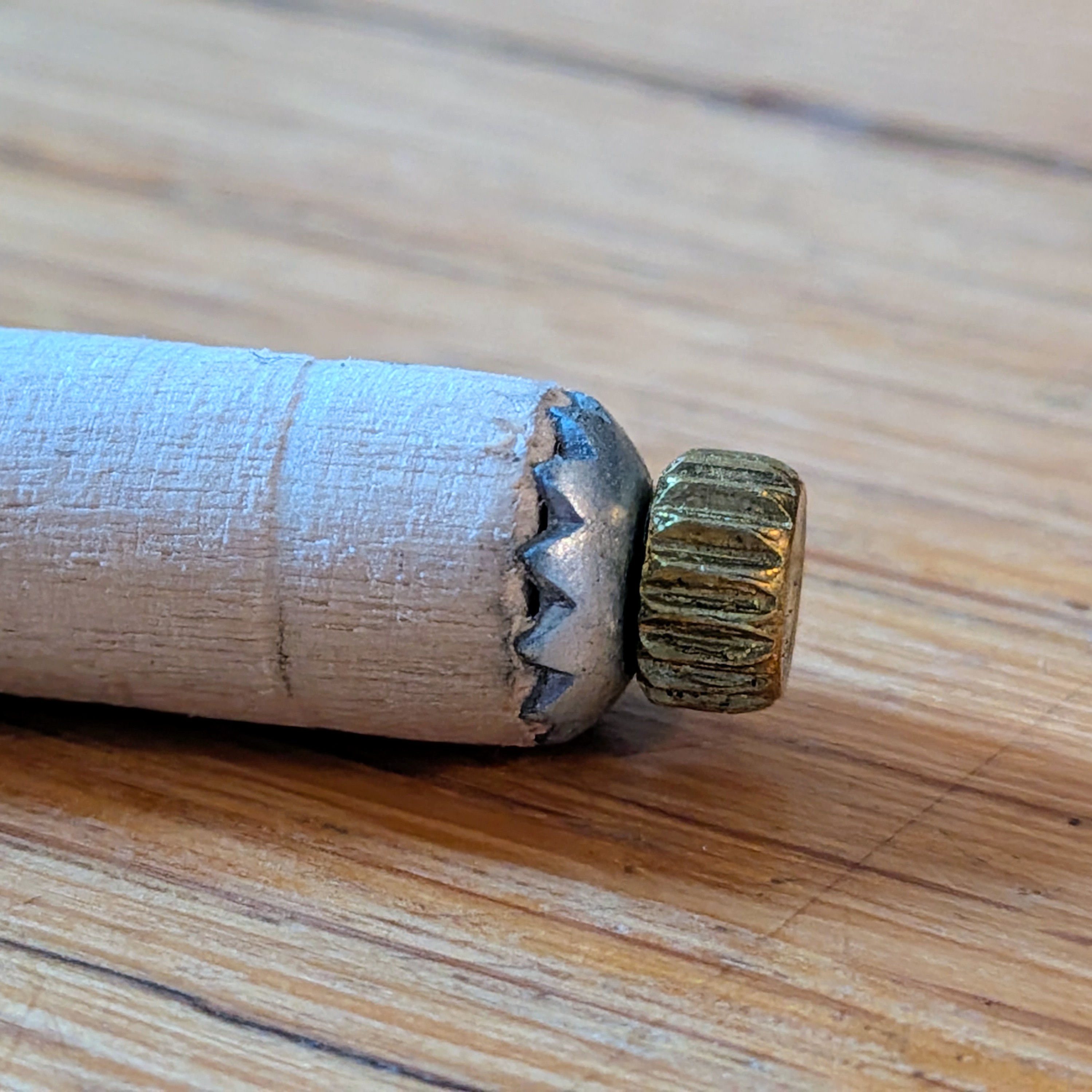
I did remove the self-threading screw from the opposite end of the cap, but I do not think this is necessary for the caps I used. I found the easiest way to remove this piece was to thread a short piece of dowel onto the screw and then pull it out. I installed it by pressing/tapping it into the cap with the dowel and then unscrewing the dowel. Since this piece is a press-fit, I would be inclined to leave it alone in the future and chose not to disturb it on the second cap that I modified.

OwIBZc1.jpg
 
Some still have the removable screw-in plug attachment, others are not removable. That style is so much simpler to convert. (y)
 
Some still have the removable screw-in plug attachment, others are not removable. That style is so much simpler to convert. (y)
Ah. That makes sense.

I was a little surprised that those thin wire springs are used to pass current. Somehow doesn't seem ideal, although I guess they help ensure constant contact.
 
Last edited:
Ah. That makes sense.

I was a little surprised that those thin wire springs are used to pass current. Somehow doesn't seem ideal, although I guess they help ensure constant contact.
Yes, and remember it's high voltage but low amperage so the spring's wire size doesn't need to be heavy gauge.
 
The 450 was the last of my bikes to be awoken this spring, which I set out to do this afternoon. It started up almost immediately, but I had to shut it down pretty quickly and hope no damage occurred.
  • Symptom #1: On a freezing cold day earlier in the winter I was out in the garage and noticed some oil under the 450. I attributed it to my many advance spring tests in the fall leaving residual oil on the motor and frame.
  • Symptom #2: Bike started easily, but was running rough. Looked down and saw gas on the floor. Closed petcock thinking the float needle wasn't sealing.
  • Symptom #3: Restarted the motor and saw more gas running to the floor. Realized my petcock must have failed during the winter as I shut off the bike. Tank has virtually no gas in it.
Too bad I didn't think more about Symptom #1 at the time. I drained about 7 liters of 87 octane motor oil from the bike, creating a bit of a mess in the garage. I removed the oil filler cap and left the drain plug out. I guess I will let it sit for a week or two before I put in new oil and evaluate things further. Hopefully I'll have a new petcock or rebuild kit by then as well, although I suspect it was the extreme cold this winter that caused it to fail.
 
The 450 was the last of my bikes to be awoken this spring, which I set out to do this afternoon. It started up almost immediately, but I had to shut it down pretty quickly and hope no damage occurred.
  • Symptom #1: On a freezing cold day earlier in the winter I was out in the garage and noticed some oil under the 450. I attributed it to my many advance spring tests in the fall leaving residual oil on the motor and frame.
  • Symptom #2: Bike started easily, but was running rough. Looked down and saw gas on the floor. Closed petcock thinking the float needle wasn't sealing.
  • Symptom #3: Restarted the motor and saw more gas running to the floor. Realized my petcock must have failed during the winter as I shut off the bike. Tank has virtually no gas in it.
Too bad I didn't think more about Symptom #1 at the time. I drained about 7 liters of 87 octane motor oil from the bike, creating a bit of a mess in the garage. I removed the oil filler cap and left the drain plug out. I guess I will let it sit for a week or two before I put in new oil and evaluate things further. Hopefully I'll have a new petcock or rebuild kit by then as well, although I suspect it was the extreme cold this winter that caused it to fail.
At least you got to it quickly and didn't put anything under load - but that's one way to flush an engine!
 
If you were being gentle with the rpm level and it didn't run for more than a half a minute or so, and not under load as EzPete mentioned, you should be okay. It does suck that you found out about the petcock that way, but it doesn't suck that you found out about the petcock.
 
If you were being gentle with the rpm level and it didn't run for more than a half a minute or so, and not under load as EzPete mentioned, you should be okay. It does suck that you found out about the petcock that way, but it doesn't suck that you found out about the petcock.
Yes, hopefully no damage was done. It was on the center stand the whole time without load, but there must have been a bunch of gas in there. I figure the oil on the floor earlier in the winter was displaced by gas and the gas that came out with it must have evaporated before I ever saw it. I nearly filled two oil pans today draining it all out. 🤯
 
Maybe do what I do, and disconnect the fuel hoses from the petcock after the last ride of the season.
Definitely. I think I may get some translucent tubing so I can connect the two spigots of the petcock to each other with clear tube through the winter. Easily removed when a warm day pops up and allows a visual check for leakage.
 
I found time to get back to this bike this afternoon. Since the last episode, I received some translucent fuel line and a new gasket for the petcock. I also bought some Rotella T4 this morning ($18/gal. on sale?) at O'Reilly Auto Parts.

I drained what remained in the tank, presumably the reserve level down, and then replaced the gasket without removing the petcock. I added gas to the tank, but left some long pieces of fuel line on the petcock over an oil pan just in case it started to leak again.

I had left the drain plug and oil filler cap out to allow more of the gasoline in the cases to evaporate, so I replaced the drain plug. I added oil and worked the kickstarter a dozen or so times to move a little oil around. Not trusting the petcock just yet, I started the bike up without connecting the tank to the carburetors. It sounded fine idling and I was happy to hear the expected sound reduction at the moment when oil reached the cams. The carbs soon began to run out of fuel, so I shut it off and connected the tank to the carbs. Started up and everything seems to be fine.

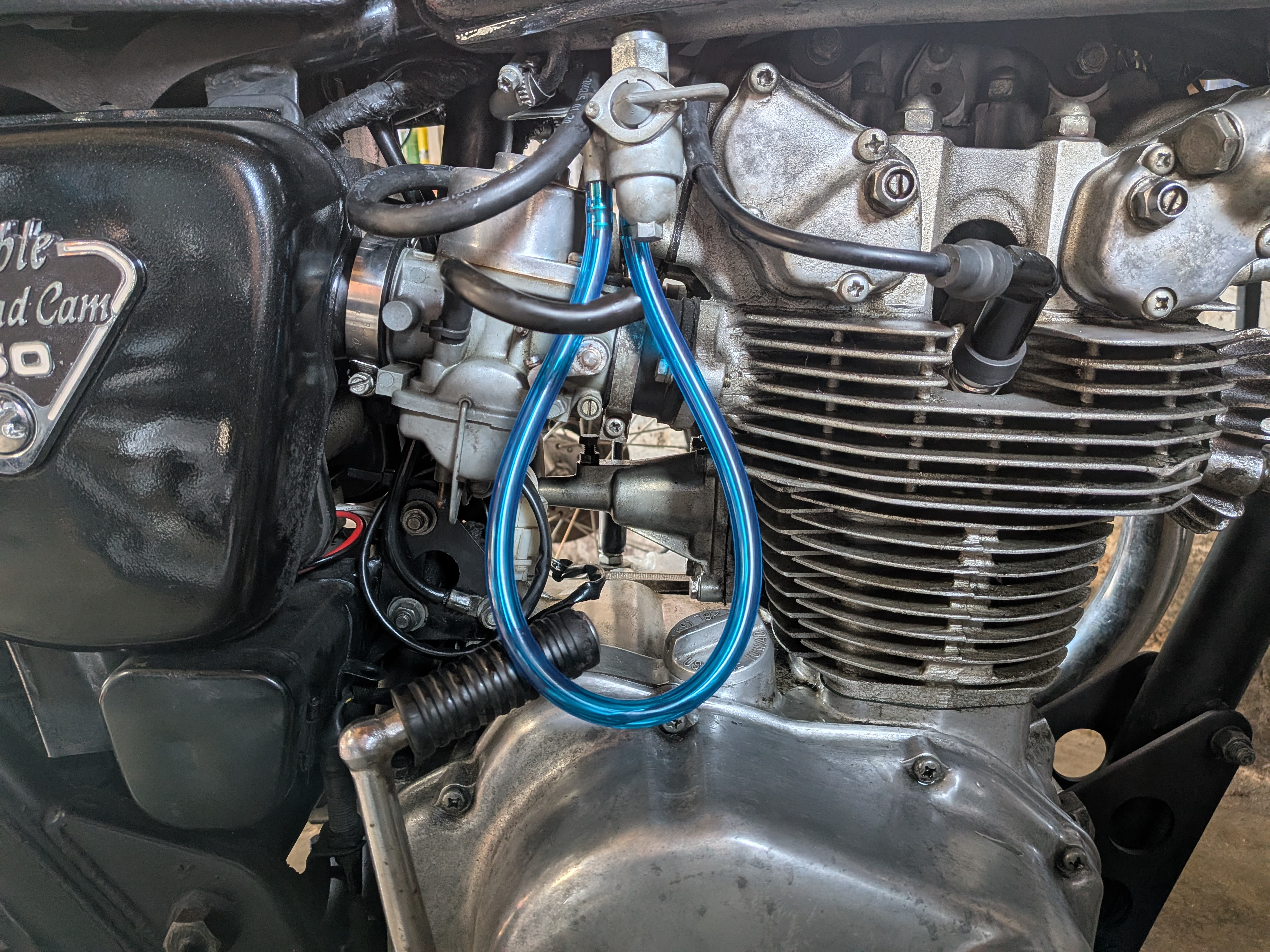
I did not have time to test ride it today and I still don't trust the petcock, so I connected a piece of blue translucent fuel line to it and called it a day. I am definitely looking forward to riding it soon.

NhyNGvi.jpg
 
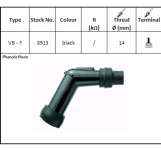
A week or two ago, after Jensen had posted about spark plug and cap availability in Europe, I went searching for NGK VB-F non-resistor caps on eBay. I found some listings out of Italy and decided to buy two.

Made a mistake right out of the gate by completing the order without changing the quantity from one to two. The shipping is crazy, but stupid me decided to order the second one right after. Each cost about $37. 🤯

I received the first one yesterday. It was a VB-05F resistor cap. 🤯🤯 And, not only that, I had to pay an additional $20 import fee before UPS would release it. I'm now expecting the second one to be another VB-05F, but we will see. This is the image from the eBay listing.

746.png

I contacted the seller and I'm not sure if it's even worth pursuing a return or exchange. I'm worried I'll have to pay import fees a second time, etc. I guess my takeaway is that I should have confirmed that their listing was correct with respect to the VB-F vs. VB-05F before ordering. Live and learn.
 
Last edited:
Well, maybe next time ask me to buy them and send them to the US in one package.
It is kind of you to offer. It didn't seem like it would be so difficult at the time to order them.

Likely, I will remove the resistor(s) rather than bother with the return and mark the cap as 0Ω.

What I'm really curious to try are the BR8EIX plugs that I've heard you talk about! Fortunately, those are easy to get here!
 
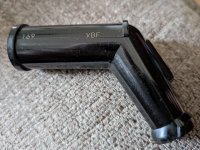
Well, I received the second NGK cap today and, lo and behold, it's a VB-F! This one was also delivered without any additional import fees!

784.jpg

The only downside is that now I want another VB-F cap to go with it. I'll choose another vendor if I decide to get it.
 
Well, I received the second NGK cap today and, lo and behold, it's a VB-F! This one was also delivered without any additional import fees!

View attachment 56507

The only downside is that now I want another VB-F cap to go with it. I'll choose another vendor if I decide to get it.
They exist !, again, I'm sorry for the inconvenience. It makes me wonder why these aren't available in the US.
 
I picked up two NGK BR8EIX plugs this morning while on a trek to purchase non-ethanol gas for my bikes.

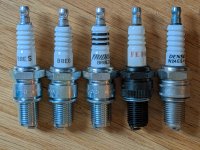
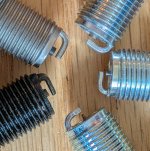
Here's a comparison of different plugs I've acquired over the last year or so.

793.jpg

And here's a close-up of the electrodes. Starting from the NOS black FE100 KLG plug and going clockwise, they are:
  • KLG FE100
  • Nippon Denso W24ES-U
  • NGK B8ES
  • NGK B8EG Racing
  • NGK BR8EIX Iridium.
790.jpg

I'm curious to try the B8EG and BR8EIX with the smaller electrodes, which are supposed to be less prone to fouling.
 
The B8EG is an interesting one. Seems to be still commonly available OTC which is a bonus.
 
I just received another pair of non-resistor plugs for my stash, Nippon Denso W24ES from NOS Parts Now. Pretty reasonably priced and still in original cellophane before I opened the boxes. I believe these are the predecessor to the current W24ES-U plugs.

840.jpg

And, before @RobMan asks, they measure about 0.6Ω and 0.7Ω, although one was a little finicky during the measurement. Hopefully that's not a bad sign.
 
And, before @RobMan asks, they measure about 0.6Ω and 0.7Ω, although one was a little finicky during the measurement. Hopefully that's not a bad sign.
I guess I better check all the new B8ES I have in my stash. I've never bothered to check plugs before, just took them at face value.
 
I guess I better check all the new B8ES I have in my stash. I've never bothered to check plugs before, just took them at face value.
I haven't run into any bad plugs straight out of the box, but I guess there was some talk about counterfeit or cheap copies of the NGK plugs around the time that the B8ES were discontinued (in the US?). I have been hoping that buying NOS plugs would be a good way to avoid that and I've never had these older style ND W24ES plugs, so thought it would be interesting to try them at some point.
 
I haven't run into any bad plugs straight out of the box, but I guess there was some talk about counterfeit or cheap copies of the NGK plugs around the time that the B8ES were discontinued (in the US?). I have been hoping that buying NOS plugs would be a good way to avoid that and I've never had these older style ND W24ES plugs, so thought it would be interesting to try them at some point.
I've not used the W24ES since back when I was still in a Honda shop and the parts department substituted them a few times but I'd buy them now if I needed to just based on many here using them. I just recall someone recently (Ron maybe) comparing resistance figures from the B8ES he bought and a few were pretty far off 0 ohms IIRC. I bought a good pile of them when we first discovered they were being discontinued so I'm probably set for life, probably should check them now.
 
Given that there is a 5kΩ resistor in the cap, I would think it would have to be very far off to cause concern. I've checked some that were over 1Ω, but it's also true that multimeters are less accurate with low resistances.

It was smart of you to buy up plugs at the time. I had some, but not a lot. I now have a decent amount between all the different options I've purchased recently.
 
It was smart of you to buy up plugs at the time.
One of the few times I've been lucky enough to be ahead of the curve. If only I'd thought a little further ahead when getting back into bikes and started buying NOS stuff while it was still more plentiful and less expensive.
 
One of the few times I've been lucky enough to be ahead of the curve. If only I'd thought a little further ahead when getting back into bikes and started buying NOS stuff while it was still more plentiful and less expensive.
You and me both. I had a newish Kawasaki Vulcan 500 from 2003 until 2011 when I purchased my CB450. It was already late in the game then and I didn't even have a clue about CMSNL until signing on here! 🫣
 
I rode the CB450 to work last week and noticed that the clutch lever had a bit too much slack. I adjusted it and then realized I didn't really have much more room for adjustment at the case or at the lever.

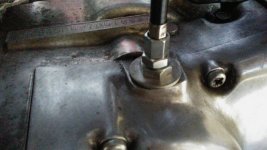
I ordered a new cable, but then remembered I had lost (okay, discarded stupidly) my clutch joint piece at some point, which means the cable is not sitting exactly how it should. I'll include a picture below.

f377a821-9263-48b9-80c8-a41d7739c96a-1_all_3649.jpg

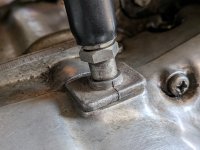
It seems to me that if I replace the clutch joint piece (I bought one a year or two ago), I will regain a substantial amount of adjustment on the cable and thus won't need to install the new cable just yet. Hope to confirm in the garage shortly.
 
I think I'm cheating a bit here, but everything seems okay for the short term. I will plan to install the new cable before long.

842.jpg

I assume the threaded section directly above the clutch joint piece should not be used when fitting one of these 350/360/450 clutch cables to a CB450?
 
Back
Top Bottom