1971 CB450 K4 "put it back together" project

chsbrgr

Member
Joined
Jun 12, 2024
Total Posts
29
Total likes
46
Location
Detroit Metro, Michigan, US
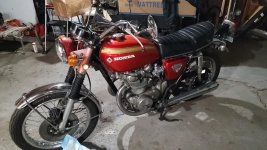
Posted about this in the Welcome thread, but the bike that brought me here is a 1971 CB450 K4, based on the Serial/VIN starting with CB450-41...,color is Candy Ruby Red based on parts and the identification guide. The odd part is the gas tank has a gold stripe on the side, which based on the guide, is from K2-3, whereas the K4 changed to black stripe. It also has the CL-style scrambler handlebars, possibly from a swap, as he also has a CL450 somewhere out there having work done on it.

The bike belonged to my wife's late uncle, who was a car and motorcycle guy, and was in the middle of disassembly of it. The seat, tanks, air boxes, and carburetors were off, Not sure how long it has been sitting in this condition, so my first step was make sure I have a complete bike.

A few weeks ago when I last went over to help clean up, we collected all the parts we could find in the garage that looked like they belonged with the bike, and I took them home. Based on what I could remember from the bike, and the parts in hand, I was missing the left carburetor, and the float bowl and top bits for the right one. I also had a few extra bits, turn signal pieces, horn, headlamp, spark plugs, various bolts and other hardware.

The air filters, not sure if I can clean them and use them as is, or if I should just go ahead and replace the filter material with some UNI foam.

The gas tank (once I figured out it didn't need a key to open, just something key-shaped) was rusty inside. I removed the petcock and balance tube and filled it up with white vinegar and left that to sit for a day or so. I cleaned out the petcock sediment bowl, filter, and off\on\res valve, and reassembled. The reserve filter is damaged, thinking about how to repair that. After a day, I emptied the vinegar into a bucket, and looked inside to see how much progress had been done. In that time, I had also seen another recommendation to put something to agitate the rust off the walls, like a handful of screws. Put the vinegar back in, and a handful of screws, and shook them around every so often, trying to get every part of the tank. After another round of cleaning, rinsing, and trying to get it dried and some oil to prevent rust, I wasn't fast enough and there was some flash rust, and some rust that the vinegar didn't get entirely, but it looks 100x better. I did pick up some POR-15 ether prep and tank sealer. From what I read and have watched on how to do it, sounds like an all-day project to finish it. The gas cap is in good condition save for the rubber gasket. It's brittle and cracking. Replacement has been ordered.

Then just this Saturday (6/15), Another trip over to help clean up more, I rented a U-Haul motorcycle trailer to bring the bike home, in looking for the left carb, we found 3 of them, plus another right carb, another choke link, and a rebuild kit from those guys in Houston. Made sure the engine wasn't seized, and loaded it up and strapped it down, then brought it home.
Sunday I started putting things back together to see where I was at. I cleaned up and started putting the right carburetor back together with the first body, only to find the pin in the side for the piston orientation was filed down. The other right-side body was filthy, So I scrubbed that clean with Carb Cleaner and moved all the bits and pieces to it. I also verified that the left carb was rebuilt correctly. Currently they're set up with 145 main jets (as that's what I had a pair of). Did a bench sync on the Carbs, Put the carbs on, connected the throttle cable, and tuned them to open at the same time. Added the air filters, plastic air filter covers, and the metal side covers.

The front brake lever was off the bike, Put that back on, cleaned the master cylinder bowl of crusty crud, and put fresh brake fluid in, and bled it. It's now seized and the front wheel can barely move when I push.

Clutch may need to be adjusted, there was a lot of play (about half distance to grip), was able to dial it down to somewhere between 1/3rd and 1/4th with the top adjustment, but I'll get the cover pulled and adjust it at the clutch and re-grease it.

The front forks are very squishy. I may have screwed up and tightened the ratchet straps too much and popped the seals or it was already low on fluid 🤷‍♂️. Another thing to investigate.

The screw-points for the headlight are broken off, and being held in with zip ties. replacements look expensive, may try to replace the broken-out bits with some epoxy putty, or some other method.

Stator cover looks like it'd been impaled by the shift lever, and JBWeld filled in the hole.

6 of the 8 bolts on each of the front and back head covers were taken out, with the other 2 being loosened. They were in the bags of parts I brought home a while back. I put them back, hand tightened with a small ratchet, then an additional quarter turn. Will probabpy have to open them back up and make sure nothing got in there, and replace the gasket.

No Battery, So I used some jumper cables and connected it to my car, tested the electrics, The left front blinker is out, and the rear doesn't blink. Both of the right side signals work and blink. The headlight low beam (maybe?) works, but only after switching from off to high-beam, then back to low. Horn works. Tail light works, brake light works when pushing the rear pedal and squeezing the front lever. Starter button was broken in the original housing, but an auxiliary button was added and wired as the starter. so far so good.
I was looking online at several sites selling batteries, but found one locally at a Batteries Plus nearby, grabbed that.

Picked up some 15w-40 Diesel oil, a can of chain Lube, and White Lithium grease. I haven't done an oil change yet on it. I'm waiting on an Oil Filter nut tool from those guys in Houston.

Plan is to work in 3 stages from here: make it run, then make it road worthy, then make it pretty. I'm trying to track my work using a task board in Notion. Link to the board. I'm trying to get pictures uploaded to either the task board, or a separate thing, so they are easier to see. Will update once I have them.

Here is a picture of the bike with everything put back on it. Super excited to see it put together. I can almost hear it running 😂.

signal-2024-06-16-235009_002 (Large).jpeg
 
Here is the first batch of pictures. I took pictures of what I had, tried to clean them up as much as I could while waiting to get the bike. One of the air filters' media was damaged before I received it, that's what's leading me to want to replace the media, but keep the filter housing, as I want it to be as close to stock as possible (IE No "pod" filters)

The gas tank has several dents around it, thinking about looking for paint-less dent repair to get them out. there is some chipping around the seams, and rust is starting to form on them. I'm also thinking I need to do another round of rust removal on it, or try and get it out with the PUR-15 metal etch prep and seal it.

There is some paint chipping on the side covers, and on the emblems. At least 1 plastic pin is still on them to hold their position, but the paint is chipping in them too.

This is the one carb body that we initially found, I tried cleaning it as best I could, and make sure everything was set right, before I learned of the missing/filed down alignment pin.

The petcock reserve filter has a hole in the bottom. Thinking of desoldering it, cutting off the damaged part, and resoldering it back on. I've also seem someone post that they recreated their own filter to fix theirs.
 
I’d be leery of the those guys in Houston stuff. Most if not is the same stuff you can find on Amazon cheaper and the non-existent customer service is the same, but at least you get free shipping.

For the vinegar part. Don’t use screws or nuts and bolts unless you know exactly what metal they are and not an alloy. That vinegar bath creates some nasty chemical electrolysis and can be the problem with your flash rust. Use 30 or 45% vinegar, not the plain stuff, steel ball bearings if there’s real crud, but usually just soak, shake, soak, shake for a day or two will clean it out - millions of threads in here about tank cleaning and liners.

Drain the oil now, and see what’s in the pan, grab some photos of the cams and followers and get ancientdad’s valve setting and head rebuild tutorial post to walk through that inspection and adjustment.

Clutch can be adjusted without removing the cover, but you’re probably going to want to pull it and clean and regrease anyway.

I’d pick up a one liter aux tank or an IV-style bottle for testing and tuning. It’s way easier to get to stuff without the tank there.
 
Here is the 2nd batch of photos from Saturday after I brought it home.

Lots of areas to investigate! Head covers being loose, found the bolts and since tightened them up for now.

Headlight cup is going to need some TLC, peeked inside, still a sealed-bulb style. haven't cracked it open yet to check wiring.

Will want to investigate that Stator cover hole. Clean out and regrease the clutch cable attachment too. In my working on it yesterday, the small panel the clutch cable attached to can be wiggled by hand.

I’d be leery of the those guys in Houston stuff. Most if not is the same stuff you can find on Amazon cheaper and the non-existent customer service is the same, but at least you get free shipping.

For the vinegar part. Don’t use screws or nuts and bolts unless you know exactly what metal they are and not an alloy. That vinegar bath creates some nasty chemical electrolysis and can be the problem with your flash rust. Use 30 or 45% vinegar, not the plain stuff, steel ball bearings if there’s real crud, but usually just soak, shake, soak, shake for a day or two will clean it out - millions of threads in here about tank cleaning and liners.

Drain the oil now, and see what’s in the pan, grab some photos of the cams and followers and get ancientdad’s valve setting and head rebuild tutorial post to walk through that inspection and adjustment.

Clutch can be adjusted without removing the cover, but you’re probably going to want to pull it and clean and regrease anyway.

I’d pick up a one liter aux tank or an IV-style bottle for testing and tuning. It’s way easier to get to stuff without the tank there.

thanks for the advice on cleaning out the rust. Good idea on the Aux tank/bottle, will need to get one. Once I can get out to work on it again, I can dump the oil and check under the covers.
 
With such a big project with lots of needs, I personally divided my bike up into different categories. Fuel, air, spark, timing, etc. I can only speak from personal experiences. Fuel and air first.

Fuel: Cleaning the fuel tank with vinegar will leave fantastic results at first. It really does help knock the thick layers of rust off. but you only have a few seconds at most to stop the flash rusting. If the tank does not have any pinhole leaks, do not use the tank liner. Save that for when a pinhole leak does develop. I am a HUGE fan of Rust911. It is non-acid based and won't flash rust as quick as vinegar. It is equivalent to EvapoRust. Check it out on amazon. I have had fantastic results. Be sure to rinse the tank out immediately after use, blow it dry with cold air, and immediately fill with gas. Here is my experience with it.


With the batch of carbs you have, it is important to make sure they match up. If you look at the front face, there should be a stamp. For instance, the 14H model and 723A model look identical, but the only differences are the fuel mixture screws. Very important not to mismatch those (like I did). We do not recommend using the those guys in Houston rebuild kit, as the jets will be different from the OEM specs.

Air: These repro air filters could possibly fit, someone may have to chime in and correct me, if not.

 
. . . The odd part is the gas tank has a gold stripe on the side, which based on the guide, is from K2-3, whereas the K4 changed to black stripe . . .

Here is a picture of the bike with everything put back on it.

View attachment 33934
Whatever guide you are looking at is wrong about the tank stripe. I had a CB450K4 that my friend bought brand new. I later bought it from him. Your tank is correct with the gold stripe, but your "bullet hole" was added later as a Detroit feature. Your side covers are correct too.

When you remove the headlight from the plastic headlight bucket, be careful. There is a bolt at the 4 o'clock position, and another at the 8 o'clock position. At the top of the bucket, the headlight rim has a metal tab that fits inside a groove in the plastic bucket. To remove the headlight, first remove the two bolts. Pull the bottom of the ring out only a couple mm, and then gently rotate the ring to disengage the top tab. Do not force it by yanking it straight out, or you will be on eBay searching for this NLA (No Longer Available) item.

Good luck with your CB450. It sounds like you are getting right after your project.
 
Whatever guide you are looking at is wrong about the tank stripe. I had a CB450K4 that my friend bought brand new. I later bought it from him. Your tank is correct with the gold stripe, but your "bullet hole" was added later as a Detroit feature. Your side covers are correct too
Sorry, you're right, I was under the impression that the K4 switched to a black stripe based on the picture in the Honda Identification Guide posted here, but in the remarks, it does not mention changing to a black stripe. Thanks for pointing it out! And yes, the bullet hole is just a decal/sticker that will be eventually removed during phase 3: make it pretty
When you remove the headlight from the plastic headlight bucket, be careful. There is a bolt at the 4 o'clock position, and another at the 8 o'clock position. At the top of the bucket, the headlight rim has a metal tab that fits inside a groove in the plastic bucket. To remove the headlight, first remove the two bolts. Pull the bottom of the ring out only a couple mm, and then gently rotate the ring to disengage the top tab. Do not force it by yanking it straight out, or you will be on eBay searching for this NLA (No Longer Available) item.
Thanks for the reminder! Although it looks like someone may have already bunged up the bucket, as the bolt hole areas are broken out, and the rim is being held on with zip ties in their locations. I have some experience with 3d modeling and printing, and I'm curious if I can design a reproduction. Printed with ABS or ASA, then bondoed and painted could look close to factory and be durable enough.
Good luck with your CB450. It sounds like you are getting right after your project.
Thank you! certainly excited about it, but definitely want to take the time and do it right!
 
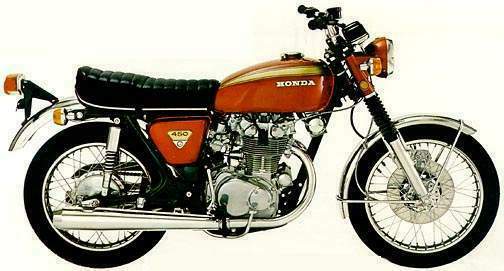
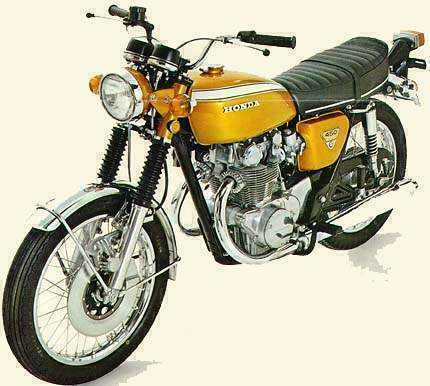
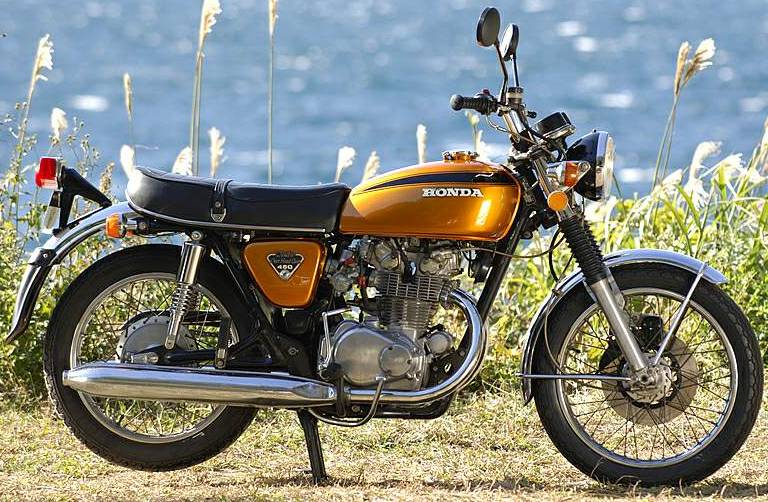
Unfortunately the ID Guide doesn't have all the information about these bikes and often lacks specific year colors and trim. Here are some pics I found that show some of the color combinations not mentioned, and from memory and brochures I'm pretty sure these are correct examples.

hover over the 4 thumbnails here

first, third and fourth pictures here

cb450k3-70a.jpg


cb450k3-70b.jpg


cb450k4-71b.jpg
 
With such a big project with lots of needs, I personally divided my bike up into different categories. Fuel, air, spark, timing, etc. I can only speak from personal experiences. Fuel and air first.

Fuel: Cleaning the fuel tank with vinegar will leave fantastic results at first. It really does help knock the thick layers of rust off. but you only have a few seconds at most to stop the flash rusting. If the tank does not have any pinhole leaks, do not use the tank liner. Save that for when a pinhole leak does develop. I am a HUGE fan of Rust911. It is non-acid based and won't flash rust as quick as vinegar. It is equivalent to EvapoRust. Check it out on amazon. I have had fantastic results. Be sure to rinse the tank out immediately after use, blow it dry with cold air, and immediately fill with gas. Here is my experience with it.


With the batch of carbs you have, it is important to make sure they match up. If you look at the front face, there should be a stamp. For instance, the 14H model and 723A model look identical, but the only differences are the fuel mixture screws. Very important not to mismatch those (like I did). We do not recommend using the those guys in Houston rebuild kit, as the jets will be different from the OEM specs.

Air: These repro air filters could possibly fit, someone may have to chime in and correct me, if not.


On the Intake faces, the left one, the one we found very clean and completely put together, has 727A stamped, and the right one, that I put together once home, has 723A stamped on it. I have 145 main jets and 38 pilot jets in both.

I also have 2 left-side bodies with 14H stamped, and a right side with 14H, but the alignment pin for the vacuum piston is filed down to the wall.

I'll be picking up some Rust911 ASAP, those results looked great!
 
On the Intake faces, the left one, the one we found very clean and completely put together, has 727A stamped, and the right one, that I put together once home, has 723A stamped on it. I have 145 main jets and 38 pilot jets in both.

I also have 2 left-side bodies with 14H stamped, and a right side with 14H, but the alignment pin for the vacuum piston is filed down to the wall.

I'll be picking up some Rust911 ASAP, those results looked great!
Start one carb rebuild and you’ll have a lifetime of carbs. Looks like you need to find a LH 723A or a RH 727A body and swap everything over. eBay is usually pretty solid for these.
 
On the Intake faces, the left one, the one we found very clean and completely put together, has 727A stamped, and the right one, that I put together once home, has 723A stamped on it. I have 145 main jets and 38 pilot jets in both.

I also have 2 left-side bodies with 14H stamped, and a right side with 14H, but the alignment pin for the vacuum piston is filed down to the wall.

I'll be picking up some Rust911 ASAP, those results looked great!

I don’t personally have experience with the 727A carb. I’d be curious what minor difference(s) it has versus the 723A carb. Hopefully they will work as a pair. According to eBay searches, 727A seems pretty rare to find. There are a lot of 723A listings, if you ever wanted a matching left one.

Also there’s the possibility of purchasing a right 14H carb, but they used 130 main jets.

I believe I posted a price chart on my previous Rust911 thread. Basically, the larger the quantity the better the deal. I didn’t put any screws or bolts in my tank when I used it. It worked fairly quickly. I shook it every now and then, and checked it after 12-18 hours.
 
Day 3 update!
Noticed that the turn stop for turning handlebars left was broken off, and let's you turn the bars past it. Right side is fine. (Picture in album below)

Found a working spare blinker bulb in my box of parts. Replaced the left front bulb, that one was rattling when shaken. Front and rear left blinkers work now!

Headlamp switch is acting funky. One of the filaments is burned out, and it appears to be the low beam. I have another one in the box of parts, and both filaments work, but someone cut off the connectors on it 😔. The switch weirdness is: when the selector is on °, or Off, the low beam is on (White wire). When I move it from off to low, low stays on. When I move the switch to High, the High beam comes on (Blue wire), but when I move from high back to Low, the high beam stays on. I have to move it to Off to turn off high beam, and turn on Low beam. Headlamp does not turn off through the switch. That's fine with me for now, I'd rather have a headlight on and be seen. But I'll get that fixed eventually.

Day 3 pictures
As requested, I drained the oil, didn't see any metallic specks in it, thankfully. I removed the rear cover and took photos and videos, then did the same for the front cover. I put the covers back on to keep foreign materials from getting in.

Took off the stator/alternator cover, cover was cracked like I suspected, but not a full blown missing material hole. I then performed the cam tension adjustment as described in the manuals, 90° turn from left TDC, then loosen the lock nut and bolt on the rear, then re-tighten them.

Ordering the rust911 and a fuel IV bottle tonight. If y'all say things are good with the carbs and the cams, I can put the fresh oil in. As I read in another thread, 15w40 diesel oil was recommended, and a zinc additive too. I have 3 quarts of it, and will get a spark plug wrench ( no idea where mine went) and that zinc additive at lunch time tomorrow.
 
I don’t personally have experience with the 727A carb. I’d be curious what minor difference(s) it has versus the 723A carb. Hopefully they will work as a pair. According to eBay searches, 727A seems pretty rare to find. There are a lot of 723A listings, if you ever wanted a matching left one.

Also there’s the possibility of purchasing a right 14H carb, but they used 130 main jets.

I believe I posted a price chart on my previous Rust911 thread. Basically, the larger the quantity the better the deal. I didn’t put any screws or bolts in my tank when I used it. It worked fairly quickly. I shook it every now and then, and checked it after 12-18 hours.
I poked around the googles and found this Google sheet document from the 'other site' with various carb stamps, and jet specification. It seems that the 727 and 723 are the same main and pilot jets, so I should be good there!
 
I poked around the googles and found this Google sheet document from the 'other site' with various carb stamps, and jet specification. It seems that the 727 and 723 are the same main and pilot jets, so I should be good there!

I actually found that same thread from the “others” today on my lunch break and was going to post it tonight. Tpbmusic(RIP Bill Lane) also made a post on there with insightful info about the carb models. Just be sure that the fuel mixture screws match up (they probably do). 14H & 723A are for sure different.

727A carbs seem to have very limited info online. Maybe they only adjusted the size of the jets from the 723A.
 
Last edited:
Day 4 pictures
Did some more work on my lunch break, and I'm the evening.
I tried to see what was up with the headlight switch, took it off and found lots of crud in there similar to old batteries left in a device, tried to clean it out, but ended up breaking the plastic on the switch mechanism. Starter area was very corroded, explains the aftermarket button. Ordered a new one from 4into1, along with some other missing bits (carb drain hose and clips for them and fuel lines.) I was going to order it eventually, as I wanted the starter button back in it, this just accelerated it.
I let the old oil settle overnight, and carefully poured it into my usual oil drain pan. Took some pictures of the bits and pieces left in the bottom. Nothing metallic looking. Seems like gasket material?

Took some pictures of the ignition points, looked brand new.
This evening I did the can tension adjustment, again (tried last night, but I think I mixed up the strokes and did not do it in the compression stroke.) then did valve adjustment, and the points adjustment. All of that should be good now.

Took the soldering iron and cut off the broken section of the Petcock reserve filter, and soldered it back on. Looks like it will hold, and let me use the whole tank!

Tomorrow I want to start disassembly on the front brake, clean it out, and see what's needed. Hopefully not the whole thing, and I just need new piston kit and pads. Oil filter tool should be here by this weekend so I can clean that out too and put oil back in it!
 
I've never seen points like those before, they look like an American car manufacturer's points from the '60s and '70s. Wonder what brand they are. So you followed the FSM's procedure for setting the points and timing?
 
Not sure where the points are from, these were already in there, and there was another set in the boxes of parts with a few other sets of spark plugs. Yes, I followed the FSM procedures. Cam Tension at 90* from Left Compression TDC, Follower gaps .03 mm while that side is at Compression TDC, and the contact breakers set to dead on separate when the LF/F marks are reached on the compression stroke, and not a degree sooner or later, verified with a test-light connected to the contact and ground.
It looks like the oil filter nut tool is coming today, so I'll be able to get the oil filter cleaned out and fresh oil filled, and fuel line and the fuel bottle as well. Still need to verify compression in the cylinders, and if the spark plugs spark.
 
Plugs you can just spark against the head to check - you can use the kickstart since your starter button is kaput. It’ll at least let you know if the ignition circuit is functioning.
While on that subject. Check your plugs and caps. As NGK has basically stopped producing the non-resistor plugs, they’re often replaced with the resistor versions, while the caps are also resistor caps, so you end up over spec. This requires either sourcing a non-resistor cap, modifying your current one, or lucking your way into non-resistor plugs. In one of my rabbit holes, I did find an outfit in Latvia purportedly selling original NGK stuff. I ordered some XD-F and SD-F caps from them to test with resistor plugs, since I’m in my last pair of B8ES plugs.

That debris in the oil could be gasket, bits of shop rag lint after a rebuild, the rubber dampener rings in the cams breaking down, or the rubber can chain rollers wearing. The bottom one can only be accessed by removing the top end, so I’d hold off on worrying about that unless your cam chain is noisy or you start seeing a lot more shredded rubber in there.
 
the contact breakers set to dead on separate when the LF/F marks are reached on the compression stroke, and not a degree sooner or later, verified with a test-light connected to the contact and ground.
But what were the resulting points gaps afterward? That is part of the FSM procedure, to stay within the .012" to .016" range for proper dwell.
It looks like the oil filter nut tool is coming today, so I'll be able to get the oil filter cleaned out
While it's handy to have the tool for the oil filter nut, it isn't necessary to remove it to clean the centrifugal oil filter cup. That is only necessary when you want to remove the clutch basket and/or oil pump.
 
Big update today.

First, yes, the point gaps were within spec, .3mm-.4mm, tested a .42mm feeler, it had to push the points to squeeze in.

My original intention was to remove the filter basket for better/easier cleaning. Ended up not removing it and cleaning it while inside. There was not much in the filter. I cleaned it out thoroughly, and put it back together. Filled it up with oil and zinc additive.
Oil filter before cleaning:
Next I checked spark and compression both sides spark well. Compressiontest showed left cylinder is 157-158, right is 160. This is of course with the engine cold, as I didn't have fuel yet. Once I get it running well, I will do the test again, but as it stands, it has enough to get started.
Left: Right:
I reattached the carburetors, making sure to sync the throttle so the both open at the same time. Next was getting fuel to them.

I got the fuel "IV" bottle, and it came with a length of hose and a shutoff valve. I had to make a last minute trip to the store to get some additional tubing and a t-adapter to run fuel to both carbs.
The right one, the one that I had to rebuild, was leaking out the overflow very slowly, probably the float needle isn't sealing off fuel perfectly. I'll check it tomorrow night.

I turned it on, and ran the starter, it was turning over, but not starting. Dummy had the kill switch set to Off... Turned it on, and it fired up within a few seconds of pressing the starter! It lives! It's Idling high, about 3k when it first started.

I turned the idle mix screw back in (clockwise) one half-turn, so it is now at 1 full turn backed off from snug. Fired up almost immediately 😄. Still idling high at 3k-4k. Gave it a quick rev at the end.
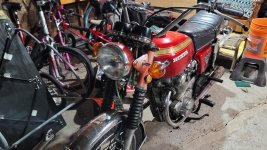
I want to adjust the idle rest screw. I think my bench sync was a bit much. I'm going to take them off and check to make sure the gates are sealing properly, and redo the bench sync, and solve the leaky right carb.

Rust911 should be here tomorrow, too, so the gas tank can derust overnight.
 
The right one, the one that I had to rebuild, was leaking out the overflow very slowly, probably the float needle isn't sealing off fuel perfectly. I'll check it tomorrow night.

1st off, congrats on getting the bike to fire up.


When this happens to my carbs, it’s because the float bowl gasket is not perfectly placed and it’s impeding the float. A temporary fix is to lightly whack the float bowl with the rubber grip of a screwdriver. Did you use an aftermarket float bowl gasket? I had terrible luck using the one out of the those guys in Houston/4into1 kit. It did not cover the surface enough, and was rubbing against the float. The perfect fit I found was from a Honda OEM kit.

It can get messy, but you can also remove the float bowl with the carb on the bike, to try and get lucky with repositioning the gasket.

Also, did you set the float heights to 20mm?

I turned it on, and ran the starter, it was turning over, but not starting. Dummy had the kill switch set to Off... Turned it on, and it fired up within a few seconds of pressing the starter! It lives! It's Idling high, about 3k when it first started.

I made the same kill switch mistake myself. I was grinning ear to ear when I first heard my bike run too.

Word of caution: do not let the bike idle that high for very long. The goal is a safe and sound 1200rpm. The design of the oil pump takes the oil roughly 1-2 mins to travel to the top end. The top end is surviving off of residual oil from the previous fire up, until the oil reaches it. The residual oil in the top end can burn off quick at high rpm. I made this mistake too as well.


I turned the idle mix screw back in (clockwise) one half-turn, so it is now at 1 full turn backed off from snug. Fired up almost immediately 😄. Still idling high at 3k-4k. Gave it a quick rev at the end.

Are you referring to the screw that is flush with the carb body? It’s not a screw sitting on an arm correct? I believe that would be your fuel mixture screw. There is a diagram I will have to find that has the general presets for the different carb models.

I want to adjust the idle rest screw. I think my bench sync was a bit much. I'm going to take them off and check to make sure the gates are sealing properly, and redo the bench sync, and solve the leaky right carb.


If you have not touched your idle screws yet, then they should both still be in sync. Just for testing purposes, I would back them out each a 3/4 turn then fire the bike up to see what the RPMs are.
 
HUGE weekend update! A lot has happened in the last few days!

Here are some pictures ad a video to go with what I'm talking about:
First, the idling/right carb issue. it turns out, if you put the valve needle in upside down, it doesn't work! Fixed that and put it back on. I thought maybe I had a ghost, I fired it up again Saturday morning and it started idling fine, then climbed once it warmed up, and I couldn't get it under 3k. Played with idle set screws, played with fuel mixture screws. I couldn't figure it out for the life of me! Gave up for a minute and went on to something else. Late Saturday night, I was re-watching the those guys in Houston carb rebuild video, and reading the FSM and the CMSNL exploded view to see if there was something I missed. Then, it hit me like a Mack truck. I finally put the puzzle pieces together. I originally had a 14H Carburetor, found in the garage, brought it home before the bike. I cleaned it up, made sure the bits and bobs were clean and in good order, When I got the rest of the parts for it and realized it was damaged and swapped to the other right side carb we found, the 723A, I took all the bits out, cleaned the body of it as best I could, and moved all the good clean brass from the 14H to the 723A. this I saw this still in the those guys in Houston video as they talked about the early models having this mix screw and the later having the other fuel mix screw:
It turns out, when you put the Older fuel mix screw into a newer carb body, it doesn't quite work. Luckily I had the other, correct mix screw, spring, washer, and a brand new o-ring still with the rest of the carb parts. Getting the wrong one out proved to be quite the frustration. The old one's o-ring was touching the threads, but I couldn't back it out far enough to remove. I ended up having to drill a small 1/16ths hole into the head, and insert a tiny screw in it to have something to pull out. Once I put in the CORRECT fuel mix screw, set the correct 1-full-reverse turn when snug, redid the bench sync because I fiddled with the idle set screw, put them back on, redid the throttle sync, it idles consistently now, with a small bit of fluctuation. +/- 100 rpms.

Next, Air filters. I wanted to keep the look and feel of the bike, and wasn't a fan of the pod filters look. I had seen someone else replace their damaged paper filter media with UNI green foam filters. I really liked that mod because it kept the original look and feel, and helped utilize the air passage under the battery, too, while giving it a modern twist that makes maintenance (In my opinion) less of a hassle. On Friday night, I used black silicone indoor/outdoor caulk to replicate the rubber gaskets that sealed the box against the passage, and to glue in the filters by spreading a thin later on the walls and pressing in the media. Left them overnight for the caulk to set, and oiled up the foam with filter oil.

Saturday morning, after I got mad at the idling, I went and found someone had tried to replicate the headlight housing as a 3d model, https://www.thingiverse.com/thing:4228664/ so I set one of my 3d printers up to print it as a test fit, took around 29 hours to finish, about 1PM Sunday. It was REALLY close to working as a replacement for the elusive HM-16M housing. the size was right, but there was some flaws I wanted to correct. I asked the creator if they had the original file, and they said they'd be able to post it by the weekend after the holiday. I also found a HM-16M with a small crack near that upper notch on eBay, Black, for around $55 all-in, so I snatched that up and It came today, Monday. Dropped some superglue in the crack/gaps to fill in and seal the crack. and this evening I scrubbed it clean, scuffed it up, and primed it, getting it ready for when I can order some R-4C Candy Ruby Red paint. My friend suggested we make a silicone mold of it, so that we can make epoxy resin castings of it. Hopefully between that, and getting the 3d model fixed and printed with ASA, we can get more of these old bikes looking original and not needing alternative headlights! I've also got the headlight kit coming that lets me use H4 size bulbs, instead of buying old sealed stock. I plan on doing some riding with it, possibly at night, and want to see well!

Next up we have the fuel tank. The rust911 came, and I got it mixed up and put in the tank, no screws or other abrasion material. to help seal the lid, I used 2 layers of nitrile gloves and a rag. worked pretty well for keeping it in while I shook it around. I let it sit for a day and a half, and then checked on it with an inspection camera. All the flash rust from the vinegar bath was gone, along with a lot of the rust the vinegar did not get. There were still a few hard to see spots of rust there and about in the corners. I let it sit for another day and a half, checking it every so often to see if rusty parts are disappearing. After not noticing much change today at lunch, I went ahead with dumping the rust911 (saved it in a 5-gal for later use!), rinsing, and using a shop vacuum with the hose on the exhaust side to blow out the water and dry it out. Slapped that bad boy on the bike, installed the petcock, connected fuel lines, and poured some fuel in. the petcock immediately started leaking. I caught it and stuffed all the rags I could under it to soak up the gas and grabbed a funnel to catch and funnel it into a small tub I had. I had to let all that gas just drain out, then once I did, I figured out where I went wrong with the petcock. When I originally took it apart to clean it a couple weeks ago, there was an extra washer and what looked like a snap ring in it. Double-checked the exploded view and saw there was no extra washer or snap-ring, I took those out, gave the spring washer it's shape back, and put it back together the right way, it held gas! I've since filled up my 2 1/2 gal can with 90 Rec fuel and poured some of that in the tank. There is a tiny overflow in the right carb if I leave the valve on, Like it took me a good while to notice it, so I'll have to double check the float.

Lastly for this weekend update, the front brake. When I first brought it home, the hydraulics were quite the opposite, dry, crusty, etc. Cleaned the master cylinder out, and pouted in fresh brake fluid, bled the brakes, and the front brake became seized, I could barely move the front tire while pushing the bike around. I pulled them off the bike, there was rust around the shoes, and the inner walls of the cylinders were rough and crusty. cleaned off the dirt and grime with brake cleaner, then coated the metal bits/ inside the cyliider in rustoleum rust dissolver gel (picked it up a few years back to restore my grandfather's table saw, great for soaking nuts and bolts in, works really fast and doesn't flash like vinegar or other acids). overnight, and came back this afternoon, cleaned up the parts, got the piston in, put brake lube on the metal bits of the pads and put them in, then put the whole thing back on the bike a bled the brakes again, with even fresher fluids! (first time around was with some brake fluid I had leftover from refilling my car), and it works and DOESN'T seize up!

Outside of the headlight, and the headlight control, it's a functioning bike! I even took it for a test ride down my block and back! my wife took a video of me riding it back, and I posted it to Reddit under the HondaCB subreddit
I am super excited to being this close to done. I'm going to be getting the paperwork done and getting it registered/plated at the beginning of next month.
 
It turns out, when you put the Older fuel mix screw into a newer carb body, it doesn't quite work. Luckily I had the other, correct mix screw, spring, washer, and a brand new o-ring still with the rest of the carb parts. Getting the wrong one out proved to be quite the frustration. The old one's o-ring was touching the threads, but I couldn't back it out far enough to remove. I ended up having to drill a small 1/16ths hole into the head, and insert a tiny screw in it to have something to pull out.

I’m very happy that you noticed this mix up. I did the same thing, except my results were way worse. I didn’t realize I had mixed up carbs, until it was too late. When I screwed in the older 14H mixture screw into the 723A carb, it actually cut new threads in the carb body. Upon trying to unscrew it, it stripped and is forever stuck. I tried 5-6 different methods of removing it. The rubber o-ring isn’t making it any better. It currently sits on a shelf collecting dust. Hopefully no damage was done to your threads. If so, it can cause an inaccurate mixture. If your carb is ok, you will probably still have some fine tuning to do. I believe the “preset” setting for your carb is somewhere around 1 to 1&1/4 turns for the fuel mixture screw. When you fully “seat” the fuel mixture screw, then back it out, do it gently to preserve the threads. When I first did my carbs, I had my fuel too rich and it fouled a spark plug, causing a cylinder misfire. So look out for that symptom too.

I went ahead with dumping the rust911 (saved it in a 5-gal for later use!)

I am glad that the Rust911 worked out for you. That 5 gallon bucket is gonna come in handy for anything else you find with rust. Sometimes if I come across an old rusty wrench, I’ll throw it in there for a day.

Saturday morning, after I got mad at the idling, I went and found someone had tried to replicate the headlight housing as a 3d model,

Are you still having idling problems? Or was this before you discovered the mismatched fuel screws?
 
The really high idle is gone, the wrong fuel mixture screw was probably dumping gas into the right cylinder. Currently it is having lower idling, at or just under 1k, when I first start it up cold. Once it warms up a bit after a few minutes, the idle will climb up to normal. I spent some time adjusting the idle while cold to dial in that 1200, but then when it warmed up, it climbs to 14-1500, so I dial it back down. Now that you said your spark plug fouled up from running rich, I'm going to check the right plug. Currently they're set at 1 full turn based on that spreadsheet. I made markings to identify what orientation the slotted head was at when snug so I could identify if it moved, and where a full or half rotation was in relation to the screw.

You might be able to rescue your carb the same way I did mine, drilling a tiny hole and using a screw as something to pull on. It took a few tries but I got it out. I also checked inside for any damage and it looked ok.
 
The really high idle is gone, the wrong fuel mixture screw was probably dumping gas into the right cylinder. Currently it is having lower idling, at or just under 1k, when I first start it up cold. Once it warms up a bit after a few minutes, the idle will climb up to normal. I spent some time adjusting the idle while cold to dial in that 1200, but then when it warmed up, it climbs to 14-1500, so I dial it back down. . .
That is 100% normal. Always set the idle when the engine is warmed up, and expect to have to nurse it along when the engine is cold. If you don't want to sit there holding the twist grip until the engine is warm enough to idle on its own, install a Vista Cruise throttle control. They are inobtrusive, cheap, and work very well. That will let you start the engine, throttle up to the rpm you want, thumb the Vista Cruise on, and free your hands to put on your helmet and riding gear while the engine is coming to normal operating temperature. Then you can release the throttle and the bike should be about ready to go at the same time you are.

 
Last edited:
Awesome idea! I have some PETG I could print a simple throttle holder with until I can get one.


Lots of work yesterday and today.


Yesterday I picked up some Jb plastic weld. Unfortunately the super glue did not keep that crack on the notch together, and it ended up coming off. Used the JB weld to put it back on, and fill in missing spots, sanded it smooth, and painted it. I had to travel a bit, but found metallic Dark Cherry red spray paint for a temporary color for the housing. And grabbed a clear coat can too. Painted it and set it inside the house to cure.


I also got the replacement right controls from 4into1, and swapped out those. Now I have a proper working headlight switch and starter button!


Today at lunch, I went to check the right spark plug for deposits, and I discovered why there was a bit of a sputter, somehow the right cylinder spark plug was loose! Cleaned up the plug and made sure it was tight this time, then checked and clean the left plug and tighten that too. And like magic the sputtering was gone!


This afternoon, I went to check the tire for the date code, because I forgot it, and was distracted by the dirty chain and sprocket. Guess I didn't clean it well enough! Spent some time trying to clean it on the bike. Opened up the clutch/shifter cover, and cleaned out there. I was going to try and replace the chain with one of the brand new ones in the boxes, but it ended up not being wide enough to fit on the rear sprocket, so I pulled the chain off, and gave it a deep clean, put it back on, and re-lubed it.


And this evening, I finally got to tackle the headlight! I scoured as best as I could, but could not find another substitute for the sealed bulb, so I had settled for the those guys in Houston kit. At least I won't have to scrape eBay for headlamps now! The clips there a pain in the butt to put in, and I pilfered the wire ends from the bad headlamp bulb to get to bullet connectors for the headlight socket. I had to disconnect the rats nest again to fit it into the headlight housing, but I got that mounted, and put the front blinkers in the right spots, and reconnected it all, got the ring into the housing and screwed on. And for the first time in who knows how long, it was complete again!

20240626_221034.jpg
20240626_221041.jpg
I'm going to need to take a break from working on it for a little bit, but when I come back to it, I'm going to check the fork oil and replace it, likely with 15W fork oil for a stiffer ride.
 
Back from vacation with a new update!

Before I left, I wanted to dial in the idle one last time when warmed up. After warming up, and getting the idle set, it was still a little floaty (12-1400), and I noticed that the right side exhaust pipe was cold! Thinking it might be a plug issue, I was looking at sparkplugs, and weighing the options to just get the newer resistive plugs, or spring for the non resistive style. I had read somewhere that someone was having issues with spark when having resistive plugs and resistive caps. It occurred to me that I never really checked the plugs and caps currently on the bike! The right side was missing it's cap when I brought it home, and I found a few in the boxes of parts, and I picked the newest, cleanest looking cap, and it came labeled NGK.
Checking out the plugs, they are NGKs, and the newer Resistive plugs (R on the side under the NGK). And so I checked the caps with a multimeter. The left side cap, and all the other, plain-looking, caps in the boxes were all 0 Ohms, but that NHK cap was 5k Ohms 🤦‍♂️. I swapped it out for one of the other caps, and started the bike up again, and sure enough the right side started getting warm. Waited for it to warm up again and dialed in the idle screws to get it to a stable 1200 rpms.
Now that I'm back, went to the SoS office after work, and got the title transfered, registration and plate. Got home and put on my gear, and made it's maiden voyage around the neighborhood to pick up dinner and came back home! I'm still a bit shaky, as I'm also a new rider, and basically haven't ridden since I passed the MSF back in May, but I plan on getting out there and practicing my slow speed skills!
 
New update! Got new tires on the rims, went with the Avon RoadRunner MK2 tires I had. They should be good for a season or 2. One is marked late 2020, the other early -to-mid 2021. I swapped out the gauge lights and blinkers for LEDs, and the diodes bit for the blinkers. I had issues with the SparckMoto blinker relay, and I have a new one coming tomorrow that should work. Seen customer reviews and videos for it. Got a new chain, RK 530H 92-link to match what was on there, and installing it showed me just how stretched the old chain was! Probably a good 3-4 inches, based on the tension screws before and after. Got some soft-side saddle bags for carrying stuff, too. Everything is running great, and I can't wait to get out on the road some more! Hoping to get some good pictures of it out and about too!
 
Back
Top Bottom