1974 CB450 - maintenance, repair, and upgrade log

stl360+450

Veteran Member
Joined
Aug 6, 2021
Total Posts
5,227
Total likes
2,770
Location
St. Louis, Missouri, USA
I have owned this bike since June 2011 and it, along with my 1974 CB360G, have provided most of my motorcycle repair experience.

Contents:

eVc20TI.jpg


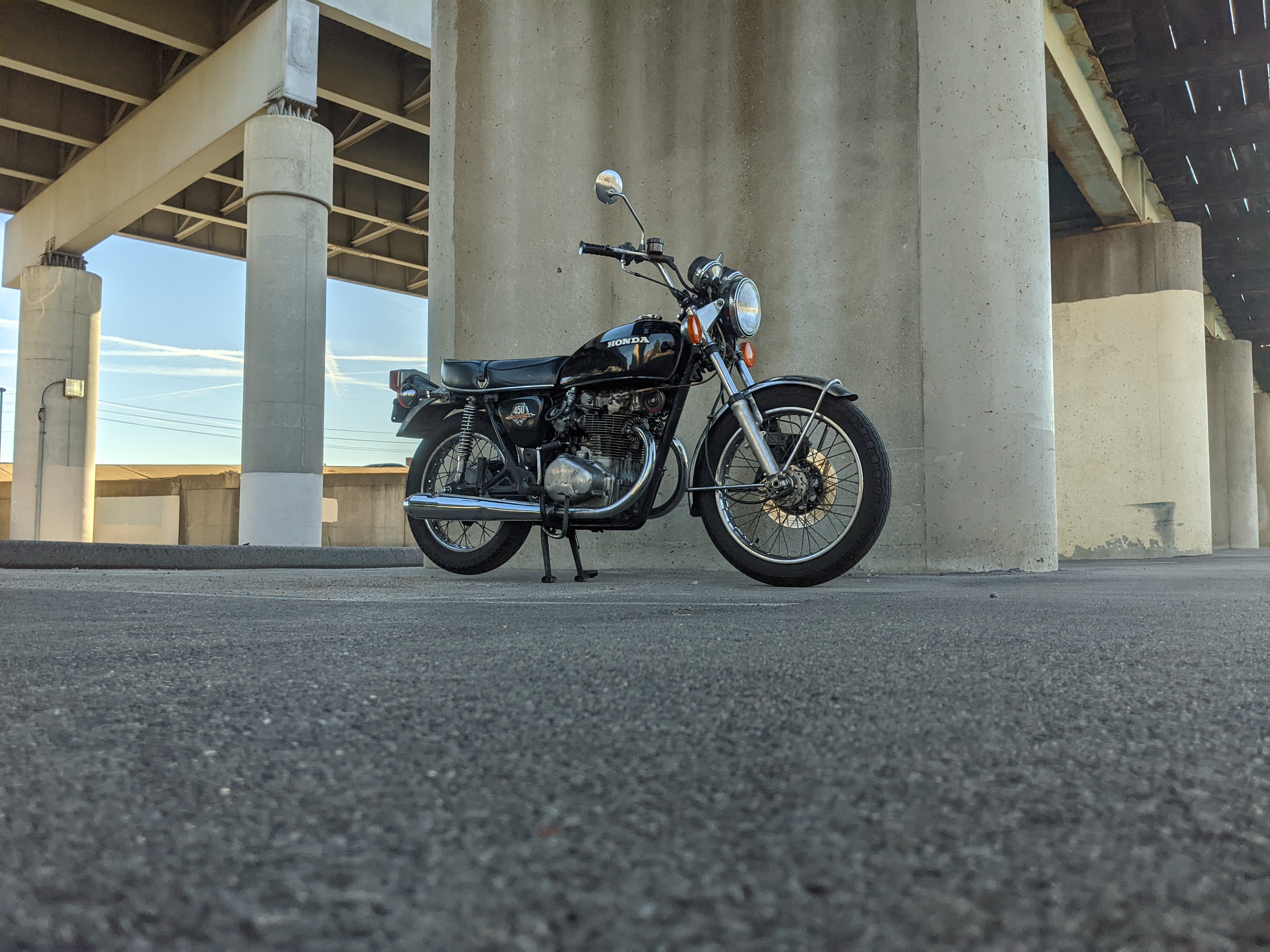
This bike is running Jay's gear pump (installation thread) and has a Rick's Electrics rotor and regulator/rectifier. It went through two top end rebuilds in shops early in my ownership and I split the cases a few years back as part of a larger rebuild after blowing up a piston on the highway. It's been running pretty well since that rebuild, aside from the occasional hiccup every now and then.

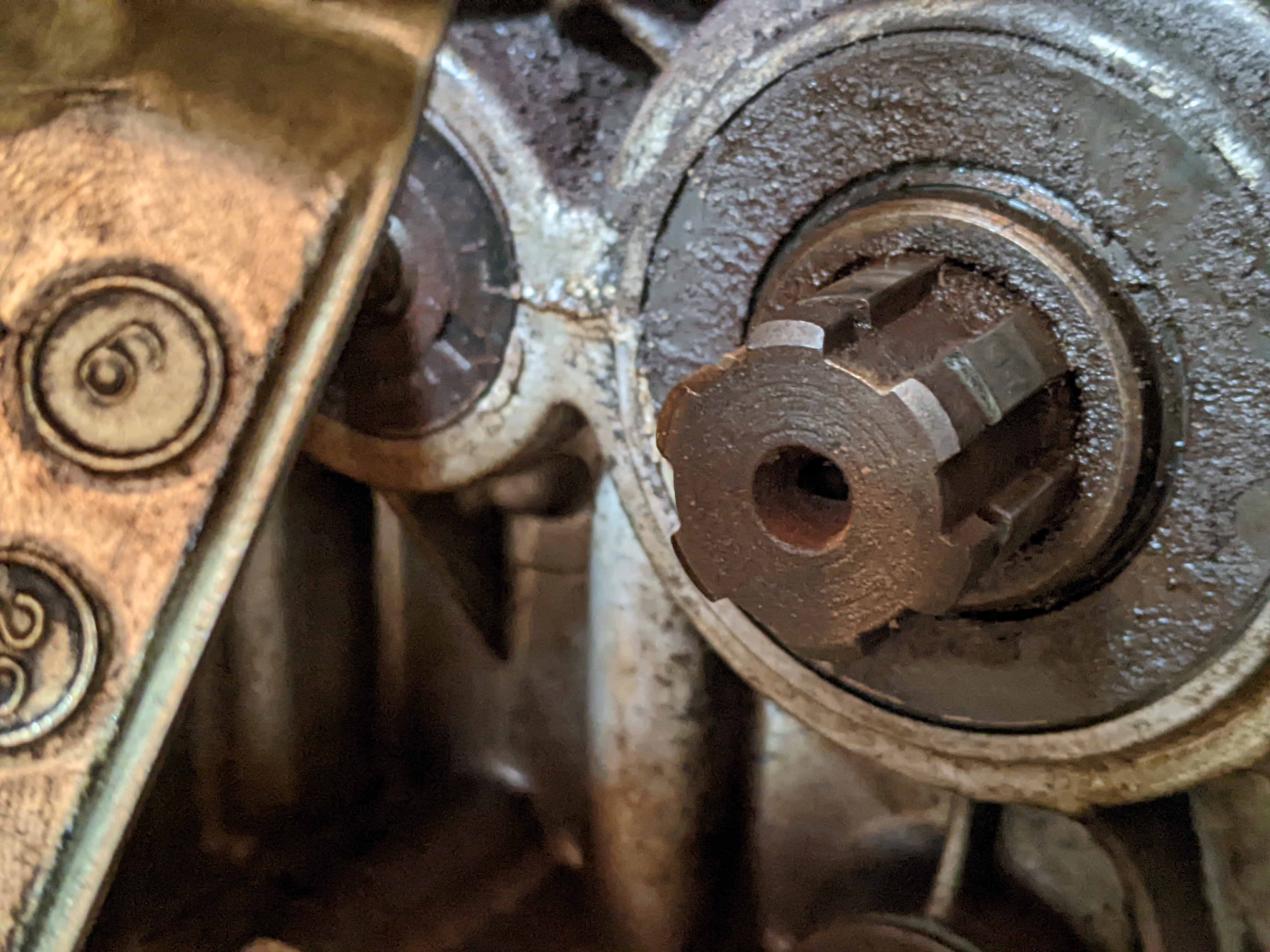
I'm still learning new things on a regular basis, thanks in no small part to this forum, and a recent sprocket change combined with a long standing feeling about the alignment of this bike has me concerned about a bent swingarm or maybe even a bent frame.

As long as I've owned the bike I've never felt comfortable taking both hands off the handlebar. When I do, I feel like I have to lean a tiny bit to keep the bike going straight.

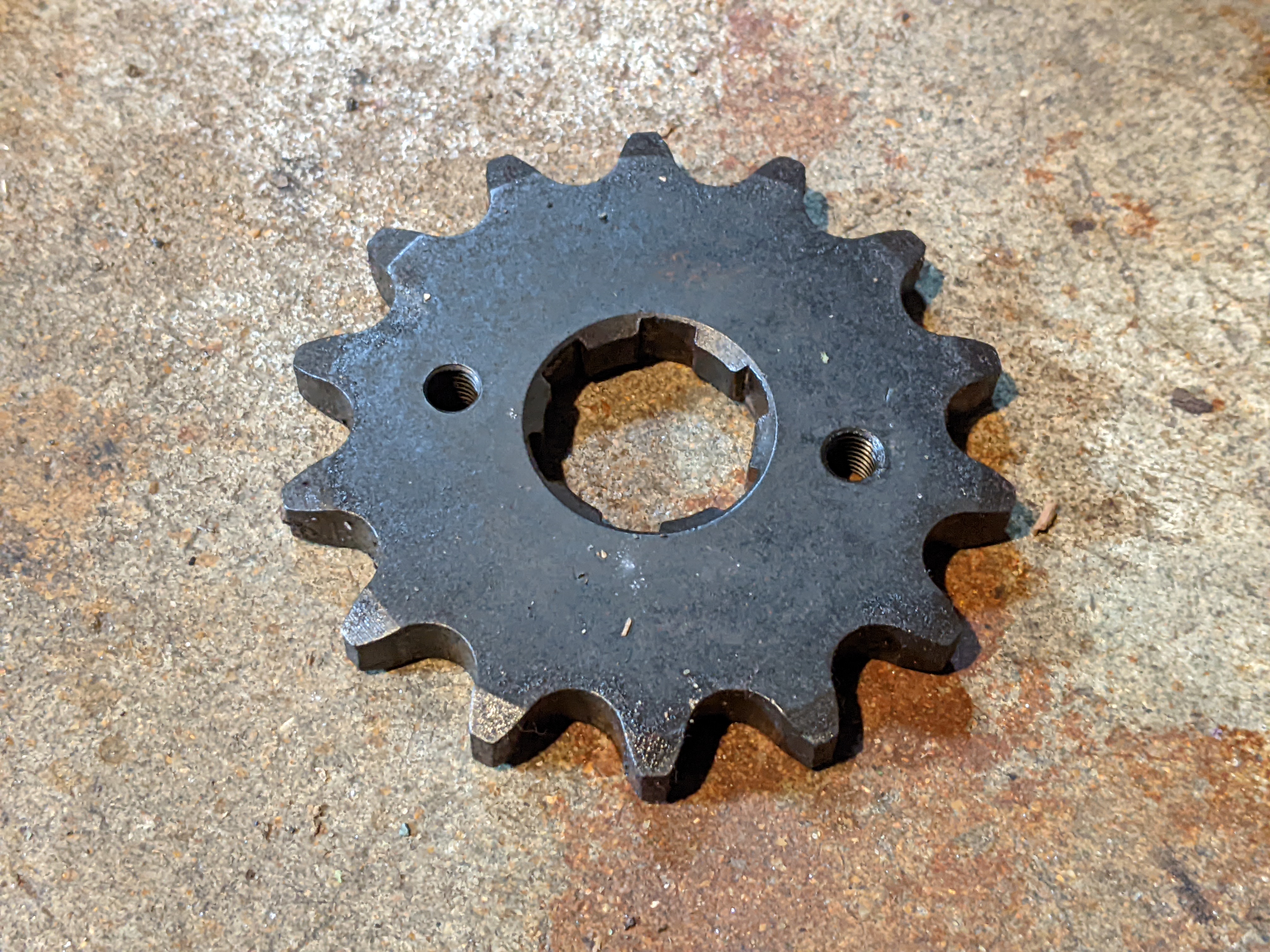
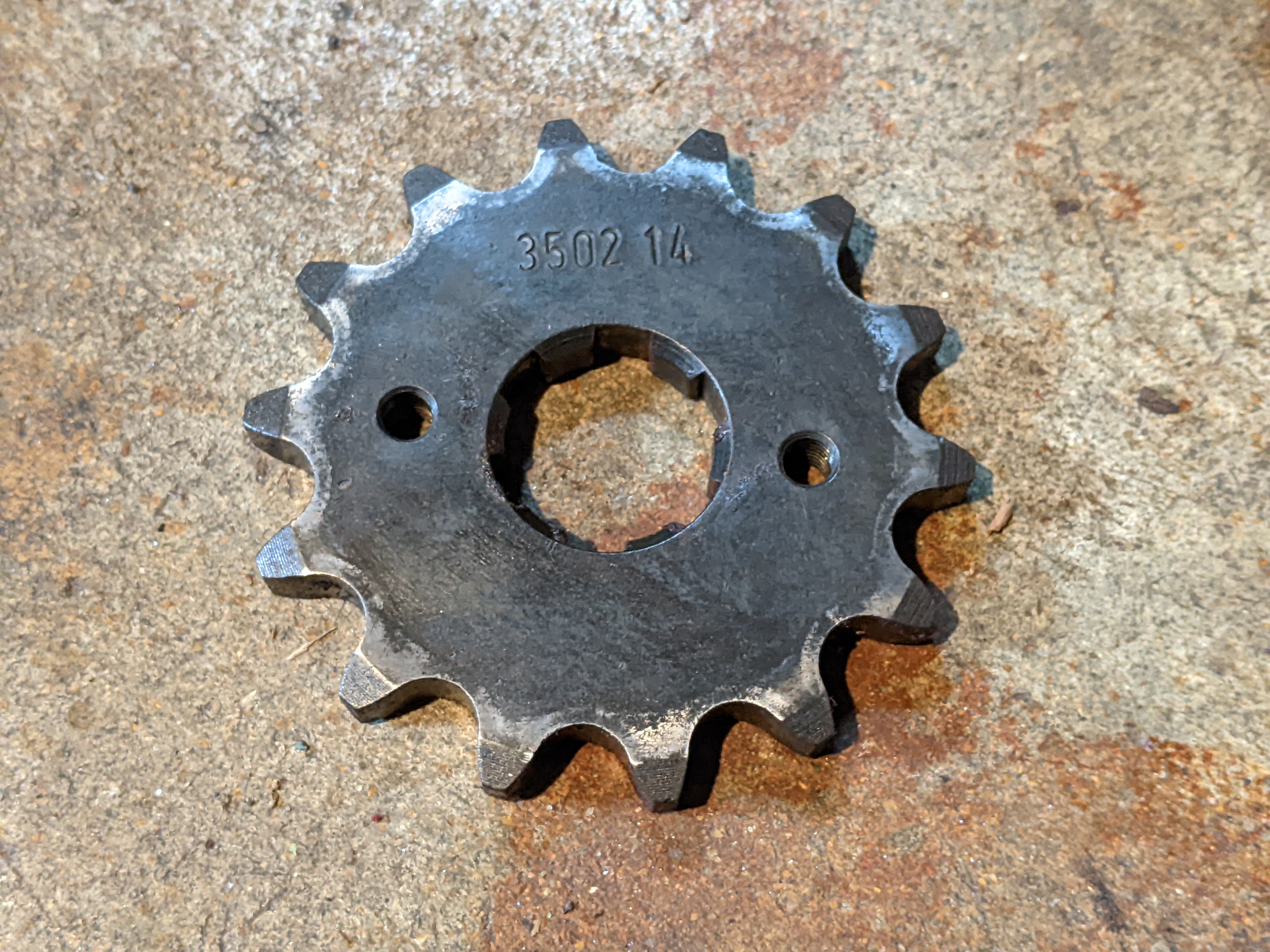
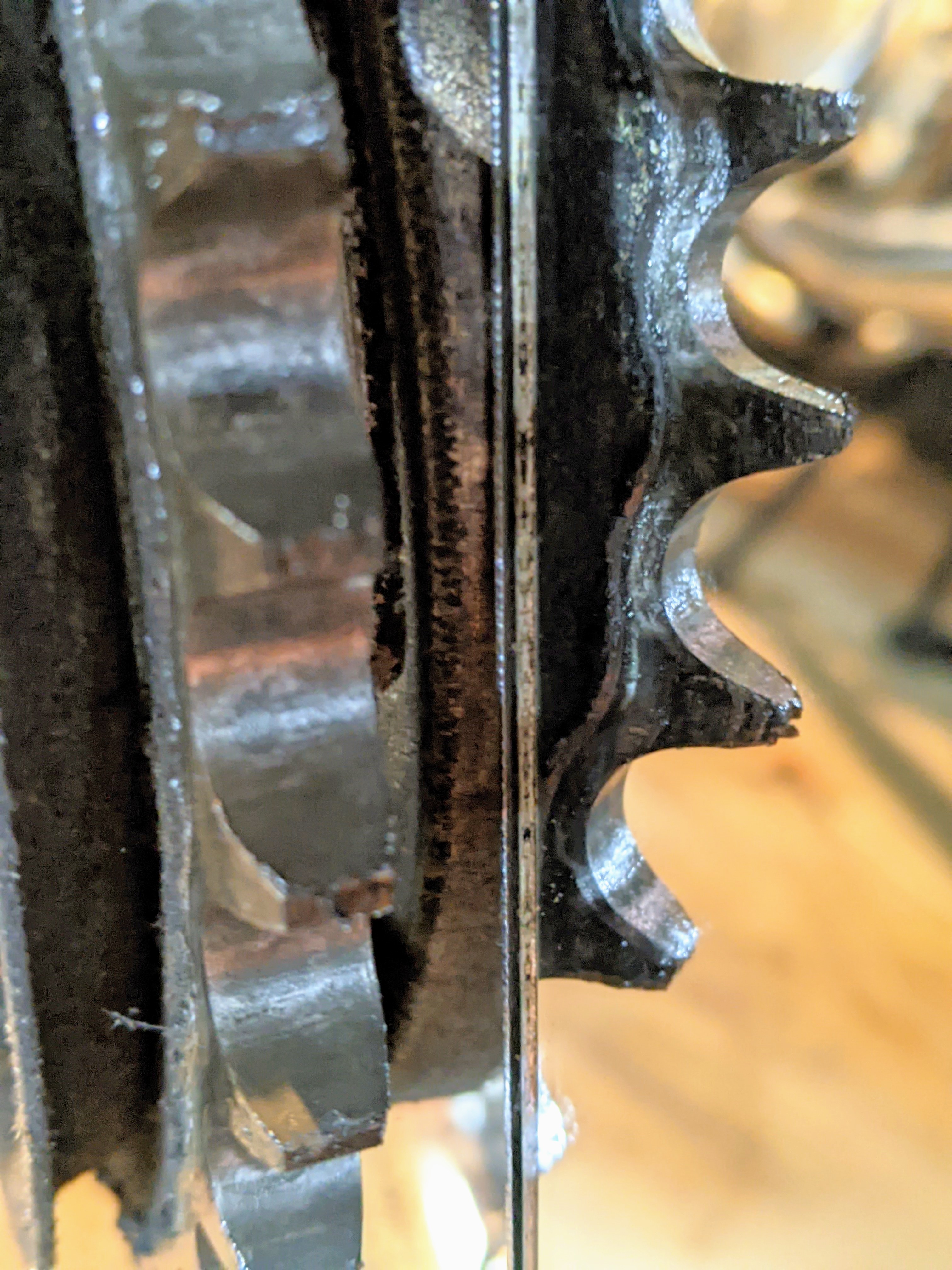
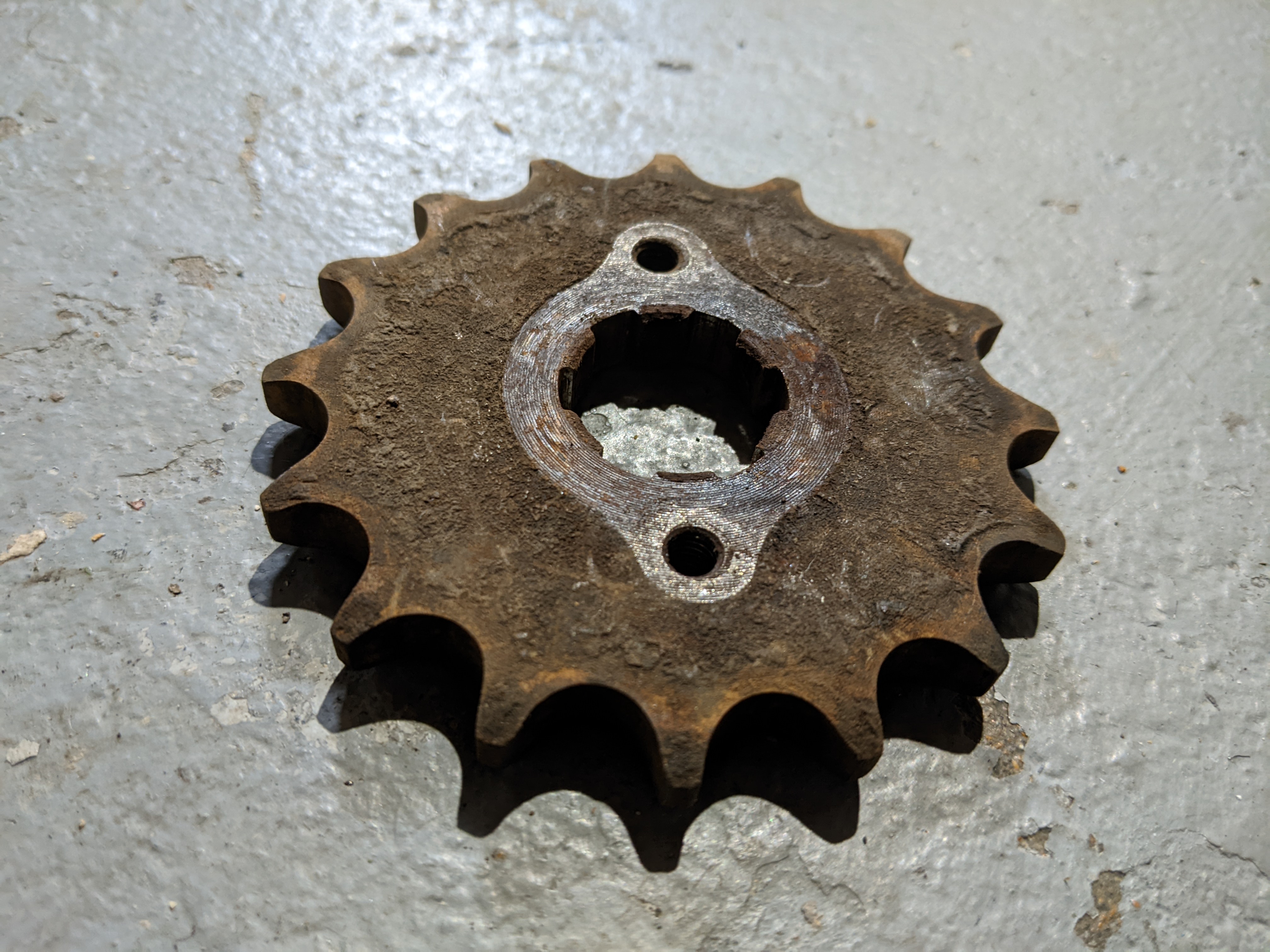
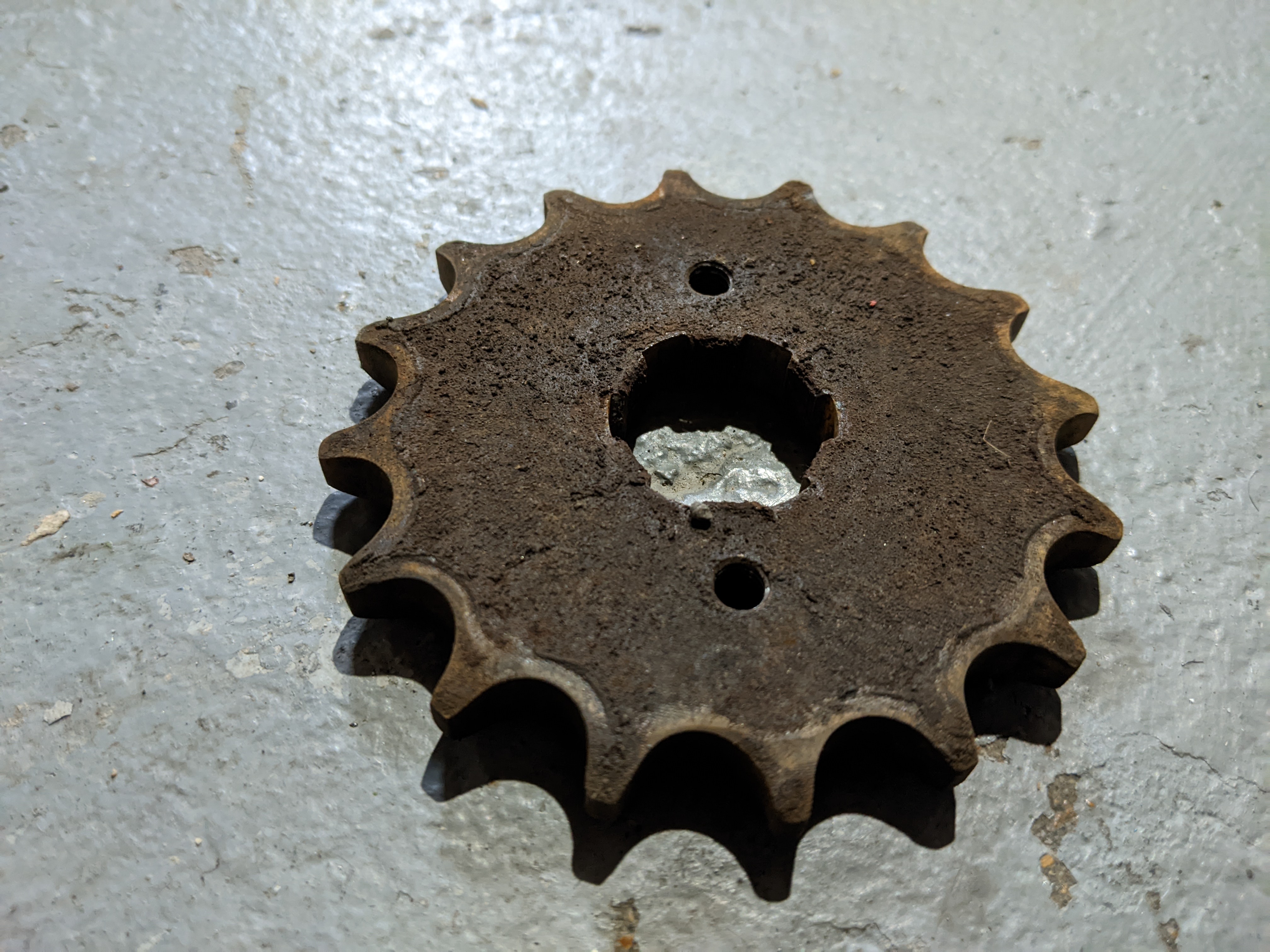
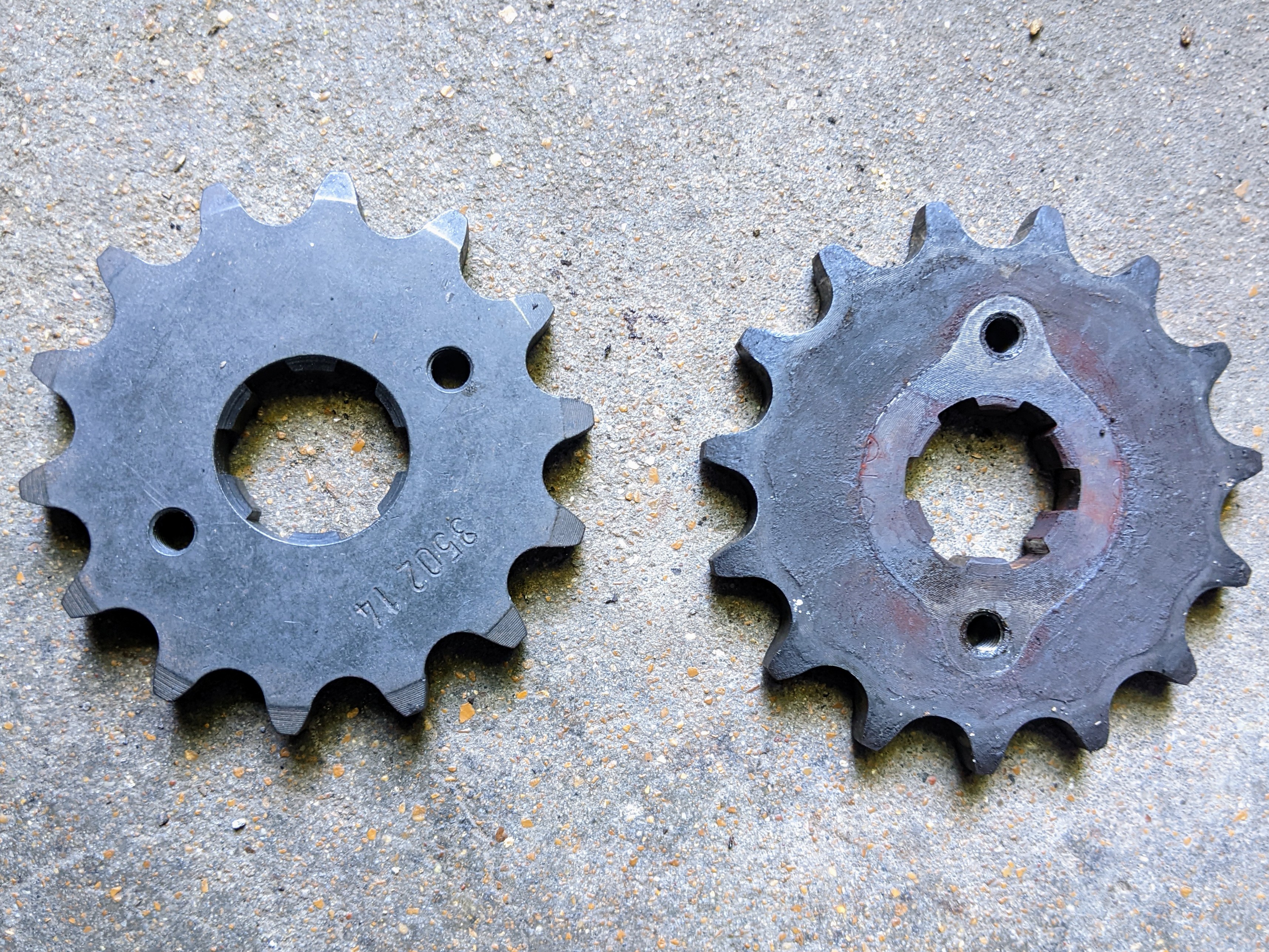
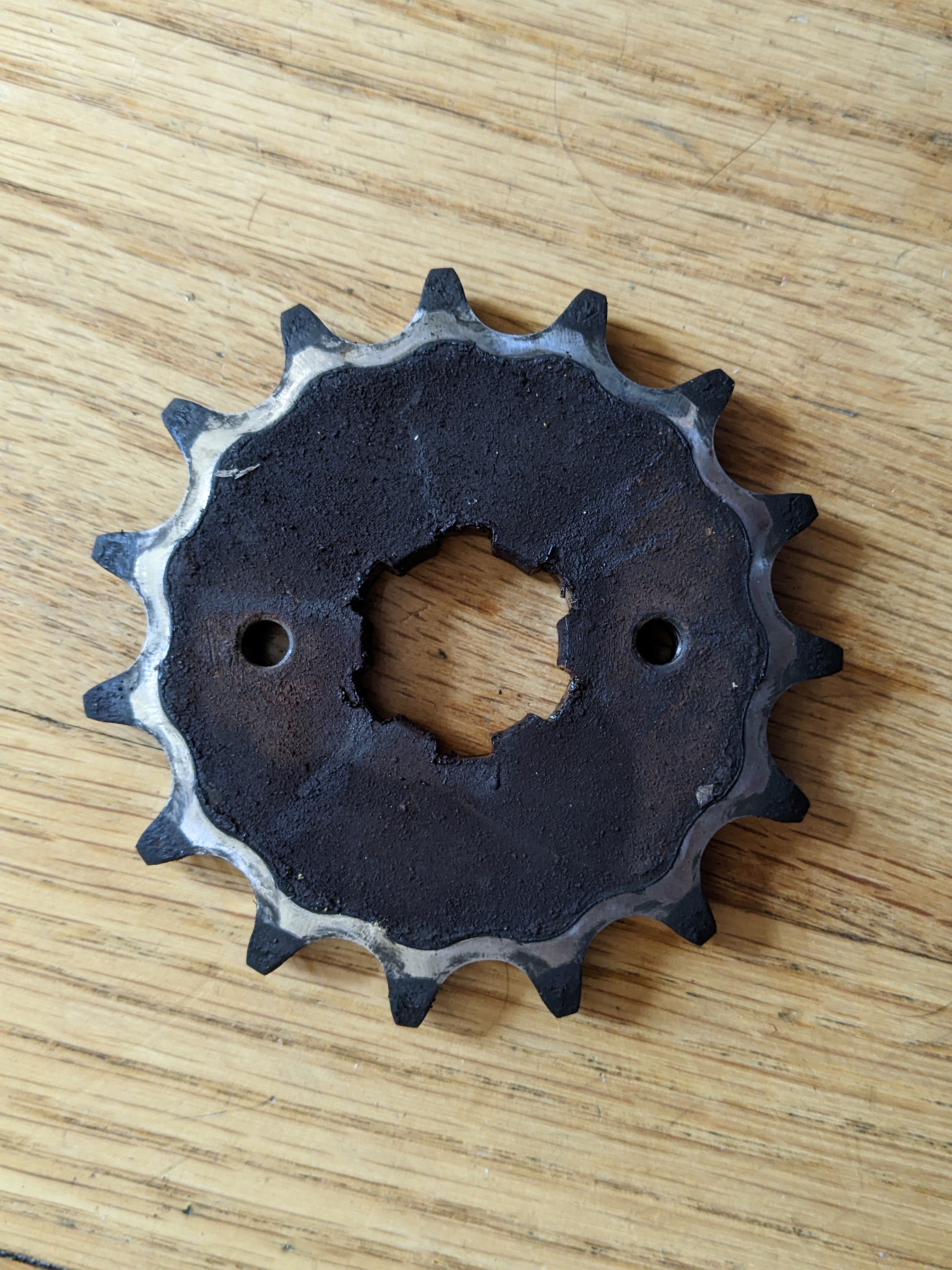
The sprocket change revealed some unexpected findings. The inside face of the original sprocket showed unusual wear.
O6yRuby.jpg


N8lpMzF.jpg


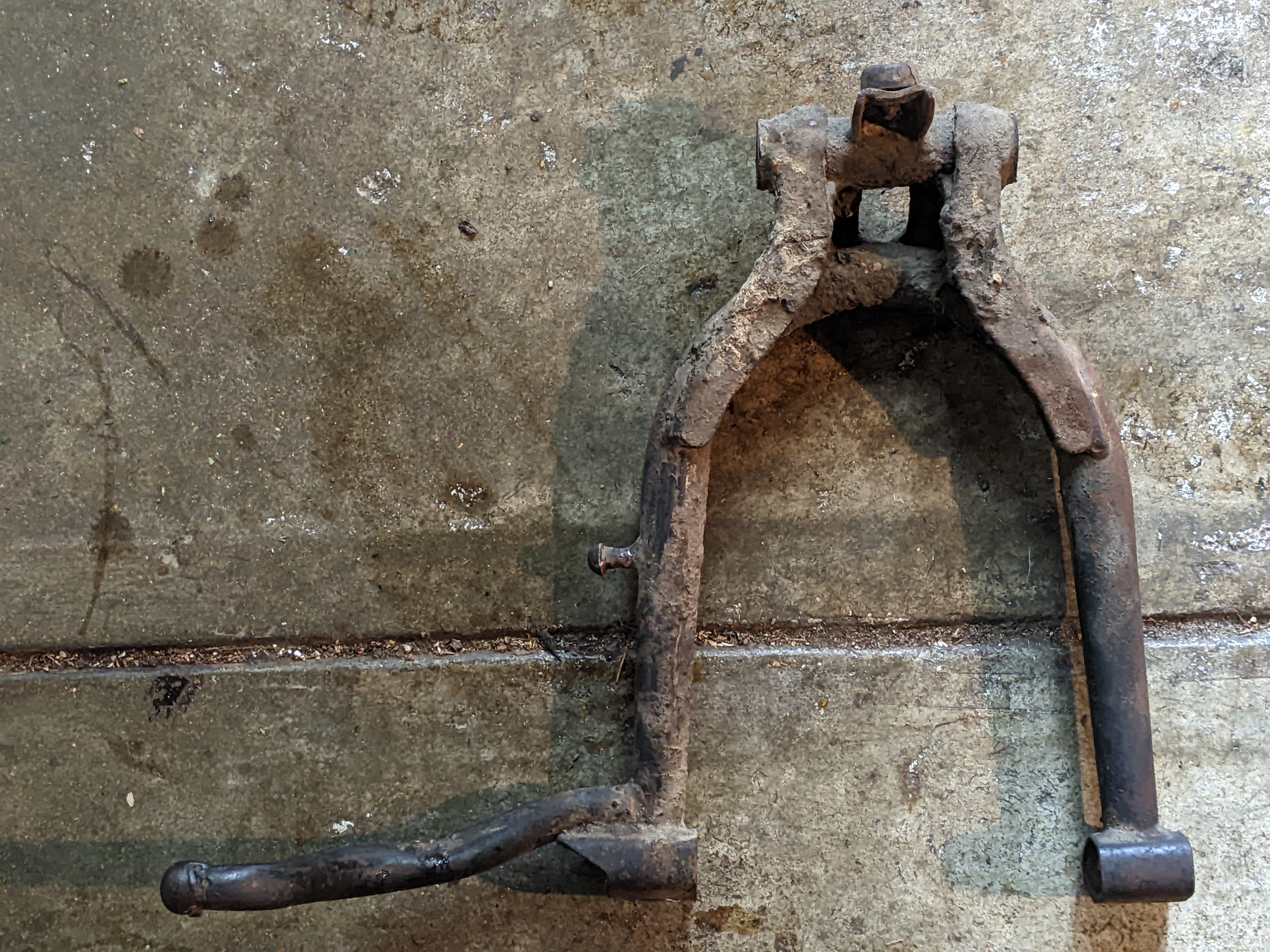
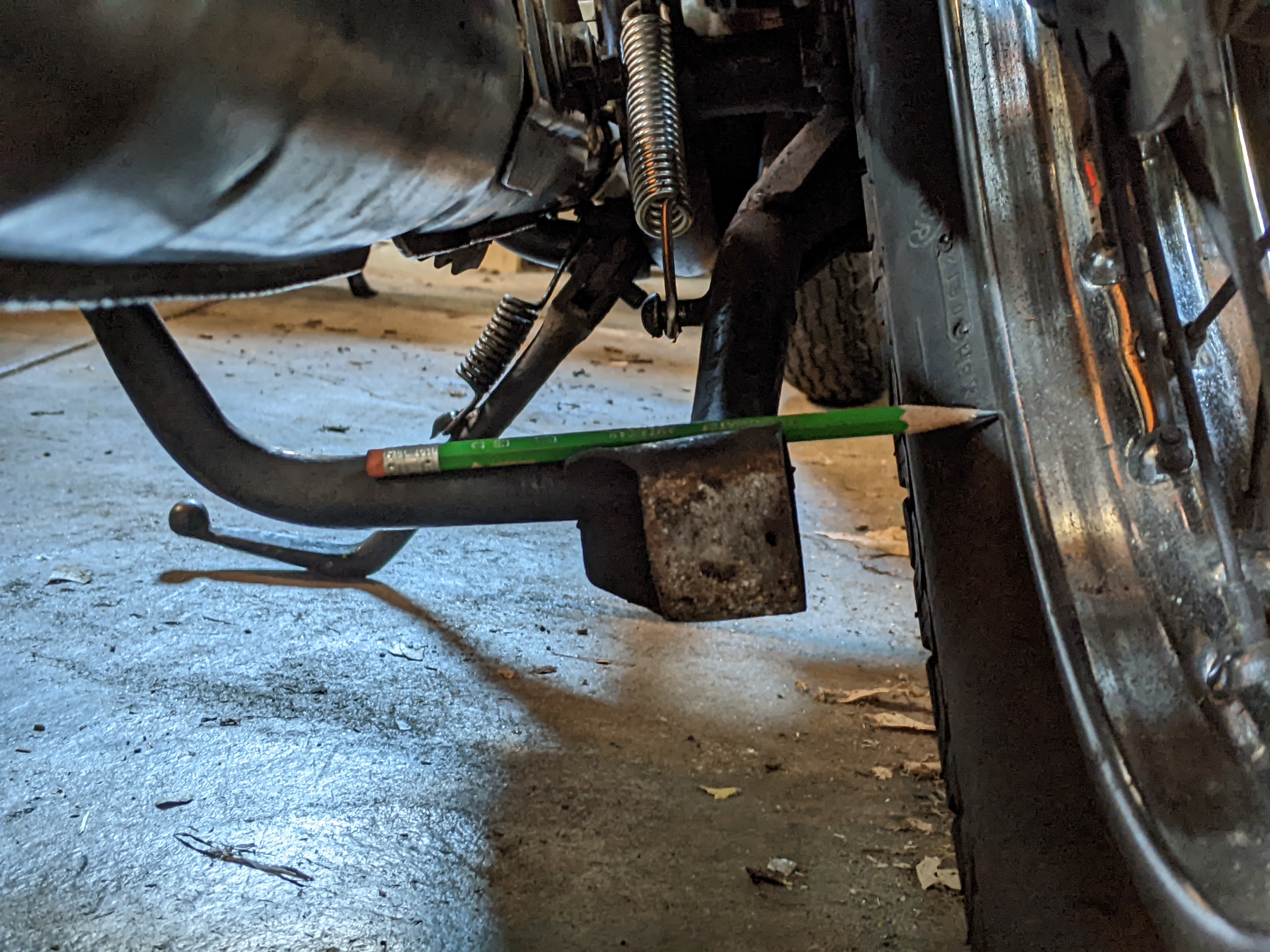
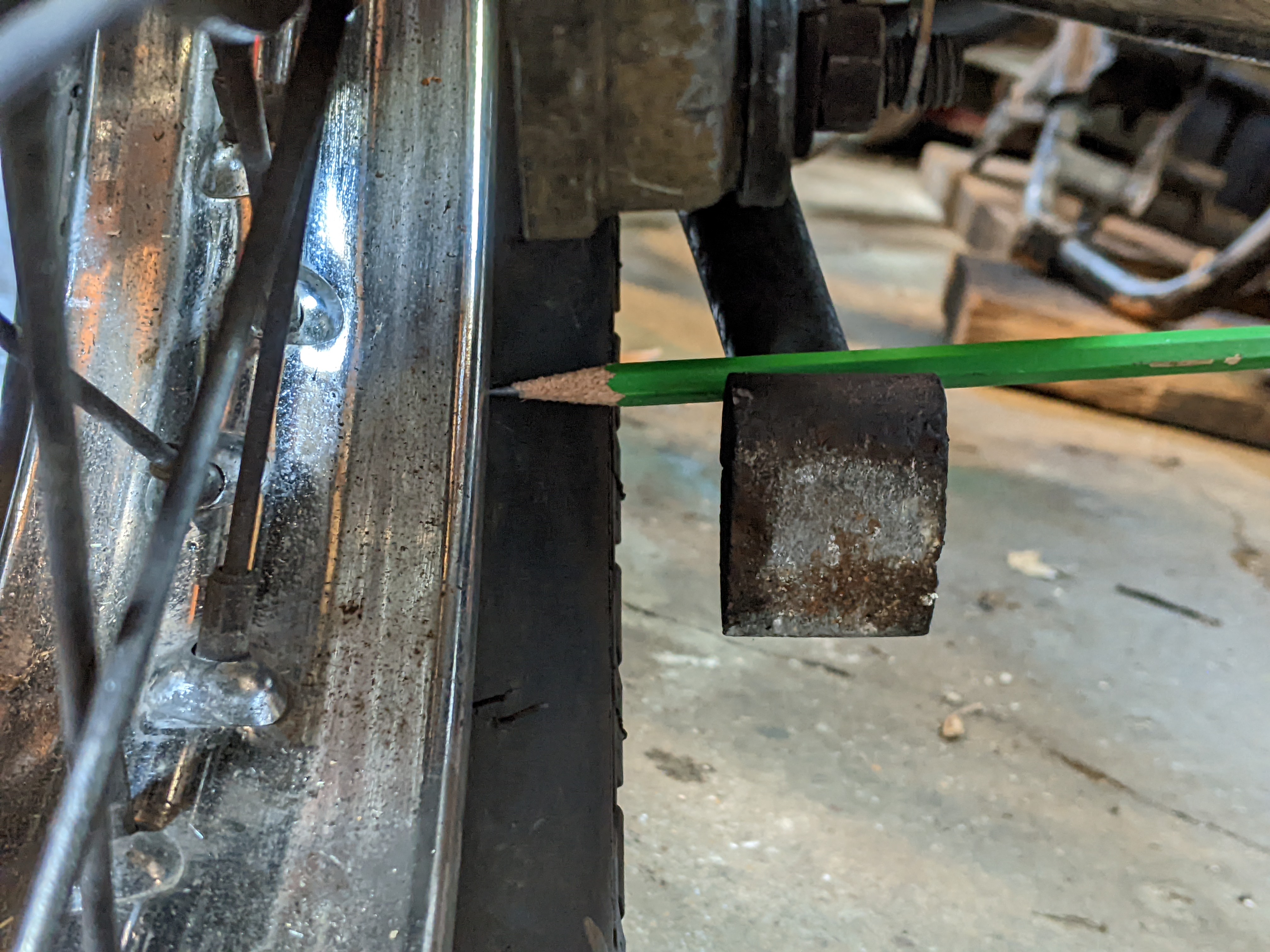
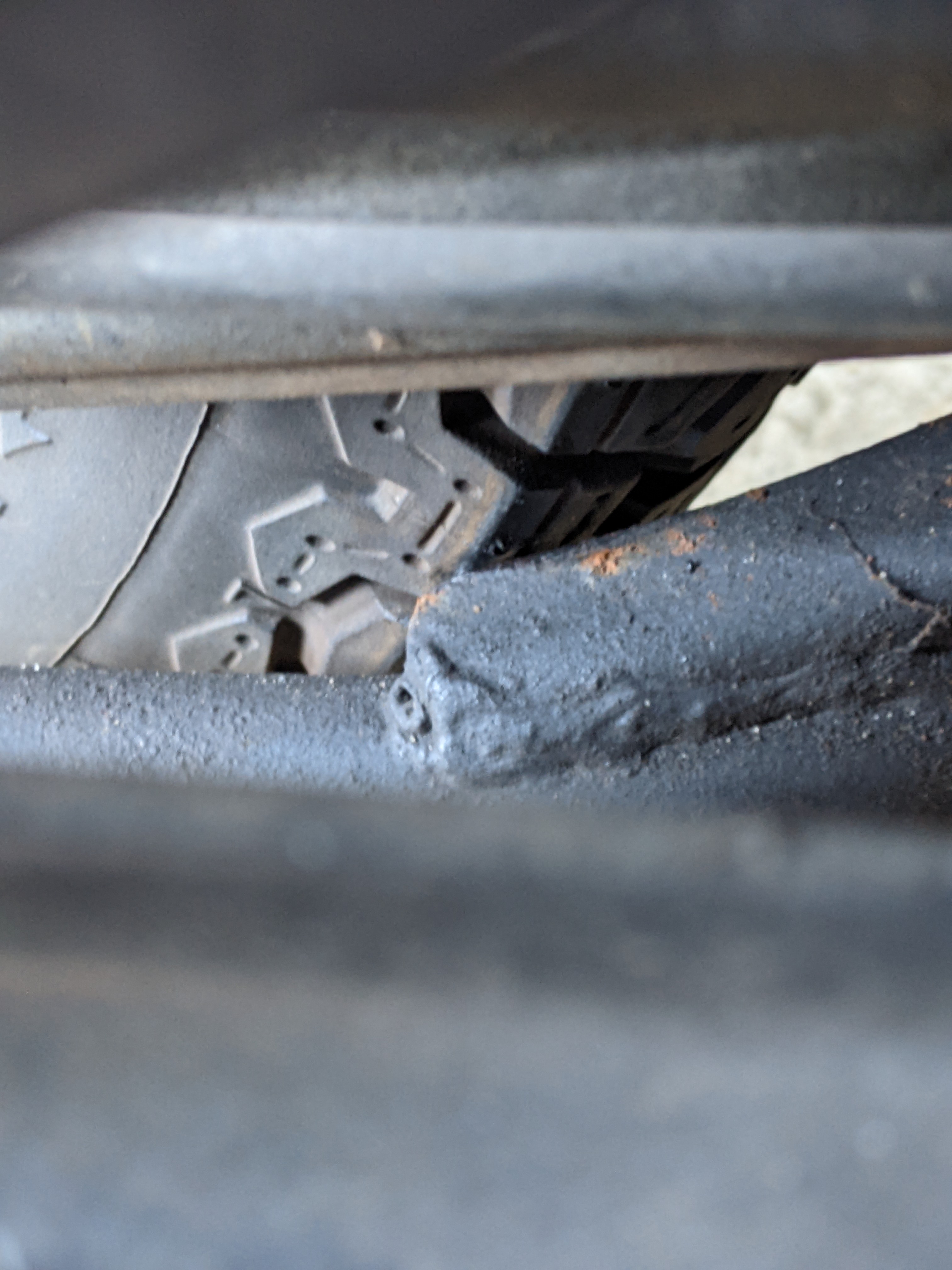
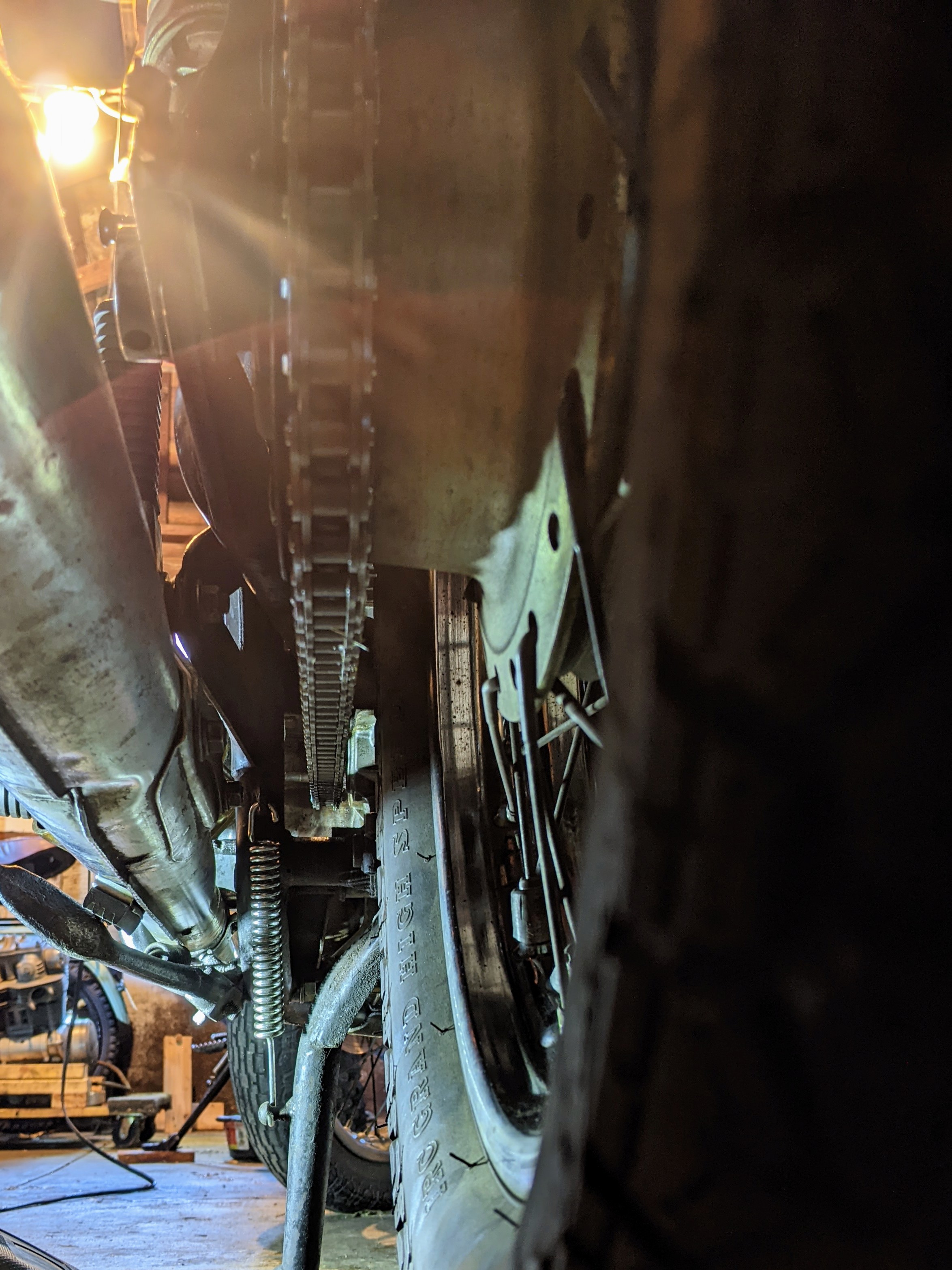
I also noticed that the center stand was much closer to the tire on the right side than the left. I had to use a bolt on the center stand tab to lower the center stand slightly in the up position to create a comfortable amount of clearance.
EIqQZhs.jpg


at31oNb.jpg


I am thinking about removing the swingarm for inspection and possibly swapping it out with the swingarm from my parts bike. I thought I would start a thread to collect advice about the best way to identify and correct the problem.

I plan to use this thread for future upgrades and maintenance as well, hence the posting under projects and builds.
 
Last edited:
What you're describing plus the front sprocket wear indicate that the rear tire isn't in line with the front and engine.
This could be a case of worn swing arm bushings/collars, axle index marks being off, slight frame bend or swing arm damage.
Did you check the countershaft splines for any damage yet? If the front sprocket can't slide freely back and forth or there's a worn section the locks the sprocket under load the wear would be normal.
 
What you're describing plus the front sprocket wear indicate that the rear tire isn't in line with the front and engine.
This could be a case of worn swing arm bushings/collars, axle index marks being off, slight frame bend or swing arm damage.
Did you check the countershaft splines for any damage yet? If the front sprocket can't slide freely back and forth or there's a worn section the locks the sprocket under load the wear would be normal.

Thanks, Jim. I haven't inspected the splines on the countershaft yet, but will do so. I have found it difficult to assess straightness of various parts visually due to all the things blocking the view. It seemed like I would have to put the axle index marks pretty far apart to create equal spacing between the center stand and tire, so I'm thinking I should get the swingarm off to have a closer look at it. I guess this will allow me to assess the bushings at the same time. Does this seem like a reasonable next step?

And, Tom, thanks for inserting that space between the pictures, it's hard to go back in and do that on my phone!
 
And, Tom, thanks for inserting that space between the pictures, it's hard to go back in and do that on my phone!

It's my daily maintenance, it bugs me when I see a wall of un-separated pictures. I hate when they sometimes seem to run together due to similar colors, just me being me because I can do it. :rolleyes:
 
The sprocket should always mounted with the numbers outside, I see that in the first picture the sprocket was probably mounted wrong. Has nothing to do with your problem, but it catches my eyes.
 
The sprocket should always mounted with the numbers outside, I see that in the first picture the sprocket was probably mounted wrong. Has nothing to do with your problem, but it catches my eyes.

Thanks, Jensen. I do think the original sprocket (on the right in the first picture) was installed with the numbers facing outward. It's a little dirty, so the numbers are hard to see in the picture.

I was wondering if there was a preferred orientation, though, so thanks for clearing that up.
 
I think I would start with getting a exact as possible measurement of the swingarm pivot bolt to the index marks. You'll need an extra set of hands and eyes.
Using a straight bar make a pointer to set at the center of that bolt. Make another pointer that's close to one of the index marks for the adjusters. Close counts since this is a reference mark. From the refence mark you can actually measure the index marks to see if they are identical, most likely they are.
A piece of bar stock with 2 holes drilled and tapped for bolts with sharpened tips will do. While measuring it's important to keep that bar as close to parallel with the frame as possible so the measurements are good.
I've come across more than one swing arm that's been painted really heavy where the 1st mark is almost invisible which can cause misalignment if it's missed.
From there it's bushing and collar inspection. Here's an excellent source for bushings, Bob is one of our members
https://cbxperformance.com/products...b450-cl450-bronze-swingarm-swing-arm-bushings
 
I'll plan on creating the flat bar reference tool next weekend, which is a long weekend for me. I ordered the bushings preemptively - thanks for the link.

I also removed the swingarm from my parts bike today. The bolt required a lot more persuading than I thought it would to slide through the frame. In fact, there was no sliding involved.
 
I have a little different take in that I think the wheel is skewed in the swingarm. That skewness would also show up in the wear pattern noted. Pics (or inspection) of both sides of the rear sprocket would reveal if that's the case here. Also, always double check the swingarm notches with a measurement of axle to swingarm pivot, both sides.

There is enough "chuckle" in the front sprocket mount to account for minor (very minute though) differences in alignment with the proviso of the axle being truly parallel to the countershaft.
 
I have a little different take in that I think the wheel is skewed in the swingarm. That skewness would also show up in the wear pattern noted. Pics (or inspection) of both sides of the rear sprocket would reveal if that's the case here. Also, always double check the swingarm notches with a measurement of axle to swingarm pivot, both sides.

There is enough "chuckle" in the front sprocket mount to account for minor (very minute though) differences in alignment with the proviso of the axle being truly parallel to the countershaft.

I will definitely have a look at both sides of the rear sprocket when the rear wheel comes off.
 
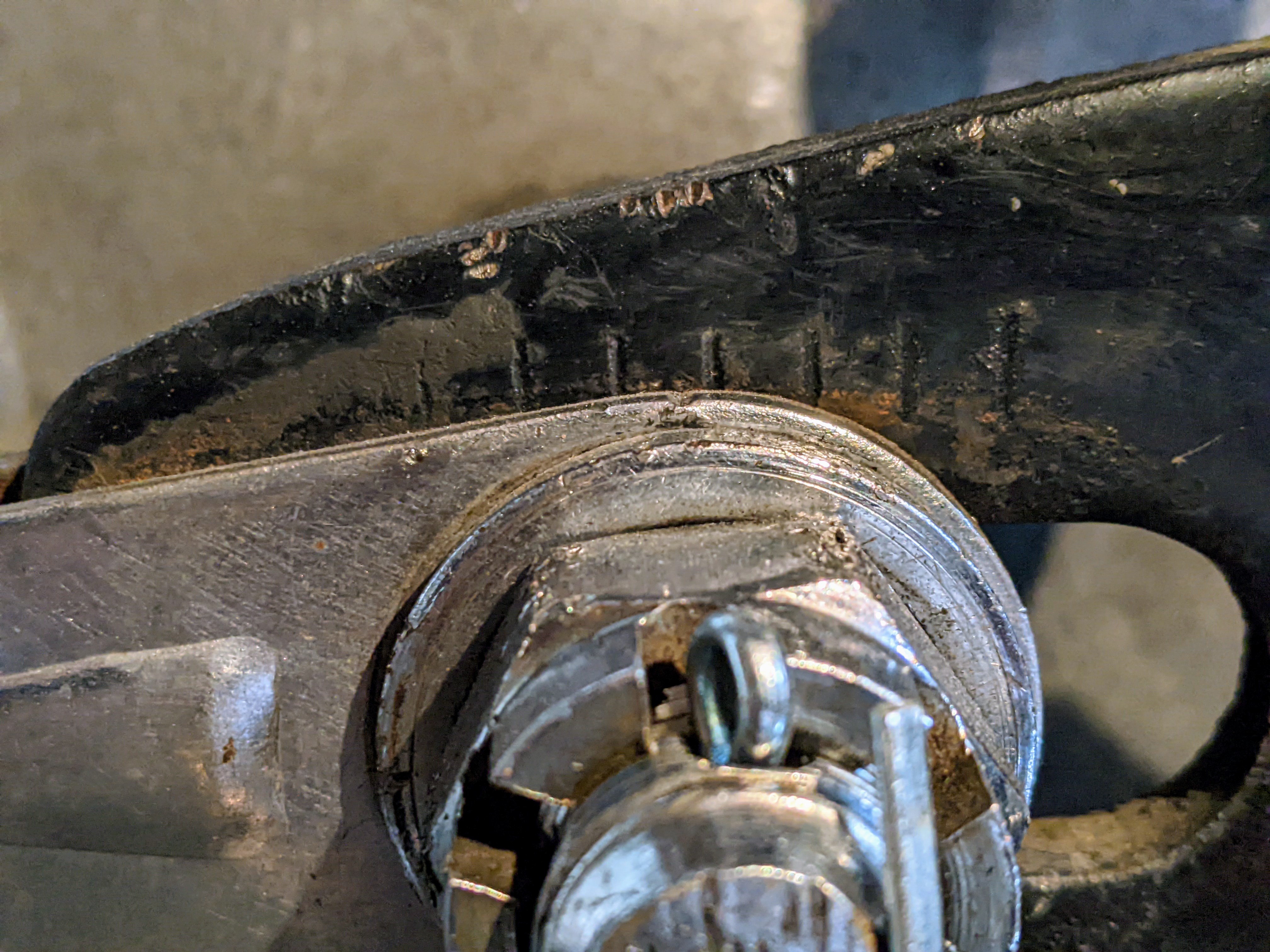
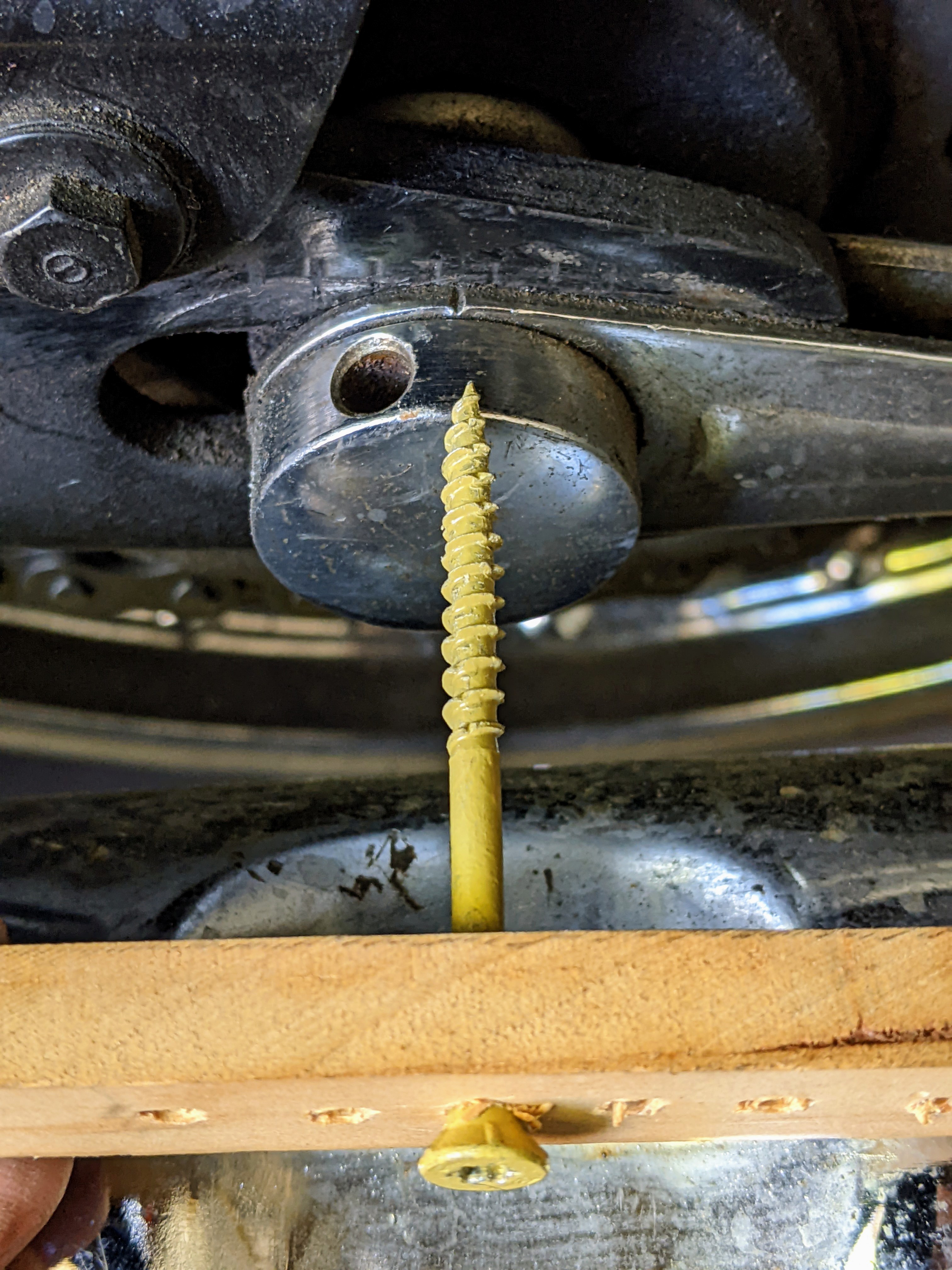
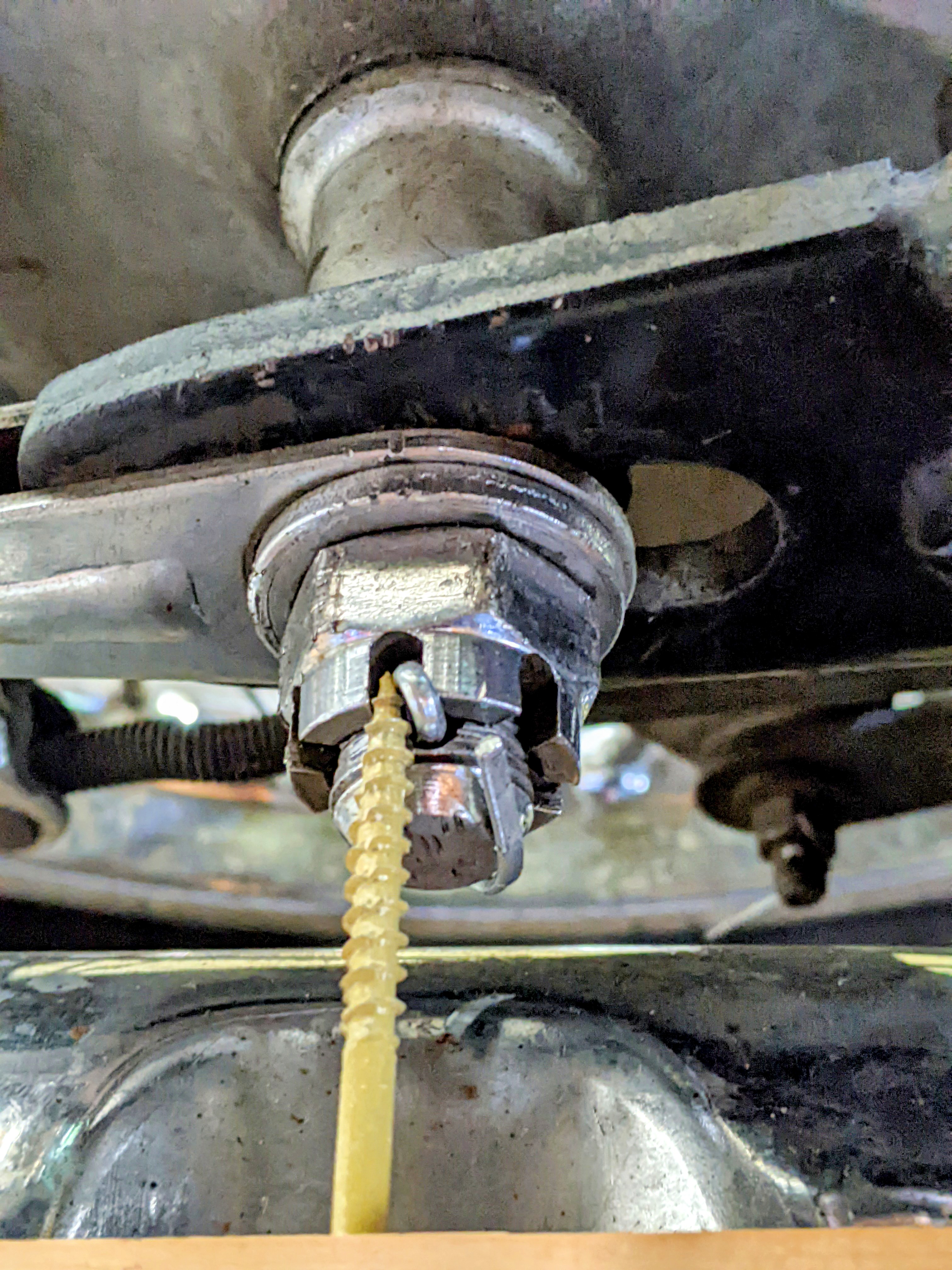
I made a crude attempt to compare the measurements from the swingarm pivot on each side to the axle. I used a piece of wood with deck screws as pointers and put a series of holes in the wood so I could choose one that was close to the notch on the axle adjuster.

Here is a comparison of the swingarm notch positions on each side.

ydVS9xt.jpg


ZNu6to9.jpg


And then a picture of the pointer, which appears to point just behind the notch on the swingarm adjusters on each side.

XZJiyvl.jpg


PRWbWXD.jpg


I have been riding it when I can and yesterday I took both hands off and it handled okay, although I still felt I had to put a slight compensating lean in. My 360 feels much better in this regard.

I am thinking to disassemble the rear swingarm and inspect everything at this point, unless there's something else I should check first. I just received the new bushings in the mail.
 
When you do take the rear fork off, pay attention to the washers and felt grease retainers. If they are assembled in the wrong order or with something missing the alignment can be off. The parts diagrams at cmsnl.com can be helpful, but it gets confusing.
 
When you do take the rear fork off, pay attention to the washers and felt grease retainers. If they are assembled in the wrong order or with something missing the alignment can be off. The parts diagrams at cmsnl.com can be helpful, but it gets confusing.

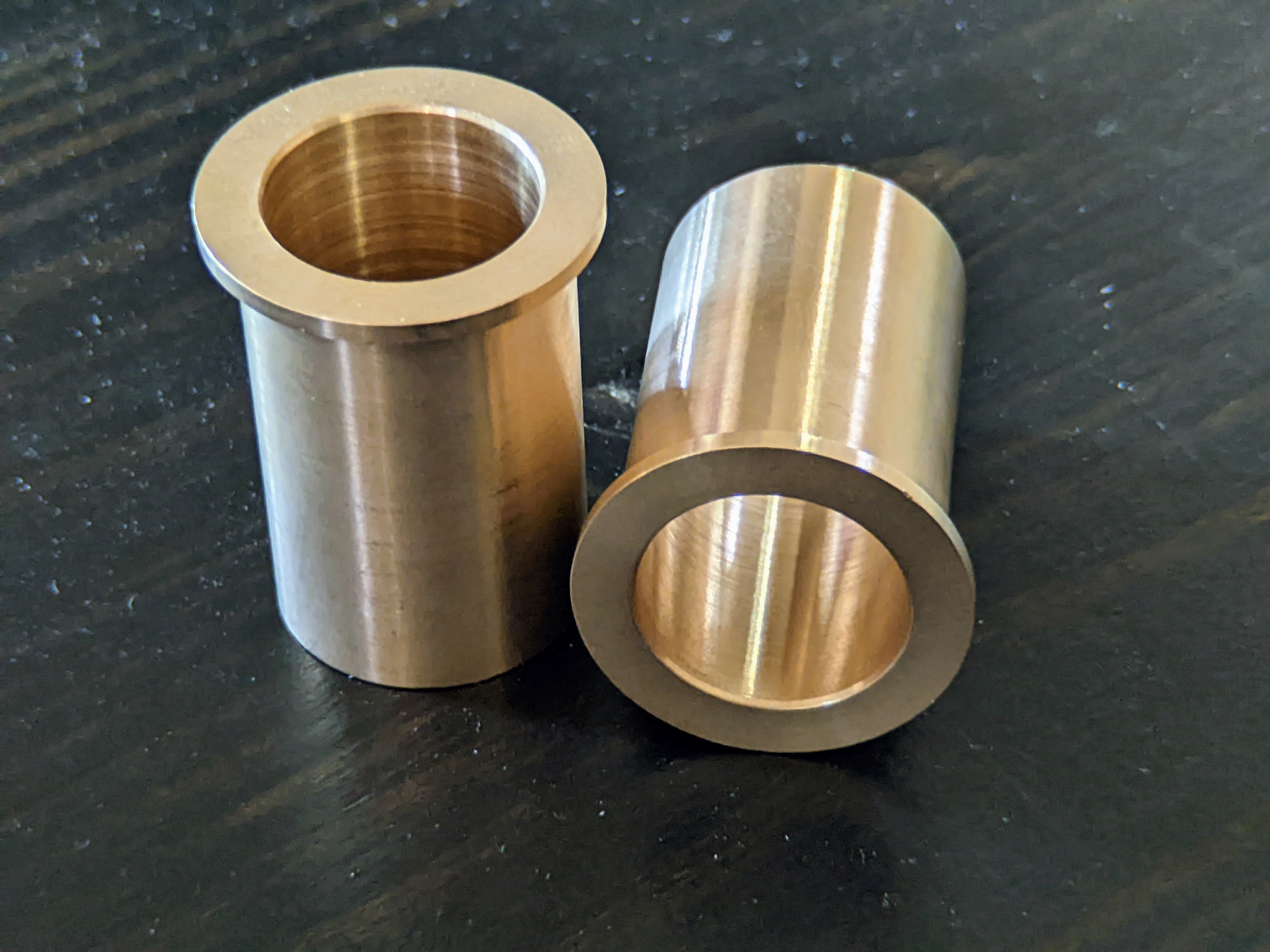
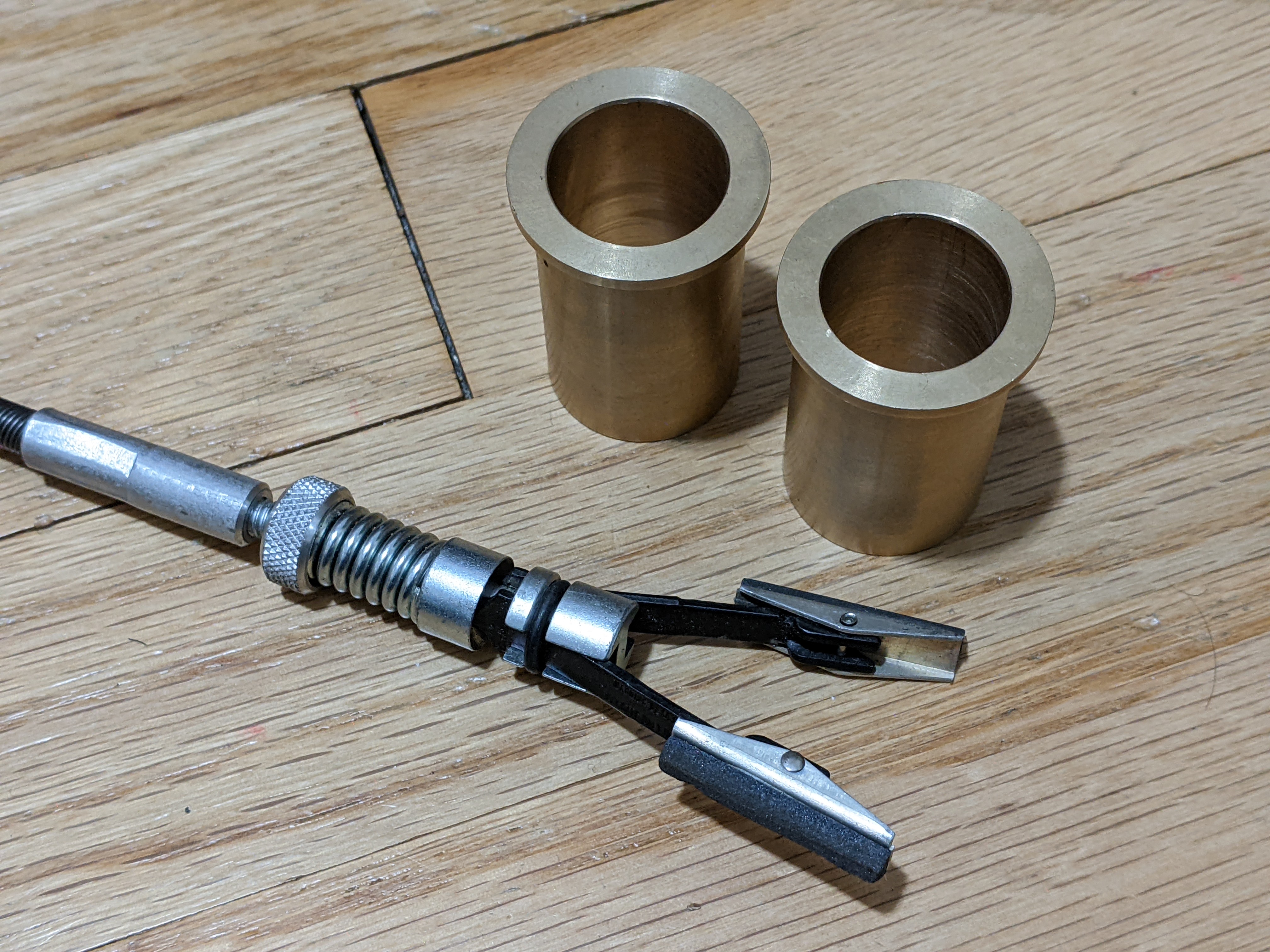
Thanks for the tip, Bob. I followed LDR's advice to buy the replacement bushings from CBX Performance and it turns out that they do away with the felt sealing washers and thrust bushings, so hopefully it will go smoothly. It remains to be seen how difficult it will be to remove the old bushings, though!

wdDWbXT.jpg
 
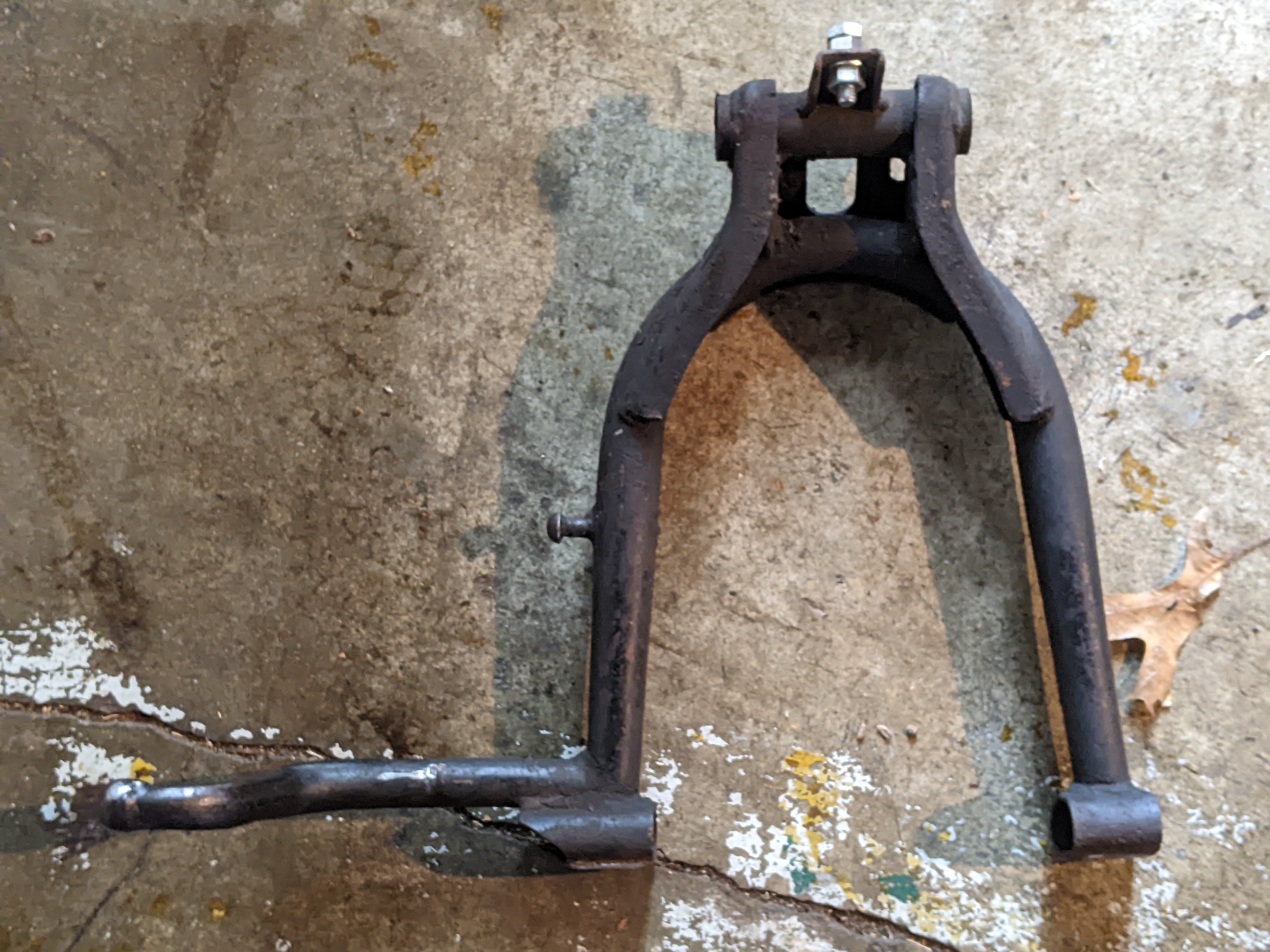
I am also wondering if my center stand could be bent. The gaps between the feet and the rear tire are very different between the left and right sides. The stand was not on the bike when I bought it -- I got it on eBay about ten years ago.

 
The width spacing certainly doesn't look right. The bent centerstands I've seen involve one of the legs being bent forward or backward from the other, not bent width-wise. Yours gives the previously-mentioned impression of rear wheel alignment problems, but at the same time the difference is pretty stark. Bent swingarms I've seen are usually where one leg was bent upward or downward with respect to the other causing a wheel to lean to one side. Side impacts that can cause out of alignment situations typically show damage to one side or the other.
 
The width spacing certainly doesn't look right. The bent centerstands I've seen involve one of the legs being bent forward or backward from the other, not bent width-wise. Yours gives the previously-mentioned impression of rear wheel alignment problems, but at the same time the difference is pretty stark. Bent swingarms I've seen are usually where one leg was bent upward or downward with respect to the other causing a wheel to lean to one side. Side impacts that can cause out of alignment situations typically show damage to one side or the other.

Thanks, Tom. I hadn't really thought about what axis the swingarm or stand could be bent on, so this is helpful. The kind of bending you describe should be noticeable once the parts are off the bike.

It may be biased that direction for drive chain clearance or to make the foot lever a little handier to reach.

This is a good point also. It would be nice to know if others see a similar discrepancy from side to side on a stock CB450.
 
Jim had suggested inspecting the countershaft splines. They look okay to me and the sprocket slides freely in the splines.

J1wRnMS.jpg


TlXC3RS.jpg

The new sprocket is already showing greater wear on the inside after about 100 miles. (I installed the sprocket with the numbers to the inside, before learning from Jensen that it should be the other way around.)

8b1Wnp6.jpg


Loe9eTD.jpg


Finally, a comparison of the center stand I removed from my bike with the one taken from my parts bike.

zazGX1q.jpg


Pa5Iuo3.jpg
 
Good to know. I'll probably keep installing it this way so I can have a better sense of the wear over time.

You can't go wrong as you put the numbers toward the outside, so you can also read the amount of teeth on your sprocket, or do you still count the teeth ? The same for the rear sprocket.
 
You can't go wrong as you put the numbers toward the outside, so you can also read the amount of teeth on your sprocket, or do you still count the teeth ? The same for the rear sprocket.

I can count the teeth on the front sprocket easy enough, but run out of fingers and toes on the rear, so I should at least be careful about the numbers there.
 
Jay had suggested checking the rear sprocket for wear. I'm including a photo of the outer face and a reflected image of the inner face below. I don't see anything unusual.

4Xwy3Zm.jpg


xO2U5LF.jpg


I also pulled a front sprocket off one of my recently acquired CB350 motors. It shows similar wear to the one removed from my CB450. Maybe this is just normal wear? I haven't looked at too many used front sprockets, so I can't judge this based on my experience.

R8DEYlI.jpg


mVzF0Sw.jpg
 
Interesting, and I wonder if the view of "wear" isn't exacerbated by the greater buildup of gunk on the backside?
 
Interesting, and I wonder if the view of "wear" isn't exacerbated by the greater buildup of gunk on the backside?

I was wondering the same thing. Funny part of it is that the area around the teeth is cleaner on the inside, yet there is definitely more gunk on the inside everywhere else.
 
It took me a while, but today I managed to remove the old bushings from the swingarm pivot. My hope for tomorrow is to install the new brass bushings and reassemble the swingarm and rear wheel.

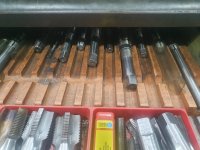
I have the bronze bushings in the freezer and plan to tap them in tomorrow. Then, I understand that I should hone the inside of the bushings slightly to fit the pivot pin. Does this look like a suitably sized hone for the task?

Hwfjpbi.jpg
 
Last edited:
I have the new brass bushings in the swingarm and now need to fit the pivot pin. My calipers show the pivot pin diameter at 21.5mm and the bore in the bushing at about 21.1mm. Does this difference of 0.4mm (0.0157") seem reasonable? I wasn't expecting to need to remove that much material.


I don't like honing with such a tool. The results are unpredictable because it will follow the geometrical glitches in the bore. There is only one right tool for the job : https://www.hogetex.com/verstelbare-handruimers?gclid=EAIaIQobChMIrv7n0qaZ-wIVEON3Ch1M_wsZEAQYAyABEgKNZfD_BwE

The ones in the link are expensive but there are many non-professional alternatives which are way cheaper. However, at the same time I realise that not everybody has excess to these kind of tools.

As always, thank you, Jensen, for the advice. I found some cheaper options online and will mull this over.
 
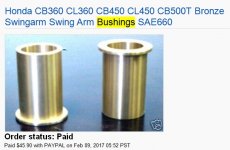
FWIW, the bushings I bought for my 450 did not need to be enlarged at all. Looks to be the same company, Performance International/Performance CBX

sw bush order.jpg
 
FWIW, the bushings I bought for my 450 did not need to be enlarged at all. Looks to be the same company, Performance International/Performance CBX

Thanks, Tom. That is interesting. You were able to slide the pivot pin right in? I definitely cannot do that and I did order the bushings from CBX Performance.
 
It's all about the tolerances and roundness of the swingarm pivot's and bushings. If the area of the swingarm is not perfectly round, and you "press-fit" these bushings in, the bushing will change it's geometry (deform) because it's relative soft material. That's exactly the reason that the stone-hone showed in this case might not be the appropriate tool to fix that. You have to be sure the hole is round, the only way to achieve that is to use a reamer.

btw, a reamer should never be turned both ways, only one direction (clockwise), in and out.

I make my own bushings from phosphor bronze (https://en.wikipedia.org/wiki/Phosphor_bronze), soft material, and easy to deform when pressed.
 
Thanks, Tom. That is interesting. You were able to slide the pivot pin right in? I definitely cannot do that and I did order the bushings from CBX Performance.

Yes, it was a snug fit but did not require any excessive force or enlarging. And though the company name is the same as in Bob's signature on the emails we exchanged when he joined (below) the link to the listing I bought them from no longer works. Same description as well as the material they're made from.

[Bob Franzke
CBX Performance
Performance Classics
Performance International]
 
It's all about the tolerances and roundness of the swingarm pivot's and bushings. If the area of the swingarm is not perfectly round, and you "press-fit" these bushings in, the bushing will change it's geometry (deform) because it's relative soft material. That's exactly the reason that the stone-hone showed in this case might not be the appropriate tool to fix that. You have to be sure the hole is round, the only way to achieve that is to use a reamer.

btw, a reamer should never be turned both ways, only one direction (clockwise), in and out.

You are right. I ordered one hand reamer (25/32" to 27/32") that should be suitable for this task from eBay.

Yes, it was a snug fit but did not require any excessive force or enlarging.

I'm going to freeze the pin and see how it goes. If it's still too tight, I will wait for the reamer to finish the job.

Am I correct in thinking that the pivot pin does not rotate relative to the swingarm when in use? In other words, it rotates with the swingarm about the swingarm pivot bolt?
 
Am I correct in thinking that the pivot pin does not rotate relative to the swingarm when in use? In other words, it rotates with the swingarm about the swingarm pivot bolt?

Pretty sure you mean the fork center collar when you mention the pivot pin and if so, unless I'm mistaken, it tightens up with the pivot bolt and the swingarm/bushings pivot on it (hence the machined grease grooves in it)
 
Pretty sure you mean the fork center collar when you mention the pivot pin and if so, unless I'm mistaken, it tightens up with the pivot bolt and the swingarm/bushings pivot on it (hence the machined grease grooves in it)

Yes, you're right, it's the fork center collar. I picked up the other terminology elsewhere on the interwebs.

The freezer did the trick -- I managed to get the collar installed in the swingarm.
 
Greased up I hope, since it seems you might not get another chance and the grease holes/passages don't seem to get much there.

That would have been a good idea... I was thinking grease was part of the next step.

Update: I greased up the bolt and installed. Then I pumped until grease started to escape the caps on each side. This should mean that the channels on the outside of the fork collar are now lubed, right?
 
Update: I greased up the bolt and installed. Then I pumped until grease started to escape the caps on each side. This should mean that the channels on the outside of the fork collar are now lubed, right?

Yes, it should mean that... unfortunately we can't see proof of it, and the way mine only took a modest amount of grease before oozing out around the caps at both ends made me wonder if all of the areas inside got lubed.
 
If grease protrude on both sides, the area's inside will be lubed. Hence the diameter difference of the shaft is close to the diameter of the swingarm, it's a tube. Most air will be pressed out by grease, nothing to worry about. What you can do is the heat the swingarm with a heat gun (not too hot !), this way grease will "flow"a little better.
 
So... Interesting series of posts. I should have waited as it unfolded but I think I'm fine.

I ordered the same thing and they were too tight. Before I read about the reamer, I used some Dremel polishing "balls" to run up/down the bushings. Like when honing. It was very close and didn't take long.

It was an NOS collar.

Took my time. It worked out. They now slide in/out smoothly and without heroics (or twisting).

69 CB350K1/68 CB450K0
 
This week provided the combination of warm weather and free time required for me to finish reassembling the swingarm, new shocks, wheel, and chain on my 450.

This was my first time replacing swingarm bushings and I definitely could've done a better job. I didn't have a reamer to correct the tight fitting brass bushings and my small brake cylinder hone didn't seem to improve the fit very much. So, I froze the rear fork collar and then installed it in a hurry without lubing it. I did manage to grease things up afterwards, but the swingarm still felt a bit tight once it was properly torqued. I also took this opportunity to install new shocks from 4-into-1.

The rear suspension feels pretty stiff, but I've been riding on the original, worn out shocks from day one and will thus reserve judgement for the time being.

qAggQKl.jpg

While everything was apart, I noticed that the clamps holding the center stand in place were a little sloppy and I made some adjustments to correct that. The spacing between the center stand and the wheel seems more even as a result. Pardon the crude measuring device.

g9qsIAU.jpg


d7pdK1c.jpg
 
That does look better. Hopefully the grease you pumped into the swingarm after the fact will work its way into all the moving parts as the bike heats up during longer rides and the miles add up ride after ride. The shocks I bought from 4into1 (Emgo) are a bit stiffer than I'd like as well, but I'm guessing the reason for my situation is because of the weight difference between my 450 and the stock bike's weight. I suppose the only way to arrive at any more accurate match for the bike would be the expensive custom shocks like Hagon, Ikon or Tec sells.
 
That does look better. Hopefully the grease you pumped into the swingarm after the fact will work its way into all the moving parts as the bike heats up during longer rides and the miles add up ride after ride.

I'm glad the spacing looks better to you as well. I imagine the grease does heat up some during use, although I might aim to do this sort of repair in the summer next time to add a little natural heat to the mix.

I'm still enjoying that 14T front sprocket. I should've made that change a long time ago.
 
I'm still enjoying that 14T front sprocket. I should've made that change a long time ago.

I like it on mine too, but honestly if it could be half a tooth (of course it can't) it would be perfect for me. Lots of rides are further for me and it raises the cruising rpm close to 1000 so it also creates higher fuel consumption with my tiny tank. And I'm not going to change the rear sprocket until it actually needs a new one.
 
Back
Top Bottom