Re-keying ignition switch locks to have matching keys

asdfqwer426

Member
Joined
Aug 10, 2020
Total Posts
26
Total likes
22
Location
Mora, MN
gvXSlR1.jpeg


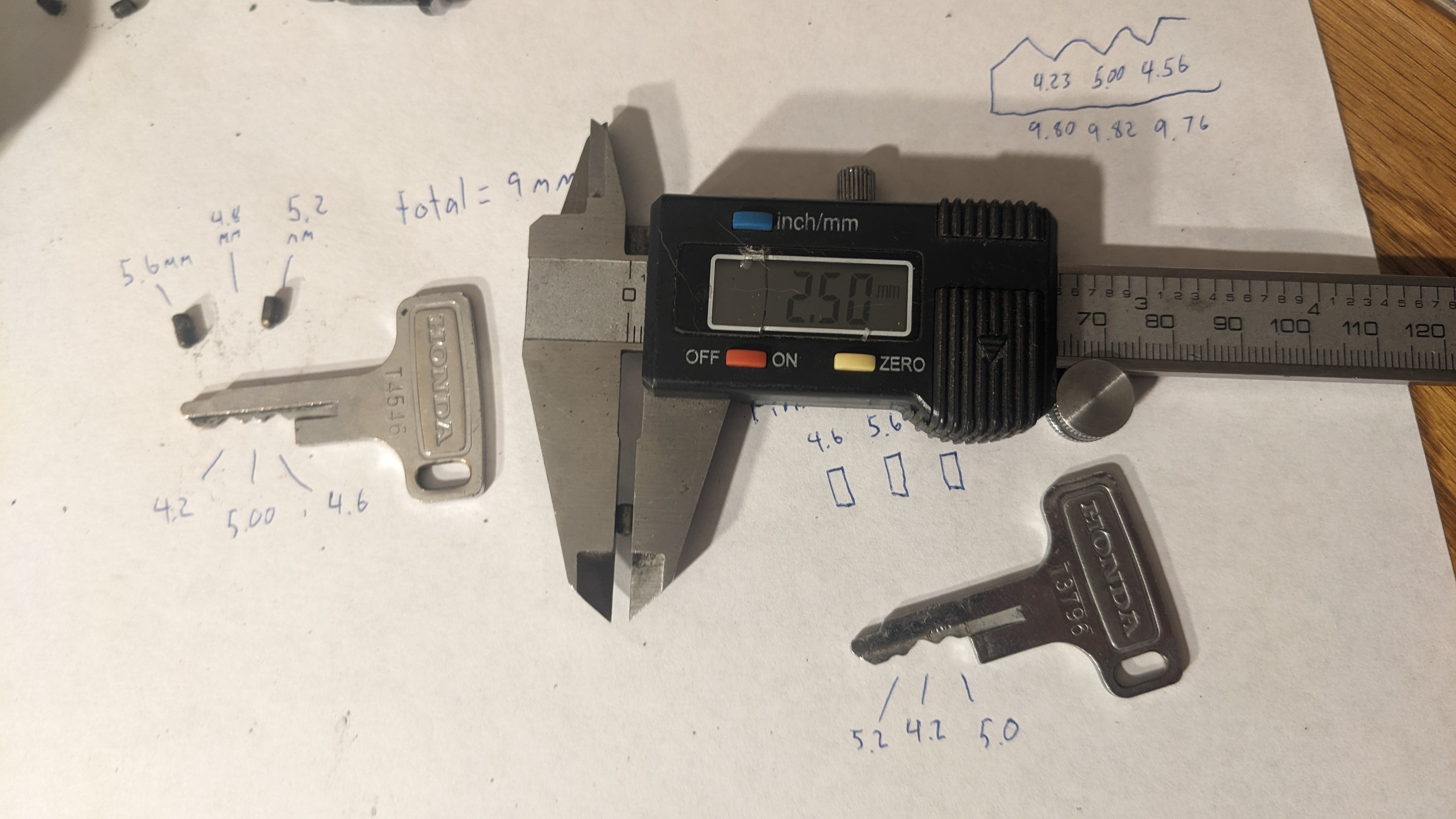
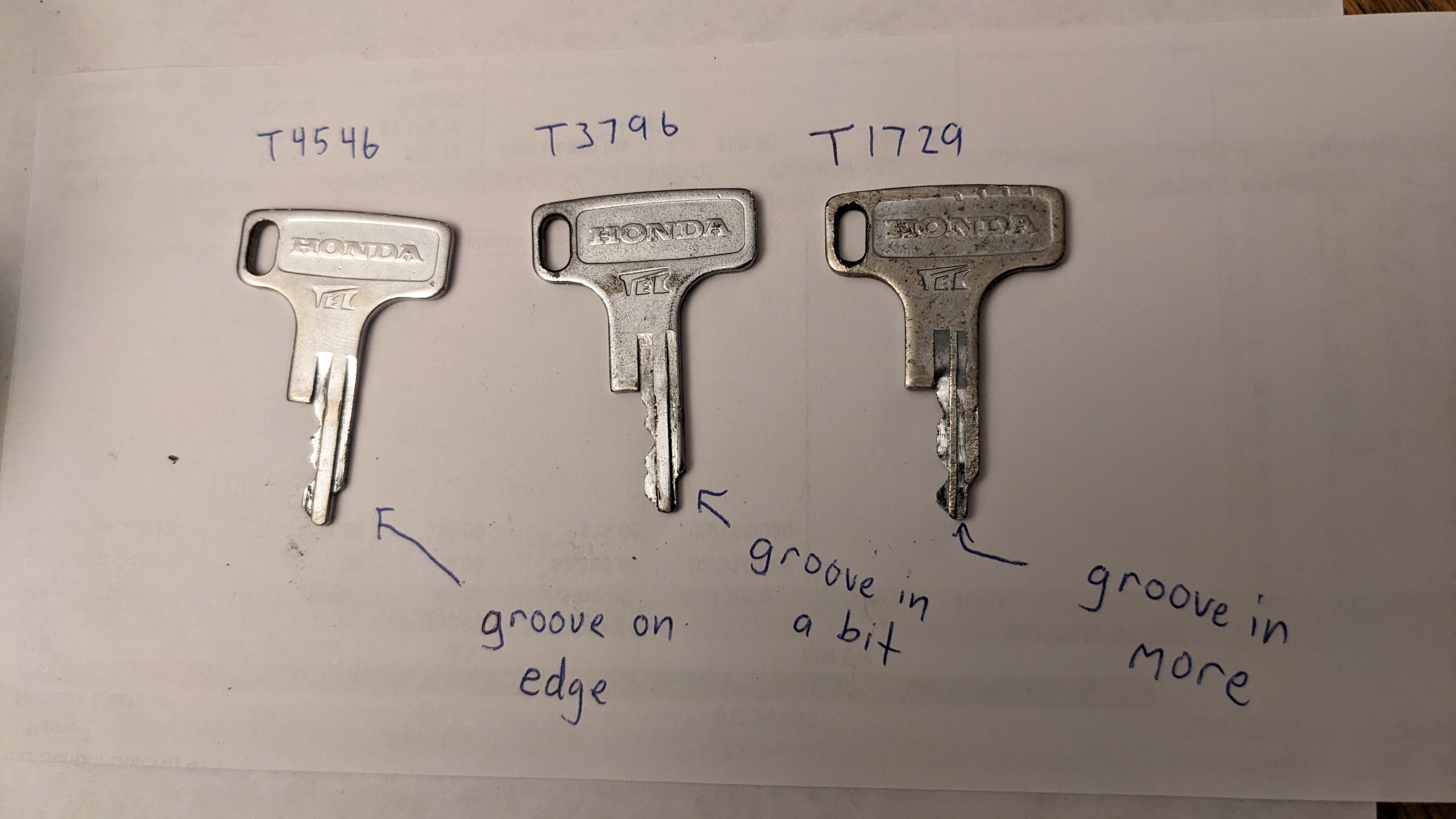
I have three kinds of honda keys here. I know the codes are just so you can buy pre-cut keys, which I love, but for bikes with damaged or missing locks I would like to write up a guide to rekeying the existing locks.

I'm curious if the first digit might be indicating where the key groove is or something? is there any more info out there on this kind of stuff? I haven't quite started looking at pictures of keys to match up characteristics, but that's probably what I'll be doing soon.

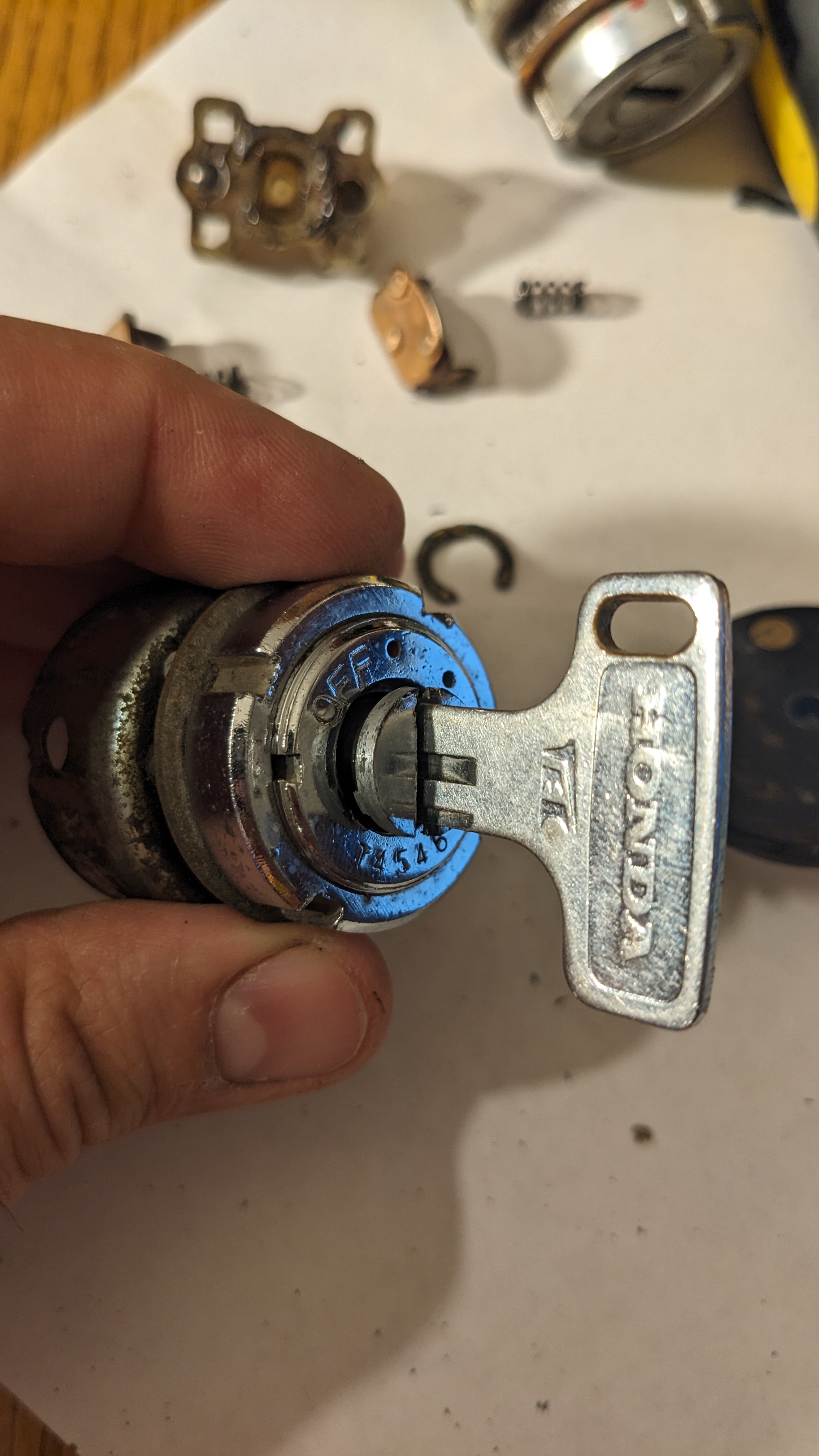
A few years back I couldn't get my 350 key in the ignition and upon closer inspection I found the pin was able to fall too far down into the keyway and jam in there. It's hard to see in this picture, but you can kind of see the pin in T4546 is lower than T3796 next to it.

Y7C5Ww1.jpeg


Using a small flat head, I can push it back up enough to get the key in, but it's been an issue. When my electrical switch also went out I completely tore it down including pulling the pins out and concluded that the lock cylinder was just damaged. I cleaned up the switch and put it back together with the intention of finding a lock with a similar keyway to swap cylinders and pins. I plan to do that right after this post and make pictures so I can write up a guide. Although the 4 key and 3 key have slightly different keyways, the 4 key seems to fit in the 3 and vice versa , so it should work for me.

I also have a 360 without a seat latch. I would like to buy a seat latch with a matching keyway and repin it to match my ignition key, and probably do a write up on that too when I get to it. I need to measure the lock pins inside the ignition switch first, and find out which seat latches have a matching keyway - hence my first question here.

Hope this fits the "technical" header!

EDIT:
After searching, it does seem like the first number indicates where on the key the side cut is, with 1, 2, 3, and 4 on the left side of the key, and 6, 7 and 9, on the right side of the key. groove 1 mirrors 6, 7 mirrors 2, and 9 mirrors 4. I have yet to see pictures of a 5, or 8 key but if the system matches up, the 8 key would mirror the groove location of the 3 key.
 
Last edited by a moderator:
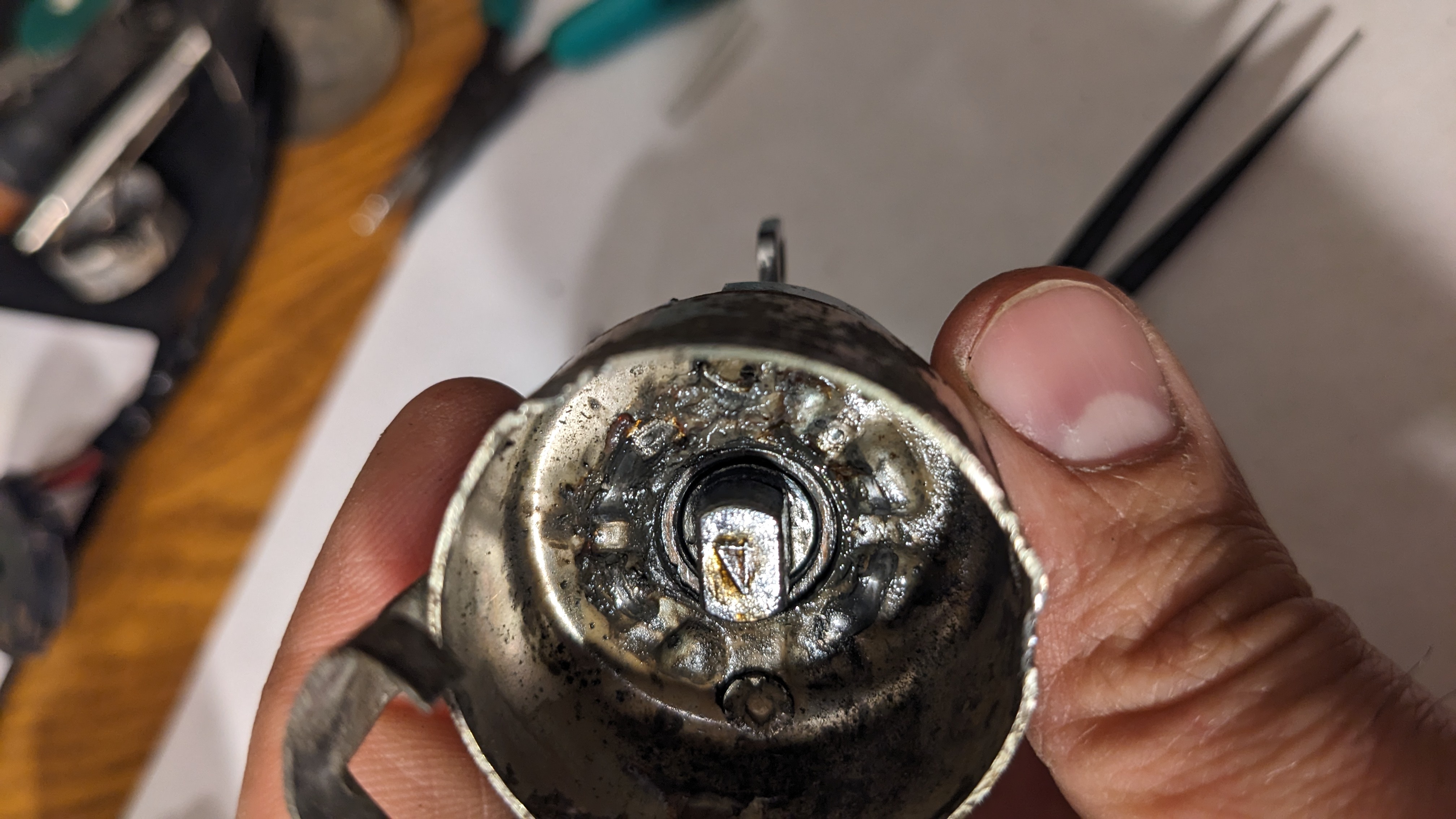
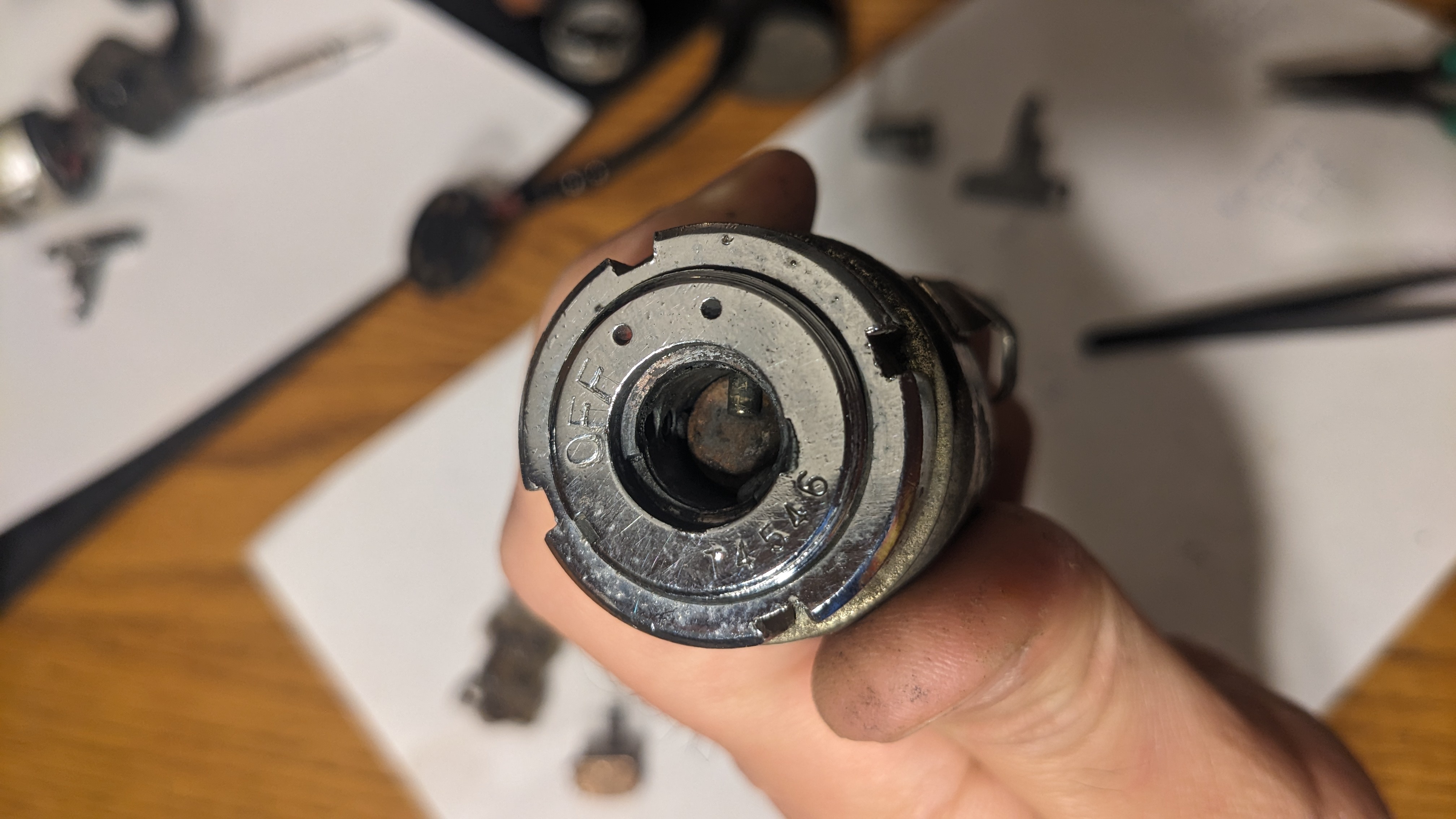
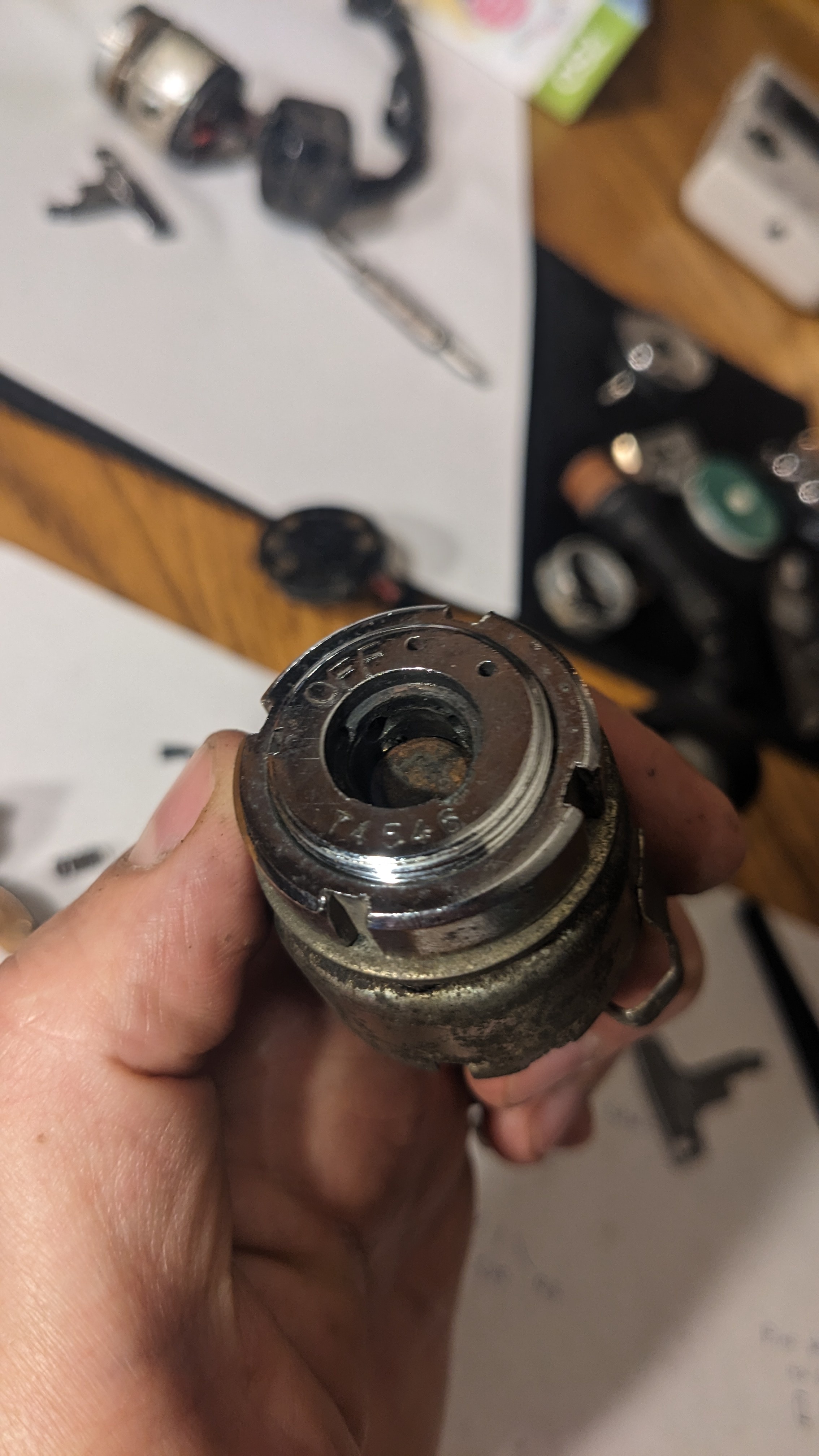
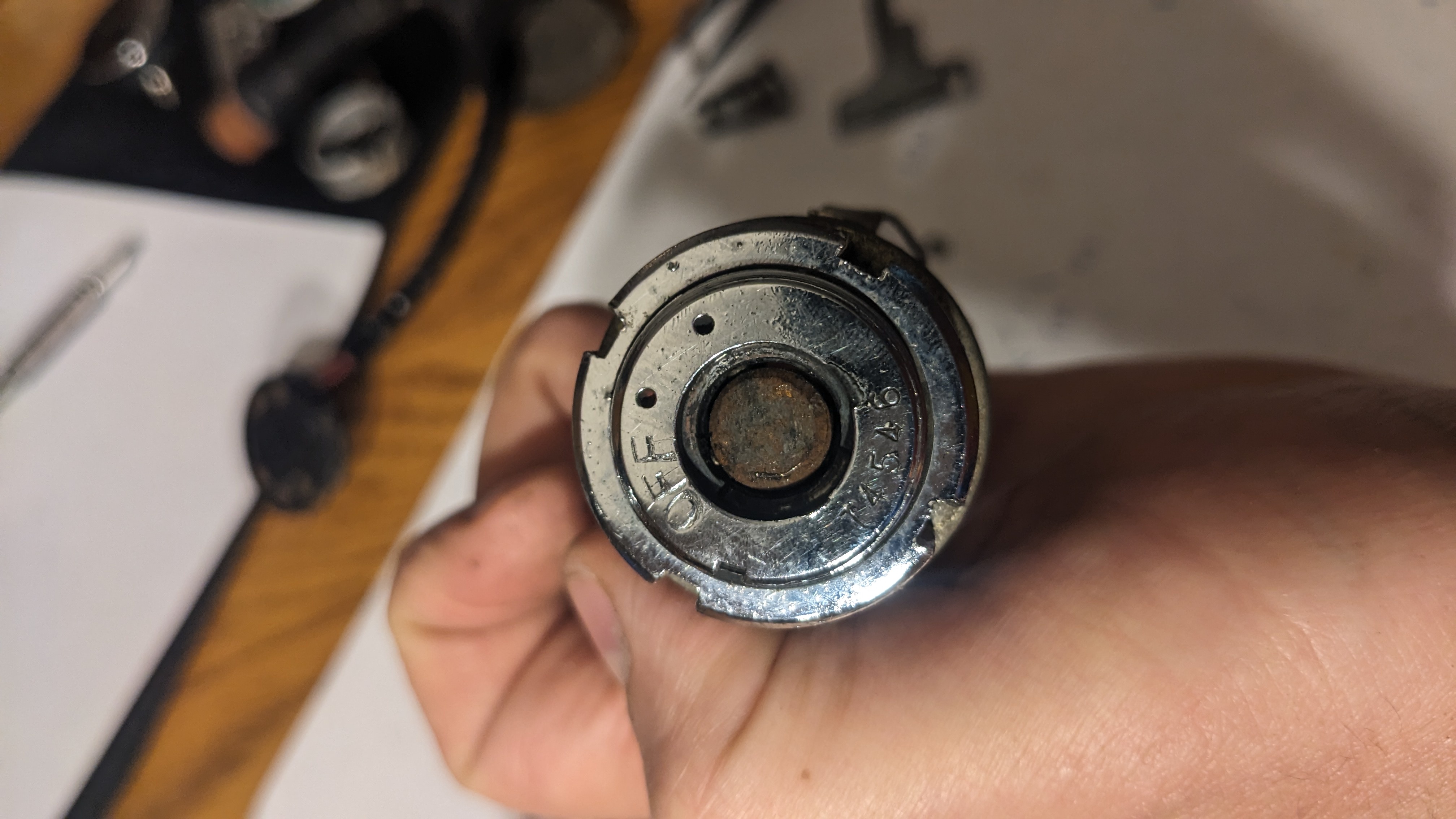
Well, I learned a lot, but bad news. It turns out that the first digit DOES denote the key way, however each key way number also has slightly different pin depth. So even if a 3 and a 4 key fit in each others key way, the pins themselves don't even come close to lining up. So swapping a 3 cylinder into a 4 lock body will not work even if the #4 pins are put in place.

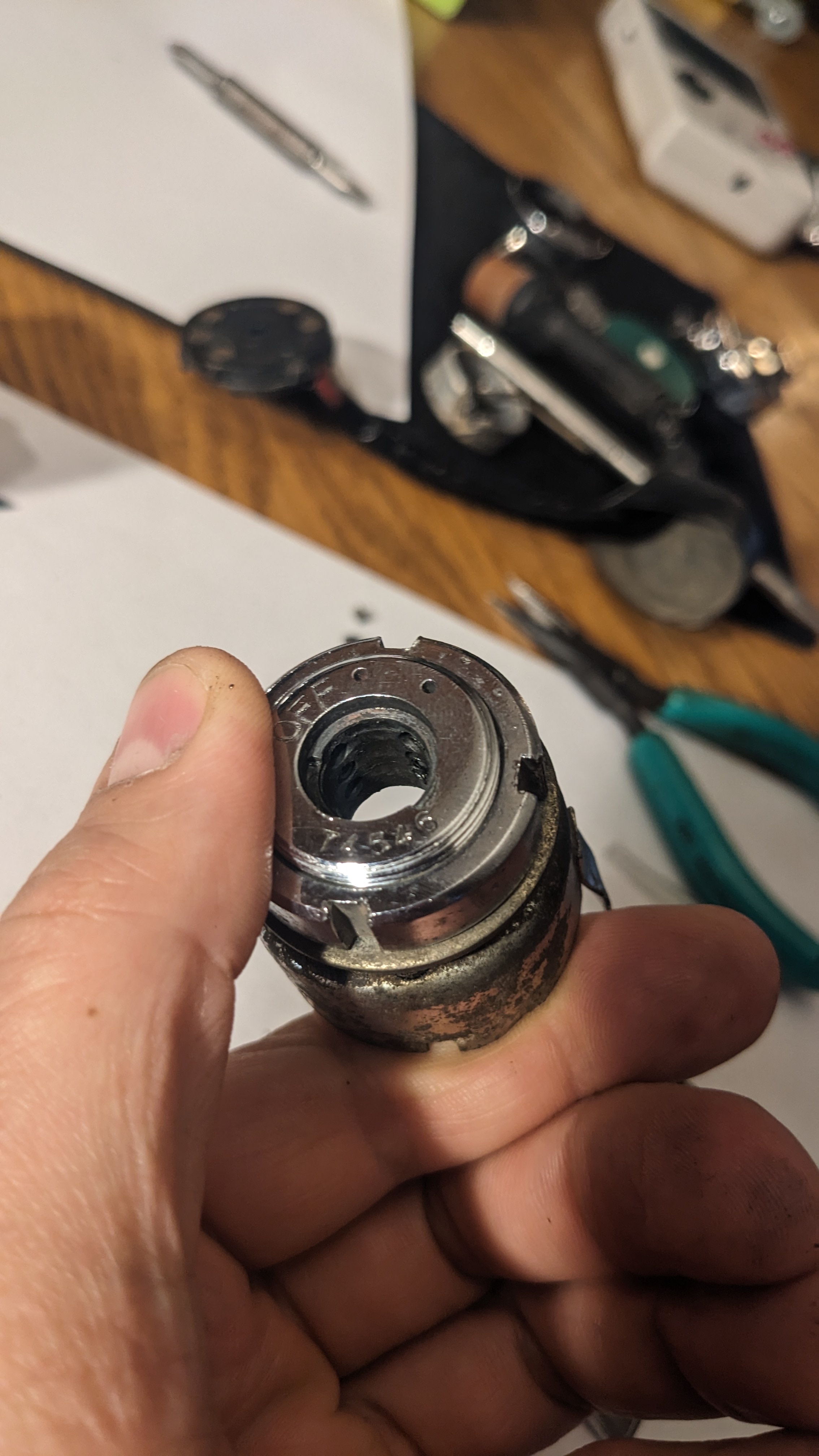
However, it does seem that each cylinder is stamped on the back with the first digit number, meaning that a T4XXX key way could be repinned to fit any T4XXX key.
here's the back of a #4 cylinder

n0BeV7l.jpeg


and the back of a #3 cylinder. note the numbers are mirrored, as the original mould from the factory probably had it written on correctly.

qRb5pIMl.jpg


the pins are 2.5mm in diameter, and their total height including the key needs to be 9.8mm, so you could measure the key cuts to determine what length pins you need without disassembling one good lock. For instance on my T4546 the first key dent is cut to 4.2mm, so the corresponding pin is 5.6mm long to total 9.8.

Here's how I did it.

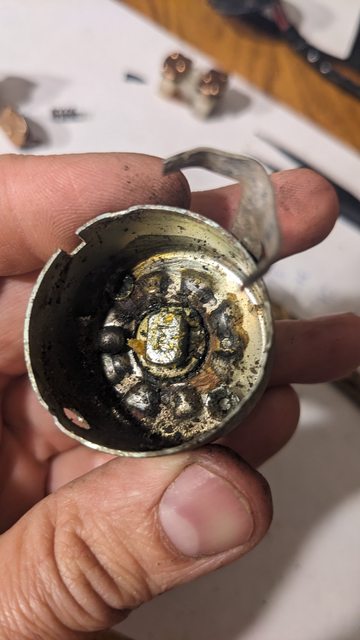
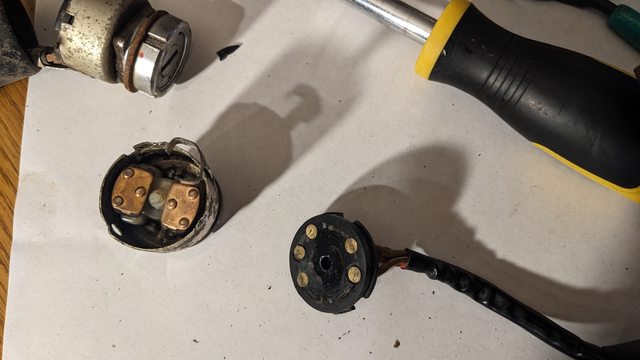
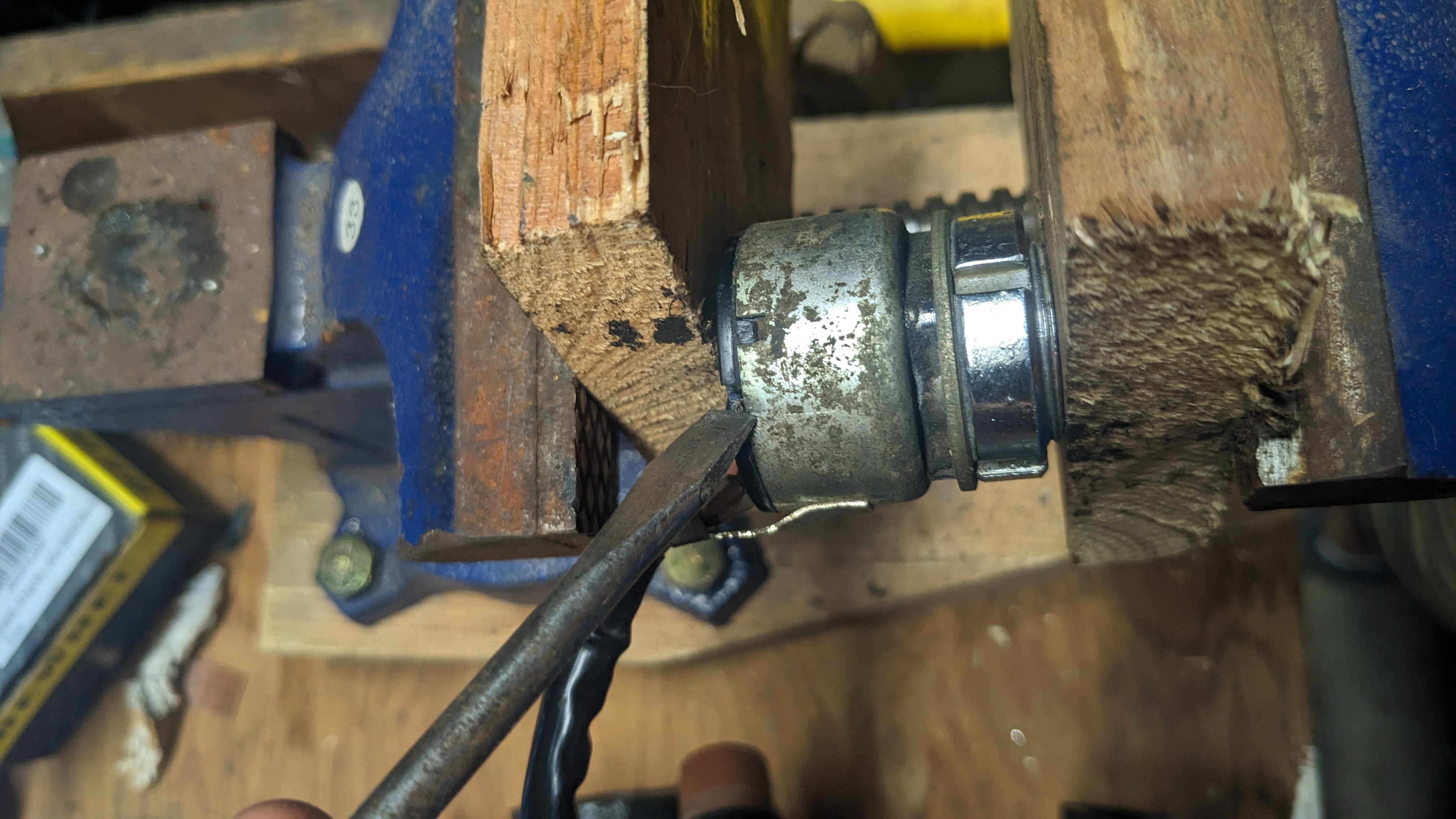
Slide the rubber boot off the lock body to expose the soldered wire ends, and pry off the wire clamp legs. Carefully pry up the three dented in spots to release the black plastic circle. Careful, as this plastic is 50+ years old and brittle! I found prying straight down, rather than twisting, seemed to be safer, but be gentle. HEADS UP! like the handlebar switches, there's little springs and ball bearings in here. Don't want to lose them when you open it up! mine were stuck in place with grease, but yours might not be. Once they're all bent up, the black circle with the wires soldered can come off.

rFo5k10l.jpg


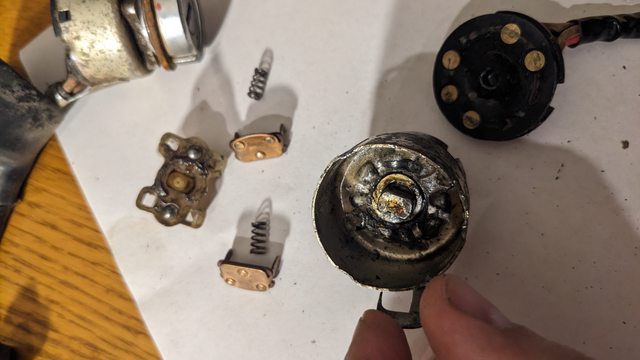
remove the two switch contacts, two springs, and two ball bearings sitting in the white plastic switch body part which can also come out.

5tLtl5hl.jpg


Next use a small screwdriver and pliers to take off the brass retaining ring that holds the lock cylinder into the body. It's not an e-clip or anything like that, it's bent on.

ASxHfur.jpg


I didn't get a good picture of it, but under the retaining clip is a small indented washer that helps hold the cylinder in place. Mine was pretty greased in and only came out when I started to slide out the cylinder.
 
Last edited by a moderator:
(second post to fit more pictures in. Is external image hosting still the way to go? still figuring out the "new" forum)

insert your key and the lock cylinder can now be removed HOWEVER, be very careful at this point. There are 6 pins and 6 springs in the lock body, as well as the three special pins in the lock cylinder. They're very small and easy to lose, so read ahead before you attempt this.

VZq34QU.jpg


as you start to slide out the cylinder, the pins in the lock body will start to press out into the empty cylinder area due to the springs behind them. I found if you turn the key to "on", instead of "off" or "park" that the back of the lock cylinder can just catch the corners of the pins and make it a bit more predicable when they pop out, this position is also key (ha.) to reinserting the lock cylinder in the end.

TCVxeRt.jpg


here's the first set of pins hanging out
]slKKcaJ.jpg
slKKcaJ.jpg


here you can see some of the springs hanging down a bit. I never had my springs come out due to grease, but yours might.

dWWNsGi.jpg


here you can see the 6 pin holes in kind of a "V6" pattern, this lets you remove the key in both "off" and "park"

jqvDGFE.jpg
 
Last edited:
Note that the pins in the lock body along the "off" section are what are called "T pins" with a slight shouldered bottom to them. I believe this is to help make picking a bit harder?

2X2iT53.jpg


Here is some measurements I took. You can see the pin diameter is 2.5mm. I measured the cut outs in two keys and compared them to the cylinder and the T4546 pins to determine that they need to total 9.8mm. I'm hoping this can be used to find and purchase new lock pins for rekeying locks.

GZx1TWL.jpg


For reassembly, we need something that is about 9.8mm in diameter to slide into the body and hold the key pins in. I found the non-cutting end of a 3/8 drill bit is close enough.

P16xGXz.jpg


Slide the bit in just far enough until it's near the first pin holes and insert the first two pins. Use tweezers and put the "T pin" in the "off" row, and the normal round pin in the "park" row. You might need to tilt the bit slightly to it holds one pin in while you slide the second.

ASLJFfE.jpg


Once they're both in, push the bit a bit further into the cylinder until it lines up with the second row and repeat the process.

6aT93ui.jpg
 
Last edited:
Finally, get the last two pins in and slide the bit far enough in to hold the pins in the lock body. Here you can just see the edges of the pins by the edge of the drill bit.

2LXDIKh.jpeg


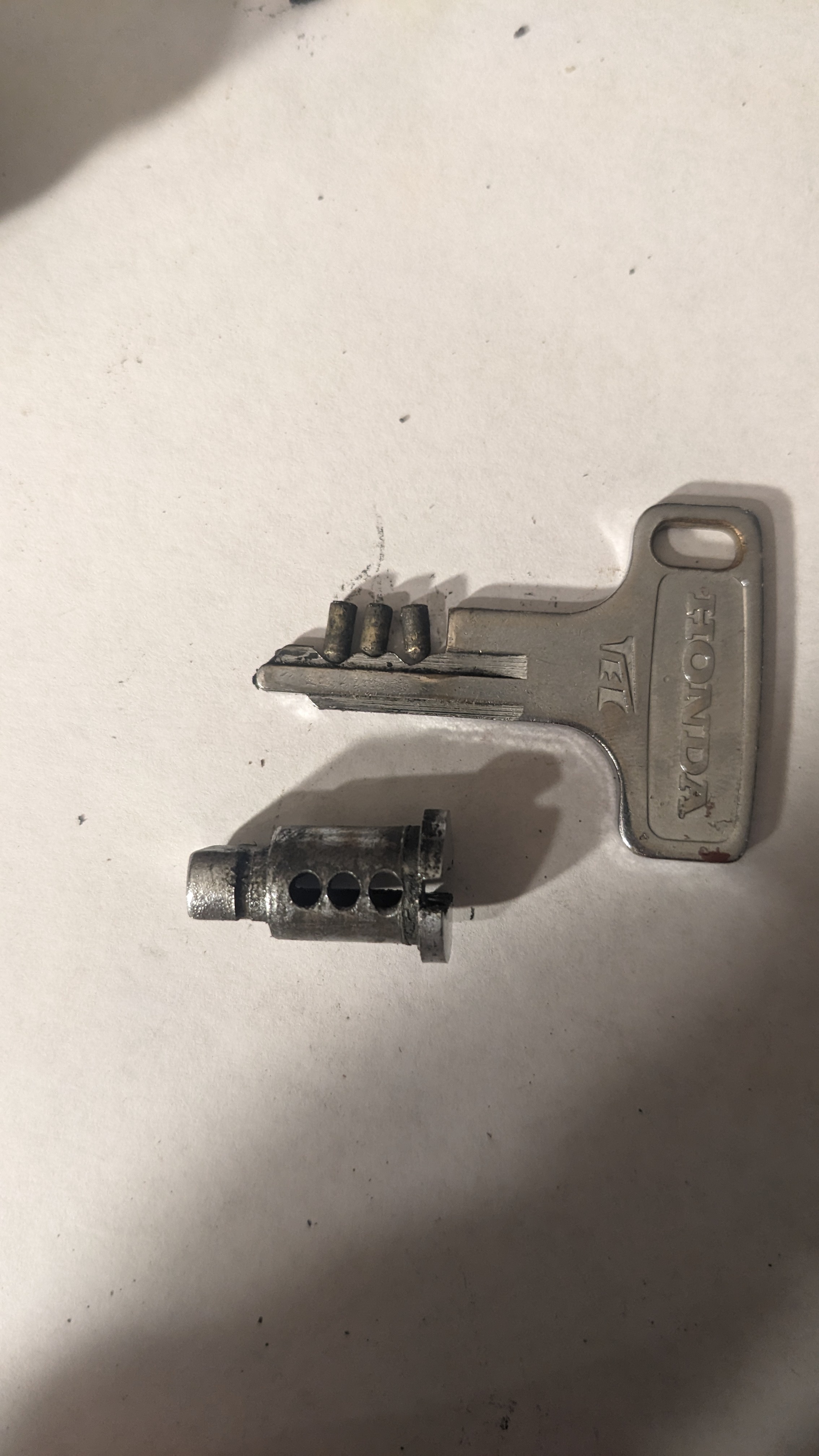
Unfortunately, I didn't get a picture of this part, but put the lock pins in the right order back into the lock cylinder (you can kind of see what I mean I think from this picture with the pins lined up on the key next to the cylinder holes.)

zVYa8bI.jpeg


Line up the key and cylinder so that they are in the "on" position between "off" and "park" and carefully slide and wiggle the cylinder into the lock body. I did have to use tweezers at one point to press a pin in from the back, but the corners of the dented section on the back of the cylinder mostly hold the pins in while you get the cylinder into the body. I managed to do it in one try, but if you have a pin fall out, you might find you have to remove it all and try again. Just make sure the three pins in the lock cylinder are in the right position!

Once the cylinder is in the body, you can reassemble the rest. Washer, then the brass clip bent into place, white switch body followed by ball bearings, springs, contacts, and then put the black circle with the wires and switch contacts back in place. Note the circle has a keyed tab on one side so it should only go in one way.

Finally use a clamp to hold the black circle firmly into the lock body while you re-dent the impressions that hold it all together.

TWvwwBJ.jpeg


And you're done!

Hoping I can get a spare seat latch soon so I can do a write up on that, and maybe find 2.5mm pins to rekey a latch to fit my 360. I have a spare T1 and T3 ignition, so if I can find a loose T1 or T3 seat latch I should be good.
 
Last edited by a moderator:
A much cruder way is to take the cylinder out, insert the key that you want to make work with it, then file flush any pins that stick up. I've done this to make the steering lock match the unmodified ignition lock.
 
A much cruder way is to take the cylinder out, insert the key that you want to make work with it, then file flush any pins that stick up. I've done this to make the steering lock match the unmodified ignition lock.
That should work if the new key has shallower cuts, but I think if one were deeper then the pin wouldn't be long enough to push the lock body pins out to turn the key. If that makes sense.

But I honestly forgot about the third lock, the steering lock! I think that's another one I'll need to figure out how to take apart if I want a complete guide here.
 
I don't want to be a locksmith, but I'm really glad that YOU(not me) are taking the time to figure this out. For me, it is a big deal to have everything keyed correctly.
 
That should work if the new key has shallower cuts, but I think if one were deeper then the pin wouldn't be long enough to push the lock body pins out to turn the key. If that makes sense.

But I honestly forgot about the third lock, the steering lock! I think that's another one I'll need to figure out how to take apart if I want a complete guide here.
Nice effort here, something that I've also never bothered with but is certainly useful for these old bikes with mismatched keys.
But I honestly forgot about the third lock, the steering lock! I think that's another one I'll need to figure out how to take apart if I want a complete guide here.
For the fork locks on the bottom of the steering stem that have the small black plastic cover over them with the little metal cylinder cover, you remove the single retaining screw from the black cover, put the key in as if you want to lock the forks, turn the key the same direction you would to lock the forks except then you pull the entire cylinder out with the key in it.
 
Nice effort here, something that I've also never bothered with but is certainly useful for these old bikes with mismatched keys.

For the fork locks on the bottom of the steering stem that have the small black plastic cover over them with the little metal cylinder cover, you remove the single retaining screw from the black cover, put the key in as if you want to lock the forks, turn the key the same direction you would to lock the forks except then you pull the entire cylinder out with the key in it.
I think I attempted to remove the fork lock on a bike once, but did not use the key to do so. I'll keep that in mind!

Unfortunately I checked and my 360 has a #4 steering lock, #1 ignition lock, and no seat lock. Dang! I see a few sets of locks on ebay that between the spare #3 and #1 ignition I have, I can make a complete set, but I'm going to wait to see if I can source 2.5mm lock pins before buying anything.
 
That was a lot of research and work you put into this. Nice write up and pics.
Thanks!

One lock down, two to go. The others look like they use a brass plate that's staked in place with a punch, they might be bit harder to get into.

I asked in a locksmith reddit about some 2.5mm pins, and they said they don't usually work in stuff that small and that they recommended getting 2.5mm brass stock and cutting it down to length, so I've purchased ten 100mm rods to give it a shot!
 
Last edited:
Nice work. I replaced the Tumblers in my BMW so the Ignition, seat, top case and side case all used the same key. On my CB360, the ignition switch was in rough shape. I had taken it apart and cleaned it, but it was intermittent sometimes. So I didn;t go through the process, I bought a new Ignition Switch kit that included the steering lock, seat lock, and ignition switch. So new keys, new tumblers, tight switch. Keying the locks alike is great, don't need to carry so many keys around. If the locks are worn, sometimes a new switcch is called for.
 
Back
Top Bottom