CB360G yard find — ongoing project log

Anyone successfully do the ' pull clutch lever, rock bike in 3rd gear' trick?
I omitted one aspect of the happenings with this stuck clutch. I knew it could stick after sitting for a while (it has in the past), but usually I could unstick it by giving it a little throttle as I shifted into first (with the clutch lever pulled in). I did that in this instance and was glad/lucky that the horse didn't throw me, because it was definitely bucking!
 
I omitted one aspect of the happenings with this stuck clutch. I knew it could stick after sitting for a while (it has in the past), but usually I could unstick it by giving it a little throttle as I shifted into first (with the clutch lever pulled in). I did that in this instance and was glad/lucky that the horse didn't throw me, because it was definitely bucking!
I've been glad the boobus cam wasn't on a few times too.
 
So what brand or type of electronic ignition did you install? Does it do the advance? If so, do you remove or replace mechanical advance? Or is it more of a electronic points only replacement?
I have a Pamco Ignition. Made by a grumpy old man (Pete) in South Carolina. He retired from doing these in 2019. I helped him develop the product (Testing, installation- I wrote up install instructions and did a schematic) for the CB360. So it is no longer available, but was a decent product. The Pamco unit has pre-programmed advance, so no mechanical advance. Full advance is at 3500 RPM.

Back when I was doing this (about 2013), There were a couple of choices. The ones that used the mechanical advance suffered from the same fate, our old bikes that have worn out parts. A good electronic ignition with mechanical advance has issues if the advance assembly is worn, the springs may have lost there tension, the advance mechanism can bounce. The points actually stabilize/dampen the point cam, so removing the points allows the points cam to bounce around a little more than it did with the points on. The electronic systems with mechanical advance can be good, but only if your old mechanical advancer is is good shape.

So I went with the Pamco Unit because it is non-mechanical on the advance. I am using the OEM coils, Replacement spark plug caps with no resistor, and resistor plugs (NGK Iridiums). I have not touched the system in over 10 years and have had no ignition issues at all. Even when the gas is stale, the bike fires up quickly.


I have not researched what's available now, but options have never been great for our CB360's. If my Pamco fails, I will probably go back to points, but may look at what is available.

 
I have a Pamco Ignition. Made by a grumpy old man (Pete) in South Carolina. He retired from doing these in 2019. I helped him develop the product (Testing, installation- I wrote up install instructions and did a schematic) for the CB360. So it is no longer available, but was a decent product. The Pamco unit has pre-programmed advance, so no mechanical advance. Full advance is at 3500 RPM.

Back when I was doing this (about 2013), There were a couple of choices. The ones that used the mechanical advance suffered from the same fate, our old bikes that have worn out parts. A good electronic ignition with mechanical advance has issues if the advance assembly is worn, the springs may have lost there tension, the advance mechanism can bounce. The points actually stabilize/dampen the point cam, so removing the points allows the points cam to bounce around a little more than it did with the points on. The electronic systems with mechanical advance can be good, but only if your old mechanical advancer is is good shape.

So I went with the Pamco Unit because it is non-mechanical on the advance. I am using the OEM coils, Replacement spark plug caps with no resistor, and resistor plugs (NGK Iridiums). I have not touched the system in over 10 years and have had no ignition issues at all. Even when the gas is stale, the bike fires up quickly.


I have not researched what's available now, but options have never been great for our CB360's. If my Pamco fails, I will probably go back to points, but may look at what is available.
Great info about the points cam bounce. I have a Pamco on a 350 with the advancer still under it (Outobie's bike). I haven't run it yet but may need your expertise then.
I take it the 350 are not the same as 360 for these.
 
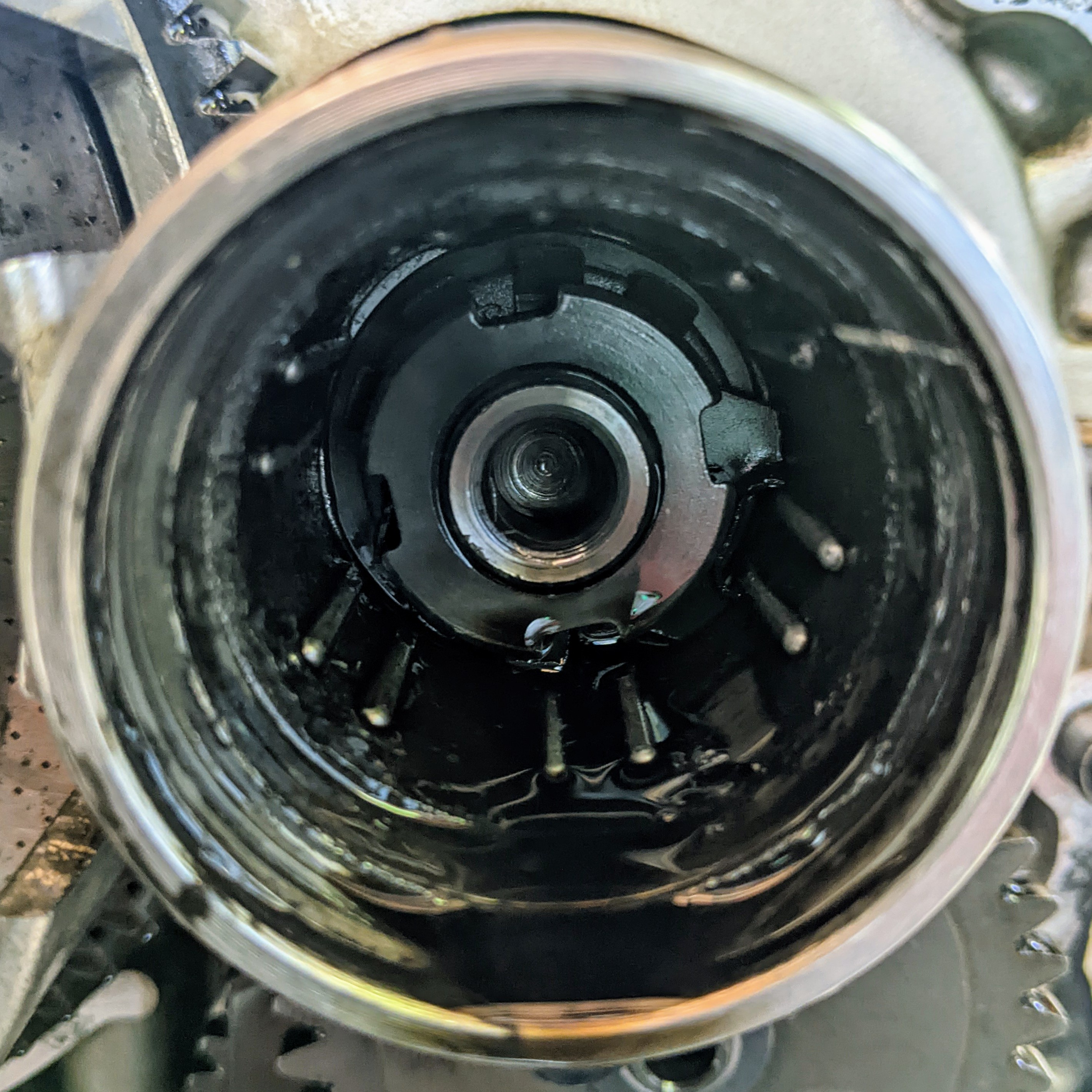
I checked the oil spinner while the side cover is off. I've probably got less than 1000 miles on this oil and it looks pretty clean in there to me.

m33KDIM.jpg


I have a new theory about why most of us find those spinners loaded with gunk when we take ownership of old bikes: the previous owner didn't find much in there the first few times they changed the oil, so they gave up on checking it thereafter.
Very plausible theory. How's your snap ring? If it's the same as the 350's, I can grind down another one because my fingertips have grown back now.
 
The OEM points set up was designed to 'bounce' around 11,500 rpm, early for of rev limiter that didn't have a cut out
That's not the bounce he's referring to. He means the loose advancer springs and general wear/slop causing an excess and erratic movement of the points cam (or the reluctor for the simple EI). I know what you're referring to, which is the long (roughly 270°) duration of the points cam lobe holding the points open far longer than really necessary, which acts as a rev limiter of sorts when there's not enough dwell at high rpm. Which is why I ground about 1/3 or so of that lobe length off from the backside of the lobe when the points close for my 450 advancer and it will turn 11,500 without a miss (and probably higher as well but it won't make any more power).
 
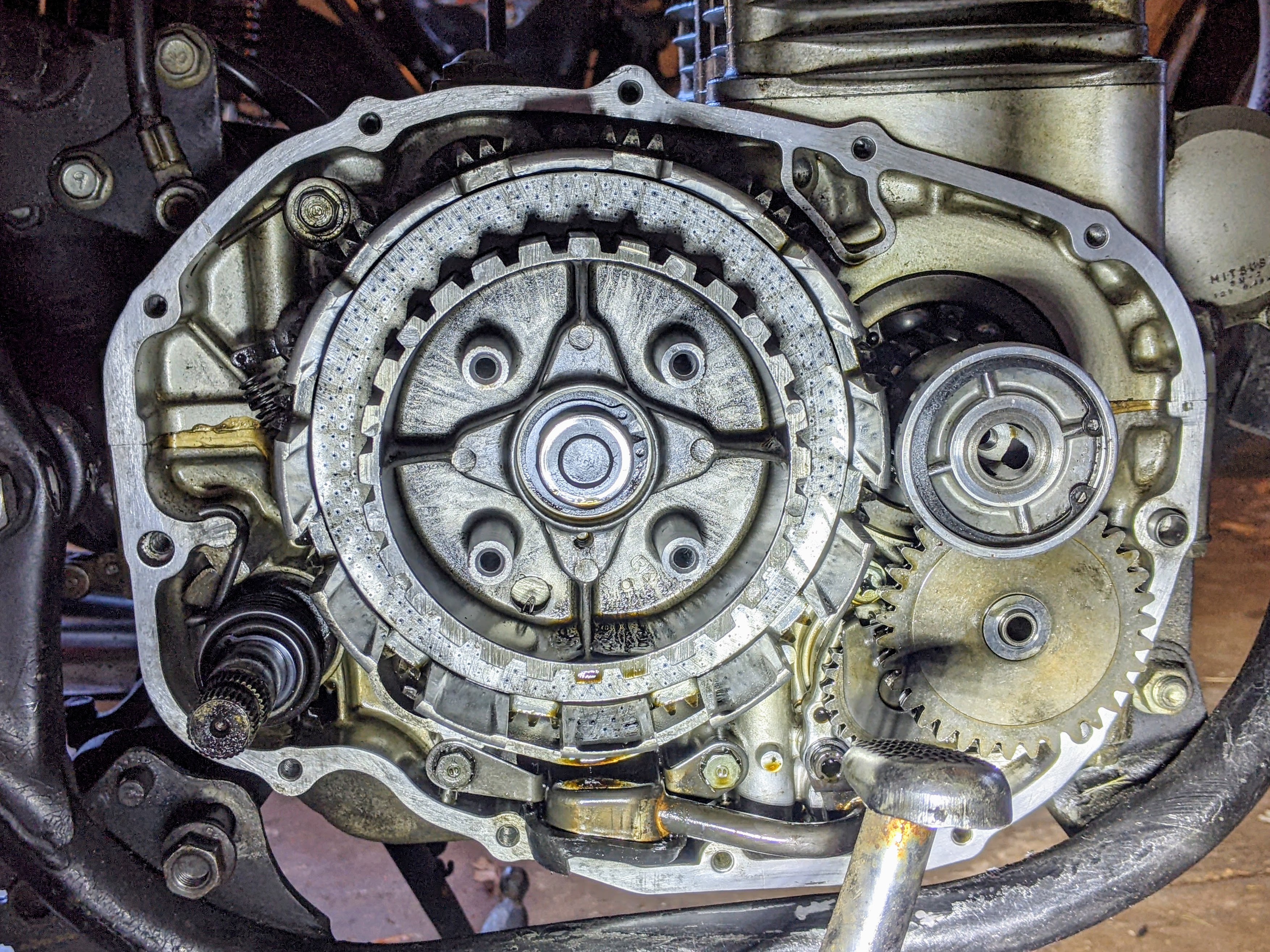
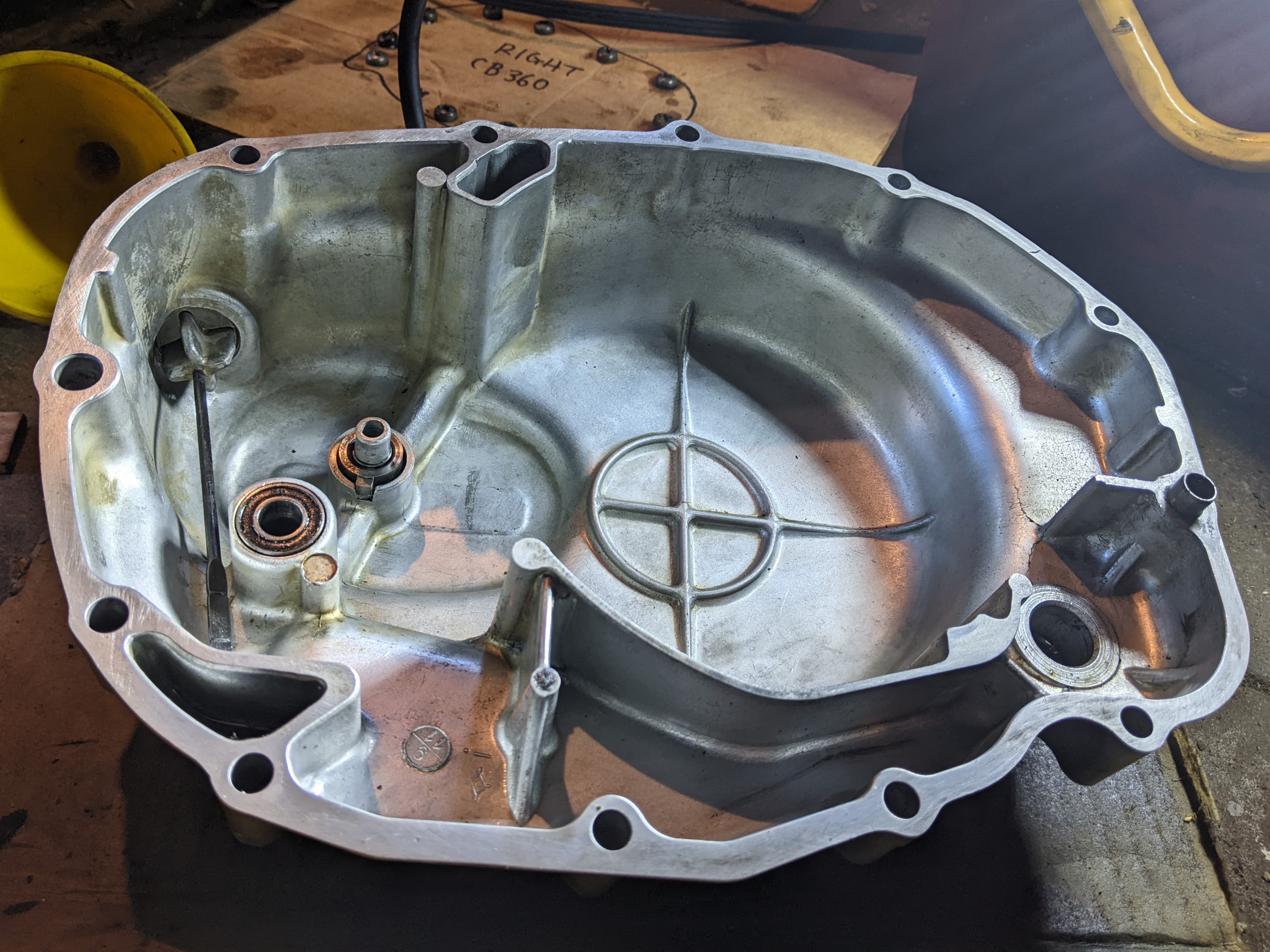
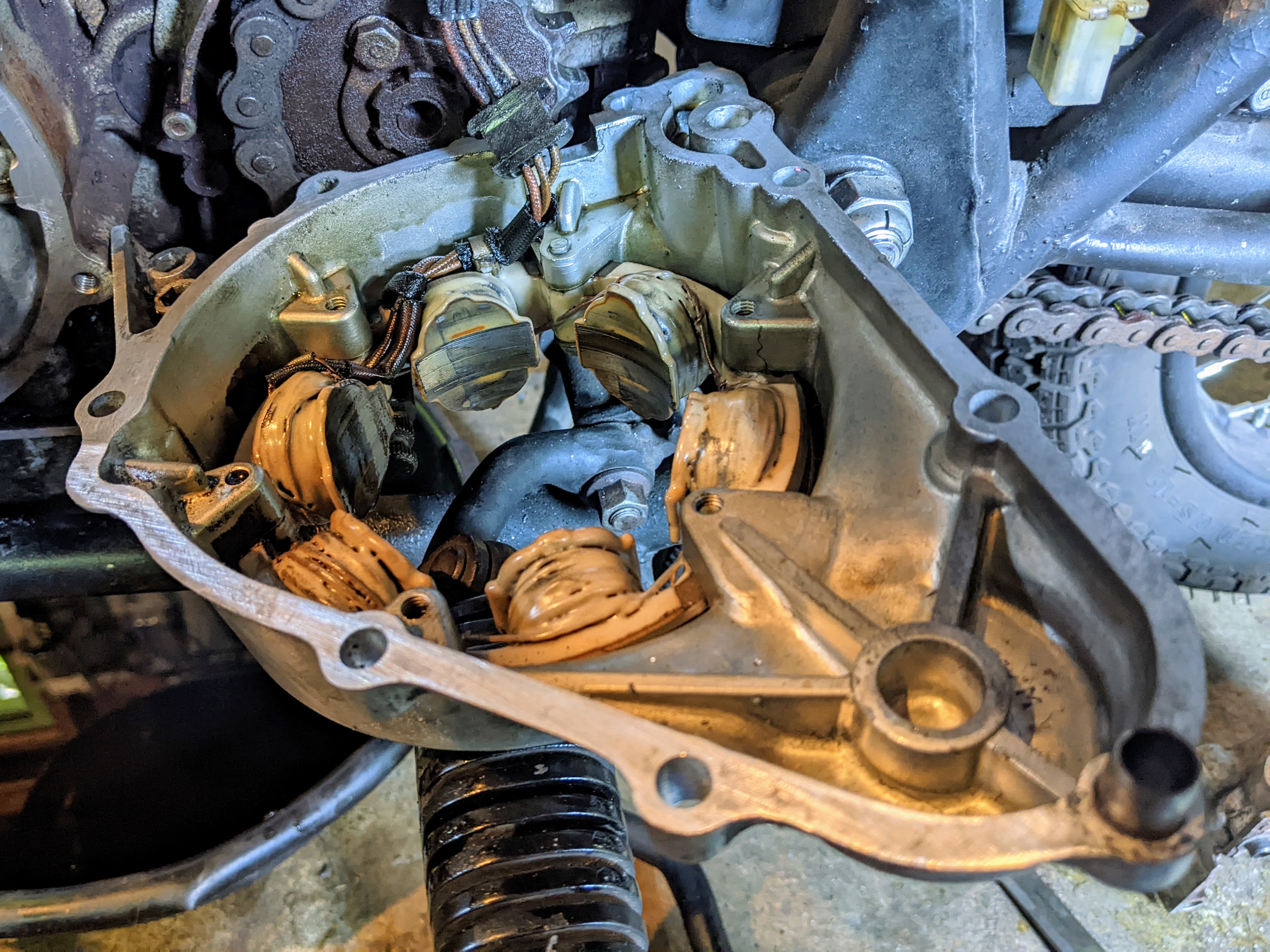
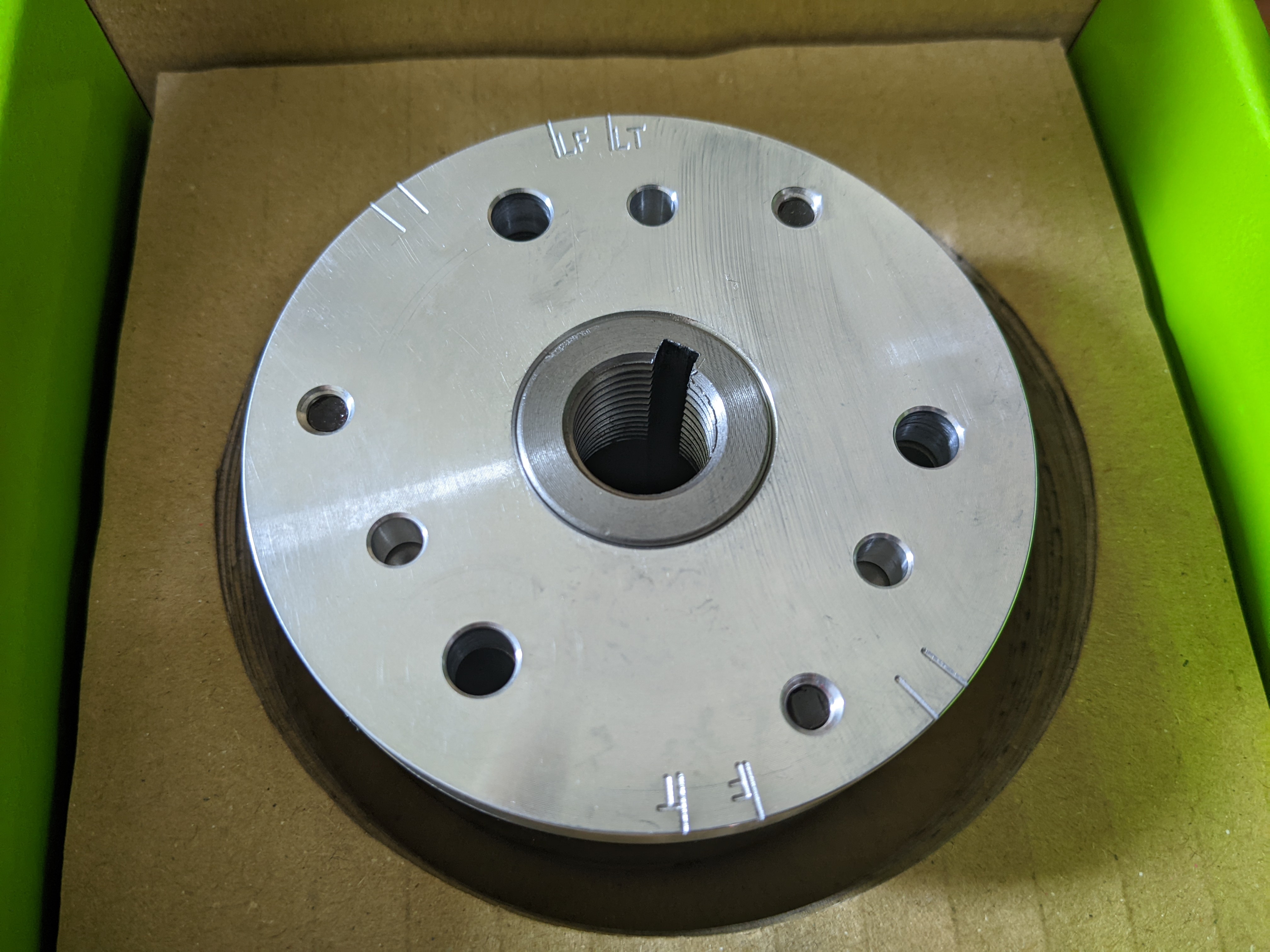
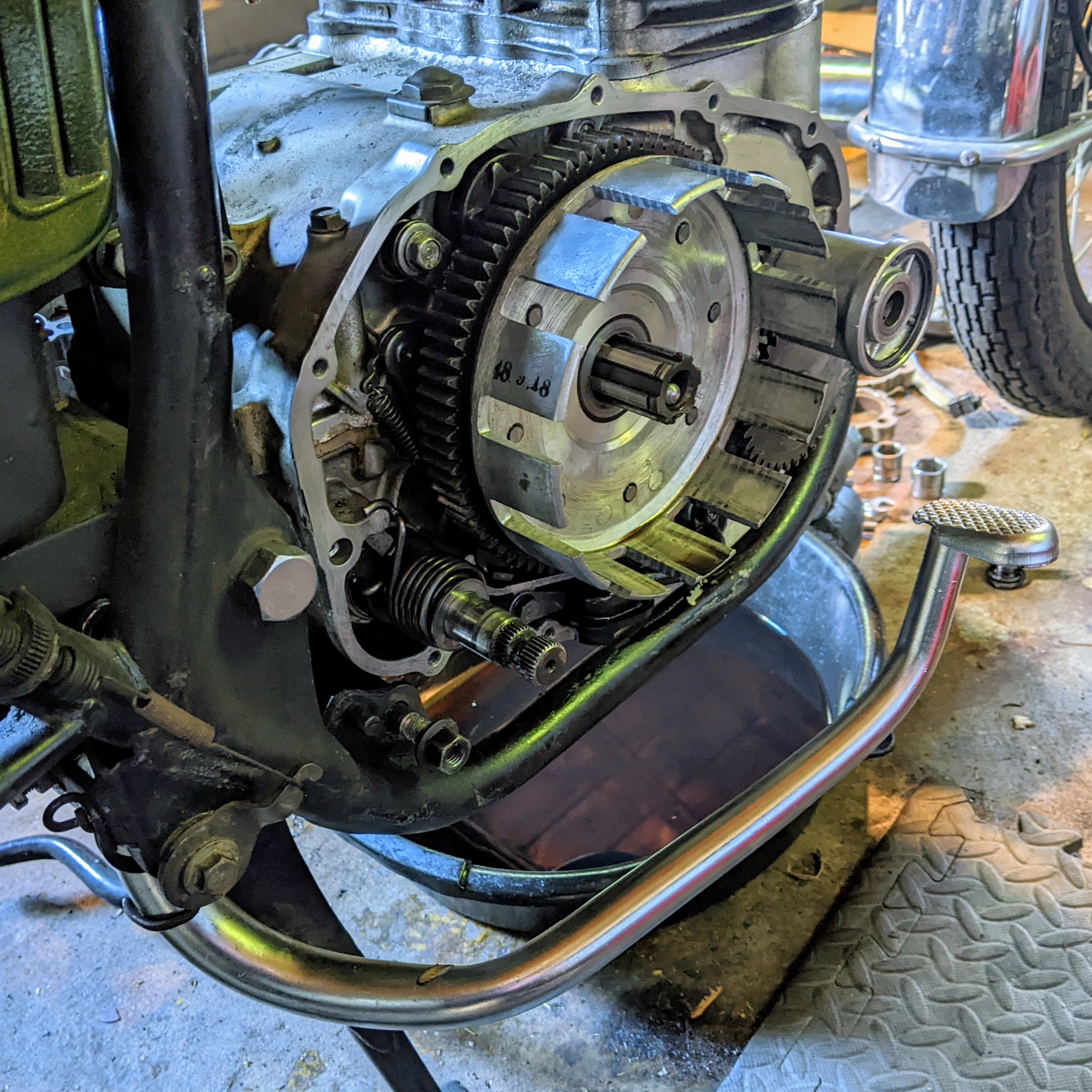
I completed most of the preparatory work for the installation of the new Rick's Electric rotor and the rebuild of the clutch. I spent a bit of time cleaning the gasket surfaces of the covers and case sides. I believe this may be the first time the left side cover has come off. Initially, the pan head screws were all coming out without a fuss, but the last one (bottom) was tough and I managed to strip the head my hand impact tool. I tried to hammer it back into shape using a punch, but I wasn't able to save it. I was able to remove it without any extreme measures and I have an exact replacement. I then pulled the rotor using a 16mm puller and removed the starter motor, starter gear, etc.

Clutch Side:

gjjaVS8.jpg
Si3hNET.jpg


Alternator Side:

H71zZwL.jpg
asWlF0w.jpg


The brake pedal was in pretty rough shape when this motorcycle was pulled out of a yard and the last ten years have done it no favors. I ordered a used one in good condition on eBay this morning. I will put everything back together after I receive the brake pedal, the rotor, and a plug for the starter motor.

RJx6YSW.jpg
WE1pG4T.jpg
 
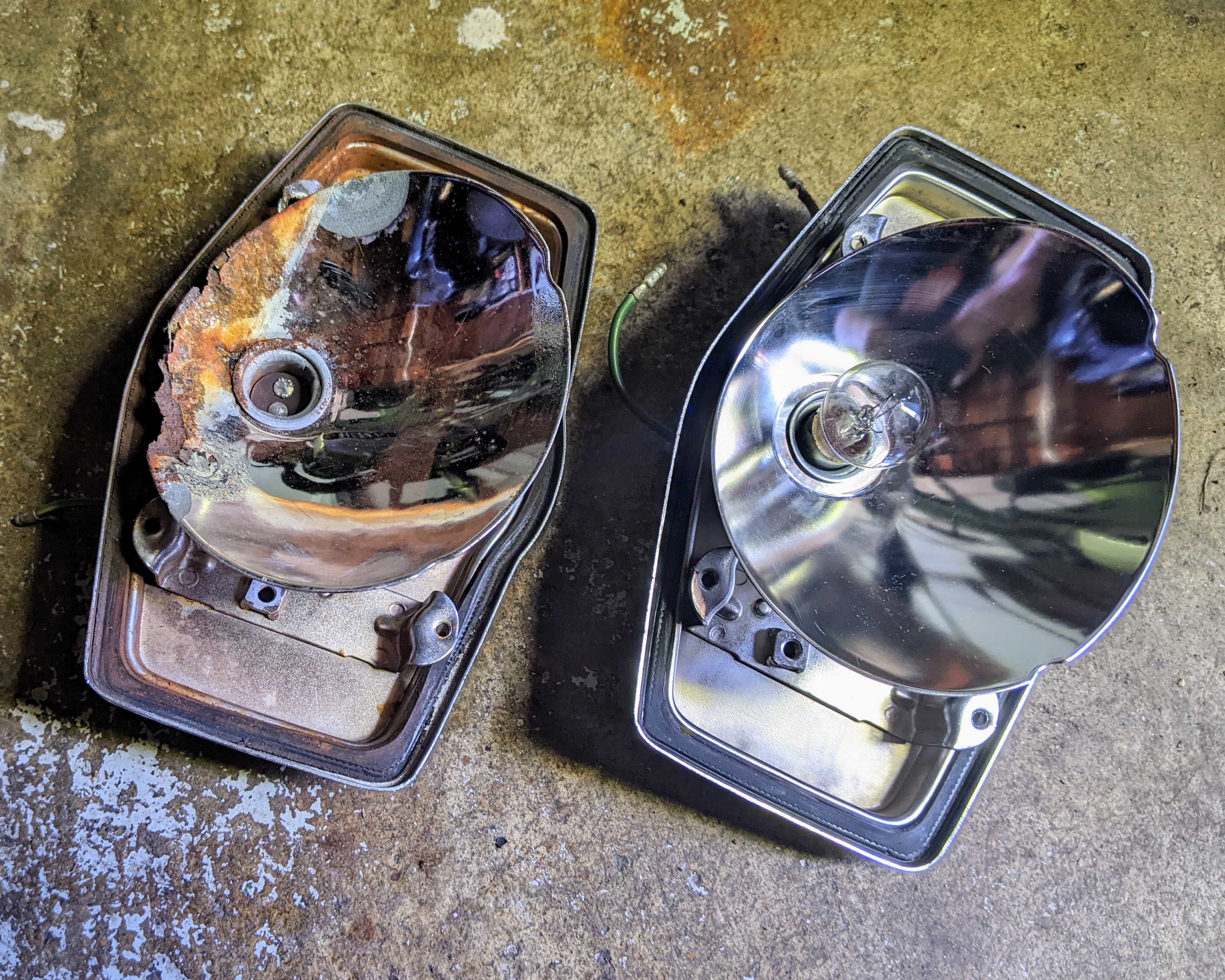
While the bike is waiting for parts, it's a good time to take care of small items that I'd been putting off. Today I replaced the original tail light assembly, which had spent many years as a fire ant home while the bike decayed outside in southern Georgia. The headers, mufflers, and turn signals were similarly affected — full of dirt and rust. The terminals were clean so, at the time, I decided to use the tail light assembly. I think I was operating on the principle that you put as little money into an unproven bike as possible. I've put more than 4,000 miles on it now, so it's time.

H0ANTyg.jpg


The used replacement came with a decent gasket and a working bulb — against my better judgement I decided to use the inherited bulb.
 
against my better judgement I decided to use the inherited bulb.
A bulb is a bulb, but if you didn't take it out of the socket to inspect the contacts, you should. They're known to both corrode and also wear down as they're basically lead, and if worn quite a bit from the single cylinder vibes it could easily lose contact later while riding and you might have no brake light.
 
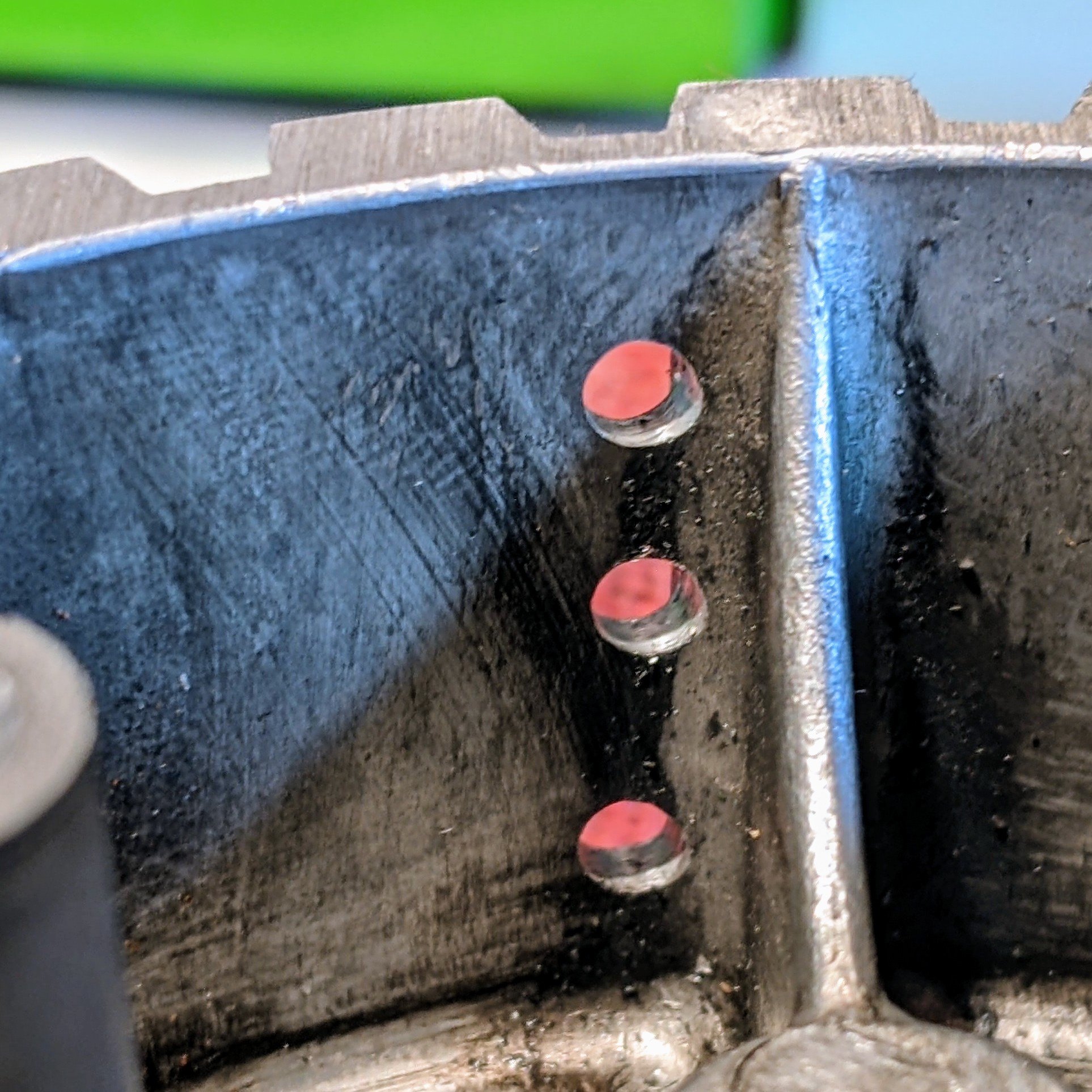
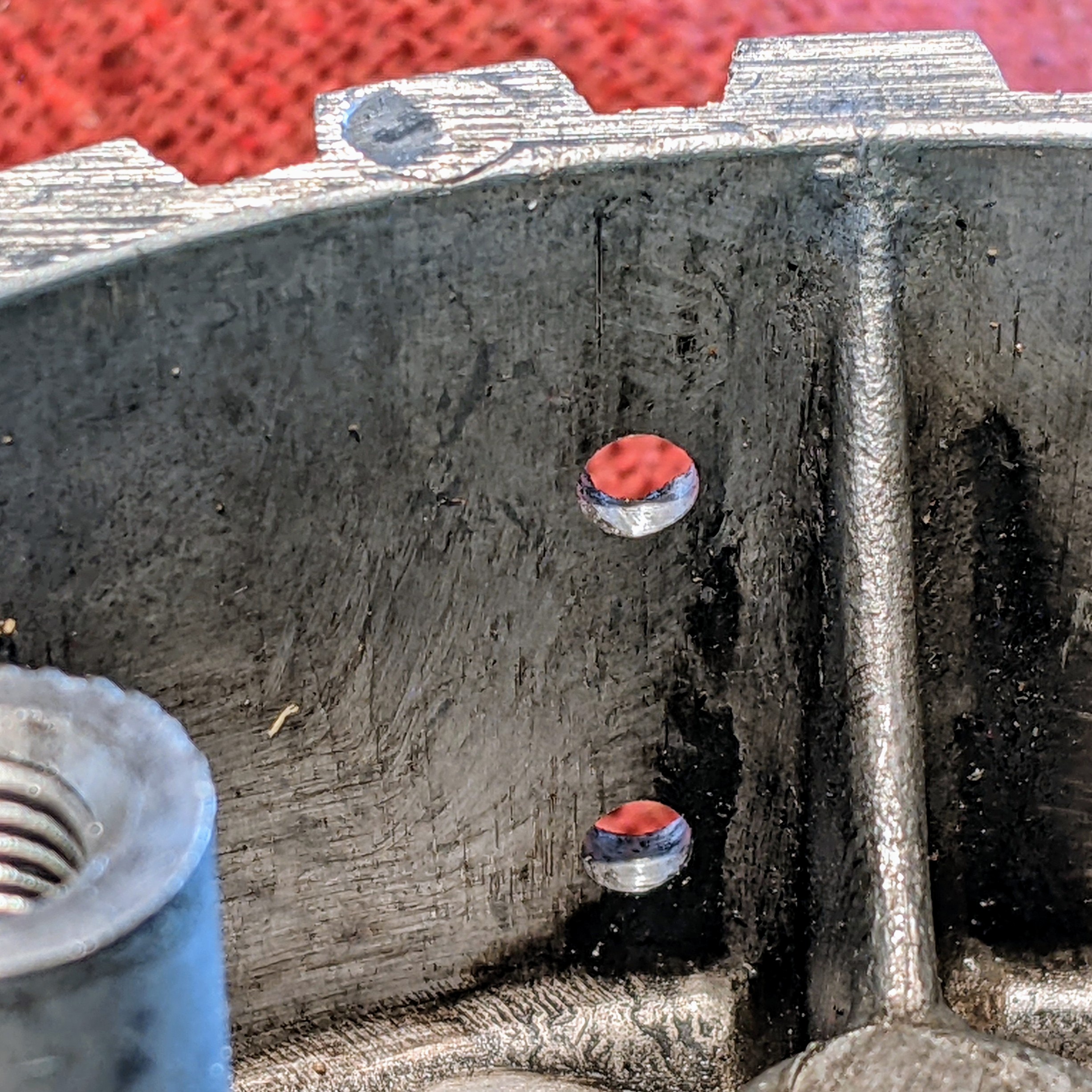
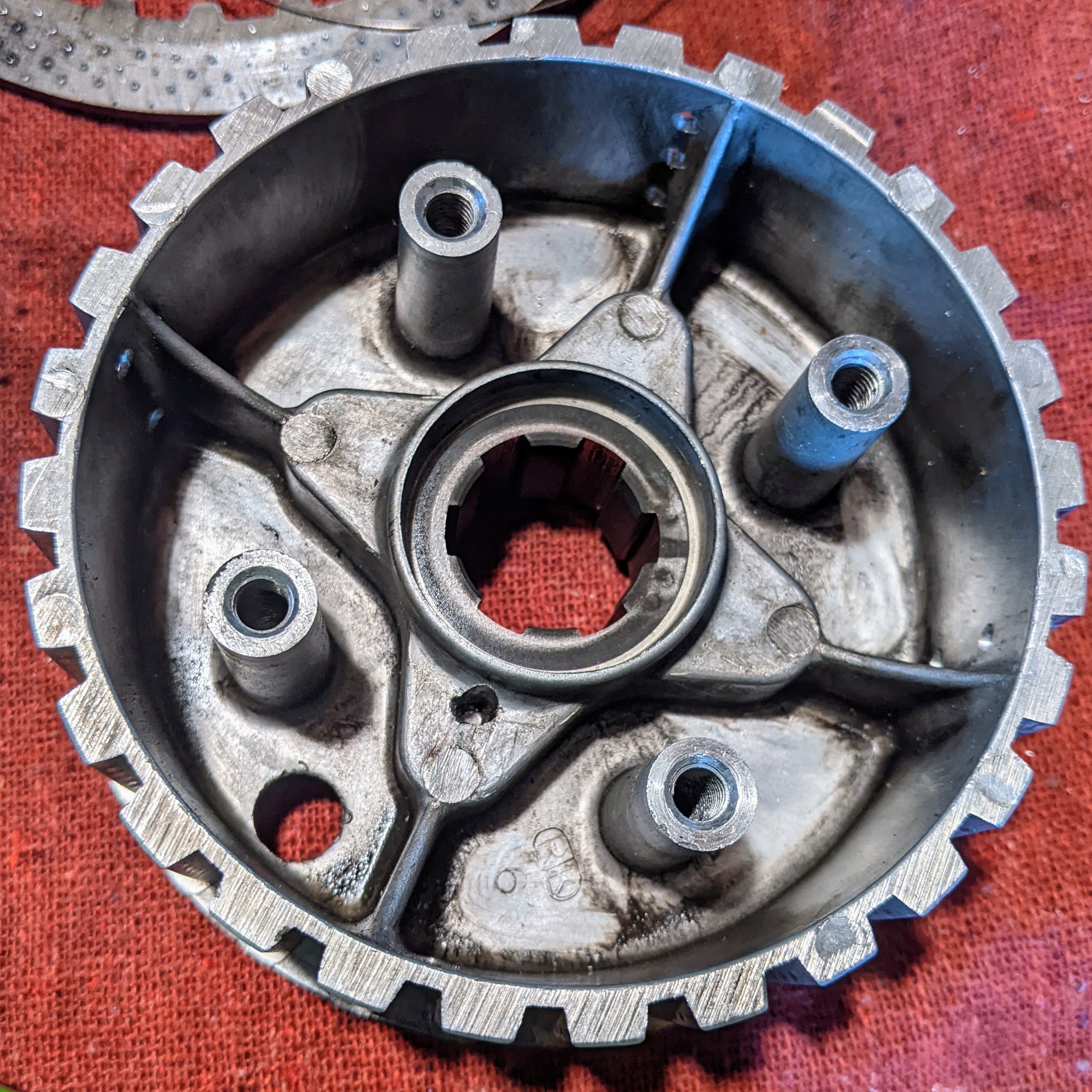
While your in the clutch side, it's a good idea to modify the inner hub.
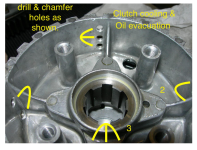
Clutch turns counter clock so drilling some 1/8" holes next to the webs increases oil flow and keeps plates cooler. (I've been doing it since 70's, modern bikes have had it since mid 80's)
Stagger the holes across the 'splines' where steels fit.
You can see where the holes need to be as there will be witness marks from steels rubbing.
 
Yep, I think they may be my pics but Eric and I were conversing a lot way back when.
I posted or sent him information and he 'prettied it up' (I still have a problem expecting people to understand what I say, back then I was teaching at MMI, high schoolers tended to work out their thumbs instead of listening, cell phones drive me nuts)
I think his were the first carbs I modified for K&N filters after I did a few sets of mine and had them on dyno.
Probably around 2008 ish?
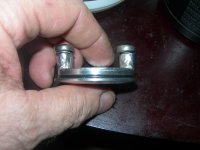
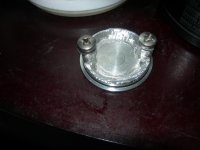
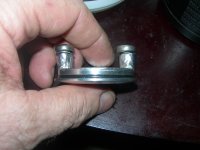
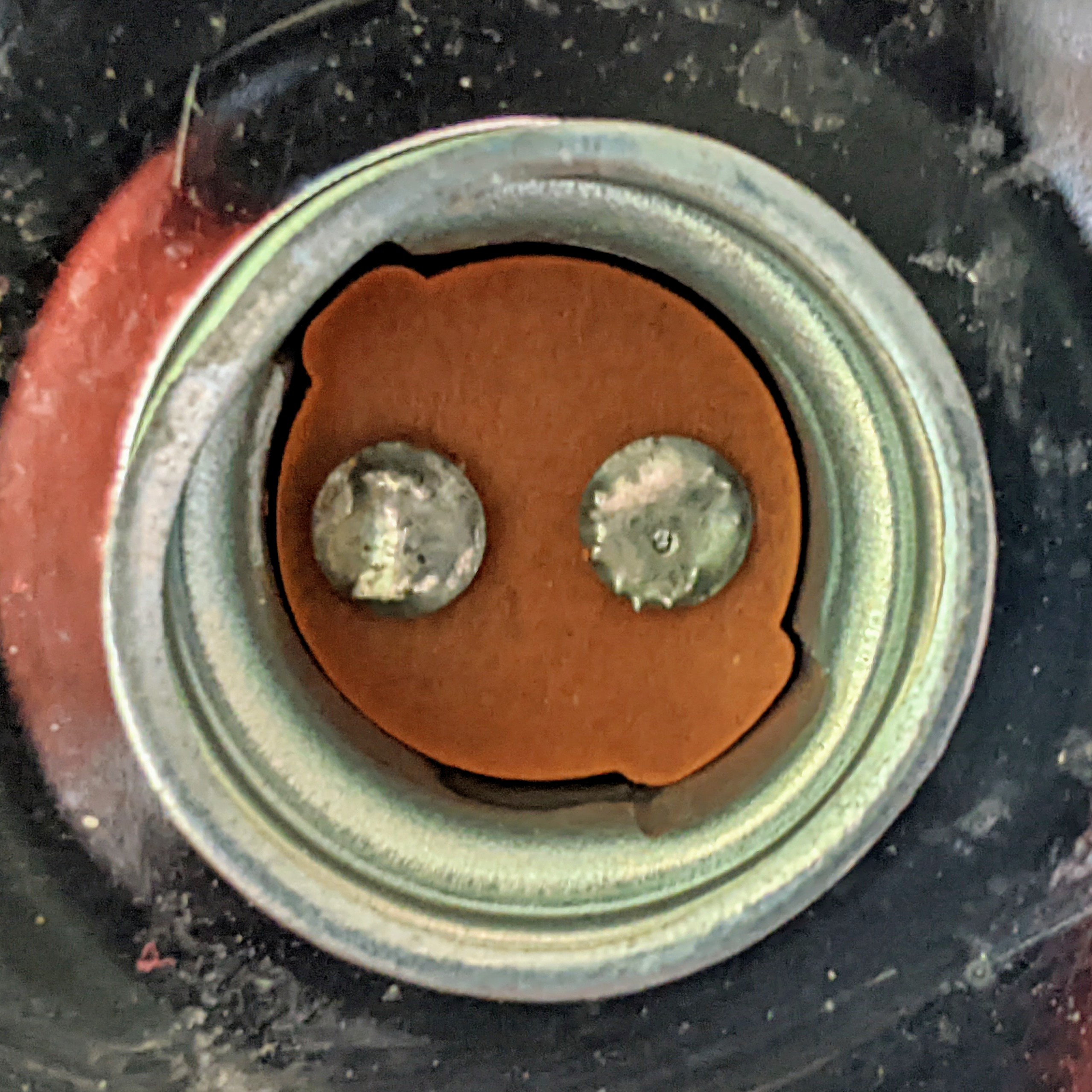
Anyway, pics of starter block off, I carved on it with Dremel, Looked better in garage :ROFLMAO:
starter block off 2.JPGstarter block off 3.JPGstarter block off 1.JPG
 

Attachments

  • starter block off 3.JPG
    starter block off 3.JPG
    1 MB · Views: 3
A bulb is a bulb, but if you didn't take it out of the socket to inspect the contacts, you should.
When you posted that, my initial thought was that I had checked it, but then I doubted myself. So, in the spirit of pictures or it didn't happen, I checked it this morning.

IpXBL7g.jpg


1M32S4n.jpg


My hesitation about the bulb was mostly about how much life it would have left, but I'm still using it for whatever it's got.
 
Yep, and the contacts on the bulb look a lot like what I expected to see, worn and dimpled a bit but still plenty usable. The older I get, the more I like to get every mile/dollar/minute out of things I pay for.
 
I made the initial 1/8" drilled holes in the inner clutch hub this afternoon — the result is not quite as pretty as the one in PJ's example, but will hopefully be effective.

WymlWsc.jpg


nw5dfF5.jpg


etrGJkM.jpg


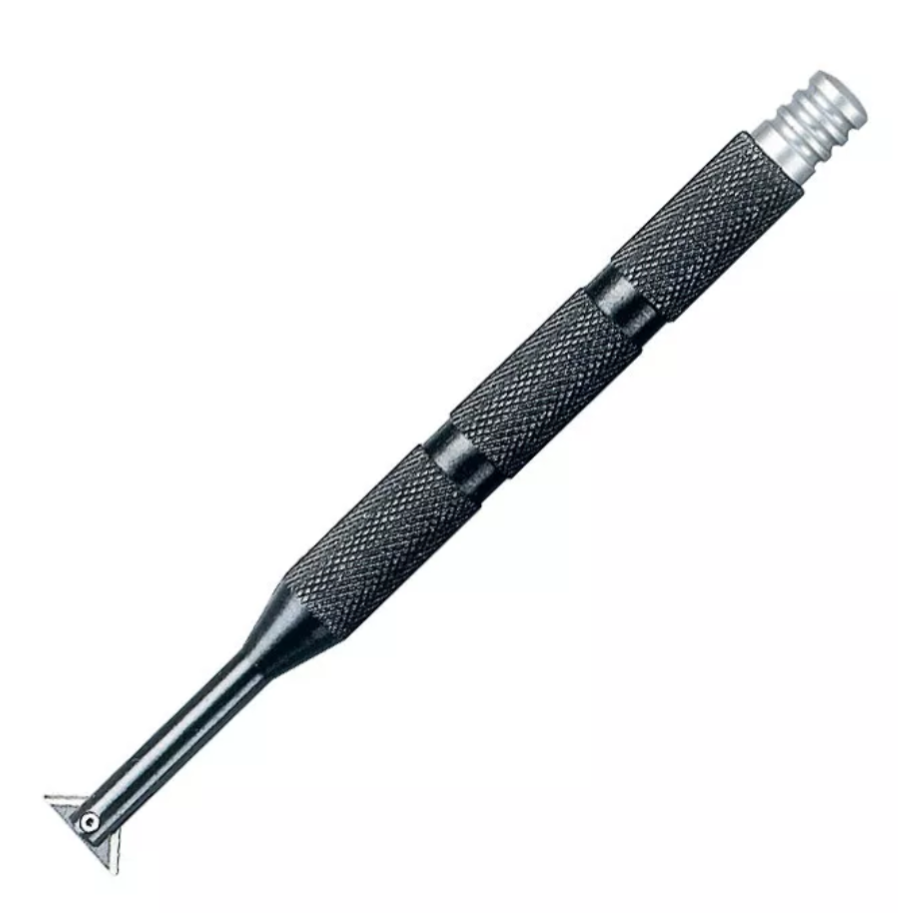
When I first saw the chamfers in PJ's picture, I was wondering what kind of sorcery was needed to do that. After a little searching online I found a few methods. Ultimately, I ordered a hand tool (mini reversible countersink) that should allow me to chamfer inside holes from 0.12" to 0.22". Once I have that I can finish the job and clean the part really well before assembly.

P91EeaC.png
 
Last edited:
Does it advertise as a rare earth magnet?
I could hope to call Rick's and reach the person who knows.. it's not as easy as it was back in the 90's.
 
Does this rotor have stronger magnets ?
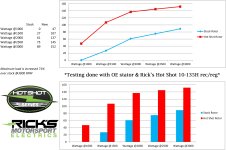
I don't know exactly how it's designed, i.e., whether it has the same quantity of stronger magnets or perhaps a greater number of poles than stock, but Rick's claims big power increases that you can read about here. I suppose I can have a look with the oscilloscope after everything is back together. I'm using one in my CB450 and have no complaints.

The description never seems to use the word magnet, despite using the word stronger.
 
I have no idea of the proper, or scientific, way to measure magnetic strength but I had 2 different rotors from my Dream and one was marked as stronger.
I made a crude test by setting each on a postal scale and lifting it with a small steel rod, then doing the other. There was a difference in upwards force required to separate the rod from the rotor, even though both units weighed about the same. Also, a side by side visual showed one had more metal in the steel composite plates in it's construction.
Supposedly there are places that can re-magnetize a rotor. Maybe they know how to measure the force.
 
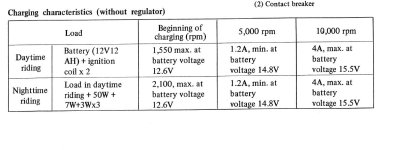
Stock Alternator/Rotor:

CB360 Charging system spec.JPG


So the output of stock alternator (assuming magnetic strength on rotor is close to new is the load of the ignition coils + 66 Watts (57+7W+3W=3W+3W) plus 4 amps charging @15.5 Volts
4 Amps of charging @ 15.5 volts is 62 Watts. So 66+62 = 122 Watts. The service manual Says:

Alternator Wattage.jpg

0.13 KW is 130 Watts.

Ricks :

Ricks Alternator.jpg


So, My opinion:

Stock in good shape , 130 W. , Ricks 150 W - Probably not worth it. it is not much more than stock. I had called Ricks and asked them about it.

Stock in bad shape? Since we can't get new, full strength magnets, Ricks is our only source for a good strength Rotor. So- Worth it for a new rotor.

My choice was to replace the lights with LEDs. Headlight is LED 12W on low, 16W on high beam. OEM was 25W/50W.

That reduced the load enough that battery stays charged even at idle. I also have Matts (Sonreir- Sparck Moto) regulator. I helped Matt in testing his product. It has lower internal resistance and regulates better than stock, so between the better regulator and lower load, the bike is fine electrically.

If my rotor ever loses it's ability to generate, I would replace it with a Ricks rotor. Old used rotors are a pig in a poke . They may be worse than your original.

Just keep in mind that magnet strength is not the only limiting factor. The max output is also limited by the number of coils, the turns in the coils, the gauge of the wire in the alternator. So Ricks Rotor will increase output, but how big that is depends how bad the original is, and the condition of the rest of your wiring.

My 2¢
 
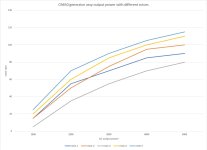
Funny, I did some measurements a while ago, after having issue's with the CB450 K0 rotor. I replaced the rotor some time ago (issue's with the starting clutch threads) and suddenly the battery overcharged. The original rotor was too weak, so I replaced some bulbs for LED's, but after the replacement of the rotor, I had to change them for bulbs again, keeping the battery from frying. This made me wonder how much the output of both rotors differed anyway, so I measured the output of 5 rotors, including the original rotor and the replacement rotor.

I took the rotors to my work, found an AC, rpm regulated, electric motor (max rpm 5000) and added a shaft that could take the rotors. I made a 3D printed setup for a NOS stator.

These are the results:

AC output power CB450 rotor.jpg


rotor output 2.jpg

Rotor 5 is the rotor that is used now, rotor 3 is the original rotor that was replaced by rotor 5. The other rotors are random picked out of my stash for comparison.

Unfortunately I couldn't find an electric motor, that was strong enough, with a higher RPM. I know that the headlight gets brighter when the RPM goes up at the CB450 K0. At the K0 there is no regulator, so output voltage generator over the battery load is equal to the voltage at the headlight.
 
Last edited:
Funny, I did some measurements a while ago, after having issue's with the CB450 K0 rotor. I replaced the rotor some time ago (issue's with the starting clutch threads) and suddenly the battery overcharged. The original rotor was too weak, so I replaced some bulbs for LED's, but after the replacement of the rotor, I had to change them for bulbs again, keeping the battery from frying. This made me wonder how much the output of both rotors differed anyway, so I measured the output of 5 rotors, including the original rotor and the replacement rotor.

I took the rotors to my work, found an AC, rpm regulated, electric motor (max rpm 5000) and added a shaft that could take the rotors. I made a 3D printed setup for a NOS stator.

These are the results:
Thank you Jensen. It was you, who pointed out the differences in the two rotors I had for my Dream. One was marked with an 'L', assumably for lower output. By some simple observation, I was able to see the other, unmarked, one had a stronger magnetic force. It too, required good regulation to avoid overcharging the battery.
Permanent magnets are interesting things. I don't think I was ever taught of any scale, or way to quantify the force exerted by them, but I'd think, one would exist to be used by persons in a commercial, experimental or manufacturing setting.
 
Stock in bad shape? Since we can't get new, full strength magnets, Ricks is our only source for a good strength Rotor. So- Worth it for a new rotor. ...Old used rotors are a pig in a poke . They may be worse than your original.
Agreed. I'm really glad that Rick's does offer viable replacement parts for our vintage bikes and I like to support any company that does so. With my 450k7, the original rotor was weak and I first replaced it with a pig in a poke. It worked, but would not charge at low rpm, whereas the high output rotor manages to do so with the stock stator.

The original rotor on the 360 is still working, too, but it's also 50 years old. I figured while I'm refreshing the bike in other ways, a new rotor will provide some peace of mind for future operation.

Your 2¢ is always appreciated.

This made me wonder how much the output of both rotors differed anyway, so I measured the output of 5 rotors, including the original rotor and the replacement rotor.

Thanks for sharing the results of your experiment, Jensen. It confirms the fact that various factors (strong blows, etc.) can lessen the output of rotors over time. I wonder how tight the variation would have been out of the factory. One would think rotor #3 would be rejected if it were new at the time of the test and maybe rotor #1 also.

How did you measure power in your experiment? What load was used? And was the power computed using rms values or by integration? Or maybe there is a device for such power measurements where you work?
 
Or maybe there is a device for such power measurements where you work?

Yes, Osciloscoop with a current probe

What load was used?

Shunt resistor

And was the power computed using rms values or by integration?

Multiplying the voltage and current signal, the product of these curves represents the power over time. The power is calculated by determining the average of this product over a period, thus by integration. I choose this method over other methods since it was not clear to me if the current and voltage were a precise sinus or shifted toward each other. The current probe and the voltage probe are galvanically separated, thus showing the real power, even if both waveforms are shifted.
 
Thanks, Jensen. I figured you would use integration and I should know already that you have excellent equipment at work!

Was there a noticeable phase difference between voltage and current?
 
I don't know exactly how it's designed, i.e., whether it has the same quantity of stronger magnets or perhaps a greater number of poles than stock, but Rick's claims big power increases that you can read about here. I suppose I can have a look with the oscilloscope after everything is back together. I'm using one in my CB450 and have no complaints.

The description never seems to use the word magnet, despite using the word stronger.
Lol :)
I'd like to know the process Rick's(or other's who re-magnetize permanent magnets)uses to strengthen the magnetic power of those Hot Shot rotors;I looked on the site but couldn't find that info;probably a 'trade secret'.
 
I'm curious about how the modern regulators work, if they use SCR's that shunt the peaks back to the coil, that's what the original ones used. And maybe the modern ones do as well, but they would have better modern SCR's. A SCR you can only turn on and then the voltage has to reverse before it turns off. Whereas a transistor can be toggled on and off more on the fly like a switching regulator or PWM dimmer. The excess power needs to be consumed somewhere, and I guess sending it back to the coil in some form is the most convenient thing. Now a transistor or SCR is not a perfect switch(they have an on-resistance) and they produce heat, that is what the heat sink is for and why it gets warm. I would think a modern regulator would use a transistor to throttle this load during it's peak, but maybe the more crude SCR has some advantages. So I believe the regulating action is primarily dumping the load back onto the stator coil - like if you just shorted it out.

I will try and get some measures with my current probe around a stator wire at some point, granted my CM400 is a bit different being 3 phase, but I believe it's roughly the same general scheme as the old bikes with 1 phase, or 1 and a half, or whatever you might call it.

And maybe you could determine the health of your stator/rotor on the bike while running, by looking at these with the scope and current probe, maybe apply extra load, like another headlight filament to stress it.
 
I have no idea of the proper, or scientific, way to measure magnetic strength but I had 2 different rotors from my Dream and one was marked as stronger.
I made a crude test by setting each on a postal scale and lifting it with a small steel rod, then doing the other. There was a difference in upwards force required to separate the rod from the rotor, even though both units weighed about the same. Also, a side by side visual showed one had more metal in the steel composite plates in it's construction.
Supposedly there are places that can re-magnetize a rotor. Maybe they know how to measure the force.
The 'quick and dirty' way we tested at shop, stick it under a steel bench. If it doesn't fall off it's OK.
It wasn't scientific but unless you sent it to a physics lab there wasn't really any other way to test back in late 70's
 
Yes, Osciloscoop with a current probe


Shunt resistor


Multiplying the voltage and current signal, the product of these curves represents the power over time. The power is calculated by determining the average of this product over a period, thus by integration. I choose this method over other methods since it was not clear to me if the current and voltage were a precise sinus or shifted toward each other. The current probe and the voltage probe are galvanically separated, thus showing the real power, even if both waveforms are shifted.

Thanks, Jensen. I figured you would use integration and I should know already that you have excellent equipment at work!

Was there a noticeable phase difference between voltage and current?
Thanks guys. My comprehension lags behind my appreciation of these responses, I will glean what I can. :)
 
Did you see that @Mydlyfkryzis provided a rough explanation as well as a schematic for the combo rec/reg units earlier in the thread?
Yes, thanks, that's what got me thinking about it, and I'm just trying to understand how they work and what the limitations are. I have not thought about it much up to this point, my CM400 with original equipment seems to work just fine, but I have not studied it other than check the battery voltage while idling. I can see now that the older bikes are more fickle, where they can't charge at low idle speeds.

A modern car alternator is quite a different arrangement where it uses another set of coils instead of magnets and throttles the produced power at the source. Modern power supplies, buck and boost converters, chop on and off at high frequencies for super good efficiencies, but it appears we lag behind on technology advances on 50 year old bikes. So it would appear a modern regulator replacement uses the same technology as was used 50 years ago, and just has some gains with newer better components, like slightly better SCR's.
 
Did you see that @Mydlyfkryzis provided a rough explanation as well as a schematic for the combo rec/reg units earlier in the thread?
One thing I think he got wrong was this statement:
"The grounding effect is proportional, so the more past 15VDC the sense wire gets, the more the Yellow AC voltage from the alternator is grounded."

The SCR is on or off, no in-between, and is only turned back off when the input changes phase. In effect it is a crude form of chopping on/off at the limited frequency of your AC power signal. The battery tends to average this out.
 
I have a Pamco Ignition. Made by a grumpy old man (Pete) in South Carolina. He retired from doing these in 2019. I helped him develop the product (Testing, installation- I wrote up install instructions and did a schematic) for the CB360. So it is no longer available, but was a decent product. The Pamco unit has pre-programmed advance, so no mechanical advance. Full advance is at 3500 RPM.

Back when I was doing this (about 2013), There were a couple of choices. The ones that used the mechanical advance suffered from the same fate, our old bikes that have worn out parts. A good electronic ignition with mechanical advance has issues if the advance assembly is worn, the springs may have lost there tension, the advance mechanism can bounce. The points actually stabilize/dampen the point cam, so removing the points allows the points cam to bounce around a little more than it did with the points on. The electronic systems with mechanical advance can be good, but only if your old mechanical advancer is is good shape.

So I went with the Pamco Unit because it is non-mechanical on the advance.
Are you sure the Pamco unit had advance? I thought they were just transistorized points relying on mechanical advance. Did it use a microprocessor? Just curious. Some of the CDI systems would do the advance using analog delays, capacitors, but the points system has this long dwell time that is tougher to do.
 
So @Mydlyfkryzis, I apologize for my last post. I googled Pamco ignition with advance and did come across some postings indicating he did come out with a later version with this. Interesting it is our AD that gives a reference back to VHT here about someone talking about it:

I get a kick out of googling about motorcycle questions and finding links to the old site or other sites and seeing some of the same wonderful crew we have here.

But the post above only mentions that he made one with advance, but then focuses on fixing an older one with out it. So I'd be curious if he used a micro on that one with advance as I can't imagine how you would do it without one. I suppose I should try googling that for further references.
 
And sure enough google finds PamcoPete mentioning MCU and the dreaded EMF, so yes, it was a box with a MCU(micro) in it:
 
So @Mydlyfkryzis, I apologize for my last post. I googled Pamco ignition with advance and did come across some postings indicating he did come out with a later version with this. Interesting it is our AD that gives a reference back to VHT here about someone talking about it:

I get a kick out of googling about motorcycle questions and finding links to the old site or other sites and seeing some of the same wonderful crew we have here.

But the post above only mentions that he made one with advance, but then focuses on fixing an older one with out it. So I'd be curious if he used a micro on that one with advance as I can't imagine how you would do it without one. I suppose I should try googling that for further references.
No apology needed. No harm is questioning and verifying.

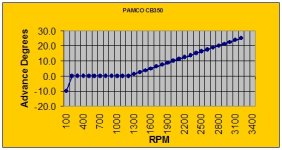
FYI, this is the advance curve. Except for the below 250 RPM , the curve mimics the stock advance curve. What Pamco Pete did was retard the timing below 250 RPM so starting would be easier. And it is. The stock centrifugal timing could not do this little trick.

Advance Curve.jpg
 
Early this morning, I installed the replacement brake pedal. It's kind of a pain to do with the swingarm on the bike because the cotter pin on the brake rod is essentially inaccessible. I found a way to manipulate the pedal/rod after disconnecting the rod from the brake arm that enabled me to remove the pin, then reversed those steps during reassembly.

Position in which the pin could be removed/replaced.

G9IHiNw.jpg


Completed installation.

9n9fDzN.jpg


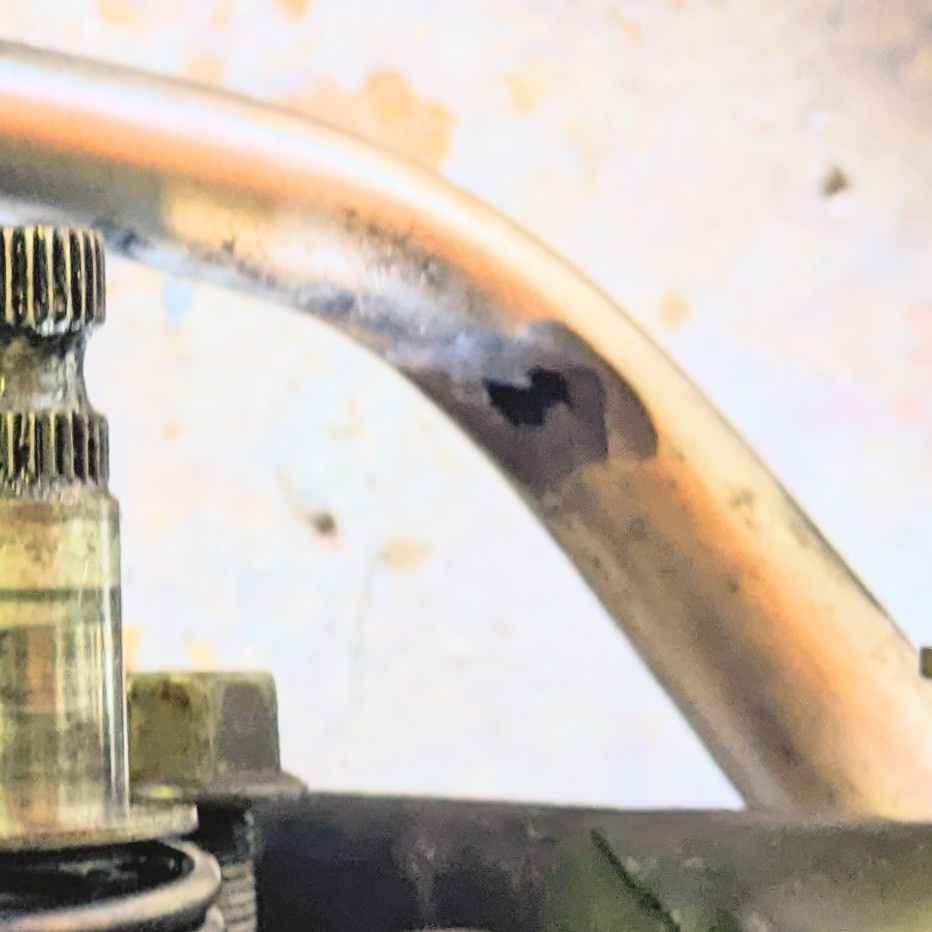
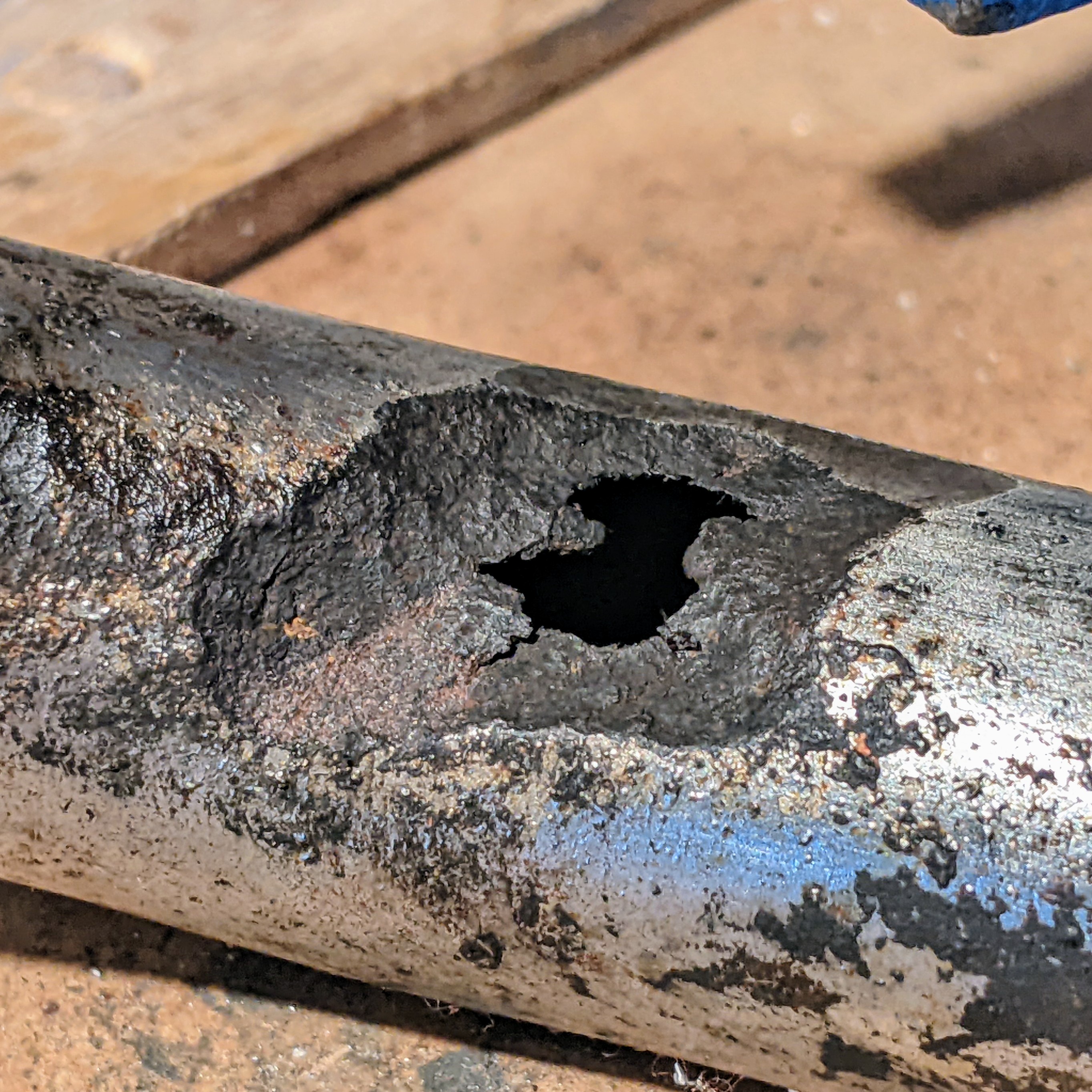
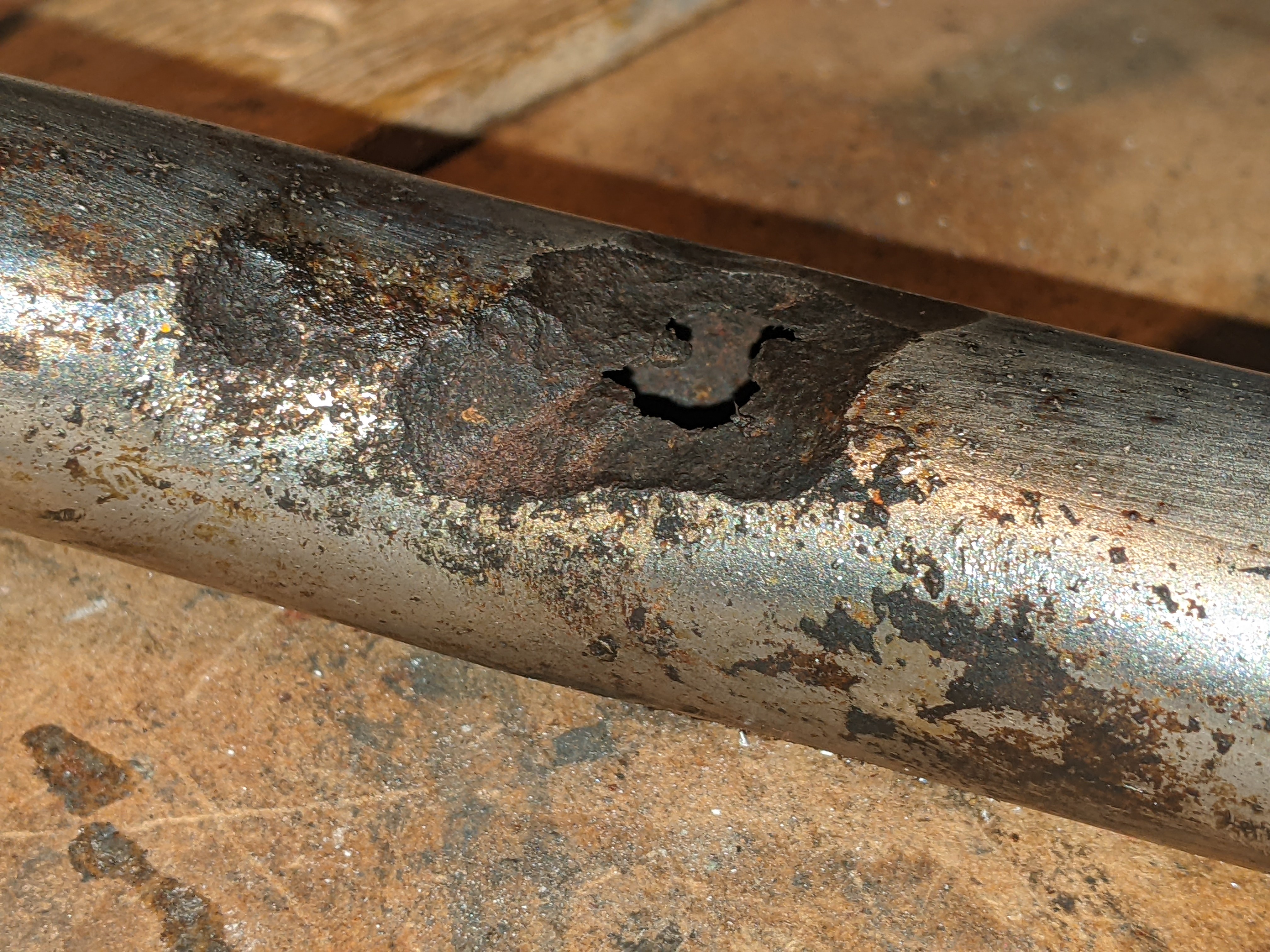
Close-ups of rust/wear damage to the brake pedal arm.

mRxOPRE.jpg


On03kI8.jpg
 
So that's the old one with the damage and rust hole. 'New' one looks much better.
Yes — I believe the "groove" in the pedal arm is cut by the seam on the muffler, when the pedal return height is not adjusted properly. I was probably guilty of that with the original to some extent and will keep an eye on it going forward.

The "new" one came from mistermonkeyclaw — I've lost track of how many parts I've purchased from that seller.
 
Last edited:
No apology needed. No harm is questioning and verifying.

FYI, this is the advance curve. Except for the below 250 RPM , the curve mimics the stock advance curve. What Pamco Pete did was retard the timing below 250 RPM so starting would be easier. And it is. The stock centrifugal timing could not do this little trick.
I have a Pamco unit on the 350 from Outobie (John Knox) that I know little about, other than I can see the original advancer base under it. The bike needs other work before I get it running but hope you can answer any questions that come up. I'd like to keep it and take good care of it so, if you've any suggestions, let me know.
 
I have a Pamco unit on the 350 from Outobie (John Knox) that I know little about, other than I can see the original advancer base under it. The bike needs other work before I get it running but hope you can answer any questions that come up. I'd like to keep it and take good care of it so, if you've any suggestions, let me know.
I'm sure John would have already put a modern rec/reg unit on your 350, AFAIK that's the most important thing to do to prolong the life of one by preventing voltage spikes from ruining it.
 
I replaced my clutch springs in 2017. I looked through my eBay purchase history this morning and found that they were EBC springs, advertised as 10% stiffer than stock. I imagine heavier springs could make it easier for the plates to get stuck together and, since this is not a high torque motor, stock springs should be fine.

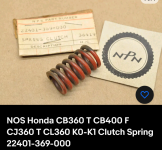
I saved the original springs and measured them yesterday. Their free lengths were no less than 31.5mm, whereas the FSM lists 31.25mm as the standard value with a service limit of 29.7mm. They all have a bit of red paint on them very similar to this photo from an NPN listing.

Screenshot_20240603-064039.png

Does the red paint indicate anything special, i.e., could it explain why the springs are longer than the standard value? I would assume that longer springs will be heavier and, at this point, I don't think I want or need heavier springs.
 
I'm sure John would have already put a modern rec/reg unit on your 350, AFAIK that's the most important thing to do to prolong the life of one by preventing voltage spikes from ruining it.
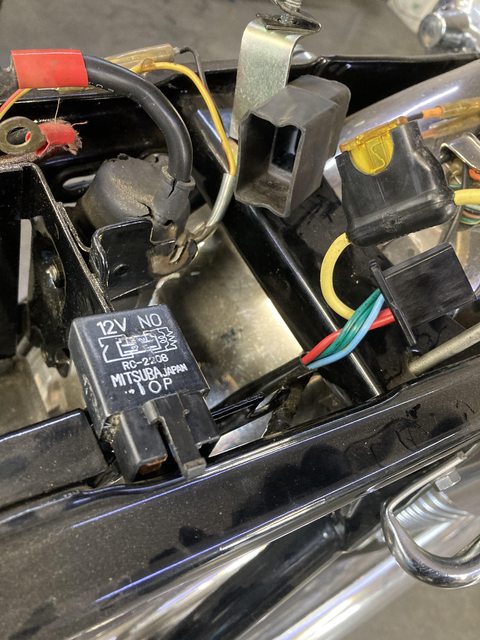
Yes he did. He also put a rely for lighting to draw from the battery, which may also help the reg/rec control voltage.
CabwbYNl.jpg
 
Back
Top Bottom