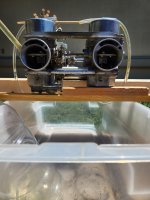
1981 CM400T and so it begins...

Mike4800

Member
Joined
Aug 10, 2025
Total Posts
26
Total likes
34
Location
Bakersfield, CA
My first bike was a 1971 Kawasaki 2-stroke 175cc Enduro I bought new and sold after a couple of years when I got my first new car. Then came marriage, kids, career, and now retirement. A month ago I bought my second bike, "Little Red", a 40 year old non-running wallflower with 6200 miles. I bought it to ride nearby backroads and not to be a period correct restoration. I just want a bike to comfortably and SAFELY cruise and get that wind in my face back. This bike was so forgotten its even dropped out of the CA DMV records system. But I do have a signed title and we go to meet the CHP on Sept 2 for a vehicle inspection to verify VIN and get clearance to reregister it. I hope to have the bike at least running somewhat by then. BTW, I do have a current CA motorcycle license, just rusty.

Here's what I've done so far, with an emphasis on safety:

Bike came with no keys so had new key impressioned so I can operate key switch and open gas tank. Key doesn't work on fork lock or helmet holder. Any suggestions?

Front caliper was seized: No brake fluid left. All had turned to rust and dust. Replaced master cylinder as original was hopelessly pitted. Replaced plugged brake line. Rebuilt caliper and replaced pitted piston and installed new pads. Front brake now works well and bike is MUCH easier to move.

Electrics totally dead: Replaced battery, turn signal flasher and horn. All electrics are working properly now.

Cables: throttle and choke stuck. Lubed and freed up cables. Cleaned and lubed speedo and tach cables.

No spark: Cleaned corrosion out of CDI multi-pin connectors under seat. Replaced spark plugs and boots. Have a reddish thin spark, not the fat blue one I hoped for.

Carbs are plugged: Began cleaning and rebuilding after watching several YouTube videos. Just found the VHT thread on rebuilding the CM400T carbs and am in the process of doing what I can. I rebuilt car carbs as a young man, but these are much more complicated than those. I'm waiting for the WERA 4mm screwdriver so I can try to remove the secondary jets/emulsion tubes which are very stuck. May also need to use the torch trick to get them out. If I can get the carbs working sufficiently to get the bike to start and somewhat run before its CHP date will be a victory. I did install a 4into1.com rebuild kit as I hadn't read the VHT carb thread yet. I suspect carbs will be a work in progress for some time.

Still to do before I can ride, assuming I get the bike running: 1) Gas tank has no rust so need to drain old gas and teardown and clean fuel petcock valve. Lube rusty chain. Air and Oil with filter change. Add fuel line filter. 2) Test ride 5-10 mph around the block to see if bike operates at least near normal. 3) If passes the can I get it to move under its own power test and CHP clears the bike for registration, I'll register the bike and decide if it's worth additional work. 4) If going ahead, replace 40+ year old tires, rear brake shoes, clean and repack front and rear wheel bearings (should I just replace them, are aftermarket sets ~$25-$30 OK to use?), replace the chain, and drain and refill the front fork oil.

If bike is running well, I hope to upgrade lights, especially headlight to LED's.

Always looking for good advice and I'll keep you posted. Thanks.
 
The helmet lock has a code stamped on the back side, of course the one time use bolt has to get cut off for access. That code will work for it and the fork lock. There's also a key code stamped in the base of the ignition switch, means taking apart a bunch for access.
Rusty chain, I can guarantee at least one link will be frozen. Just replace it.
Same for the tires and original brake shoes, they are both dangerous to use.
On the carbs? take it slow and careful. Plan on a couple days at least if not slower. Time and patience.
Might read this https://www.vintagehondatwins.com/forums/threads/basic-checklist-for-the-new-to-you-old-bike.86/
No need for LED's, there's plenty of power being generated, 170w.

NOTE: CHP is doing a VIN check, not a safety check. I literally had them check a CM400C that was partially disassembled but had the engine and was barely a roller.
 
Ignition and locks have a number stamped on faces. Keys available by number. Our member 12ozPBR sells them cheap.
I already got the new key + a spare. Took out the ignition switch and took it to a locksmith. Cost me $41 to get a new key and fix a stuck gas cap lock. The number on the switch didn't work, only put the locksmith in the ballpark. Will try some penetrant on the helmet and fork locks and see if they will free up. That's lower priority for now, until I can get the engine running.
 
The helmet lock has a code stamped on the back side, of course the one time use bolt has to get cut off for access. That code will work for it and the fork lock. There's also a key code stamped in the base of the ignition switch, means taking apart a bunch for access.
Rusty chain, I can guarantee at least one link will be frozen. Just replace it.
Same for the tires and original brake shoes, they are both dangerous to use.
On the carbs? take it slow and careful. Plan on a couple days at least if not slower. Time and patience.
Might read this https://www.vintagehondatwins.com/forums/threads/basic-checklist-for-the-new-to-you-old-bike.86/
No need for LED's, there's plenty of power being generated, 170w.

NOTE: CHP is doing a VIN check, not a safety check. I literally had them check a CM400C that was partially disassembled but had the engine and was barely a roller.
Already have shoes, and will get tires and chain after CHP VIN check. I just want to see if I can get the bike moving SLOWLY under its own power before doing the replacements. Just want to check if I have first & second gears and neutral with nothing frozen in-between. If the tranny's not trashed, I'll move forward into the rabbit hole. Thanks for the CHP note. I really didn't know what to expect from them. But it would help if the engine starts to make the bike easier to load onto a trailer to take it down to the CHP. I really don't want to use the clutch/starter/first gear to get a non running bike up the U-Haul trailer loading ramp. My wife and I are 75+ so muscling it really isn't an option.

Carbs are definitely slow and careful. It's hot here, 100+ in the afternoon garage so most work done early in the day.
 
The odds of transmission issues are between slim and none, :LOL: Good possibility the clutch plates are stuck but after the engine is running and hot engagement usually clears it on these models.
Understand the muscling bikes around and up ramps, turning 75 end of the month.(n)
After CHP it's back to DMV to finish the paperwork and get the reg.
 
Here's the big update I promised, remember I did a bunch of stuff listed in my first post just to "safety" the bike a bit and see what I could fix quickly:

TL;DR: It starts and runs on left cylinder. Right carb overflowing.

Long version, remember bike hasn't run in decades:

1. Carbs were thoroughly gunked up. Lots of plugged jets. Able to remove secondary jets/emulsion tube with Wera screwdriver (thanks for tip!) and cleaned everything and I think I got all the jets/passages flowing freely. Gumout and my new ultrasonic cleaner with Dawn are my new best friends. Installed 4into1.com rebuild kits in both carbs. Everything looked good.

2. Tried to add air to the front forks, but my bicycle pump is not working properly. I used my air compressor hose, filled the hose w/air and cut off the supply from the tank. Saw the forks rise when air added. Reduced pressure to about 12 PSI and will see what happens.

3. Reinstalled carbs. What a B@#$%. Used new intake manifolds but the air box boots were really tough. Used PBlaster silicone spray lube on the boots and pushed them into the air box about 1/2"-1" for more clearance. Right boot is a bit damaged due to age where it clamps to carb, but clamp band fits all the way around. Makes me wish I had fuel injection!

4. Ended up with about 3 metal collars that must have fallen off bolts when they were removed and I didn't see where they came from. Was unable to get the rearmost bolt securing the air box reinstalled. The plate/nut that goes between the rear fender and the bottom of the air box bolt hole slipped off my finger and I now think is caught between the fender and air box as I didn't hear it hit the ground. I'll go after this after I get the bike registered as I have to remove the rear rack and fender to get to the bottom side of the bolt to attach a nut.

5. Gas tank was pristine so drained old gas, removed and cleaned petcock. Added fuel filter when reinstalled tank. Added 1 gallon on Regular gas with StayBil. No leaks.

6. Opened petcock and waited for filter and carb bowls to fill with gas. Pulled the choke.

7. Engine started after about 2 seconds of cranking and would idle OK. Also responds to throttle with no backfiring or other odd sounds. Stopped engine and heard dripping. Found right carb dumping gas out the overflow tube. Closed petcock and restarted bike and ran engine until fuel in carbs ran out. Checked exhaust headers and found left was hot and right was cold.

I'll need to troubleshoot the right carb. My guess is the float valve is not working properly. I have the non-adjustable white plastic floats and they had no fluid in them when reinstalled. Is there any reasonable way I can troubleshoot this WITHOUT removing the carbs from the bike? Suggestions appreciated.

It's going to be 103+ the next few days, so I'll probably just hide inside until it cools down some. With the carbs run out of fuel, how long can I expect fresh gas w/StayBil to be OK in the tank? I don't want to have to go through cleaning the carbs again.
 
Overflow: turn the petcock on and start hitting the float bowl with a screwdriver handle to jar the float needle as it fills. Typically it's fuel deposits in the seat or on the valve causing this.
Those collars you found go inside the airbox mounts, see #1 and #19 https://www.partzilla.com/catalog/honda/motorcycle/1981/cm400t-a/air-cleaner.
Stabil will keep pump gas good for a month or more, non ethanol will last for 1+ years.
Everyone hates R&R on these carbs/models. Lots of colorful language on display.
 
Again, the engine started within a couple of seconds. Tried rapidly hitting the float bowl while opening the petcock and starting/running the bike. The overflow persists. Maybe try removing the float bowl and valve while on the bike and replace with new Honda valve? Will I have enough access to do that with the carb on the bike? Could I have a bad drain screw? One had a bit of a notch worn in it (I don't remember if it went back into the right carb) and I had to use a generic O-ring from an O-ring kit and wasn't really happy with the fit.
Noticed something. The right exhaust pipe is still cool at the engine after running the fuel out of the left carb, which indicates the right cylinder is not firing, BUT, I tried touching various spots downstream from the engine and found the right muffler is hot to touch, so something's combusting somewhere on the right side. I've got stock exhaust with no crossovers.
Will the overflowing right carb cause the symptoms I'm feeling in the right exhaust?
 
Since there's an overflow on the right carb then excess fuel is being fed to that cylinder. Gotta fix the leak issue first. Might be the drain screw, O-ring has zero effect since the taper is the seal. The O-ring just keep dirt out of the screw. The screw taper can be filed smooth.
Might be a cracked overflow stand pipe. If you can drop the bowl w/o removing carbs great.
 
I'm 95% sure I can get the float bowl off without removing the carbs from the bike. I prefer to throw $$ at the problem instead of having to do the physical contortions again to remove, maybe fix, reinstall, and then have to lather, rinse, repeat until everything is fixed. So...I've got a new drain screw coming, which shouldn't be a problem to R&R with the float bowl off. But what about the float valve? I thoroughly cleaned the seat and installed a new 4into1.com float valve when I had the carbs off the bike. No adjustments needed as I have the plastic floats. Should I attempt again installing new float valve too? Maybe getting an OEM part from my local Honda dealer. I'm pretty sure I have sufficient access to do so, but I will be putting it back into the carb with the carb in riding position rather and on its back as it would be on a bench. Anybody done that before?
 
I'm 95% sure I can get the float bowl off without removing the carbs from the bike. I prefer to throw $$ at the problem instead of having to do the physical contortions again to remove, maybe fix, reinstall, and then have to lather, rinse, repeat until everything is fixed. So...I've got a new drain screw coming, which shouldn't be a problem to R&R with the float bowl off. But what about the float valve? I thoroughly cleaned the seat and installed a new 4into1.com float valve when I had the carbs off the bike. No adjustments needed as I have the plastic floats. Should I attempt again installing new float valve too? Maybe getting an OEM part from my local Honda dealer. I'm pretty sure I have sufficient access to do so, but I will be putting it back into the carb with the carb in riding position rather and on its back as it would be on a bench. Anybody done that before?
Yes it can be done, I'm no expert but I removed the bowls on the bike to change jets and adjust the float.

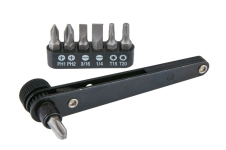
I used one of these with JIS bits. But a small 1/4 drive ratchet may work too. DO CHECK THAT SAND PIPE FOR CRACKS if you remove the bowls like @LongDistanceRider says.
1755898087309.png
 
I'm assuming the proper float level is when the gas in the tubing is lined up with the top of the float bowl/bottom of the carb like I see in your photo, right? As long as that is what I get I should be OK. If so, then I'll lower the tubing below the bottom of the float bowl and make sure I've stopped the leak. BTW, I'll drop by our local Honda dealer tomorrow and get an OEM float valve, just to be on the safe side. The left side carb isn't leaking and appears to be working OK so far.
 
Yes it can be done, I'm no expert but I removed the bowls on the bike to change jets and adjust the float.

I used one of these with JIS bits. But a small 1/4 drive ratchet may work too. DO CHECK THAT SAND PIPE FOR CRACKS if you remove the bowls like @LongDistanceRider says.
View attachment 48695
Essentially what I ordered from Amazon today. 2" long JIS bit set and handle with a 1/4" square rachet on one end and a 1/4" hex rachet on the other. The dual rachet will fit lots of bits I have and should work fine. Having to adjust my tool chest contents from the much bigger cars only tools I bought decades ago.
How to check the standpipe for cracks? I read using steel wool, polish the brass, and look for a change or dark streak in the polished brass at the crack site. Ugh, what do I do if I find the standpipe is cracked? FYI, I didn't see any obvious damage when I originally had the bowls off, but I didn't polish the brass or inspect it with a magnifying glass.
 
Good job getting it up and running so far. These carbs are fussy, especially the float valves, they often overflow or leak(for me), so don't feel alone. I have used the tubing method, it does work to measure level. Gas should go somewhere around top of bowl housing seam. I have made my own stubby screwdriver to help take the bowl off while on the bike. I got some phillip bits of various sizes and just made handle(3d printed, but a chunk of wood could work, or small vise grips). Assuming it wasn't put back on extremely tight, and the stubby has to be just the right size - 2" maybe, possibly 1" length, it's tight in there. Hing pin for float should push out easily with a piece of bent wire from behind, don't grab it with a pliers or it gets marred up, it should be a loose fit. I use a wood dowel with with sharpened tip and some steel wool to clean up the seat. Clean up that overflow tube with some steel wool and look carefully for a thin crack. Try and flush out any areas you used steel wool with. Sometimes the float valves need to settle in, like others mentioned you can whack bowl to coax. Also you can turn on and off petcock and ride a little, sometimes they will just settle in.
 
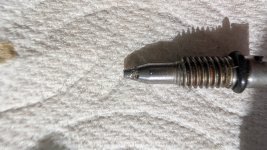
Amazon delivered the tools I needed yesterday and this morning I fairly easily removed the right carb float bowl from the bike. I found a short YouTube video on testing and repairing the float bowl standpipe valve using pressure and soapy water and soldering any cracks found. Fortunately, there were no leaks in the standpipe to fix. I pulled out the drain screw and it was the sketchy one I'd originally noted. See photo of pitting. I made sure the screw was fully closed, and it also didn't leak with me blowing on the drain hose. But to be safe, I ordered a couple of new screws last week from 4into1.com. I don't know when I'll get them. Tracking shows them DELIVERED to Los Angeles on Friday. I live in Bakersfield. :mad: I've sent a message to the vendor, but don't expect any response until at least Monday. I've removed the float valve and will reinstall the original float valve after a through cleaning to remove varnish around the pin. I've also buffed the valve seat with 0000 steel wool, and everything has been rinsed clean of debris with CRC carb cleaner. I want to try reassembling but will wait until the new drain screw arrives. I might get anxious and swap the drain screw which has no pitting from the left carb, into the right carb. The left carb drain screw is easily accessed from the left side of the bike. The right carb drain screw is on the inner left side of the carb and is basically blind and very tight access. The saga continues.


PXL_20250824_161811481.MP.jpg
 
Minor success this morning. Reinstalled the float valve this morning and tested it with gas from the petcock. When I let the floats dangle, gas flowed. When I gently pushed up the float, the gas flow stopped. So at least that works. I'm waiting for the new drain screw to arrive before I put the float bowl back on and test the entire system.

I came up with a little tip for reinstalling the float valve on the bike. On the bench, the valve points down and gravity steadies everything so you can line up the retaining plate on the top of the float valve in the slot made for it in the plastic float. Then lining up the valve seat and pivot pin and inserting it is a piece of cake. BUT, when trying the same thing with the carb on the bike, gravity is NOT your friend. Lining up the float valve with the slot in the float and the valve seat in the carb is difficult because the valve keeps moving around and slipping out of the float when you try to line up the valve with the valve seat. If only there was a way to slip the float valve into the float slot and keep it there while you line up the valve and valve seat and insert the pivot pin. A glob of gum would work if only it didn't make a mess and be almost impossible to perfectly remove. So, I took a plastic-coated wire, a twist-tie from some wrenches that has been mounted to a display card and slipped it through the openings in the float so it "closed the door" on the float valve and made it impossible for the valve to slip out of the float and fall out of my hands. I then turned my attention to lining up the valve and float and inserting the pin. Worked perfectly. I then gently slipped out the wire, leaving no mess to clean up.
 
This morning, I replaced both carb drain screws. The second one had a very minor leak also, so out it goes. Carbs not leaking, so moment of truth time. Bike fired up immediately on both cylinders! As it warmed up, it wants to run about 3000-4000 rpm on full choke with no throttle inputs. Will easily rev higher when the throttle is used. As I bleed off the choke, the "idle" revs come down, but the bike stalls about 2000 rpm with no choke or throttle inputs. So, I guess it's time to tinker with adjustments. I set the fuel/air mixture screws initially to 1 1/2 turns out. Suggestions about where to start to tame this filly?

Currently in the middle of oil/filter change since I got the oil/engine warmed up a bit. Oil was dirty, but no metal chunks seen or felt.
 
Lower the idle to 1200, ride it for a couple miles to get everything hot.
Bike on center stand. Pick a carb and adjust the mixture screw for highest idle speed. IF it exceeds 1300 reset the idle speed back and repeat the mix adjust. Once that's set move to the other carb and repeat. If the second carb has to have the idle reset you'll need to do the 1st again.
Now check the sync of the carbs. If adjustment is needed you get to redo the mix one more time.
This takes a lot of idle time so use a fan to cool the engine while working.
Take it for a good run, 5 miles or more. Recheck the mixtures and you're done.
Good news is that you only need to do a recheck every year or 2, usually changing nothing since these carbs will hold adjustment.
 
Adjusted the chain this morning and removed a lot of slack. Took the bike out for its first ride in 30+ years and my first ride in 50 years. A bit scary as I'm very rusty. Took the bike up all 5 gears but kept the speed below 30 as I've still got the original tires (which I will replace after CHP inspection on 9/2). Glad I saw on a YT video about clutch plates sticking after the bike has set for a long time. Sure enough, the first 3-4 engagements of low gear caused the bike to jump even though the clutch was held in. That would have been a nasty surprise for a rusty rider.

Handlebar question: my bars seem to have a bit of give, about 1/8" or a bit more, when I wiggle them, mostly forward and backward. Normal?? It seems to me to be where they clamp down at the rubber bushing. Old rubber? Need to tighten to remove all free play? How hard is it to get new rubber bushing?

After my ride, I noted the neutral light no longer working. It worked fine during the ride when I could see it. The sun's real bright today so it often washed out. Probably a 44+ year old bulb dying, I hope.

I'm getting there.
 
Check these rubber vibration dampers in the fiche below, #3 and #4, it's generally what needs to be replaced.

honda-cm400t-1981-b-usa-handlebar-top-bridge_bighu0131f7z05_53fa.gif
 
new rubber dampers is the way to go, but you could put a washer under each #12 nut and get a little extra compression on the rubbers. I did it on mine after removing the dampers and making sure they were not cracked. be careful not to over tighten, just enough to get the cotter pins back in. mine snugged up enough to ride is around for a while.
 
Well, "Little Red" had its in person background check with the CHP and she passed! No skeletons in her closet or at least there're very well buried. Next stop is DMV to register the bike. First time in 30+ years. Bike will be parked a few weeks while we're on vacation and when we return, it's new tire and rear brake shoe time so I can check off those safety items. I'll keep you posted.
 
Hi all, will be returning from vacation next week and it's time to think of things to come.
I'll be replacing tires and rear brake shoes and will work on tightening up the handlebars. But what to do with front forks?
I know my forks won't hold air pressure overnight. They bleed to zero psi. No fork oil leaks seen, but I might have no fork oil to leak out. I know I have to drain and flush out the forks, but what to do with the air pressure forks?
I am confident enough to drain and flush the forks and replace fluid but should I eliminate the air forks and go to straight springs? I don't feel confident enough to dismantle and rebuild the forks. Lack of specialized tools, knowledge and experience at work here. If removing the air forks, how do I easily convert to springs only? I don't want to "fork" this up!
Your thoughts will be appreciated.
 
Might try locating the air leak. Add air, 20-30psi, and spray the hose, fittings and fork tube caps with soapy water looking for air bubbles. Might be as simple as a leaking Schrader valve or an O-ring.
Yeah I know that spec for the forks is 1 Bar or @14psi, higher pressure will reveal a leak faster.
I can tell you that the threads of the fork tube caps are different from non air forks, already tried that and failed. So you will be using the original caps with those forks.
 
Been a while since I updated so here goes: 1) Have replaced tires and rear brakes shoes so I'm no longer concerned about a rotten something disintegrating and crashing the bike, 2) Got the bike in the CA DMV system and now have clear title!, 3) The tach was sticking and very slow to respond so I took it apart, spritzed the internals w/brake cleaner and lubed the needle shaft ends. Worked fine at first but now back to sticking and very slow to respond to throttle, not going over 4-5K RPM indicated. Been very cold, ~45-50 degrees for the last few weeks so oil may be too stiff on needle shaft, Did use a light 3-in-1 type oil., 4) Have ridden the bike about 15 miles up to about 50 mph and it seems fine except for the tach. Want to dial in the Air/fuel screws but didn't get the small screwdriver I needed to adjust them until after the tach stiffened back up., 5) After riding, the air forks appear to be holding air pressure for a couple of days now so maybe something is loosening up after years of storage and the seal is improving? Never saw any air bubbles when forks were leak tested., 6) I removed the sissy bar and rear rack for cleaning and making it easier to mount the bike. I'll put it back later this spring after I've re-honed my riding skills., 7) I am really rusty with my slow speed riding, shifting, etc. Also having to learn the fit of my boots with the shift lever and rear brake is taking a bit of practice. Now that I have my full riding gear in hand, I've decided to take the MSF beginner course in January/February with short rides in the neighborhood and school parking lot until then to at least get in some practice. I know what I know and more importantly, I know I've forgotten a lot. One doesn't get to be 76 by being excessively vain!
Another quick question: I got a new license plate when I registered the bike, but I have the option, with DMV approval of condition and probably payment of a fee, of returning the original license plate from 1981 to the bike. It's the old blue w/yellow letter CA plate, which does clash with my red paint. Kind of like having an antique plate. Any value to doing that or strictly nostalgia with no other value? Just on appearance, the new plate looks better because it doesn't clash with the paint.
As usual, any suggestions are most appreciated.
 
OK, here's my getting the bike back into good riding condition and a fateful decision posting. Since December, I've not done too much to the bike. I have replaced the fork oil seals and dust boots plus the O-rings and Schrader valve in the air suspension and that all seems sorted now. I also replaced the old chain. It was hopelessly stretched and the new chain fits much better. The sprockets looked good. I've cleaned up the bike a bunch and polished a bunch of corrosion off the left and right engine covers and spiffed up the bike. I have also listed it for sale. Yes, I found after getting everything all sorted that my old carcass doesn't fit the bike properly. I have arthritis limited movement in my right hip and am unable to QUICKLY move my foot from ground to peg. It required too much mental concentration on my part to get it done, meanwhile the left side is not getting the brain power it deserves. If I never had to put my right foot down, it might work somewhat but the overall peg position no longer works for me. It's strictly a safety decision I never expected to have to make.

I went to the local Honda dealer and tried sitting on a Rebel 300 & 500, same problem, even with the low seat height. Mid or standard peg positions just won't work for me. Tried the Rebel 1100 and it was better but that's too much bike for me. Found the seating on a Kawasaki Vulcan S with the forward pegs actually fit pretty well. Went into an AI frenzy searching for bikes with forward controls that might work for me and kept coming up the same ergonomic solution, a CTX700DCT. I found a real clean one, a 2016 DCT with factory saddle and trunk bags and only 2600 miles on it at a dealer about 250 miles away. I went up, looked at it, it fit me almost perfectly, especially getting my feet up onto the pegs. The DCT removes the clutch and left foot gear lever from the equation and made my first ride a revelation. Much more relaxed position, low CG, able to move feet much quicker and no clutch/gear shifting really lowers the mental stress of getting back into riding. I know this is considered a "boring bike", but what matters is what I think and what works for me. And the CTX just flat out works. It's a much bigger and heavier bike, about 120# more, so I need to practice, especially low speed, but I already feel more comfortable on it than I ever did on Lit' Red.

Besides Facebook and Craigslist, any good suggestions of where to list a vintage bike? (Hopefully I didn't break a rule here. If I did, I'm sorry.) I know I'll be looking for someone who appreciates vintage bikes and that may be hard to find.
 
Glad you found a bike that fits your current needs so you can still ride. (y)

You can post the CM400 for sale here in the Bikes For Sale section, the timing is right for good riding weather most places now so maybe someone here might be interested.
 
Back
Top Bottom